AI Agent Platforms 2026: 10 Best Tools for Building Autonomous Agents (January Roundup)
January 15, 2026
CES 2026 Robotics: 5 AI-Powered Humanoid Demos That Proved Robots Are Finally Ready to Work
January 16, 2026
When Logic Pro 11 dropped in May 2024 with AI Session Players, it felt like Apple had finally woken up to what modern producers actually need. Turns out, that was just the opening act. With Logic Pro 12 expected to launch on January 28, pre-release details are leaking out — and what we’re seeing suggests Apple’s biggest DAW update in years is about to reshape the music production landscape.
Logic Pro 12’s Headline Features: AI Synth Player and Chord ID
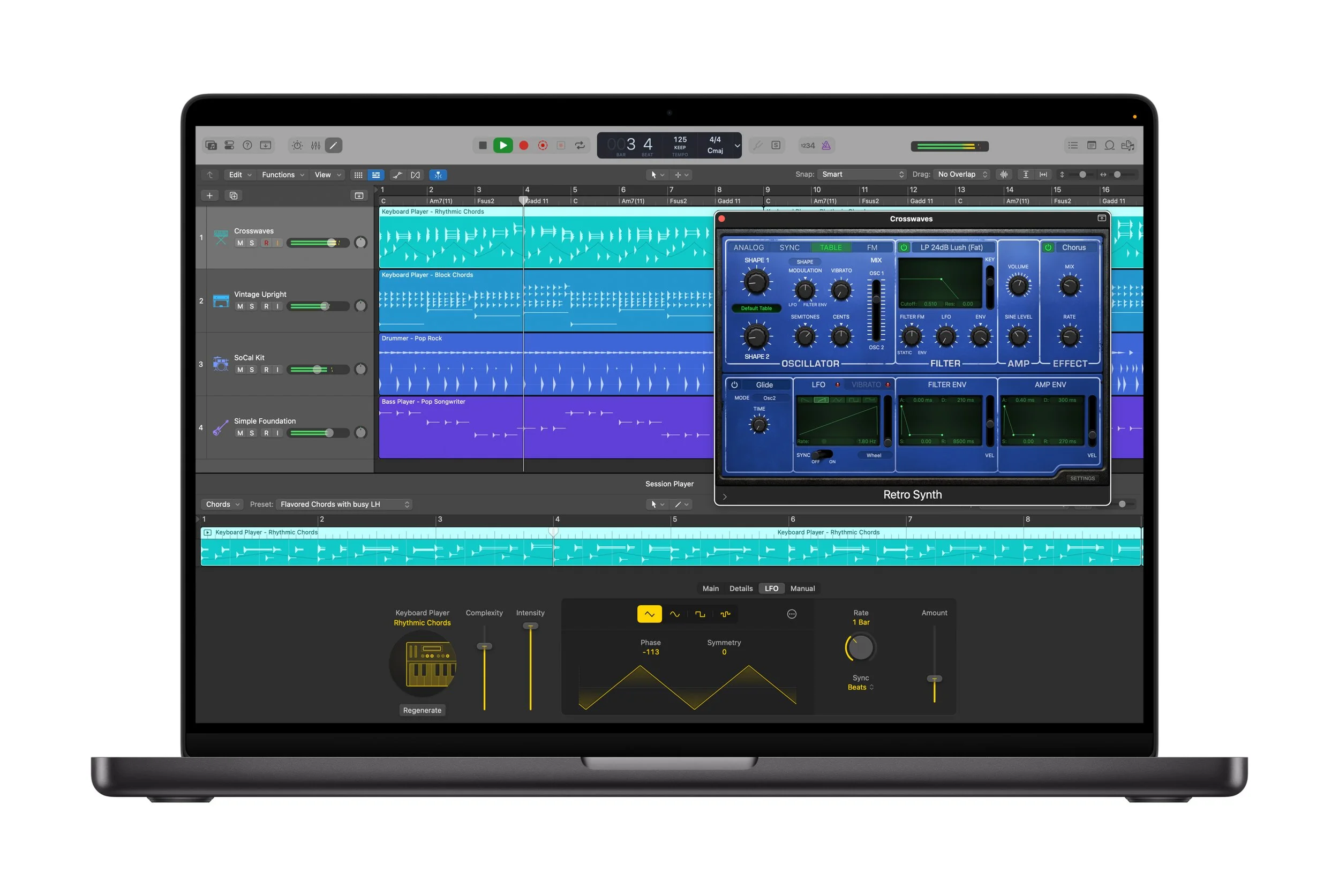
The AI Session Player lineup that debuted in Logic Pro 11 — Drummer, Bass Player, and Keyboard Player — is about to get a significant expansion. According to MusicRadar’s pre-release coverage, Logic Pro 12 will introduce a brand-new Synth Player. This AI instrument is expected to offer bass styles including 808 Bass, Pump Bass, and Sequenced Bass, along with Simple, Modulated, and Rhythmic Pad modes for atmospheric texture creation.
What makes Synth Player particularly interesting is its reported ability to control third-party Audio Unit plugins and even external hardware synthesizers. Unlike the existing Session Players that work primarily within Logic’s built-in ecosystem, Synth Player could open the door to having AI perform through your favorite soft synths like Serum, Vital, or Pigments — a first for any major DAW.
The practical implications here are significant. Instead of being limited to Logic’s built-in synthesizer sounds — which are good but recognizable — producers could leverage the AI’s musical intelligence through any Audio Unit instrument in their collection. A producer working on a bass-heavy electronic track could have Synth Player generate 808 patterns through their carefully designed Serum preset, maintaining their signature sound while benefiting from AI-assisted composition. For hardware enthusiasts, the ability to route Synth Player through external gear via MIDI opens up a hybrid workflow that no other DAW currently offers.
Chord ID — Your Personal Music Theory Assistant
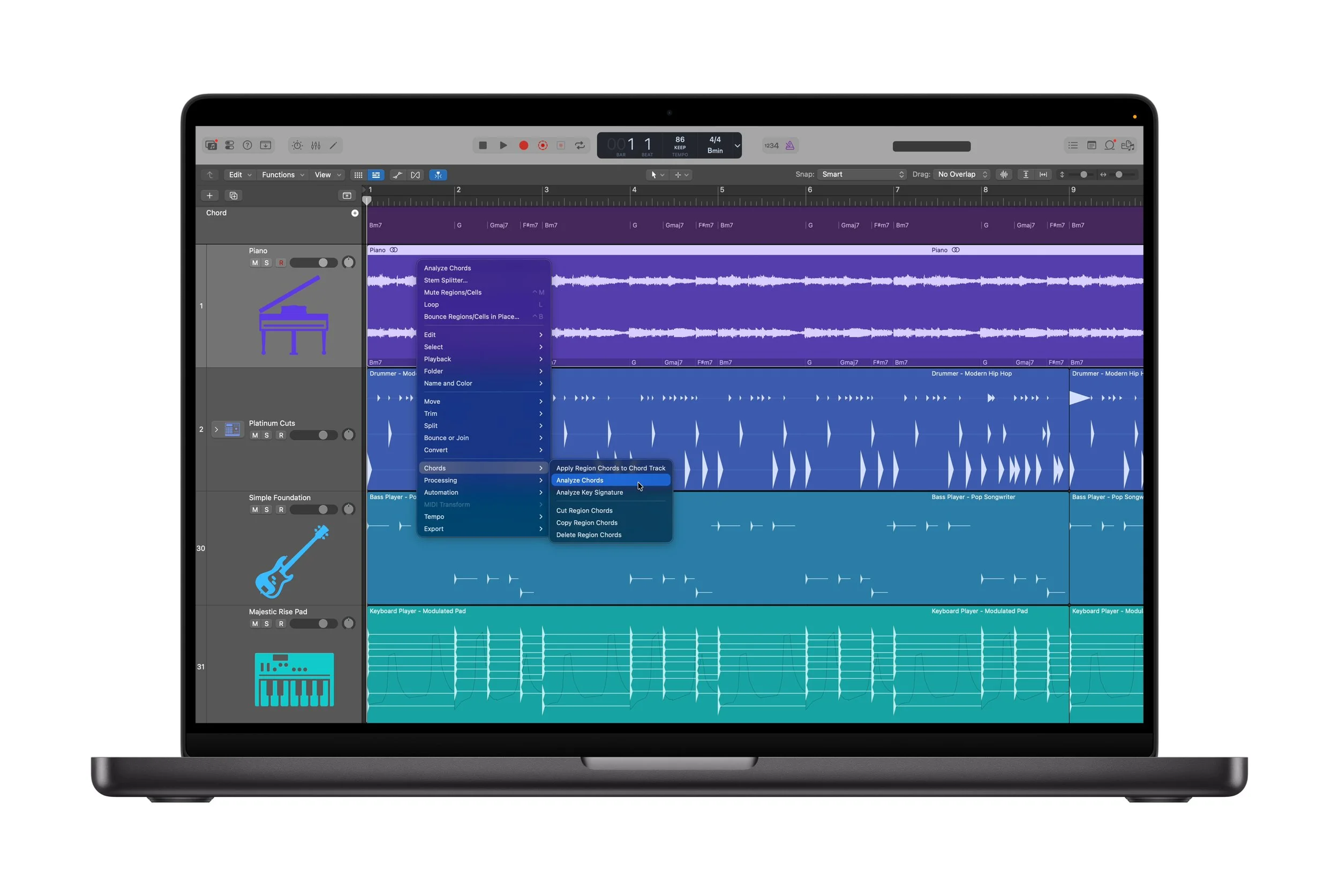
Perhaps the most creatively impactful new feature in Logic Pro 12 is Chord ID. This tool automatically detects chord progressions from any audio or MIDI region in your project. Drag a recorded guitar riff or piano loop onto the Chord ID analyzer, and it extracts the harmonic structure — then feeds that information directly to Session Players for intelligent accompaniment generation.
For producers who work primarily by ear rather than formal music theory training, this is a genuine game-changer. Imagine recording a simple vocal melody, having Chord ID identify the implied harmony, and then letting Synth Player generate complementary pad textures — all without manually inputting a single chord symbol. That workflow alone could fundamentally change how many producers approach songwriting in Logic Pro 12.
The combination of Chord ID and Synth Player also hints at a broader strategic direction for Apple’s AI in music production. Rather than replacing musicians — a concern that has dominated AI discourse — these tools appear designed to augment the creative process. A guitarist who writes by feel can now get instant harmonic analysis and AI-generated accompaniment that respects the original musical intent. This is AI as a collaborative tool, not a replacement, and it represents a thoughtful approach to integrating machine learning into creative workflows.
Workflow Upgrades: Step Sequencer, Stem Splitter, and Flashback Capture
Beyond the AI headliners, Logic Pro 12 is expected to deliver substantial workflow improvements that affect day-to-day production. According to CDM’s detailed breakdown, the Step Sequencer gets pendulum and arpeggiated modes — adding creative sequencing options that have long been standard in hardware sequencers but missing from Logic’s implementation.
More significantly, the Step Sequencer will reportedly support MIDI 2.0. For those unfamiliar, MIDI 2.0 expands the resolution from MIDI 1.0’s 127 velocity steps to thousands of discrete values, enabling far more nuanced and expressive performances. Logic Pro appears poised to become one of the first major DAWs to meaningfully integrate MIDI 2.0 into its core workflow — a move that positions Apple ahead of competitors like Ableton and Steinberg in next-generation protocol adoption.
5-Track Stem Separation and Flashback Capture
According to EditorsKeys, the Stem Splitter in Logic Pro 12 will handle five separate tracks: vocals, drums, bass, guitar, and piano. Previous versions had more limited separation capabilities, so this upgrade brings Logic Pro’s built-in stem separation much closer to dedicated tools like iZotope RX or LALAL.AI.
Then there’s Flashback Capture — a feature that recovers performances you played but forgot to record. Every musician has had that moment: you’re noodling on a keyboard while Logic is idle, you stumble onto something brilliant, and it’s gone forever because you weren’t recording. Flashback Capture appears to solve this by continuously buffering audio input, letting you retroactively capture what you just played. If this works as described, it could save countless creative moments that would otherwise be lost.
Intel Mac Support Dropped — A Controversial but Expected Move
Production Expert reports that Logic Pro 12 will require Apple Silicon (M1 or later) and macOS 15.6 as minimum system requirements. This means Intel-based Macs — including the powerful Mac Pro towers and iMac Pros that many professional studios still rely on — will not be able to run the new version.
This is arguably the most controversial aspect of the Logic Pro 12 update. While Apple has been transitioning away from Intel for years, a significant number of professional studios invested heavily in Intel Mac Pros as recently as 2019. Those machines remain powerful enough for complex sessions, but they’ll be locked out of new Logic features going forward.
The silver lining: Logic Pro 11 will continue to work on Intel Macs, so existing projects and workflows won’t suddenly break. But if the new AI features and workflow improvements prove as useful as they look, the pressure to migrate to Apple Silicon will intensify significantly. For studios planning hardware upgrades, this is a clear signal that the clock is ticking on Intel Mac compatibility across Apple’s pro applications.
Apple Creator Studio — Logic Pro Goes Subscription
Alongside Logic Pro 12, Apple is expected to launch Creator Studio — a subscription bundle priced at $12.99/month or $129/year. The bundle reportedly includes Logic Pro, Final Cut Pro, Pixelmator Pro, Motion, Compressor, and MainStage. Student pricing is expected at $2.99/month, with a three-month free trial for new Apple device purchasers.
For existing Logic Pro owners, the update will be free — so there’s no forced migration to the subscription model. But for new users who haven’t yet purchased Logic Pro (which currently costs $199.99 as a one-time purchase), the subscription option dramatically lowers the barrier to entry. At $2.99/month for students, it becomes one of the most affordable professional DAW options on the market — undercutting even Splice’s rent-to-own plans for competing DAWs.
This is also the first time Logic Pro has been available through a subscription model, marking a significant strategic shift for Apple’s creative software division. Whether this signals the eventual end of one-time purchases remains to be seen, but for now, both options are expected to coexist.
The Creator Studio bundle also positions Apple more competitively against Adobe’s Creative Cloud and the growing ecosystem of subscription-based creative tools. For content creators who need both audio and video production capabilities, having Logic Pro and Final Cut Pro under a single $12.99 monthly subscription is compelling — especially compared to paying for separate DAW and NLE subscriptions from different vendors. This bundling strategy could attract a new wave of multi-disciplinary creators to Apple’s ecosystem.
MainStage 4 and Additional Improvements
Logic Pro 12 is expected to arrive alongside MainStage 4, which brings one particularly significant addition: full Ableton Link support. For live performers who use MainStage for their Logic-based live rigs but need to sync with other musicians running Ableton Live, this bridges a gap that has long forced workarounds involving external MIDI clocks or manual BPM matching.
Additional improvements reportedly coming in Logic Pro 12 include Quantec-style reverb algorithms, enhanced Spatial Audio capabilities, a redesigned Sound Library with audio previews and storage management tools, Artist and Producer Packs with dedicated artwork and video content, natural language loop search on iPad, Quick Swipe Comping for iPad, and Drum Machine Designer workflow enhancements. The Sound Library redesign is particularly welcome — Logic’s sample browser has long been functional but uninspiring compared to competitors like Ableton’s browser or Native Instruments’ Komplete Kontrol integration.
Is Logic Pro 12 Worth the Wait?
With an expected launch date of January 28, Logic Pro 12 is shaping up to be the most significant update since Logic Pro 11 introduced AI Session Players in 2024. The expansion into AI Synth Player, the addition of Chord ID for harmonic analysis, MIDI 2.0 integration, improved stem separation, and the Creator Studio subscription model all point to Apple investing aggressively in the professional audio market.
The Intel Mac compatibility break will be painful for some, but for Apple Silicon users, this update looks like it will deliver genuine creative and workflow advantages. Timing this release alongside NAMM 2026 suggests Apple wants maximum visibility among the professional audio community — and the feature set suggests they’re serious about competing not just with established DAWs like Ableton Live and Pro Tools, but with the growing wave of AI-native music tools entering the market.
For producers already in the Logic Pro ecosystem, January 28 could mark a significant turning point in how you approach composition and production. For those on the fence about which DAW to invest in, Logic Pro 12’s combination of AI features, competitive pricing through Creator Studio, and deep Apple Silicon optimization makes a compelling case. Keep an eye on the official announcement — we will be covering the full release with hands-on analysis as soon as it drops.
Whether you’re optimizing your Logic Pro workflow for the version 12 transition or need professional mixing and mastering for your next release, Sean Kim brings 28 years of audio experience to your project.
Get weekly AI, music, and tech trends delivered to your inbox.