GDC 2026 AI Game Development: NPCs That Finally Talk Back — And 52% of Devs Aren’t Happy
March 4, 2026
Claude Code Agent Teams: How TeammateTool and Swarm Mode Are Redefining AI Coding — March 2026 Update
March 5, 2026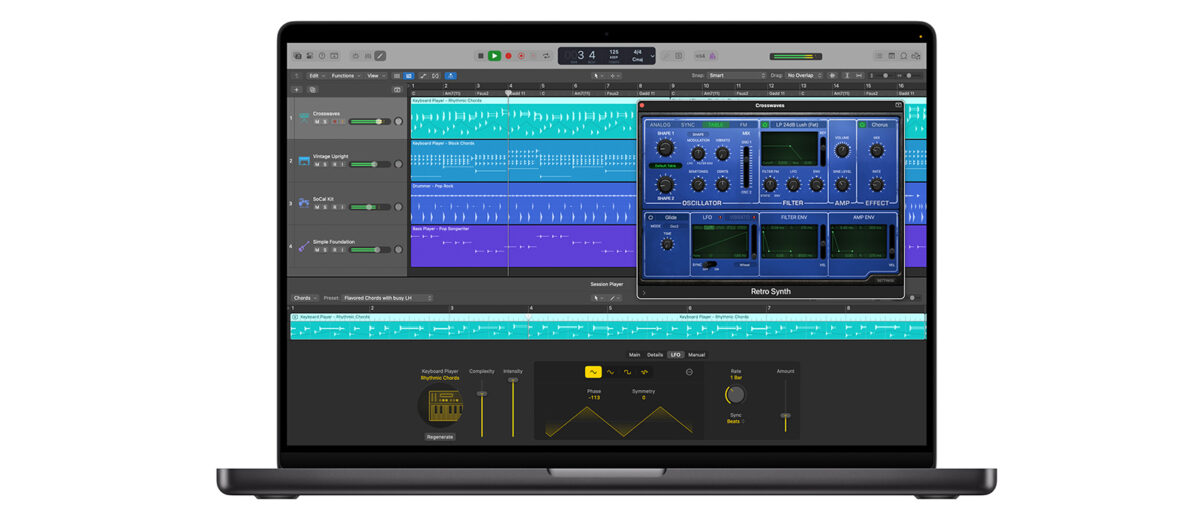
Five weeks ago, I loaded Logic Pro 12 on my Mac Studio expecting incremental polish—and instead found myself rewriting session templates I’d been using for over a decade. The Logic Pro 12 AI features are not a gimmick. After putting them through actual album production, commercial sync work, and late-night sound design sessions, I can tell you exactly where they deliver and where Apple still has gaps to fill.
Logic Pro 12 AI Features: What Actually Changed Under the Hood
Apple released Logic Pro 12 on January 28, 2026, and this is the first version that requires Apple Silicon exclusively—no more Intel support. That decision alone tells you where Apple is heading. Every AI feature in this release leans on the Neural Engine, and after 28 years of bouncing between DAWs, I can say the performance difference is real. Session Players respond in near real-time, Chord ID analysis takes seconds rather than minutes, and the overall CPU headroom for third-party plugins has noticeably improved.
The headline additions are the Synth Player, Chord ID, and an overhauled Sound Library. But it’s the way these features interconnect that makes Logic Pro 12 feel like a genuine generational leap rather than a feature checklist.
Synth Player: The Session Player That Actually Surprised Me
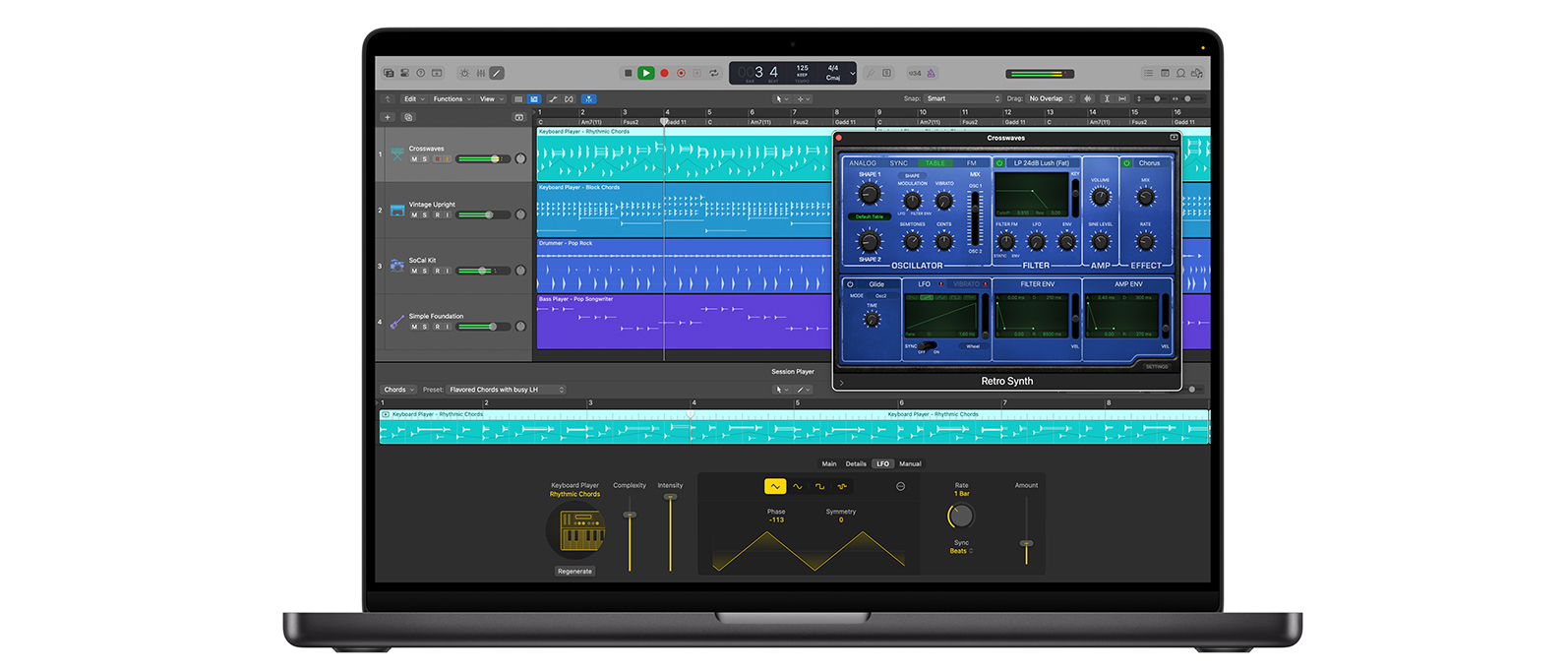
Let me be honest: when Apple announced another Session Player, my expectations were measured. Drummer and Bass Player were useful but often felt like preset machines—you picked a style, tweaked a couple of parameters, and accepted whatever came out. Synth Player is fundamentally different in its depth and flexibility. It ships with six styles—Pump Bass, 808 Bass, Sequenced Bass, Simple Pad, Modulated Pad, and Rhythmic Chords—and each one is deeply tweakable. You’re not just picking a pattern and hoping it fits. You’re shaping velocity curves, adjusting rhythmic density, and dialing in harmonic complexity with real-time visual feedback.
Here’s what caught me off guard: Synth Player can trigger third-party Audio Unit plugins and external hardware synths. I routed it to my Moog Subsequent 37 via a MIDI output, and it generated bass lines that actually followed the harmonic structure of my Chord Track. That is something no other DAW does out of the box right now. Synthanatomy confirmed this capability extends to any AU-compatible instrument, which means the creative possibilities are genuinely wide open.
After five weeks, I’ve been reaching for Synth Player most often during the initial arrangement phase. It’s not replacing my playing—it’s accelerating the ideation stage. I sketch a chord progression, let Synth Player generate a pad texture and a rhythmic bass part, then I perform over the top. My arrangement speed has roughly doubled for sync library work.
One workflow tip worth sharing: if you set Synth Player to Rhythmic Chords mode and feed it a sparse Chord Track with just root triads, then layer a Modulated Pad instance on the same progression, you get a surprisingly full harmonic bed in under two minutes. From there, I mute the Synth Player tracks once I’ve recorded my own parts inspired by them—think of it as a creative scaffold rather than a final performance.
Chord ID: The Workflow Game-Changer Nobody Is Talking About
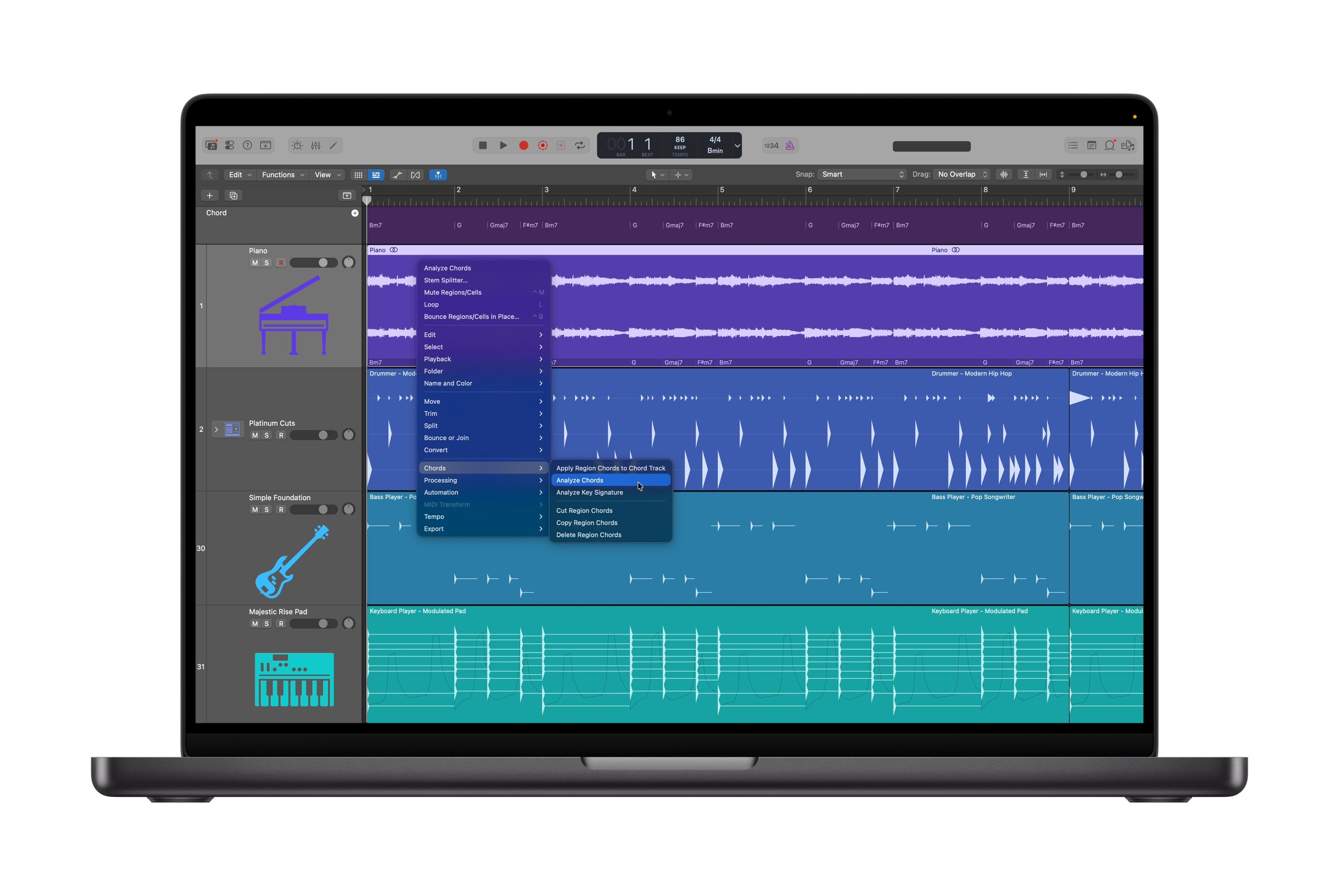
Chord ID analyzes audio and MIDI regions to detect harmonic progressions and populate the Chord Track automatically. On paper, that sounds like something you could do manually in five minutes. In practice, it’s transformative—especially when working with sampled loops, client stems, or old projects where you’ve forgotten the harmony.
I threw a complex jazz-influenced track at it—one with extended chords, modal interchanges, and a key change in the bridge. Chord ID nailed about 85% of it on the first pass. The remaining 15% were voicings where it identified the root and quality correctly but missed tensions (calling a Cmaj9#11 just Cmaj9, for instance). For pop and electronic production, accuracy is closer to 95%. That’s remarkable.
The real power comes from what happens after detection. Once your Chord Track is populated, the Enhanced Step Sequencer follows it automatically. Session Players follow it. Even arpeggiators respond to chord changes. This creates a unified harmonic ecosystem across your entire project—something that previously required manual MIDI editing or third-party tools like Scaler 2.
Sound Library Redesign and the Missing Guitarist
The Sound Library has been completely reorganized with searchable categories, better tagging, and faster browsing. It sounds minor, but when you’re auditioning patches at 2 AM against a deadline, the difference between three clicks and eight clicks matters. The new search actually understands context—typing “warm analog pad” returns relevant results instead of just literal keyword matches.
What’s conspicuously absent is a Guitarist Session Player. We now have Drummer, Bass Player, Keyboard Player, and Synth Player—but no guitar. MusicRadar’s review noted this same gap, and for anyone producing rock, country, or acoustic singer-songwriter material, it’s a noticeable hole. I expect Apple will address this in a point update, but for now, guitar parts still require manual performance or third-party solutions.
The Intel Question and Competitive Landscape
Dropping Intel support is a bold move. If you’re still running a 2019 Mac Pro or an older iMac, Logic Pro 12 is not for you—and Apple isn’t apologizing for it. The trade-off is clear: every ounce of development effort now targets Apple Silicon optimization, and the results speak for themselves. My M2 Ultra handles 200+ tracks with Session Players active and CPU meters barely flinching.
At $199.99 for a one-time purchase (or $12.99/month through Apple Creator Studio), Logic Pro 12 remains the most aggressive value proposition in professional DAW software. AudioNewsRoom’s overview breaks down the Creator Studio bundle in detail, and for anyone already paying for Final Cut Pro, the math makes the subscription route surprisingly sensible.
Compared to Studio One 7 and Ableton 12, Logic Pro 12 is the only DAW where AI-generated musical content actually follows your harmonic structure in real time. Ableton’s generative tools are powerful but operate independently of harmony. Studio One’s chord track is mature but doesn’t drive AI instruments the way Logic’s does. This is Apple’s differentiator, and they’ve executed it well.
The Verdict After 5 Weeks: Who Should Upgrade
Here’s my practical scoring after five weeks of daily use. Synth Player: 9/10—deeply musical, hardware integration is a standout, but needs more styles over time. Chord ID: 8.5/10—accurate enough for production use, occasional misses on complex jazz voicings are easily corrected. Sound Library: 8/10—the contextual search is a genuine improvement, though I wish Apple had added user-tagging for custom patches. Overall, Logic Pro 12 earns a solid 9/10 for producers on Apple Silicon.
If you’re on Apple Silicon and you produce any genre that benefits from harmonic-aware AI tools—electronic, pop, hip-hop, film scoring, sync library work—Logic Pro 12 is an immediate upgrade. The Synth Player alone has already paid for itself in my workflow. Chord ID has become one of those features I can’t imagine working without, the way Flex Time was a decade ago.
If you’re primarily a guitarist or acoustic producer, the value proposition is thinner until Apple fills the Guitarist Player gap. And if you’re on Intel, this is Apple’s not-so-subtle nudge to upgrade your hardware.
After 28 years of music production, I’ve seen DAW updates that promise the world and deliver incremental tweaks. Logic Pro 12 isn’t one of those. The AI Session Players, Chord ID integration, and the unified harmonic workflow represent the most meaningful evolution in Logic since Flex Time and Smart Tempo. Five weeks in, it’s already reshaped how I start every new project.
Looking to optimize your Logic Pro workflow, build a production template around AI Session Players, or need professional mixing and mastering for your next release?