Snapdragon X2 Benchmark Leaks: 30% Faster Single-Core Than Intel and AMD — ARM Laptops Are Coming for the Throne
June 20, 2025
How to Use Sidechain Compression Creatively: 7 Techniques Beyond Basic Kick-to-Bass Ducking
June 23, 2025
Your engineering team just shipped a critical bug report — and it sat in triage for three days because nobody knew which team owned it. Linear AI triage intelligence is here to make sure that never happens again, and with $82 million in fresh Series C funding, Linear is betting everything on an AI-first future for project management.
Linear AI Triage Intelligence: The $1.25 Billion Bet on Automated Issue Routing
On June 10, 2025, Linear announced an $82 million Series C round led by Accel, valuing the company at $1.25 billion. That brings total funding to $134.2 million — a serious war chest for a company with 15,000+ customers that include OpenAI, Scale AI, and Perplexity. CEO Karri Saarinen didn’t mince words, calling the AI shift “generational.”
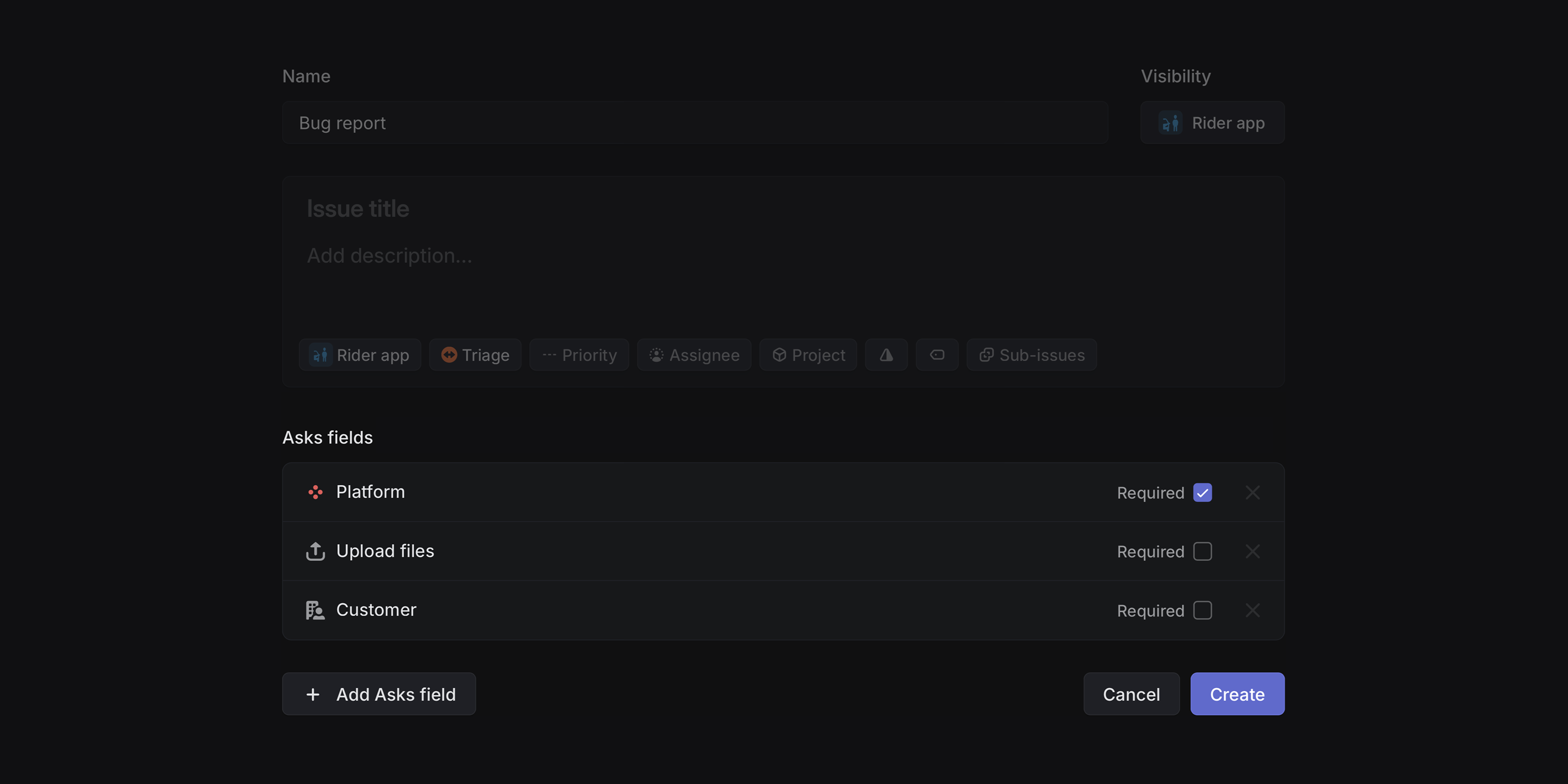
But here’s the thing: Linear isn’t just raising money. They’re actively shipping features that justify the valuation. Just five days before the funding announcement, on June 5, 2025, Linear rolled out Asks fields and Triage routing — customizable intake forms paired with automated triage routing that can sort incoming issues based on priority, creator, template, project, and SLA status. Available on Business and Enterprise plans, this release set the stage for what came next.

” alt=”Linear AI triage intelligence dashboard showing automated issue routing suggestions”/>
How Linear’s Triage Intelligence Actually Works: LLMs Meet Project Management
Let’s get technical, because Linear’s approach to AI triage intelligence isn’t just a GPT wrapper slapped onto a Kanban board. According to Linear’s engineering deep-dive, Triage Intelligence uses a multi-stage reasoning pipeline that processes every incoming issue through three distinct phases: search, ranking, and LLM reasoning.
Here’s the breakdown:
- Search stage: When an issue arrives, the system performs semantic search across your workspace’s existing issues, projects, and team structures using vector embeddings. This evolved from simple keyword matching to full semantic understanding — meaning “login broken on mobile” will correctly match with “authentication failure on iOS app.”
- Ranking stage: Results from the search phase are ranked by relevance, factoring in team ownership patterns, recent activity, and historical assignment data.
- LLM reasoning stage: A frontier-class language model (Linear moved from smaller models like GPT-4o mini to larger frontier models for their agentic approach) analyzes the ranked results and generates specific suggestions — assignees, teams, labels, and projects — along with reasoning you can inspect by hovering over each suggestion.
Processing takes 1–4 minutes per issue, and the system also flags potential duplicates and related issues. You can configure it at both workspace and team levels, with an auto-apply option for teams confident enough to let AI handle triage without human review.
Trust and Transparency: Why Linear’s AI Design Philosophy Matters
One of the most underappreciated aspects of Linear’s AI implementation is their commitment to transparency. Every AI suggestion comes with visible reasoning — hover over a suggested assignee, and you’ll see exactly why the system chose that person. This isn’t a black box. It’s an opinionated assistant that shows its work.
This design choice matters enormously for enterprise adoption. Engineering managers need to trust automated triage before they’ll enable auto-apply. By making the reasoning chain visible, Linear reduces the friction between “interesting demo” and “production deployment.”
The technical evolution tells a compelling story too. Linear’s team documented how they moved from keyword-based search to semantic search with vector embeddings, and from small language models to frontier models capable of genuine agentic reasoning. Each step was driven by a specific limitation: keyword search couldn’t handle paraphrased issues, and smaller models couldn’t reliably reason about complex organizational structures.
Beyond Triage: Linear’s Full AI Product Intelligence Stack
Triage Intelligence is the headline feature, but Linear’s AI capabilities extend significantly further:
- AI-powered semantic search: Natural language queries across your entire workspace. No more hunting through project boards with exact keyword matches.
- Pulse Updates: AI-generated project summaries that give stakeholders a snapshot without requiring manual status updates from every team lead.
- Linear for Agents: Deploy AI teammates that can participate in workflows — creating issues, updating statuses, and responding to triggers programmatically.
- Linear MCP (Model Context Protocol): Integration layer for Cursor, Claude, and ChatGPT to interact directly with your Linear workspace. This means your AI coding assistant can create, update, and query issues without leaving the IDE.
- Duplicate detection: Automatic identification of issues that overlap or duplicate existing tickets, reducing redundant work across teams.
” alt=”Linear AI triage intelligence workflow diagram showing multi-stage LLM pipeline”/>
The Funding Story: $134.2M Total and What It Signals
Let’s put the numbers in context. Linear’s $82M Series C, announced by the company on June 10, 2025, was led by Accel with participation from existing investors. The $1.25 billion valuation represents a significant step up, and the $134.2 million total raised gives Linear substantial runway to execute against Atlassian.
What makes this raise notable isn’t just the amount — it’s the timing. Linear secured this funding during a period when many SaaS companies are struggling to raise at favorable terms. The market is clearly signaling that AI-native tools in the developer productivity space command premium valuations. Investors aren’t just buying into Linear’s current revenue; they’re buying into the thesis that AI will fundamentally reshape how engineering teams operate, and that Linear is positioned to capture that shift.
The 15,000+ customer base is particularly telling. These aren’t just any customers — they include some of the most technically sophisticated organizations in the world. When AI companies like OpenAI, Scale AI, and Perplexity evaluate project management tools, they understand AI capabilities at a deep level. Their choice of Linear over established alternatives like Jira is a powerful endorsement of Linear’s technical approach.
Linear vs. Jira: The AI-First Challenger Takes Aim at Atlassian
The elephant in the room is Atlassian. Jira dominates enterprise project management with a massive installed base and deep integration ecosystem, but Linear is making a direct play for teams that are frustrated with Jira’s complexity and eager for AI-native tooling. The $82M raise isn’t just about building features — it’s about scaling sales and go-to-market to compete with Atlassian’s distribution muscle.
Where Jira has been adding AI features incrementally (Atlassian Intelligence, Jira’s AI-powered search), Linear was built from the ground up with a modern architecture that makes deep AI integration significantly easier. There’s no legacy plugin system to work around, no decade of technical debt constraining what’s possible. This architectural advantage compounds over time — every new AI feature Linear ships can be more deeply integrated than what Atlassian can bolt onto Jira’s existing framework.
The competitive dynamics are fascinating. Jira’s strength is its ecosystem — thousands of integrations, marketplace plugins, and enterprise workflows that large organizations depend on. Linear’s counter-argument is that many of those integrations exist because Jira can’t do things natively. When your core platform has AI-powered triage, semantic search, and automated project summaries built in, you need fewer third-party plugins to fill the gaps.
The customer list speaks volumes. When OpenAI — arguably the most important AI company in the world — uses Linear over Jira, that’s a signal. When Scale AI and Perplexity make the same choice, a pattern emerges. The fastest-moving AI companies are choosing the fastest-moving project management tool. These organizations could afford any tool on the market; they’re choosing Linear because the product genuinely serves their workflow better.
Pricing and Availability: Who Gets Access to AI Features
It’s worth noting that Linear’s AI features — including Triage Intelligence — are only available on Business and Enterprise plans. This is a deliberate product strategy. By gating advanced AI capabilities behind higher-tier plans, Linear creates a clear upgrade path for teams that start on the free or Standard tiers and grow into needing automated triage as their organization scales.
For smaller teams, this means you won’t get AI triage on the free plan. But for organizations dealing with hundreds or thousands of issues per week — the teams where manual triage actually becomes a bottleneck — the Business plan pricing is likely a fraction of the engineering hours saved by automated routing. The ROI calculation becomes straightforward once you quantify how many hours your team spends on manual issue sorting each week.
What This Means for Engineering Teams in 2025
Linear’s AI triage intelligence represents a broader shift in how engineering organizations will operate. The manual triage meeting — where a team lead spends 30 minutes every morning sorting new issues — is becoming obsolete. Not because humans aren’t needed, but because the initial sorting, categorization, and routing can be handled with 90%+ accuracy by AI systems that understand your team’s patterns.
The implications extend beyond just issue routing. When triage is automated, engineering managers reclaim time for higher-value work — architecture decisions, team mentoring, strategic planning. The compounding effect of removing 30 minutes of daily overhead from every team lead in your organization is substantial. For a company with 10 engineering teams, that’s over 25 hours per week returned to actual engineering leadership.
For teams evaluating project management tools right now, the decision framework has fundamentally changed. It’s no longer just about features, integrations, and pricing. It’s about which platform has the strongest AI foundation — because the gap between AI-native and AI-bolted-on tools will only widen from here. The tools that were built with AI as an afterthought will spend the next several years trying to retrofit capabilities that AI-native platforms already ship natively.
Linear’s $1.25 billion valuation isn’t just a number on a term sheet. It’s a bet that project management is about to be fundamentally restructured by AI — and that the team building the fastest, most opinionated tool will win. With Triage Intelligence, Pulse Updates, MCP integration, and a customer base that reads like an AI industry who’s-who, Linear is making a compelling case that the future of project management isn’t just smarter — it’s autonomous.
Looking to integrate AI-powered automation into your team’s workflow — or need help building custom triage and routing systems?
Get weekly AI, music, and tech trends delivered to your inbox.