Samsung 9100 Pro 4TB Review: 14,800 MB/s PCIe 5.0 SSD That Creators Actually Need
July 16, 2025
Arturia KeyLab Essential mk3 Review: The $219 MIDI Controller That Punches Way Above Its Weight
July 17, 2025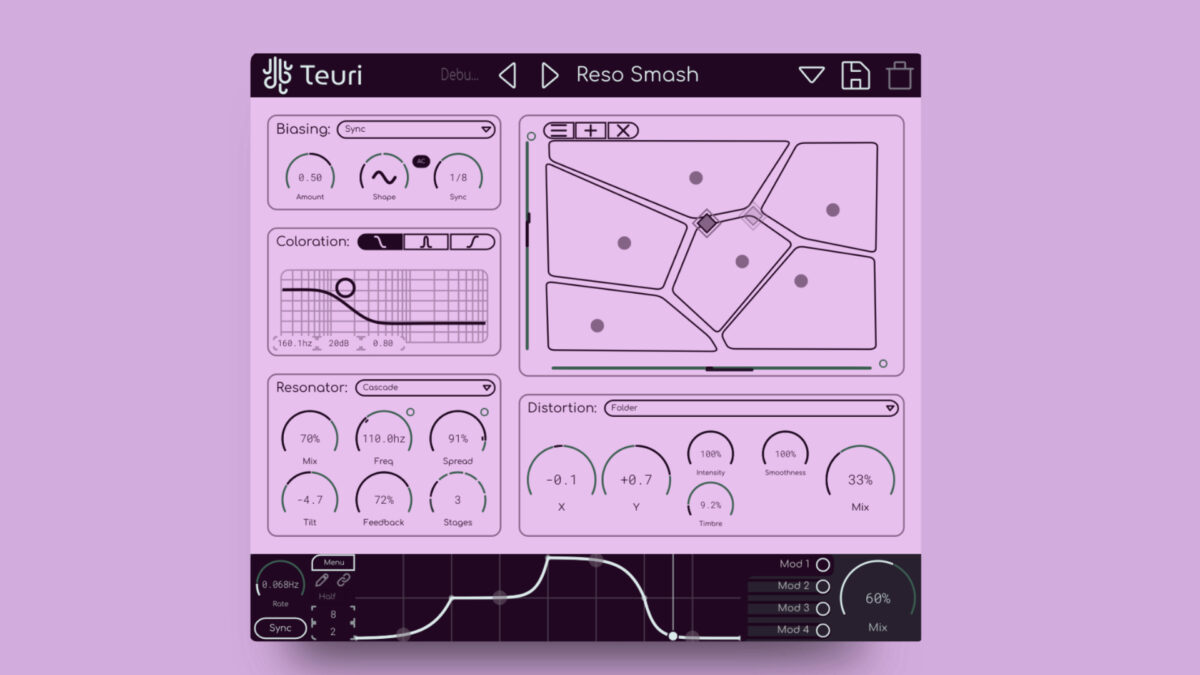
Most distortion plugins give you one algorithm and a drive knob. Lese Teuri throws that entire paradigm out the window by placing up to 10 independent distortion cells on an XY grid and letting you morph between them in real time — no snapping, no quantizing, just continuous timbral evolution. After two weeks of running Teuri on everything from drum buses to vocal chains, I can say this: it is unlike anything else in my plugin folder.
What Makes Lese Teuri Different: The Cellular Distortion System
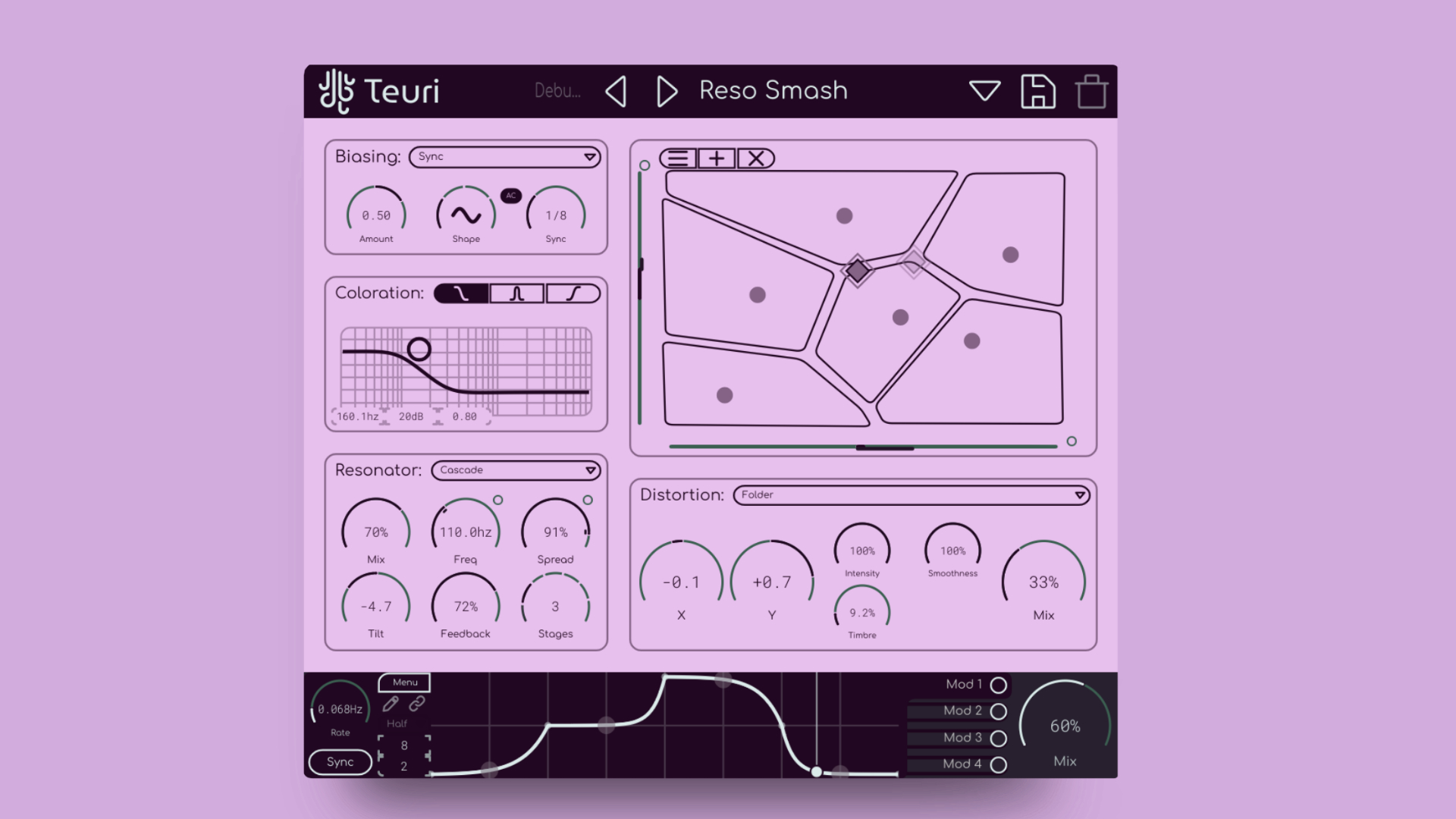
The core of this Lese Teuri review centers on what the developer calls “Cellular Distortion.” Instead of choosing a single distortion algorithm and tweaking parameters, Teuri lets you place up to 10 distortion cells at different positions on a two-dimensional XY pad. Each cell can host any of the 13 distortion modes with its own independent settings. When you move the cursor across the grid, Teuri blends between nearby cells using a proprietary Positional Blending system — creating textures that exist nowhere in the individual algorithms alone.
Think of it like this: set Tape saturation in one corner, bit Crush in another, wave Folder in a third, and Diffuse cluster delay in the fourth. Now automate the XY position with one of Teuri’s four LFOs synced to your DAW tempo. The result is a living, breathing distortion that evolves with your track. This is sound design territory that traditional distortion plugins simply cannot reach.
All 13 Distortion Types: From Analog Warmth to Experimental Destruction
Lese Teuri includes 13 distortion algorithms that span the entire spectrum from subtle analog coloring to aggressive experimental processing. Here is the full lineup:
- Crush — Classic bit crusher for lo-fi digital degradation
- Fuzz — Germanium-style fuzz with aggressive harmonic content
- Warm — Soft-clipping saturation for gentle analog warmth
- Tape — Magnetic tape saturation characteristics
- Diode — Asymmetric diode clipping with odd and even harmonics
- Valve — Tube-stage emulation with classic overdrive character
- Transform — Waveshaping distortion with unique harmonic generation
- Phase — Subtle phase-based tonal coloring (not traditional phase distortion)
- Folder — Wave folding for complex harmonic spectra
- Lattice — Subtle notch-filter-based spectral distortion
- Ring Mod — Ring modulation for metallic, inharmonic textures
- Shifter — Frequency shifting for tonal transformation
- Diffuse — Cluttered diffused cluster delay for ambient destruction
The diversity here is remarkable. Having Warm and Tape alongside Ring Mod and Diffuse in the same morphable space means you can transition from radio-friendly saturation to experimental sound design within a single automation curve. That versatility is what makes this cellular distortion plugin stand out.
Pre-Distortion Processing: Bias, Coloration, and Resonator
Before the signal hits the distortion grid, Teuri offers three pre-processing stages that dramatically expand the tonal range:
Biasing adds a low-frequency signal or DC offset to the input, which can be modulated by pitch tracking or MIDI. This asymmetric biasing changes how each distortion algorithm responds, adding even harmonics and creating tonal shifts that vary with your playing dynamics.
Coloration applies a frequency-selective boost before the distortion stage and then applies an inverse filter after. The practical result: you can push specific frequency ranges harder into the distortion while keeping the overall tonal balance intact. This is surprisingly useful for adding grit to specific ranges without destroying the mix.
Resonator operates in two modes — single and cascade. The cascade mode feeds the signal through up to 8 resonator stages, producing effects that range from subtle metallic ringing to self-resonating textures that become instruments in themselves. The resonator alone is worth exploring for ambient and experimental producers.
Modulation: 4 LFOs With DAW Sync
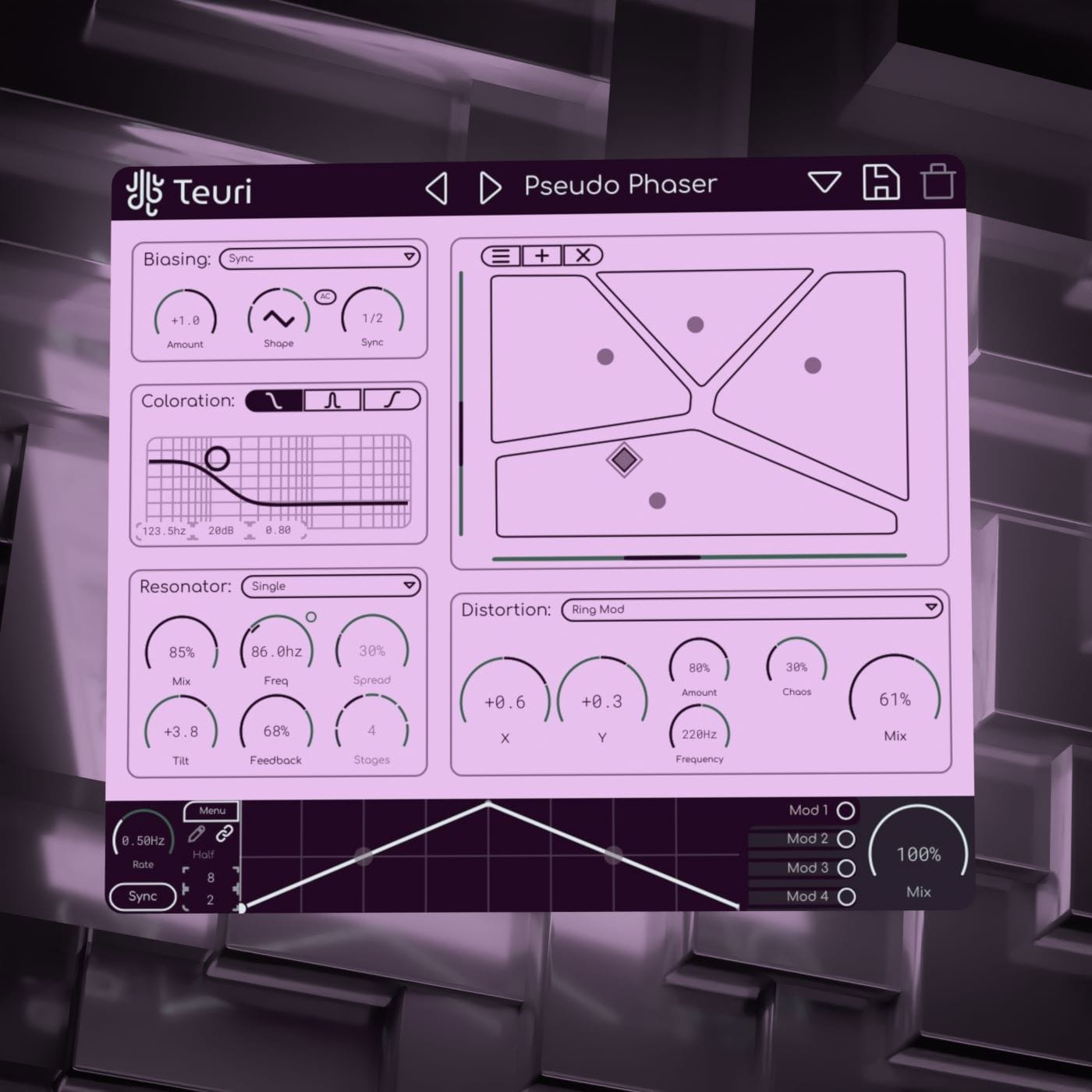
Teuri includes four dedicated LFO modulators that can be mapped to any parameter in the plugin. Each LFO can sync to your DAW’s BPM and retrigger with playback state. While the modulation system covers the essentials well, it is worth noting that Teuri currently lacks envelope followers and randomized LFO shapes — features that would push the modulation capabilities even further into generative territory.
That said, mapping an LFO to the XY cursor position already opens enormous creative possibilities. Syncing a slow LFO to half-note intervals while the cursor traces a path through four different distortion cells creates evolving textures that would require complex modular routing in any other plugin.
Pricing, Compatibility, and Verdict
Lese Teuri is available for $55 (€55) as a VST3, AU, and AAX plugin on macOS (Apple Silicon native and Intel) and Windows. A free demo is available from lese.io. At this price point, the value proposition is exceptional — many single-algorithm distortion plugins cost more while offering a fraction of the creative range.
Lese is a boutique developer whose other plugins — Glow and Smear — share the same design philosophy of taking familiar concepts and reimagining them through unique interfaces. If you are looking for a distortion plugin that genuinely offers sounds you cannot get anywhere else, Teuri earns a strong recommendation. The cellular distortion system is not a gimmick; it is a fundamentally different approach to how distortion can work in a mix. For producers working in electronic music, sound design, or experimental genres, this XY pad distortion VST should be at the top of your demo list.
For more details on Teuri’s morphing system, check the official documentation and the in-depth DATABROTH review.
Looking for studio consultation on plugin choices and signal chain optimization?
Get weekly AI, music, and tech trends delivered to your inbox.