
Warner Music Revelator Acquisition: The 3-Way Indie Distribution War Between Majors Just Got Real (2026 Analysis)
April 2, 2026
UJAM Groovemate Latigo Review: 460 Latin Percussion Phrases From an Ex-Jamiroquai Musician — Is It Worth $39?
April 3, 2026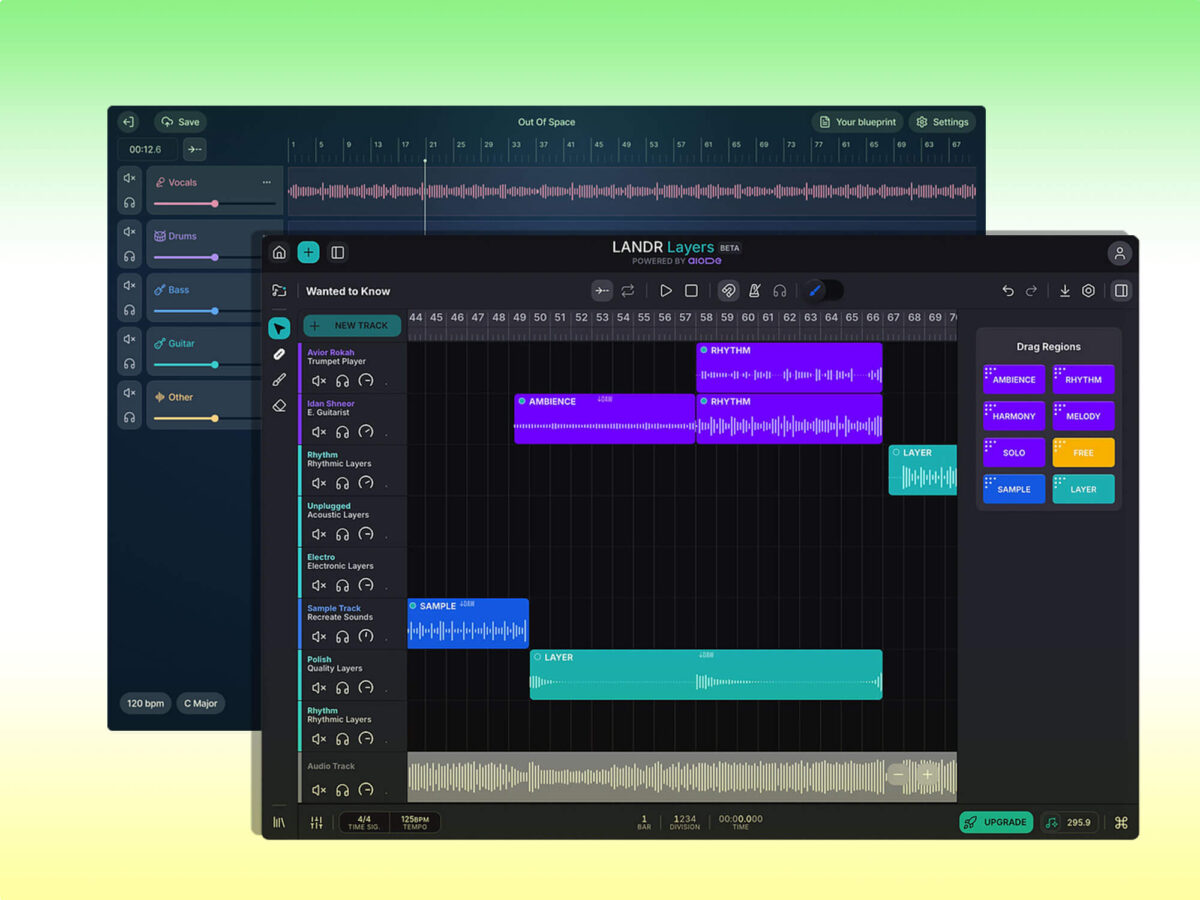
“AI music has no soul.” You’ve heard it a hundred times. But what if the AI was actually trained on real session musicians who opted in and got paid? That’s exactly what LANDR Layers AI stem generator brings to the table — and after digging into its public beta, I think it might be the first AI production tool that doesn’t make me cringe.
What Is LANDR Layers AI Stem Generator? The Missing Link Between MIDI and Samples
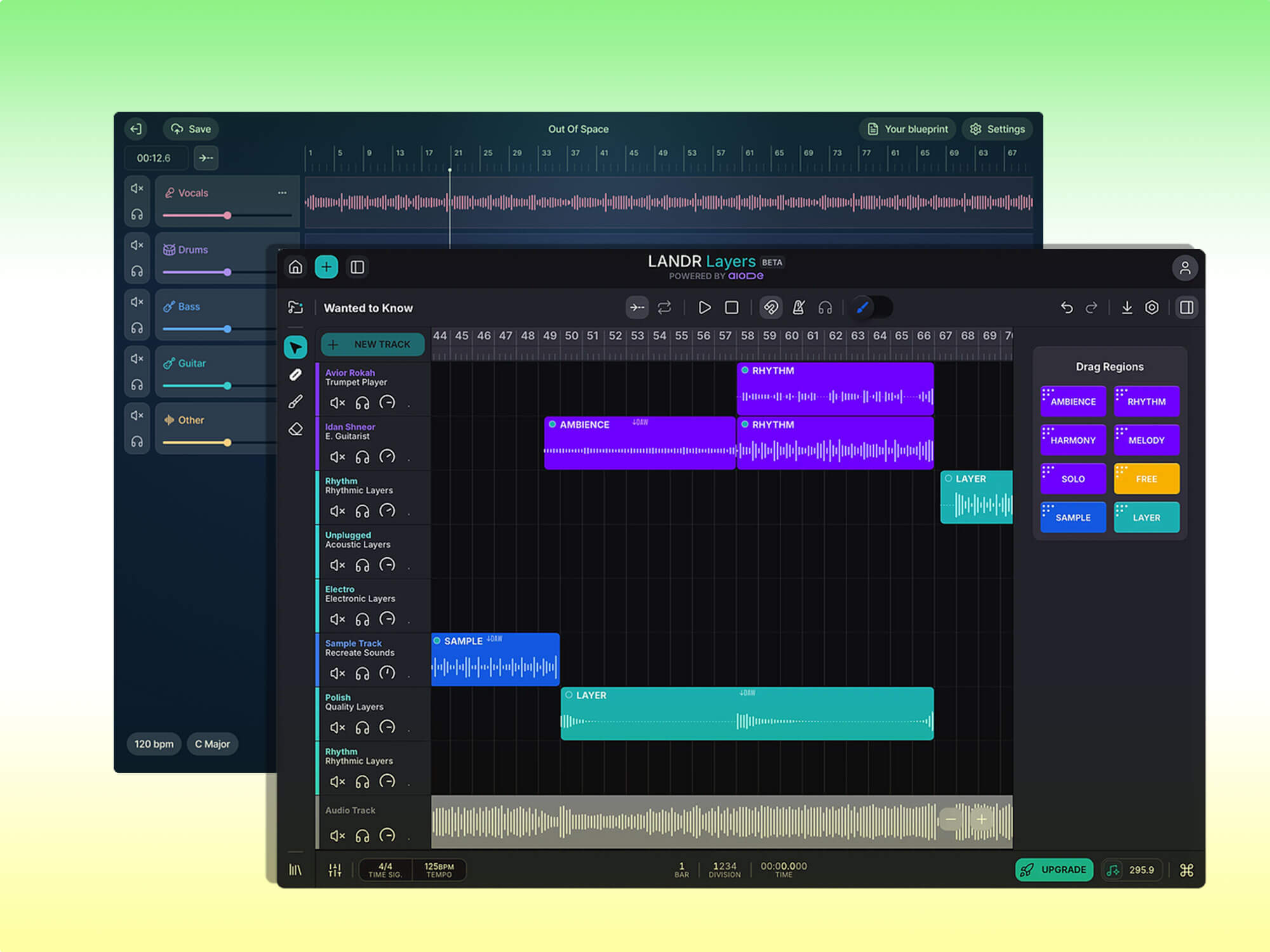
LANDR Layers is an AI-powered instrument stem generator co-developed by LANDR and Aiode. First unveiled at NAMM 2026 in January, it’s now available as a public beta. The core concept is straightforward — it listens to your track, analyzes the harmony, rhythm, and structure, then generates complementary instrument parts that actually fit your music.
But here’s the crucial distinction: unlike Suno or Udio, which generate entire songs from text prompts, Layers positions itself as a co-producer. It doesn’t replace you — it augments what you’ve already created. As industry observers have noted, it occupies “the middle ground between MIDI programming and sample drag-and-drop.” That’s a space that’s been surprisingly empty until now.
Fair Trade AI: Why LANDR Layers’ Ethical Framework Actually Matters
The hottest debate in AI music right now isn’t about quality — it’s about where the training data came from. Suno and Udio are battling copyright lawsuits. Thousands of musicians are discovering their work was scraped without consent. The legal landscape is shifting fast, and producers who use ethically questionable AI tools could find themselves on the wrong side of new regulations.
The LANDR Layers AI stem generator takes a fundamentally different approach. According to Sound On Sound, every AI model in Layers was trained exclusively on recordings from session musicians who opted in and receive recurring compensation. LANDR calls this their “Fair Trade AI” framework — a transparent revenue-sharing model where the musicians whose playing shapes the AI actually benefit from its use.
This matters for two practical reasons. First, legal safety: as AI copyright regulations tighten globally in 2026, using ethically sourced tools protects your productions from future liability. Second, quality: because the models learned from real human performances rather than synthetic data, the nuance, groove, and dynamic range in the output is noticeably more musical.
Key Features: Professional Stems in Under 30 Seconds
As MusicTech reported, Layers is far from a one-click generator. It gives producers granular control over every aspect of the generated stems.
- Track Analysis Engine — Upload your track and Layers automatically detects tempo, key, harmonic progressions, and structural sections
- Multi-Instrument Layers — Generate guitar (lead/rhythm), bass (electric/slap/synth), horn sections, drums, and synthesizers
- Timbre, Dynamics, and Complexity Controls — Fine-tune the tonal character, dynamic range, and performance complexity of each generated stem
- Section-Level Regeneration — Don’t like the chorus horns? Regenerate just that section without touching the rest
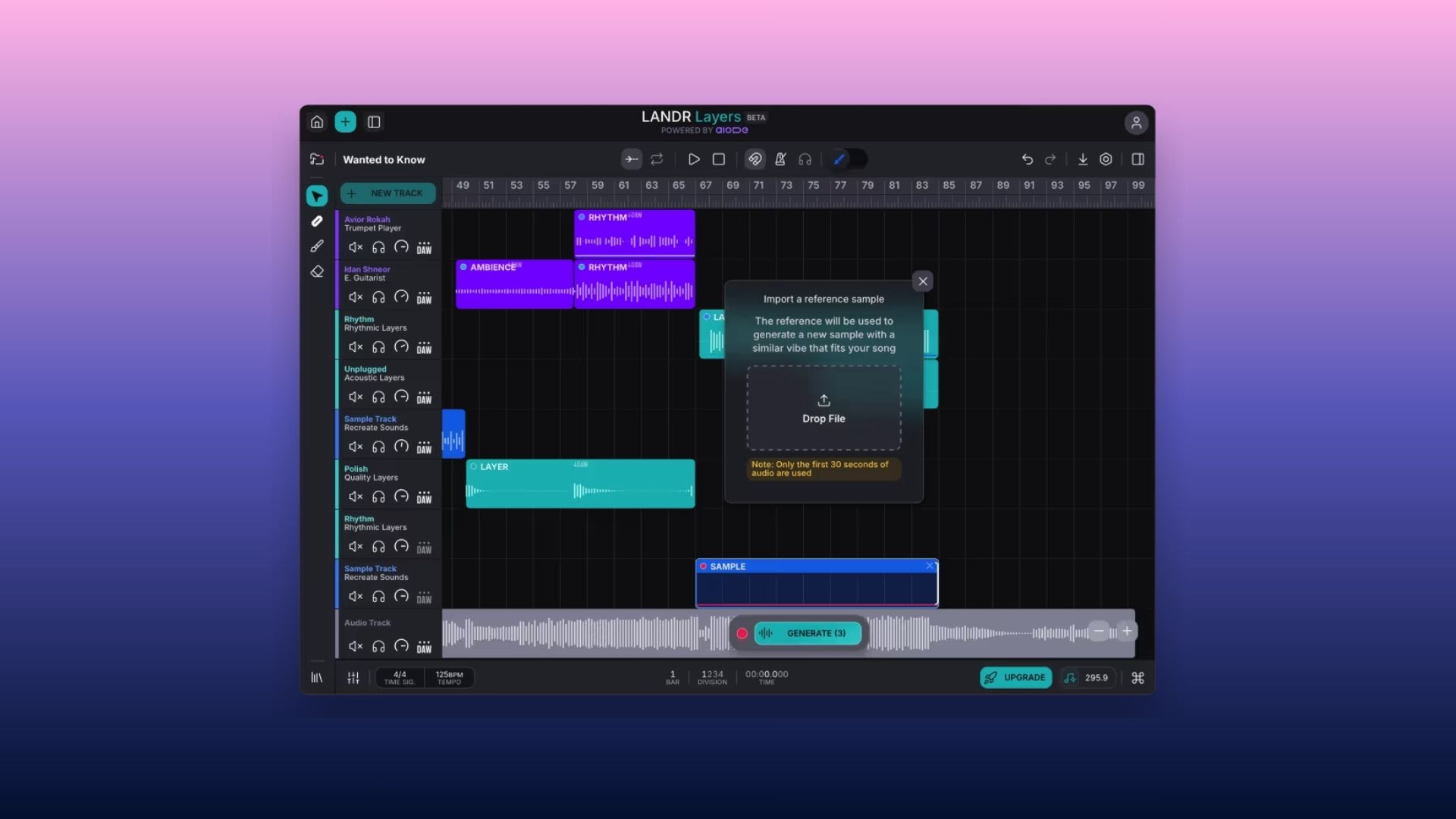
- Sample-to-Stem Conversion — Feed in any audio sample and Layers will match key, tone, and timing to your track context, transforming it into a full stem
- Universal/Classic/Rock Modes — Genre-specific presets for quick starting points
- DAW-Ready Export — 48kHz/24-bit WAV output, available as VST3/AU plugin or standalone application
- Cloud Processing — All heavy computation happens server-side, completing in under 30 seconds regardless of your local hardware
The cloud-based architecture deserves special attention. Because the AI models run on LANDR’s servers, the minimum system requirements are surprisingly modest: macOS 13+ or Windows 10, Intel i5 or AMD Ryzen 5, and just 8GB of RAM. No GPU needed. For laptop producers working in coffee shops or bedrooms, this removes a significant hardware barrier.
Suno and Udio vs LANDR Layers: Same AI, Completely Different Philosophy
The positioning of the LANDR Layers AI stem generator in the market is unique. MusicRadar raised a provocative question about whether AI co-production would leave producers “feeling empty inside.” But Layers’ approach addresses that concern head-on.
Suno and Udio generate complete songs from text prompts. The producer’s involvement is minimal, and copyright ownership remains murky. LANDR Layers adds complementary parts to tracks the producer has already created. The final creative decisions — what stays, what gets tweaked, what gets tossed — always belong to you.
Pricing is competitive too. Layers comes included with a LANDR Studio subscription starting at $8.25/month, which also bundles mastering, distribution, and other production tools. Compare that to hiring a session musician for even a single hour, and the value proposition for indie producers is clear.
Production Workflow: How to Actually Use Layers in Your Sessions
Layers shines brightest not as a replacement for human musicians, but as a tool that eliminates specific bottlenecks in the production process. Here’s where it fits most naturally.
Sketching Phase: You’ve got a beat and a chord progression but you’re stuck. Drop your work-in-progress into Layers, generate 3-4 instrument options, and use them as creative direction finders. If something clicks, record a real performance on top of it.
Demo Stage: Need to present a fuller arrangement to a client or collaborator? Layers can fill in missing instrument parts in minutes, giving your demo a polished feel before committing to expensive studio time. Think of it as a pre-production tool — a way to validate arrangements before booking real session musicians.
Sample-Based Production: For hip-hop and electronic producers, the sample-to-stem conversion is particularly powerful. Feed in a sample, and Layers automatically matches it to your track’s key and timing, outputting a context-aware full stem. No more manual pitch-shifting and time-stretching.
Live Performance Backing: Solo artists who need backing tracks for live shows can generate instrument stems that follow their actual arrangements. This beats using generic backing tracks or MIDI mockups that never quite capture the right feel.
My Take: What 28 Years in Audio Taught Me About This Tool
After nearly three decades in music production, I’ve seen plenty of “revolutionary” tools come and go. Auto-Tune was going to kill singing. Beat Detective was going to kill drummers. Splice was going to kill originality. None of those things happened — but each tool did fundamentally change how we work. I think LANDR Layers falls into that same category.
What catches my attention isn’t the technology itself — it’s the business model. Training AI on consenting, compensated musicians and sharing revenue with them isn’t just ethically sound; it’s a blueprint for how this entire industry should operate. I’ve worked with session musicians my entire career. The idea that their artistry can contribute to AI development while they actually get paid for it? That’s the model worth supporting.
But let me be honest about the limitations. Cloud dependency means no offline use — that’s a dealbreaker for producers who work on planes or in remote locations. And no AI, no matter how well-trained, can replicate the magic that happens when a real session musician says, “Hey, what if we tried it this way?” in the middle of a take. That spontaneous creative energy, the interplay between humans in a room — algorithms can’t touch that. Not yet, anyway.
My verdict: LANDR Layers is at its best when you use it to complement human musicians, not replace them. Use it in the sketching phase to explore ideas quickly. Use it to beef up demos. Use it for pre-production direction. Then, when it matters most, bring in the real players. That hybrid workflow — AI for speed, humans for soul — is the smartest approach to production in 2026.
The Bottom Line: Who Should Use LANDR Layers?
The LANDR Layers AI stem generator isn’t perfect — it’s still in beta, it requires internet access, and it won’t replace the magic of a live session. But it’s heading in the right direction. For indie producers, beatmakers, and singer-songwriters who hit creative walls, having an AI co-producer that generates context-aware stems at $8.25/month is genuinely useful. The ethical training data is the cherry on top — in a 2026 regulatory environment where AI copyright battles are heating up, knowing your tools are legally clean gives you peace of mind that competitors can’t match.
If you’re exploring how to ethically integrate AI into your professional production workflow, or you want to experiment with an AI co-producer that actually respects the musicians it learned from, the public beta is the perfect low-risk entry point.
Need professional mixing, mastering, or Dolby Atmos production? Sean Kim brings 28 years of studio experience to every project.
Get weekly AI, music, and tech trends delivered to your inbox.