Stable Image Ultra Just Got 2.3x Faster: How TensorRT Is Making 4K AI Images a Reality on RTX GPUs
July 14, 2025
Best 4K TVs for Gaming July 2025: HDMI 2.1 and VRR Picks Under $1500
July 14, 2025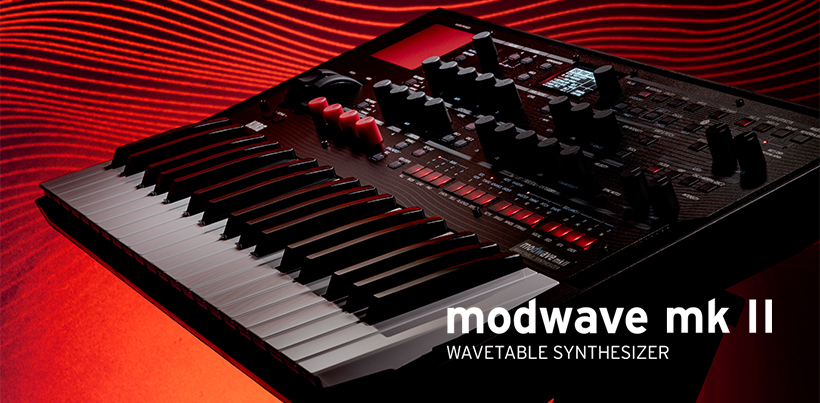
Thirty-two voices was never enough. That was the one complaint that followed the original Korg Modwave through every forum thread, every studio session, and every live rig breakdown. Now the Korg Modwave MkII answers with 60-voice polyphony, a reworked modulation engine, and a red Kaoss Physics pad that looks like it belongs on a spacecraft console. After spending years working with wavetable and granular engines in professional production, I can tell you: this update hits exactly where it needed to.
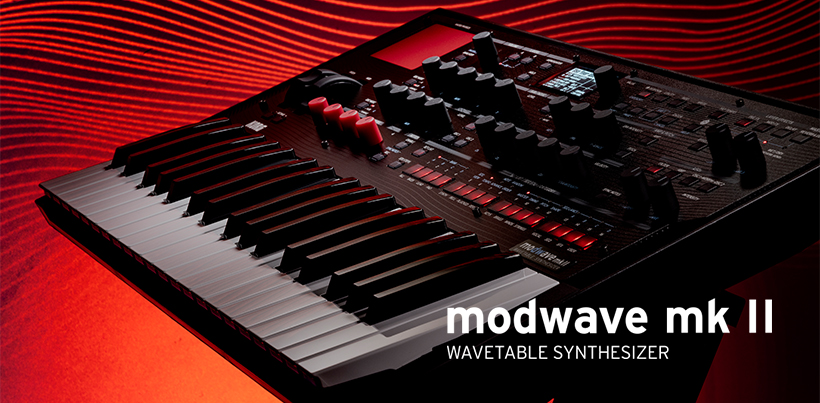
What Changed in the Korg Modwave MkII
The headline upgrade is polyphony. The original Modwave topped out at 32 voices, which could vanish fast when stacking two wavetable layers with granular processing and long release tails. The MkII nearly doubles that to 60 voices, which is a significant leap for a synth in this price range. For context, the Korg Wavestate MkII got the same treatment, suggesting Korg has upgraded the internal DSP across its wave-series line.
Beyond raw voice count, Korg has refined several core systems. The LFOs now support free-running, delayed, and retrigger modes, giving you far more control over how modulation behaves across held notes and sequences. The effects routing has been overhauled with pre/post reverb sends, which is the kind of detail that separates a synth you demo from a synth you actually use in a mix. According to Sound On Sound’s coverage, these routing improvements address the most requested features from the original Modwave user base.
Korg Modwave MkII Sound Engine: Wavetable Meets Granular
The Modwave MkII’s dual-layer architecture remains its defining feature. Each layer can run either a wavetable engine or a granular engine, and you can mix both simultaneously. The wavetable side offers over 200 wavetables with 64 waveforms each, which Korg claims produces more than 230 million wavetable variations. That number sounds like marketing hyperbole until you actually start morphing between tables using the Kaoss Physics pad and realize you’re accessing timbral territory that preset surfing will never reach.
The granular engine lets you import your own samples and shred them into grains, controlling position, size, density, and pitch independently. Layer a granular texture underneath a wavetable lead, apply Motion Sequencing to both, and you have the kind of evolving sound design that would take a modular rig and three hours of patching. In a production context, this means you can build complete pad textures, evolving soundscapes, and rhythmic patterns within a single patch.
Kaoss Physics: The Controller That Changes Everything
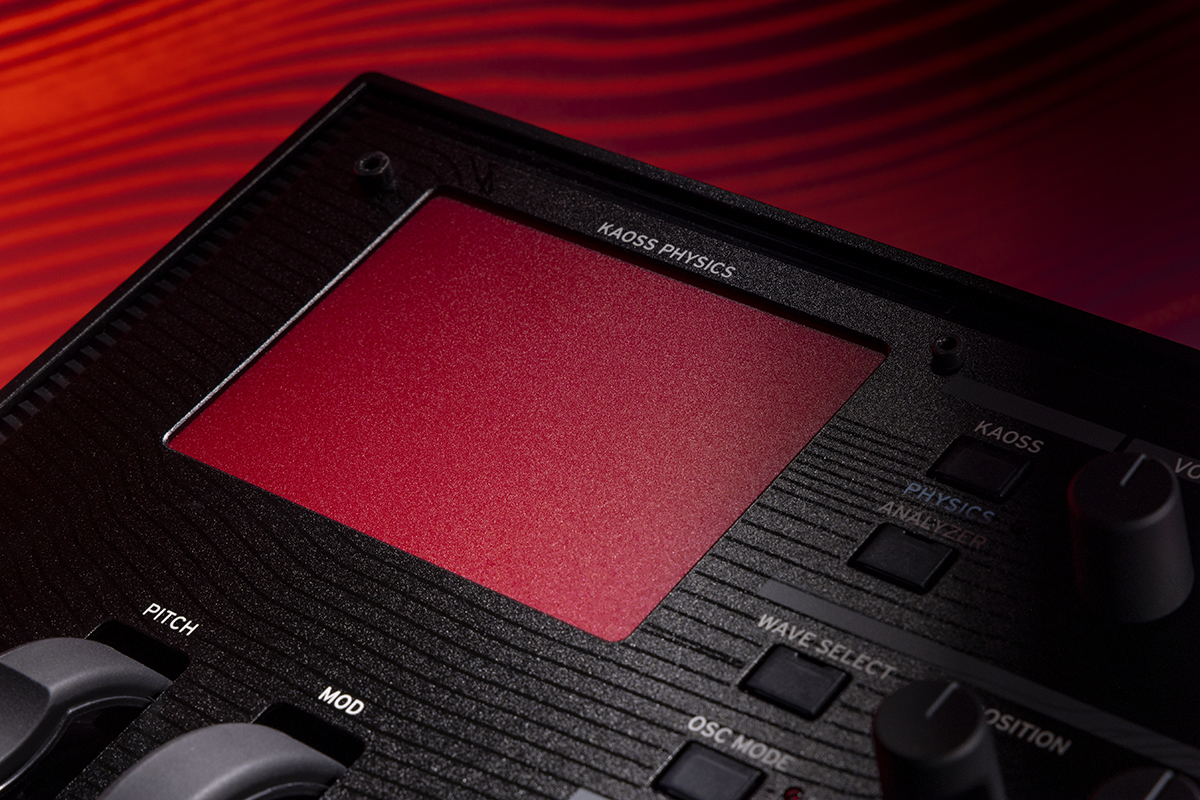
The Kaoss Physics X/Y pad is where the Modwave series separates itself from every other wavetable synth on the market. Instead of a standard X/Y controller that stops when your finger stops, Kaoss Physics applies a virtual physics model. Flick your finger and the ball bounces, rolls, and eventually settles based on simulated friction, gravity, and boundary conditions. Each axis maps to any parameter you choose.
On the MkII, the pad now features a red illuminated surface that provides visual feedback on the ball’s position. It sounds cosmetic, but in a dim studio or on a dark stage, seeing exactly where your modulation sits is genuinely useful. As MusicRadar noted, the red pad also signals this as a distinct generational update rather than a firmware revision.
Having worked with X/Y controllers across dozens of hardware synths over 28 years, I can say that Kaoss Physics remains one of the most expressive real-time controllers available. The physics model introduces an element of controlled randomness that is almost impossible to replicate with standard LFOs or step sequencers. For live performance, it’s a standout feature. For studio work, it means you can generate modulation curves that feel organic and unrepeatable, which is exactly what you want for cinematic sound design and evolving textures.
Motion Sequencing 2.0: Modulation as a Compositional Tool
Motion Sequencing was already the Modwave’s secret weapon. It lets you record parameter changes as lanes within a sequence, so filter sweeps, wavetable positions, effect levels, and dozens of other parameters move in lockstep with your playing. Version 2.0 on the MkII expands this with more lanes, improved smoothing options, and tighter integration with the enhanced LFOs.
Think of Motion Sequencing as the bridge between a synthesizer and a generative music system. You can set up a 4-bar sequence where the wavetable position morphs on lane 1, the granular density shifts on lane 2, the filter cutoff follows lane 3, and the reverb send tracks lane 4. Hit a single key and the entire texture evolves over time without touching another control. In electronic music production, this translates directly to tracks that breathe and shift rather than sitting static.
The practical impact in a studio setting is substantial. Where you might normally automate these parameters in your DAW over 20 minutes of tweaking, Motion Sequencing lets you design the movement at the source. The sound comes into your DAW already alive, already moving, already interesting. That workflow efficiency alone justifies the upgrade for anyone doing sound design, film scoring, or electronic production.
Full Specifications and Build Quality
According to Korg’s official specifications page, the Modwave MkII features a 37-key keyboard with velocity sensitivity, balanced stereo outputs (1/4″ TRS), a headphone output, DIN MIDI in/out, and USB MIDI (class-compliant). Class-compliant USB means no driver installation on macOS, Windows, or iOS, which makes it immediately usable with any DAW, iPad setup, or modular hybrid rig.
The 12 stereo filter types deserve special attention. You get emulations of the legendary MS-20 filter, the creamy Polysix filter, and a versatile Multi Filter mode. Each filter can be placed pre- or post-effects in the signal chain, giving you routing flexibility that many synths twice the price don’t offer. For sound designers who rely on filter character as a core part of their palette, this selection covers everything from aggressive analog-style resonance to smooth digital filtering.
The modulation matrix is generous: 4 envelopes and 5 LFOs, all routable to virtually any parameter. Combined with Motion Sequencing 2.0 and Kaoss Physics, the total modulation capacity is enormous. You could spend months exploring patches without exhausting the possibilities, and that’s before loading custom wavetables or granular samples.
Software Integration: Modwave Native Plugin
One aspect that often gets overlooked is that Korg offers the Modwave as a native VST/AU/AAX plugin. This means every patch you create on hardware can be opened, edited, and played in your DAW session without the physical unit connected. For producers who work across studio and laptop setups, this continuity is invaluable. Design a patch on hardware during a creative session, then recall it in the DAW for final production without any MIDI-based workarounds.
The plugin also serves as a sound design tool on its own, giving laptop producers access to the Modwave engine without purchasing the hardware first. It’s a smart strategy from Korg that expands the user base while giving hardware owners a genuine reason to stay in the ecosystem.
Who Should Consider the Modwave MkII
The Modwave MkII isn’t a synth for everyone, and that’s a good thing. If you need a straightforward subtractive polysynth for bread-and-butter pads and leads, there are simpler and cheaper options. The Modwave MkII is built for sound designers, electronic producers, film composers, and anyone who treats timbre as a primary compositional element.
At the reported UK price of around 699 GBP, it sits in a competitive bracket against synths like the ASM Hydrasynth Explorer, the Novation Summit (at a higher tier), and Korg’s own Wavestate MkII. The Modwave MkII’s unique advantage is the combination of wavetable, granular, Kaoss Physics, and Motion Sequencing in one box. No other hardware synth at this price offers that particular intersection of engines and controllers.
For existing Modwave owners, the upgrade decision comes down to polyphony needs and workflow preferences. If you’ve been running into voice-stealing on complex patches, 60 voices will be transformative. If the improved LFO modes and effects routing address pain points in your current setup, it’s worth the jump. If you’re happy with 32 voices and your current routing, the original still holds up as an excellent instrument.
Final Verdict: A Targeted Upgrade That Delivers
The Korg Modwave MkII is not a revolution. It’s a focused refinement of an already excellent synthesizer that addresses the specific limitations users identified over the past few years. Doubled polyphony, improved modulation options, better effects routing, and the visual refresh of the Kaoss pad add up to a meaningfully better instrument. The core sound engine, which was already one of the most creative on the market, remains intact and continues to reward deep exploration.
In a studio context, integrating the Modwave MkII alongside a traditional analog polysynth and a sample-based workstation gives you a three-dimensional sonic palette that covers virtually any production scenario. The wavetable and granular engines handle the territories that analog and sample playback can’t reach, while Motion Sequencing and Kaoss Physics ensure those textures stay dynamic and expressive. If your creative process depends on discovering sounds you’ve never heard before, the Modwave MkII remains one of the best tools for that pursuit.
Looking to integrate hardware synths like the Modwave MkII into your production workflow, or need professional mixing and mastering for your electronic tracks?
Get weekly AI, music, and tech trends delivered to your inbox.