ASUS ProArt PA32UCXR Review: Why This $2,999 Mini-LED Monitor Outperforms Displays Twice Its Price
October 24, 2025
Moog Matriarch Update: Mother Global Settings Editor Unlocks Hidden Paraphonic Features for $49
October 27, 2025
“80% of customer inquiries resolved by AI” — Zendesk says it, Ada says it, and Intercom implies it. But when you actually run standardized tests across 2,000+ queries, the results tell a very different story. Here’s how Intercom Fin 2 vs Zendesk AI vs Ada actually stack up in October 2025, with real numbers instead of marketing promises.
Why This Comparison Matters Right Now
The AI customer service market hit an inflection point in 2025. With Meta Connect and Adobe MAX happening this October, agentic AI capabilities have evolved far beyond simple chatbot territory. Zendesk crossed $200 million in AI Annual Recurring Revenue. Intercom shipped Fin 2 powered by Anthropic’s Claude with 99.9% accuracy. Ada doubled down on enterprise-grade autonomous resolution.
The problem? All three platforms claim to be the best. So I dug into the actual data — resolution rates, pricing structures, integration capabilities, and real-world deployment scenarios — to help you make an informed decision.
Intercom Fin 2: The Accuracy Revolution Powered by Anthropic Claude
When Intercom launched Fin 2 in late 2024, they made a bold choice: ditching GPT models in favor of Anthropic’s Claude LLM. The reasoning? According to Intercom’s engineering team, Claude delivers “better accuracy and nuance in customer service contexts” than competing models.
Key Performance Metrics
- Average resolution rate: 51% (fully autonomous, no human intervention)
- Accuracy: 99.9% — the highest in the industry
- Languages: 45 languages with real-time translation
- Channels: Chat, email, WhatsApp, social media — true omnichannel
Fin 2 operates on four core capabilities: Knowledge (learns from internal content, websites, PDFs, databases), Actions (retrieves and updates customer data, performs account changes), Insights (real-time analytics on satisfaction and sentiment), and human team collaboration. The standout feature is its ability to combine information from multiple content sources to create tailored answers — something that gave it a massive edge in head-to-head testing.
In standardized testing across 2,000+ queries, Fin provided better answers than Zendesk’s AI agent in 80% of cases. For multi-source questions requiring information synthesis, the gap widened further: Fin achieved a 96% answer rate compared to Zendesk’s 78%.
Pricing follows a per-resolution model at $0.99 per resolved conversation, plus platform fees starting at $74/seat/month. Cost-effective for moderate volumes, but watch out for scaling costs.
Zendesk AI: GPT-5 Powered Scale and the Five-Agent Architecture
Zendesk unveiled its Resolution Platform in October 2025 with an ambitious target: 80% autonomous resolution. As TechCrunch reported, the new AI agent aims to handle the vast majority of support issues without human intervention.
Key Performance Metrics
- Target resolution rate: 80% (autonomous)
- AI engine: OpenAI GPT-5 + Model Context Protocol (MCP) integration
- Customer base: ~20,000 companies using Zendesk AI
- AI ARR: Projected $200 million in 2025
Zendesk’s differentiator is its five-agent architecture: an autonomous support agent (handling 80%), a co-pilot agent (assisting humans with the remaining 20%), an admin-layer agent, a voice-based agent, and an analytics agent. The integration of GPT-5 and Model Context Protocol enables sophisticated multi-step problem resolution with instant data access.
With nearly 20,000 customers already using Zendesk AI, the ecosystem advantage is real. If you’re already on Zendesk Suite, the migration cost to add AI capabilities is minimal compared to switching platforms entirely.
Pricing is seat-based subscription: Suite Team at $55/agent/month, Suite Growth at $89/agent/month, Suite Professional at $115/agent/month (all billed annually). AI Agents Advanced is available as a separate add-on.
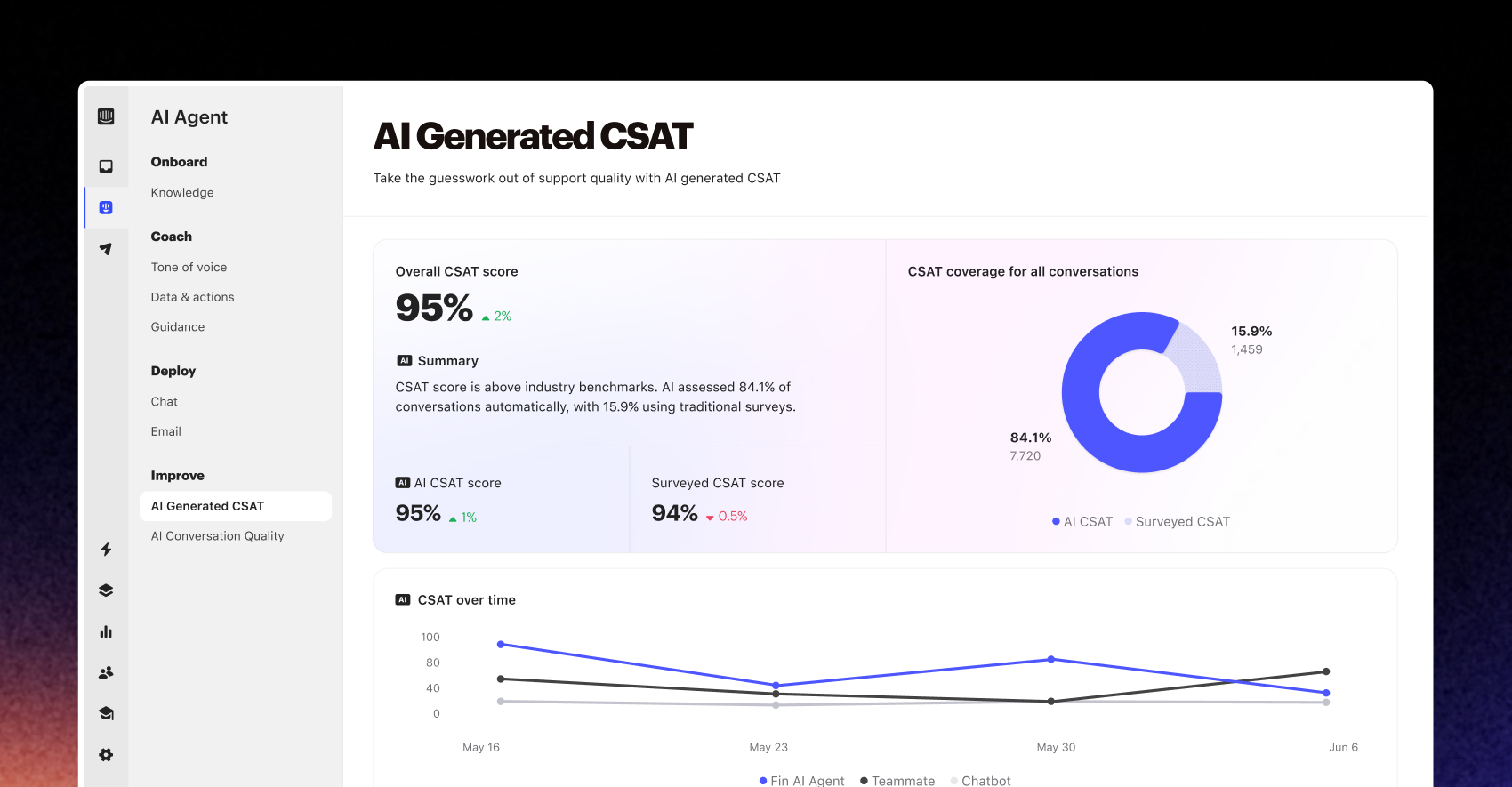
Ada: The Enterprise-Grade Autonomous AI Dark Horse
Founded in Toronto in 2016, Ada positions itself as the “AI-first customer service platform” — and that distinction matters. While Intercom and Zendesk added AI to existing helpdesk products, Ada was built from the ground up for autonomous AI resolution, serving e-commerce, financial services, healthcare, and technology sectors.
Key Performance Metrics
- Resolution rate: 80%+ (company-reported)
- Languages: 50+ with instant translation
- Channels: Messaging, voice, email
- Differentiator: Reasoning-based resolution, enterprise compliance controls
Ada’s strength lies in full autonomy with enterprise-grade control. The platform offers rapid deployment with minimal engineering, and leads the pack in compliance and agent behavior governance — critical for regulated industries like fintech and healthcare. The reasoning engine uses multiple AI models to handle complex queries that go beyond pattern matching.
The catch? Opaque pricing. Ada charges $1 to $3.50 per resolution, with custom quotes required. No public pricing page means you’re walking into negotiations blind. For high-volume operations, this per-resolution model can lead to unpredictable costs.
Head-to-Head Comparison: The Numbers That Matter
Let’s put Intercom Fin 2 vs Zendesk AI vs Ada side by side on the metrics that actually drive purchasing decisions.
Resolution Rate Reality Check
- Intercom Fin 2: 51% resolution / 99.9% accuracy — conservative but verified
- Zendesk AI: 80% target resolution — ambitious but limited real-world data
- Ada: 80%+ resolution — enterprise-reported, variance by deployment
Here’s the critical nuance: Intercom’s 51% is a verified average across all deployments. Zendesk’s and Ada’s 80% figures represent optimal-case targets. When accuracy matters more than volume — think legal, finance, or healthcare — Fin 2’s 99.9% accuracy rate is unmatched.
Monthly Cost Comparison (1,000 inquiries/month scenario)
- Intercom: ~$510/month resolution cost (51% × 1,000 × $0.99) + seat fees
- Zendesk: $55–$115/seat/month (agent-count based, AI add-on separate)
- Ada: $1,000–$3,500/month ($1–$3.50/resolution, custom quote)
For small teams (under 5 agents), Zendesk’s seat-based model offers the most predictable costs. For automation-heavy operations, Intercom’s per-resolution pricing becomes more efficient at scale. Ada works best at enterprise scale where negotiating power brings down per-resolution rates.
Which Platform Should You Choose: Scenario-Based Recommendations
All three platforms are powerful, but the optimal choice depends on your specific situation.
Choose Intercom Fin 2 When:
- Accuracy is non-negotiable (B2B SaaS, legal tech, financial services)
- You need sales and support on a single platform
- Claude’s nuanced responses matter for your industry
- Multilingual support is a core requirement for global operations
Choose Zendesk AI When:
- You’re already on Zendesk Suite (minimize migration costs)
- You run a large support team (20+ agents) that needs a co-pilot
- Voice + text + analytics in one ecosystem is essential
- GPT-5’s latest reasoning capabilities align with your complexity needs
Choose Ada When:
- Full autonomy is the goal — minimize human agent dependency
- You’re in a heavily regulated industry (fintech, healthcare)
- Rapid deployment with minimal engineering resources is critical
- Enterprise-scale automation where you can negotiate per-resolution pricing
The Bottom Line: Who Actually Wins in 2025?
There’s no single winner in the Intercom Fin 2 vs Zendesk AI vs Ada comparison — each platform has carved out a distinct competitive advantage. Intercom wins on accuracy and quality. Zendesk wins on scale and ecosystem. Ada wins on autonomy and compliance.
The smartest move isn’t chasing the highest resolution rate number. It’s choosing the architecture that best fits your customer journey and team structure. Take advantage of free trials from all three platforms before committing. The AI customer service landscape continues to evolve rapidly through the second half of 2025, and the AI assistant technologies showcased at Meta Connect this October could introduce yet another variable into this equation.
Need help building an AI-powered customer service automation pipeline or choosing the right platform for your business?
Get weekly AI, music, and tech trends delivered to your inbox.