Unreal Engine 5.7 PCG Framework at GDC 2026: Build Massive Procedural Worlds 2x Faster with Zero Code
March 31, 2026
AI Music Licensing 2026: How $500M Copyright Lawsuits Became 7 Industry-Changing Deals
March 31, 2026
A PassMark single-core score of 5,009. The highest ever recorded for an x86 mobile processor. When Intel’s Core Ultra 9 290HX Plus hit that number, it didn’t just edge ahead of AMD — it rewrote the rules for what laptop CPUs can do. But AMD’s Ryzen 9 8940HX has a 64MB L3 cache that refuses to be ignored. This Intel Core Ultra 9 290HX Plus vs AMD Ryzen 9 8940HX battle deserves a deeper look than benchmark charts alone can provide.
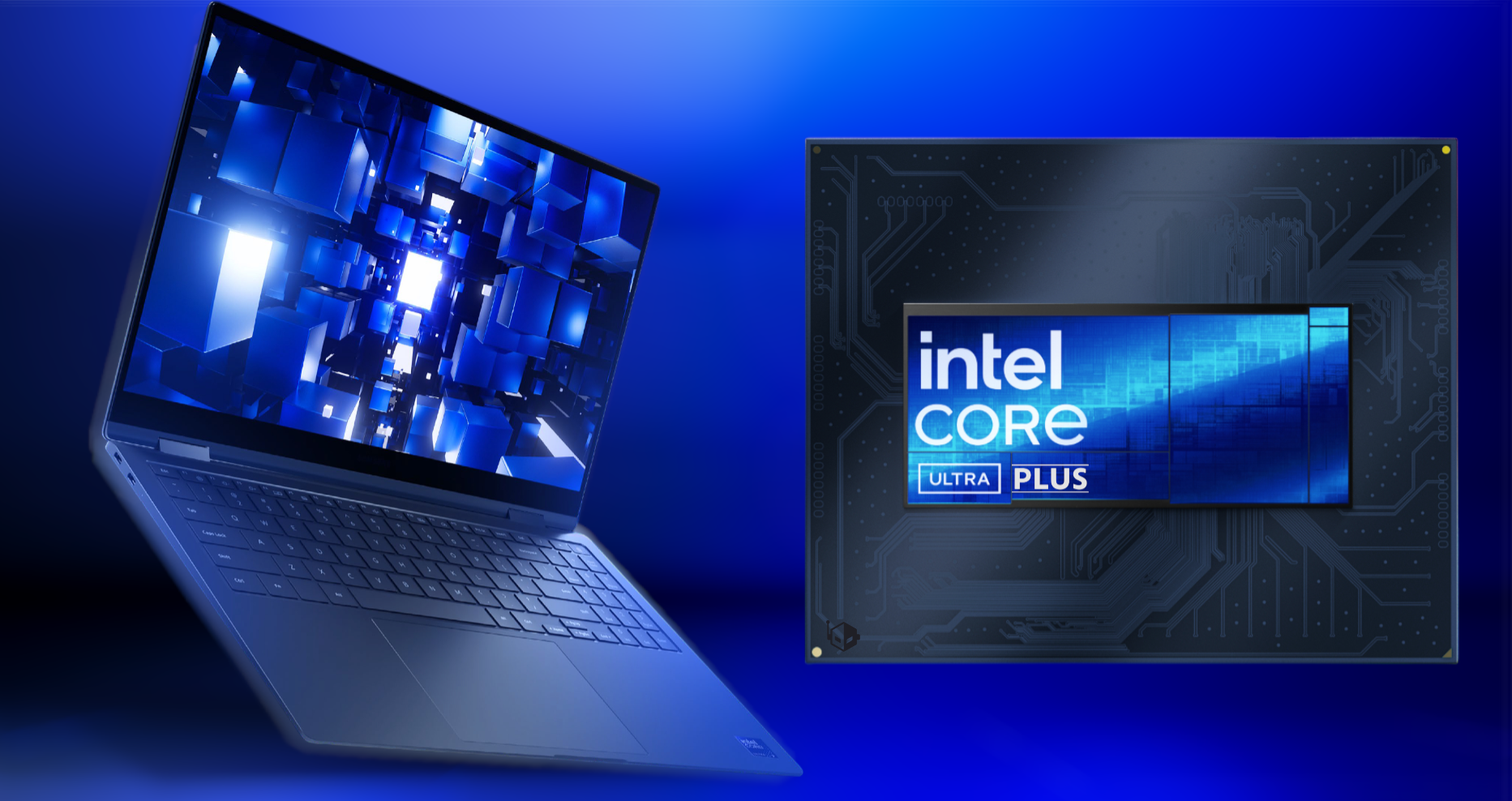
What makes this comparison uniquely valuable is timing. ASUS just launched the TUF Gaming F16 (Intel) and A16 (AMD) with identical chassis designs, identical RTX 5070 GPUs, and identical display options. Same cooling, same build, different brains. This is the closest we’ll get to a pure CPU isolation test in real-world laptops.
Intel Core Ultra 9 290HX Plus vs AMD Ryzen 9 8940HX: Spec Breakdown
Intel’s Core Ultra 9 290HX Plus runs on the Arrow Lake Refresh architecture, manufactured on Intel’s 3nm process. It packs 24 cores in a hybrid configuration — 8 Performance cores and 16 Efficient cores — with 24 threads total. Boost clock reaches 5.5 GHz, total cache sits at 76MB (40MB L2 + 36MB L3), and TDP is rated at 55W. The integrated NPU delivers 11 TOPS for on-device AI workloads, and you get Intel Arc (Xe2) integrated graphics.
AMD’s Ryzen 9 8940HX takes a different approach entirely. Built on TSMC’s proven 5nm process with the Zen 4 Dragon Range Refresh architecture, it offers 16 cores and 32 threads — all full-fat cores, no hybrid design. Boost clock reaches 5.3 GHz, total cache comes to 80MB (16MB L2 + 64MB L3), with the same 55W TDP. There’s no dedicated NPU in this Dragon Range SKU, and the integrated Radeon 610M (RDNA 2) GPU is modest by comparison.
The architectural philosophies couldn’t be more different. Intel bets on a hybrid core strategy with cutting-edge process technology and AI acceleration. AMD doubles down on raw thread count and massive cache pools on a mature, battle-tested platform. Both approaches have legitimate merit — the question is which one matters more for your workflow.
Benchmark Performance: Intel Core Ultra 9 290HX Plus vs AMD Ryzen 9 8940HX by the Numbers
In single-core performance, Intel dominates convincingly. The 290HX Plus scores 5,009 in PassMark single-thread — the highest ever for a mobile x86 chip. That’s 7.5% faster than its predecessor, the 285HX, and it nearly matches the desktop Core Ultra 9 285K. In Geekbench 6 single-core, Intel posts 3,153 versus AMD’s approximately 2,735, a roughly 15% advantage.
Multi-core results tell an even more interesting story. PassMark multi-core: Intel 66,203 vs AMD 55,745 — a 19% gap in Intel’s favor. Geekbench 6 multi-core: Intel 21,720 vs AMD 13,522. Despite having only 24 threads to AMD’s 32, Intel’s hybrid architecture delivers superior multi-threaded throughput in these synthetic benchmarks. Tom’s Hardware confirmed the 290HX Plus beats even AMD’s Ryzen 9 9955HX3D by 6.2% in multi-core.
In real-world gaming, Intel claims an 8% improvement over the 285HX across a 32-game average at 1080p High settings. Single-core performance directly translates to frame rates in most game engines, giving Intel a measurable edge in the majority of titles.
But here’s where AMD fights back. That 64MB L3 cache — 77% larger than Intel’s 36MB — creates a meaningful advantage in cache-sensitive workloads. Open-world games with large asset pools, physics-heavy simulations, and scenarios where data locality matters can see AMD’s cache advantage narrow or even reverse the benchmark gap. It’s the same principle that made AMD’s 3D V-Cache desktop chips legendary for gaming.
For Creators: AI-Powered Workflows vs Raw Rendering Muscle
The creator divide between these two CPUs goes beyond raw speed — it’s about what kind of creator you are in 2026.
Intel’s killer differentiator is the 11 TOPS NPU. In the current software landscape, Adobe Premiere Pro’s AI-powered scene detection, DaVinci Resolve’s AI noise reduction, real-time AI upscaling, and AI-assisted audio processing tools are increasingly leveraging dedicated neural processing units. If your creative workflow involves video editing with AI effects, image generation, or AI-based audio cleanup, the Intel Core Ultra 9 290HX Plus gives you dedicated silicon for those tasks without taxing your CPU or GPU.
AMD’s Ryzen 9 8940HX counters with 32 threads of raw parallel compute power. Blender rendering, Cinema 4D, After Effects multi-frame rendering — any workload that can saturate thread count benefits from AMD’s straightforward all-core design. However, the benchmark data shows Intel’s hybrid design still outperforms in actual multi-threaded benchmarks, which tempers AMD’s theoretical thread-count advantage.
For music producers specifically, DAWs like Ableton Live, Pro Tools, and Logic Pro remain heavily dependent on single-core performance for real-time plugin processing, virtual instrument loading, and low-latency monitoring. Intel’s 15% single-core advantage translates directly to more plugins, more virtual instruments, and lower buffer sizes before audio dropouts — and that’s a difference you can hear.

ASUS TUF Gaming F16 vs A16: The Perfect Controlled Comparison
ASUS has inadvertently created the ideal testing ground for this CPU battle. According to ASUS’s official press release, both the TUF Gaming F16 (Intel 290HX Plus) and A16 (AMD 8940HX) share the same RTX 5070 GPU, the same display options — 2.5K OLED at 165Hz or 2.5K IPS at 300Hz — and virtually identical thermal designs.
With both CPUs sharing a 55W TDP in the same chassis, thermal behavior becomes a meaningful comparison point. Intel’s 3nm process should theoretically deliver better power efficiency, but the hybrid core scheduler adds overhead. AMD’s 5nm Zen 4 platform has had years of optimization, delivering predictable and well-understood thermal characteristics. Digital Trends noted that Intel emphasizes single-thread performance and AI NPU capabilities, while AMD leans into multi-thread raw power and cache depth.
For gamers considering these specific laptops, here’s the practical truth: with an RTX 5070 handling the graphics workload, the GPU will be the bottleneck in most gaming scenarios at 1440p and above. The CPU difference only becomes noticeable in CPU-bound scenarios — esports titles at 1080p with high refresh rates, or heavily modded games with CPU-intensive physics. For the vast majority of gaming use cases, the real-world frame rate difference between these two CPUs will fall within 5%.
My Take: What 28 Years in Audio Taught Me About CPU Choices
After 28 years in music production and audio engineering, I’ve learned that the right hardware choice always comes down to one question: how does this affect what I do every single day? Not benchmark scores. Not spec sheet bragging rights. Daily workflow impact.
In my studio workflow, running 100+ track sessions with real-time plugin chains, the bottleneck is always single-core performance and memory latency. Intel’s PassMark single-core score of 5,009 on mobile is unprecedented, and that translates directly to fewer audio dropouts, more simultaneous plugins, and lower buffer settings. For DAW-heavy production work, the Intel Core Ultra 9 290HX Plus is the clear winner on paper.
But I can’t dismiss AMD’s 64MB L3 cache either. When loading massive orchestral templates — think Kontakt libraries with hundreds of articulations, or Spitfire Audio’s full symphonic collections — that enormous cache reduces RAM access frequency, which directly lowers latency. If your work involves large sample libraries, AMD’s cache architecture offers a tangible benefit that synthetic benchmarks don’t fully capture.
Looking at the 2026 landscape, the trajectory is clear: AI-powered tools are becoming integral to creative workflows. I use AI noise reduction, AI-assisted mastering, and stem separation daily now. Intel’s integrated NPU gives these tools dedicated hardware acceleration, and as software support grows over the next 2-3 years, that NPU will become increasingly valuable. If I were buying a laptop today for the next 3-4 years of production work, the NPU tips the scale toward Intel — not for what it does today, but for what it’ll unlock tomorrow.
The Verdict: Who Should Buy Which CPU
After analyzing every angle of the Intel Core Ultra 9 290HX Plus vs AMD Ryzen 9 8940HX matchup, the answer depends entirely on your use case.
Choose Intel Core Ultra 9 290HX Plus if: You prioritize single-core speed for gaming and DAW work, you’re investing in AI-powered creative tools, you want the newest architecture with an integrated NPU, or you simply want the fastest mobile CPU by the benchmarks. Intel leads in single-core by 15%, multi-core by 19%, and brings AI hardware acceleration that AMD simply doesn’t offer in this SKU.
Choose AMD Ryzen 9 8940HX if: Your workflow maxes out thread count (3D rendering, heavy parallel workloads), you benefit from large L3 cache (simulation, open-world gaming), you value proven platform stability over bleeding-edge architecture, or you’re looking for the best price-to-performance ratio. Zen 4’s maturity and that 64MB cache are proven assets.
Either way, the 2026 ASUS TUF Gaming lineup delivers remarkable value with RTX 5070 graphics and 2.5K OLED displays. The CPU is the variable — and the right answer lives in your daily workflow, not in a benchmark chart.
Need help choosing the right hardware for your creative workflow, or looking for tech consulting on studio optimization?
Get weekly AI, music, and tech trends delivered to your inbox.