MacBook Air M5 Review: 31% GPU Boost, Benchmark Deep Dive, and the Real Upgrade Story (2026)
March 23, 2026
Nuendo 15 Launches March 25: Folder Group Tracks, Analyzer Track, and 5 Game-Changing Features for Post Engineers
March 24, 2026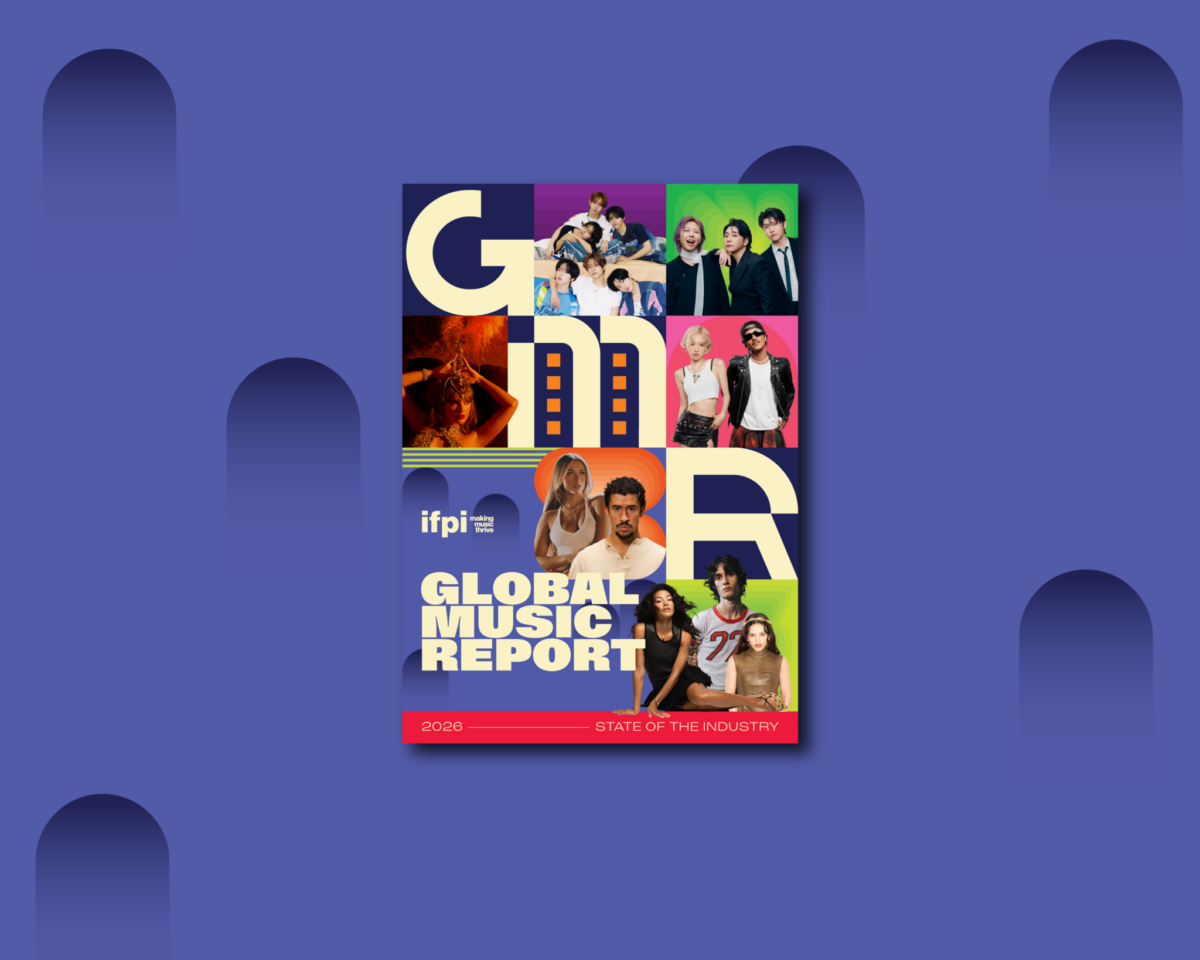
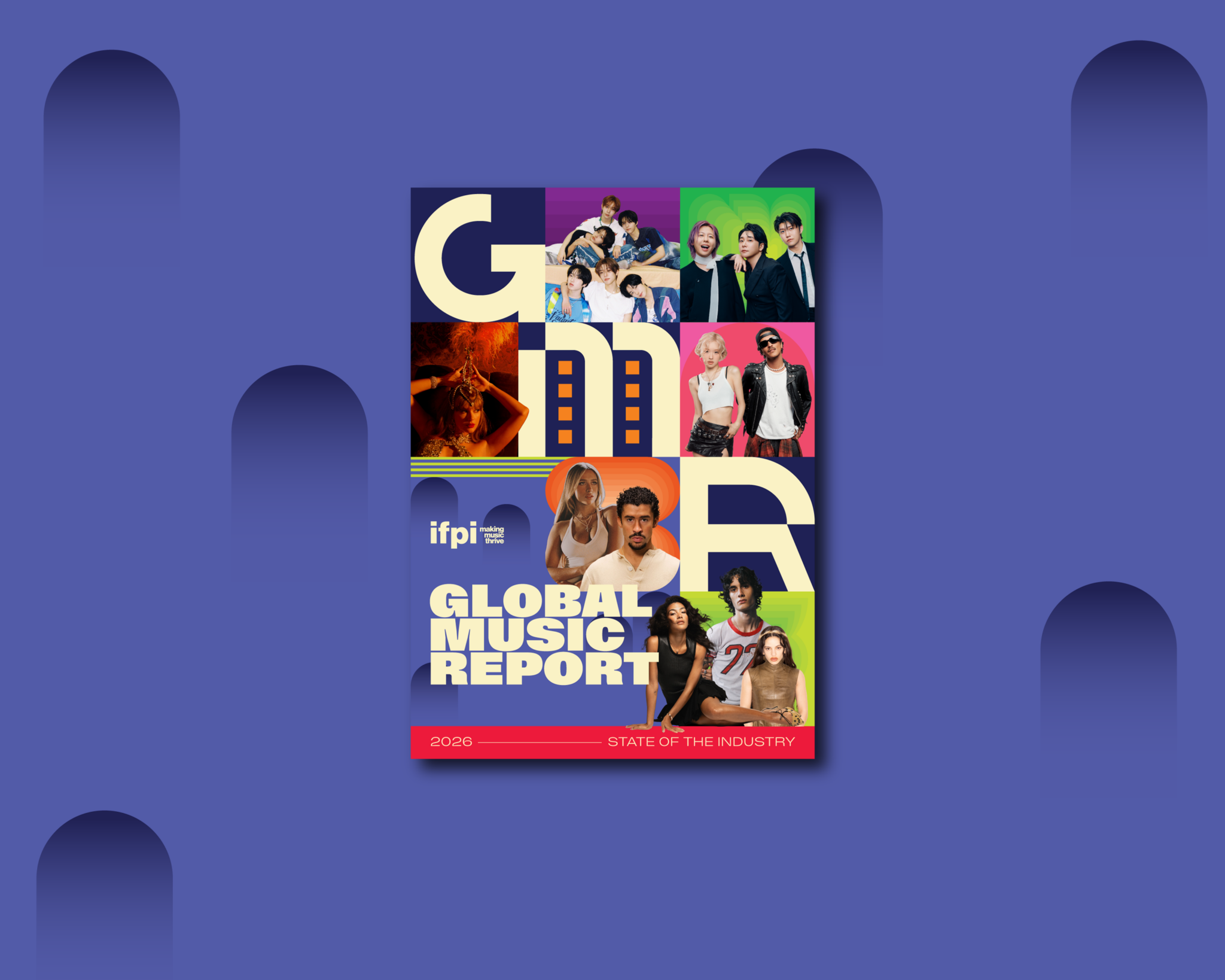
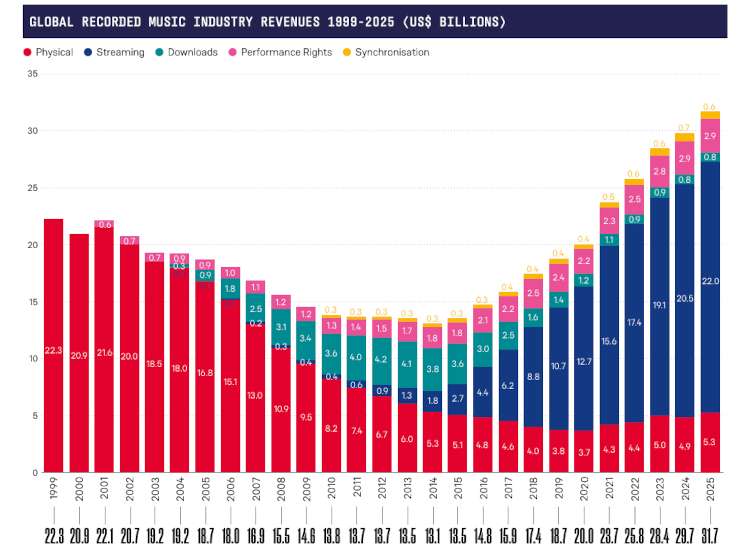
$31.7 billion. That is how much the global recorded music industry generated in 2025 — and it is not just a number. Released on March 18, the IFPI Global Music Report 2026 reveals an industry that has not only surpassed the $30 billion mark for the first time in history, but has done so for the eleventh consecutive year of growth. With 837 million paid streaming subscribers, vinyl posting its 19th straight year of gains, and every single global region showing growth, the music business is operating at a scale and diversity of revenue that would have been unthinkable a decade ago.
IFPI Global Music Report 2026: The Numbers That Matter
The IFPI’s official report paints a comprehensive picture of an industry firing on multiple cylinders. Global recorded music revenues reached $31.7 billion in 2025, representing a 6.4% year-over-year increase — a notable acceleration from the 4.7% growth rate posted in 2024.
Here is how the revenue breaks down by format:
- Paid subscription streaming: Up 8.8% YoY, accounting for 52.4% of total global revenue. 837 million paid subscribers worldwide.
- Total streaming (including ad-supported): Surpassed $22 billion for the first time, representing 69.6% of all recorded music income.
- Physical formats: Grew 8.0% YoY, with vinyl leading at 13.7% growth — its 19th consecutive year of expansion.
- Performance rights: $2.9 billion, up 0.3% (fifth consecutive year of growth).
- Synchronization: $641 million, down 2.0% (first decline after four years of growth).
- Permanent downloads: Approximately $800 million, down 5% (continued structural decline).
As someone who has spent 28 years in the music and audio industry, what strikes me most about these numbers is not the size — it is the balance. Yes, streaming dominates at nearly 70%, but the fact that physical formats, performance rights, and sync all remain meaningful revenue streams speaks to an industry that has finally built a diversified foundation. That was not the case even five years ago.
837 Million Paid Subscribers: What This Scale Really Means
Let that number sink in for a moment. 837 million people are now paying for music streaming subscriptions globally. Paid subscription streaming alone accounts for more than half of all global recorded music revenue at 52.4%, and when you add advertising-supported streaming, the combined total crosses $22 billion — nearly 70% of everything the industry earns.
The 8.8% growth rate is particularly significant because it demonstrates that streaming has not hit saturation. Despite already massive subscriber numbers, the platform ecosystem continues to expand. Billboard’s analysis highlights that much of this growth is being driven by emerging markets in Latin America and Asia, where smartphone penetration and affordable data plans are bringing millions of new listeners into the paid ecosystem.
For producers and creators, this scale matters in practical terms. A larger paying subscriber base means more total revenue flowing through the system, even as per-stream rates remain a point of contention. The debate around fair compensation is far from over, but an expanding pie is always better than a shrinking one. And at 837 million subscribers, this pie is still growing at a healthy clip.
Vinyl’s 19th Consecutive Year of Growth — The Digital Age Paradox
If there is one number in this entire report that should make every music professional stop and think, it is this: vinyl revenues grew 13.7% in 2025, marking the format’s 19th consecutive year of growth. Nineteen years. That means vinyl has been growing every single year since 2007 — the year the iPhone launched and the music industry was supposedly going all-digital.
Physical formats overall returned to growth in 2025 with an 8.0% increase, but vinyl is the clear driver. The IFPI attributes this to “enduring fan demand for tangible music experiences,” and the data backs it up. Asia remains the largest physical music market globally, accounting for 45.1% of all physical revenues, with Japan anchoring that position.
Music Business Worldwide noted that vinyl growth actually outpaced digital growth in percentage terms — a headline that would have seemed absurd just a few years ago. But the message is clear: music fans do not just want to stream. They want to own. They want the artwork, the liner notes, the ritual of putting a needle on a record. For producers and artists, a vinyl release is no longer a nostalgic novelty — it is a legitimate business strategy with real revenue behind it.
Regional Analysis: Latin America and Asia Drive Global Momentum
The regional breakdown in the IFPI Global Music Report 2026 is where the story gets truly exciting. For the first time in the modern era, every single region posted growth. Four regions achieved double-digit gains:
- Latin America: +17.1% — The fastest-growing region globally, now in its 16th consecutive year of growth. Streaming accounts for an extraordinary 88.1% of the region’s recorded music revenue. Brazil grew 14.1%, climbing to the #8 global market. Mexico added 13.3%.
- Middle East and North Africa (MENA): +15.2% — A rapidly emerging market demonstrating the global appetite for music consumption.
- Sub-Saharan Africa: +15.2% — Matching MENA’s growth rate, signaling enormous untapped potential on the continent.
- Asia: +10.9% — China surged 20.1% — the fastest growth of any Top 20 market — overtaking Germany to become the world’s fourth-largest recorded music market. Japan returned to growth at +8.9% after a flat 2024.
Latin America’s numbers deserve special attention. With streaming comprising 88.1% of regional revenue — far above the global average of 69.6% — it represents a market that largely skipped the physical-to-digital transition and went straight to streaming. The global dominance of reggaeton, Latin pop, and artists like Bad Bunny and Karol G has turned the region into a cultural export powerhouse, and the revenue numbers are following.
China’s 20.1% growth is perhaps the most strategically significant data point in the entire report. Having overtaken Germany to reach the #4 global position, China is rapidly closing the gap with the UK (#3). The normalization of the Chinese market and aggressive conversion of free users to paid subscribers on platforms like Tencent Music and NetEase Cloud Music are driving this surge. For anyone producing or distributing music, ignoring the Chinese market is no longer an option.
Even mature markets showed resilience. Japan, the world’s second-largest recorded music market, bounced back with 8.9% growth after a flat 2024, proving that its unique blend of physical sales and streaming can still deliver gains.
AI Licensing and Streaming Fraud: The Two Challenges Ahead
The IFPI report was not all celebration. It highlighted two critical challenges that will shape the industry’s trajectory in the coming years: AI and streaming fraud.
On the AI front, the report notes that record companies are actively developing music licensing models to create revenue opportunities for artists in the AI era. This is the right direction. As someone who works at the intersection of music production and technology, I see AI as both a creative tool and a business opportunity — but only if proper licensing frameworks protect the artists whose work trains these systems. The industry needs to get this right, and the fact that IFPI is placing it front and center is encouraging.
Streaming fraud is the darker side of the $31.7 billion equation. The IFPI warns that bad actors are artificially inflating play counts and distributing manipulated or entirely fake content, effectively siphoning revenues away from legitimate artists. In a system where fractions of a cent per stream add up to billions, even small-scale fraud has enormous cumulative impact. Platforms, labels, and distributors all have a role to play in combating this, and it is a fight that is only going to intensify as the stakes grow higher.
What the IFPI Global Music Report 2026 Means for Producers and Creators
Data is only useful if you can translate it into action. Here is what this report means if you are making music, running a studio, or building a career in the industry.
Diversify your revenue streams. Streaming dominates at 70%, but vinyl’s 13.7% growth proves there is real money in physical releases. Performance rights are growing for the fifth straight year, meaning live performances and broadcast placements matter. Even with sync’s 2% dip, the $641 million market remains a viable income source. The artists and producers who thrive in this environment will be the ones who do not put all their eggs in the streaming basket.
Think globally. Latin America at +17.1%, China at +20.1%, Africa and MENA both at +15.2% — these growth rates dwarf the more mature Western markets. If you are only targeting English-speaking audiences, you are leaving significant opportunity on the table. Multilingual content strategies, localized marketing, and understanding regional playlist ecosystems on platforms like Spotify, Apple Music, and Tencent Music should be part of your distribution playbook.
The audience has never been larger. 837 million paid subscribers represents the largest paying audience for music in human history. Competition for attention is fierce, but the sheer scale of the ecosystem means that well-crafted, properly marketed music has more potential reach than at any previous point. Quality production, smart release strategies, and consistent output remain the fundamentals — they just operate on a much larger stage now.
Prepare for the AI economy. With the industry actively building AI licensing frameworks, producers who understand both the creative and business implications of AI will have a significant advantage. Whether it is licensing your catalog for AI training, using AI tools in your production workflow, or simply staying informed about how these models affect royalty structures — this is not a future concern. It is happening now.
The $31.7 billion figure is impressive on its own. But the real story of the IFPI Global Music Report 2026 is that this growth is accelerating, diversifying, and becoming truly global. Every region growing. Physical and digital both gaining. Subscriber numbers still climbing. For anyone in the business of making music, the message is unambiguous: the opportunity is here, it is real, and it is bigger than it has ever been. The question is whether you are positioned to capture your share of it.
Get weekly AI, music, and tech trends delivered to your inbox.