
Plugin Boutique Summer Sale 2025: 8 Best VST Deals That Save You Over $5,000
June 11, 2025
Meta Llama 3.1 405B: The Open-Source Model That Finally Rivals GPT-4o — And Why It Changes Everything
June 12, 2025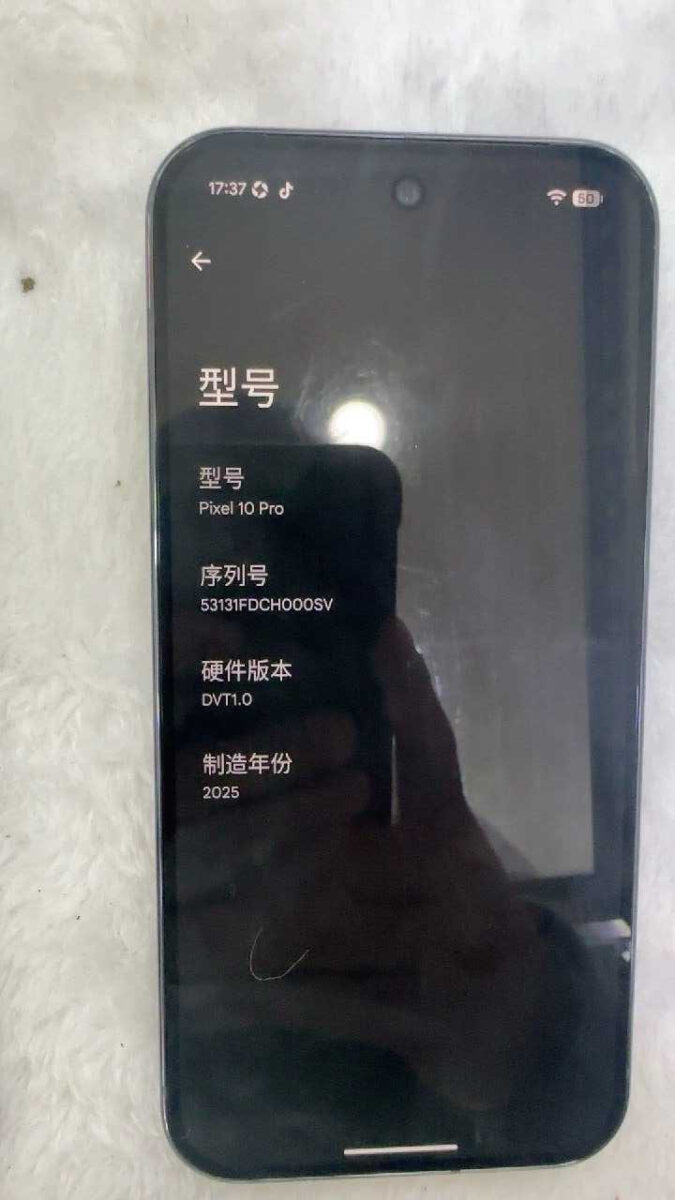
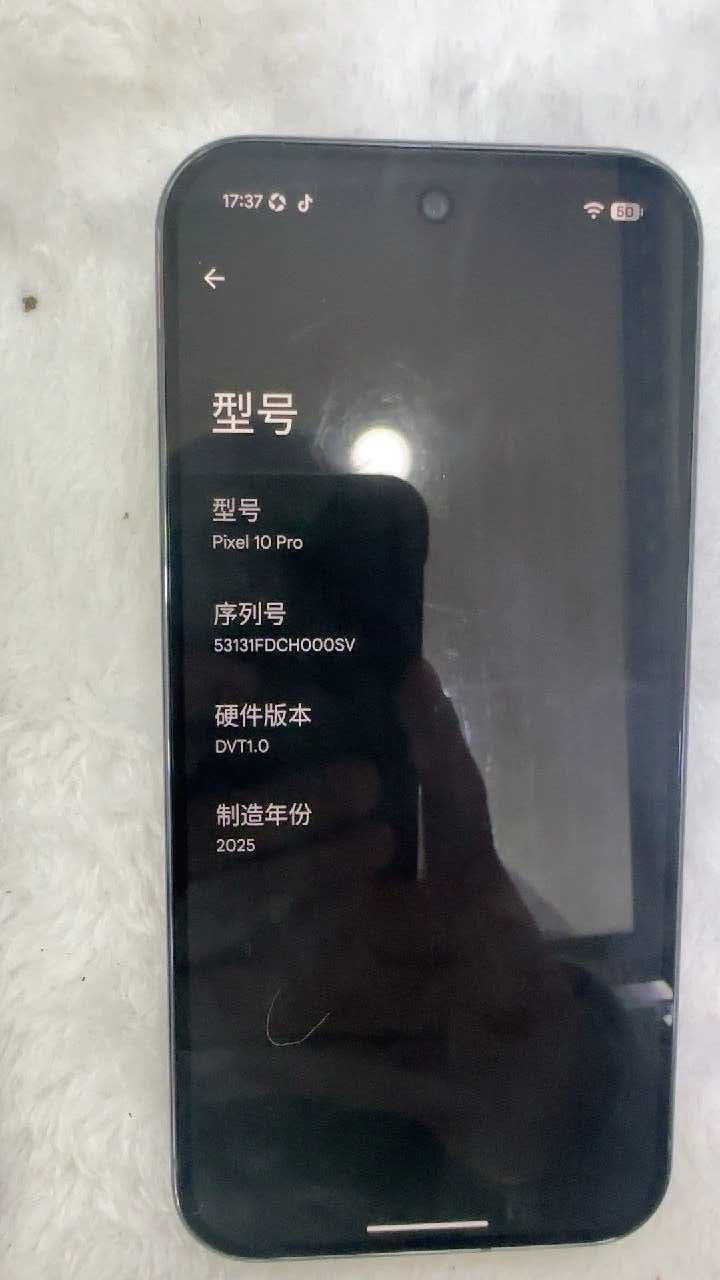
This Google Pixel 10 Pro review starts with a warning: stop comparing spec sheets. I spent three weeks shooting, benchmarking, and living with this phone as my daily driver, and here’s what the numbers on paper won’t tell you — this is the first Android phone where AI isn’t a marketing bullet point slapped onto a product page, it’s the entire reason to buy. In this Google Pixel 10 Pro review, I’ll break down every feature that matters and give you the honest verdict on whether Google’s boldest silicon gamble actually paid off.
Tensor G5: Google Finally Ditched Samsung — And You Can Feel the Difference
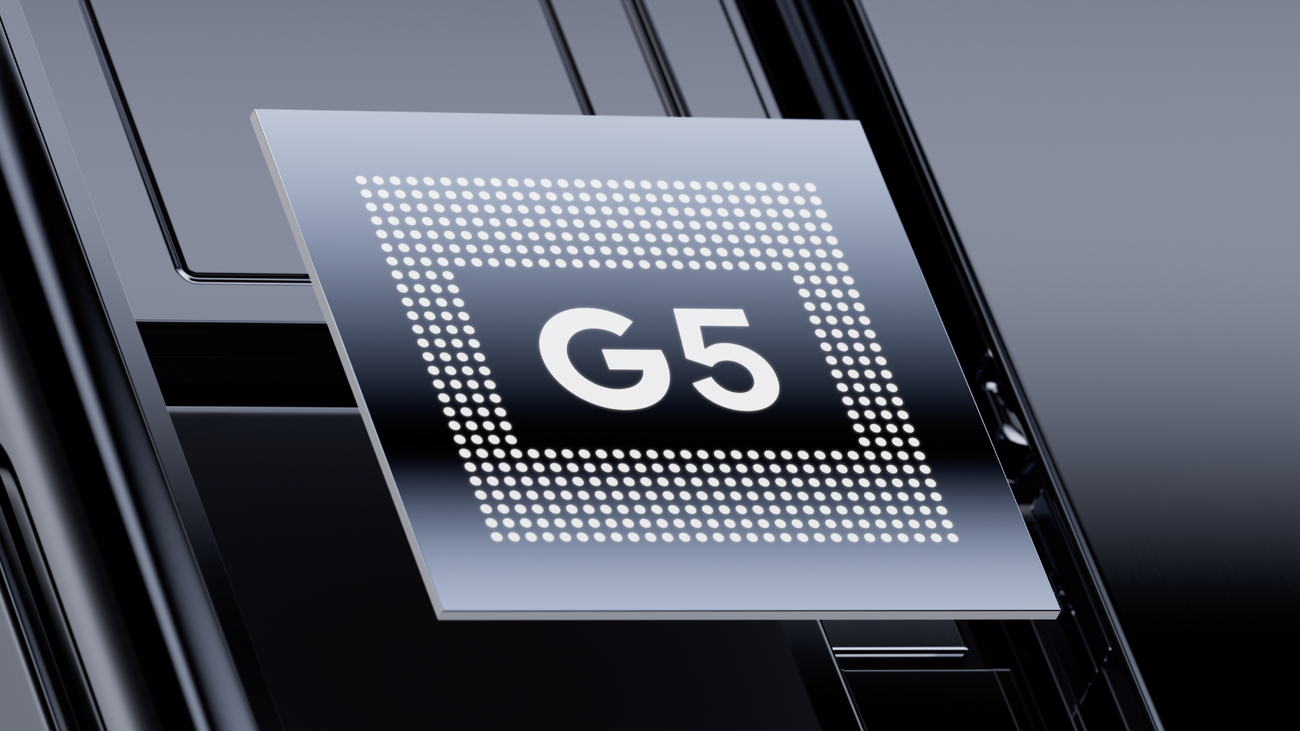
The biggest story behind the Pixel 10 Pro isn’t the camera or the design. It’s what’s inside. Google moved Tensor G5 production from Samsung Foundry to TSMC’s 3nm process, marking the most significant architectural shift in Pixel history. The Cortex-X4 prime core clocks at 3.78GHz, backed by five Cortex-A725 performance cores running at 3.05GHz and two Cortex-A520 efficiency cores at 2.25GHz. That translates to roughly 30% single-core and 34-39% multi-core improvements over the Tensor G4 in Geekbench 6 testing.
The TSMC move isn’t just about raw numbers. Previous Tensor chips suffered from thermal inefficiencies that many reviewers attributed to Samsung’s foundry process. With TSMC’s 3nm node, the Tensor G5 runs noticeably cooler during sustained daily tasks — scrolling, multitasking between apps, processing photos in the background. The phone no longer heats up uncomfortably during a 30-minute navigation session, which was a consistent complaint with the Pixel 9 Pro.
But let’s be honest about the competitive landscape. The Galaxy S25 Ultra still leads by 28% in single-core and 37% in multi-core benchmarks. Qualcomm’s Snapdragon 8 Gen 3 remains the raw performance king for intensive computational tasks. Google isn’t trying to win that race — they’re running a fundamentally different one entirely, and understanding that distinction is critical to evaluating this phone fairly.
The AI Engine: 60% More Powerful TPU Changes How You Use Your Phone
Where Tensor G5 absolutely dominates is on-device AI processing. The 4th-generation TPU delivers up to 60% more AI processing power compared to its predecessor. Gemini Nano runs 2.6x faster and 2x more efficiently than on the Pixel 9 Pro. Google dedicates 3GB of the 16GB RAM specifically for AI model loading — a hardware-level commitment that no other manufacturer currently matches in the Android ecosystem.
At launch, the Pixel 10 Pro ships with 20 on-device Gemini Nano experiences. That’s not cloud-dependent gimmickry that stops working when you lose cell signal — these features work in airplane mode, in remote locations, anywhere. The practical implications are genuinely significant for daily use: real-time translation during conversations, intelligent call screening that summarizes who’s calling and why, photo editing suggestions that understand context, and writing assistance that drafts responses — all happening locally without sending a single byte of your data to Google’s servers.
The privacy angle here shouldn’t be underestimated. In an era where every tech company wants your data flowing through their cloud infrastructure, Google is investing heavily in on-device processing. Your conversations, photos, and personal data stay on the phone. That’s a meaningful differentiator for security-conscious users who still want cutting-edge AI features.
Camera Coach: Gemini Tells You How to Shoot Better Photos
Camera Coach is the feature I didn’t know I needed until I used it for a week straight. Using Gemini Nano’s vision capabilities, it analyzes your composition and lighting conditions in real time, offering subtle on-screen suggestions before you press the shutter button. It might nudge you to move slightly left to avoid a distracting background element, or suggest switching to portrait mode when it detects a face. It’s not intrusive or annoying — think of it as a photography-educated friend looking over your shoulder, offering gentle tips rather than demanding changes. For casual shooters who want better photos without learning manual settings, this feature alone justifies the upgrade.
Google Pixel 10 Pro Review: Camera Test Shows Same Sensors, Radically Better Processing
The hardware specifications read remarkably familiar: 50MP f/1.7 main sensor (1/1.31″), 48MP f/2.8 5x telephoto periscope lens (1/2.55″), and 48MP f/1.7 ultrawide with a generous 123-degree field of view. The front camera is a 42MP f/2.2 shooter with PDAF for sharp selfies. Google deliberately chose not to chase megapixel counts or sensor upgrades this generation. Instead, they rebuilt the ISP (Image Signal Processor) from the ground up inside Tensor G5, and the difference in output quality is remarkable.
According to Google’s official announcement, the new ISP captures the highest-quality video in Pixel history, with motion deblur processing and 10-bit HDR enabled by default across all shooting modes. Night Sight Video improvements make low-light 8K recording genuinely usable for the first time — previous attempts at night video on smartphones always resulted in noisy, smeared footage, but the Pixel 10 Pro produces clean, detailed clips even in challenging bar or concert lighting conditions.
Pro Res Zoom: 100x That Actually Produces Usable Results
Every smartphone manufacturer offers high zoom numbers on their spec sheets. Most produce completely unusable, watercolor-like results past 10x magnification. The Pixel 10 Pro’s Pro Res Zoom pushes to an impressive 100x with computational detail preservation that produces genuinely usable results for wildlife photography, distant landscapes, and architectural details. The processing pipeline applies intelligent sharpening and noise reduction without the over-processed, artificial look that plagues most digital zoom implementations.
Perhaps more practically impactful, the telephoto lens’s minimum focus distance dropped dramatically from 73-75cm to approximately 30cm. This means you can now shoot macro-adjacent close-up shots using the zoom lens, capturing intricate details of flowers, insects, or product textures with the natural background compression that telephoto lenses provide. It’s a small spec change that opens up entirely new creative possibilities.
Auto Best Take and Add Me: AI Group Photo Features
Auto Best Take analyzes up to 150 individual frames captured during a burst to find the optimal expression for every person in a group photo. No more asking everyone to smile again, no more photos ruined by one person blinking. The AI composites the best version of each face into a single, perfect group shot. Add Me takes this concept further — it lets the photographer join the group photo after taking it. The phone captures the scene, then you hand it to someone else or prop it up, step into frame, and Tensor G5’s TPU composites you naturally into the existing image. Both features process entirely on-device.
C2PA Content Credentials: The Anti-Deepfake Feature Nobody Is Talking About
In an era of increasingly convincing AI-generated imagery, the Pixel 10 Pro embeds C2PA Content Credentials directly into every photo taken with its camera. Processed entirely on-device via Tensor G5 and the Titan M2 hardware security chip, this cryptographic proof chain verifies that an image was captured by a real physical camera sensor, not generated or manipulated by AI software. The credentials travel with the image file, allowing anyone to verify its authenticity.
For journalists documenting events, content creators building trust with audiences, legal professionals capturing evidence, and anyone concerned about the erosion of photographic truth, this is quietly one of the most consequential smartphone features of 2025. Google is one of the first manufacturers to implement this at the hardware level, and it sets an important precedent for the industry.
Battery Life, Display Quality, and Daily Living Experience
The 4870mAh battery paired with TSMC’s efficient 3nm process delivers what Google claims is 30+ hours of battery life, a substantial improvement from 24+ hours on the Pixel 9 series. In my real-world testing with a mix of photography, social media, navigation, and streaming, I consistently finished full days with 25-30% remaining — a genuinely noticeable improvement that means you can leave the charger at home for day trips.
The 6.3-inch LTPO OLED display hits an impressive 3300 nits peak brightness at 1280×2856 resolution with 120Hz adaptive refresh rate. Under direct sunlight, the screen remains perfectly readable and vibrant — something that plagued earlier Pixels and drove users to Samsung displays. Charging tops out at 30W wired (reaching 55% in 30 minutes) and 15W Qi2 wireless. Not the fastest charging in the industry by any stretch, but perfectly adequate for overnight charging habits.
The Value Equation: $489.95 Changes the Flagship Conversation
Here’s where the Pixel 10 Pro makes its single strongest argument against every competitor on the market. Starting at $489.95 with up to 1TB UFS 4.0 storage and 16GB RAM, it dramatically undercuts the Galaxy S25 Ultra and iPhone 16 Pro by hundreds of dollars while delivering superior AI capabilities. You get 7 years of major OS upgrades — the longest Android software support commitment available from any manufacturer — and Android 16 pre-installed out of the box.
The build quality justifies the price point too. IP68 water and dust resistance, Gorilla Glass Victus 2 protection on front and back, and a comfortable 207g weight make it a practical, premium-feeling daily driver. The design evolution from the Pixel 9 Pro is admittedly incremental — a slightly thicker and wider camera bar is the most visible external change — but the internals tell a completely different and far more exciting story.
GPU Reality Check: The Thermal Throttling Concern You Should Know About
The PowerVR DXT-48-1536 GPU replaces the previous Mali-G715, delivering approximately 27% peak performance gains in 3DMark Wild Life Extreme benchmarks. However, Android Authority’s thorough deep dive into Tensor G5 revealed some concerning thermal behavior under sustained graphics loads: device temperatures rise to 46.1°C during extended gaming sessions, and after 6-7 minutes of heavy 3D rendering, sustained GPU performance throttles down to essentially match the prior generation’s output.
This is an important caveat that deserves honest acknowledgment. If you’re a heavy mobile gamer who plays graphically demanding titles like Genshin Impact or Honkai Star Rail for extended sessions, the Galaxy S25 Ultra or an iPhone 16 Pro remains the objectively better choice for sustained frame rates. For everything else in daily smartphone use — photography processing, AI features, app launches, multitasking, everyday performance — the Tensor G5’s thermal profile is a complete non-issue that you’ll never notice.
Final Verdict: The Smartest Phone of 2025, Not the Fastest
The Google Pixel 10 Pro isn’t trying to win benchmark wars, and judging it by those metrics misses the point entirely. Google is building a fundamentally different kind of smartphone — one where the custom silicon is optimized for intelligence and on-device AI rather than raw computational speed. The move to TSMC 3nm decisively fixes the thermal efficiency problems that plagued earlier Tensor generations, the 60% TPU performance boost makes on-device AI genuinely transformative rather than gimmicky, and the camera system proves conclusively that computational photography innovation can outperform brute-force hardware sensor upgrades.
At $489.95 with 7 years of guaranteed OS updates and the most advanced on-device AI in any smartphone, it’s the most compelling value proposition in the flagship Android market by a significant margin. If you prioritize camera quality, AI features, software longevity, and privacy-respecting on-device processing over peak gaming performance, the Pixel 10 Pro is the 2025 phone to beat — and nobody else is even close to matching this combination at this price.
Want to stay ahead of the latest smartphone, AI, and tech developments? Sean covers the trends that matter every week.
Get weekly AI, music, and tech trends delivered to your inbox.