Fender Tone Master Pro Firmware 1.6 Update: 6 New Amp Models, Dual Mic, and 22 Effects That Change Everything
October 7, 2025
OpenAI DevDay 2025: GPT-5 Pro API, AgentKit, and 5 Developer Features That Change How You Build with AI
October 8, 2025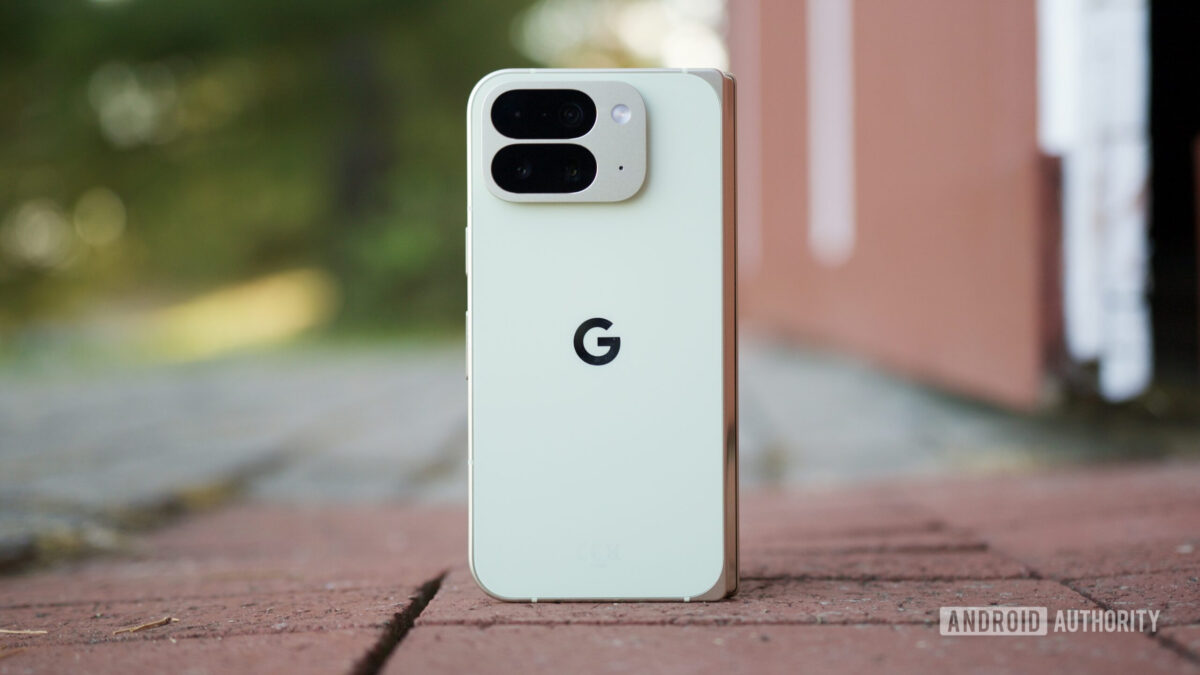
Google Pixel 10 Pro Fold just landed with something no foldable phone has ever offered before — full IP68 water and dust resistance. After years of watching Samsung dominate the foldable space with increasingly thinner devices, Google has taken a completely different approach: build the toughest foldable you can buy, even if it means carrying a few extra grams. With review units now in the hands of major outlets ahead of the October 9 release, I’ve been digging through every benchmark, teardown, and hands-on report to answer the question everyone’s asking — is Google’s $1,799 foldable actually worth buying over the $1,999 Galaxy Z Fold 7?
Google Pixel 10 Pro Fold Specs: What’s Under the Hood
Let’s start with the raw numbers, because the Google Pixel 10 Pro Fold spec sheet tells an interesting story. The Pixel 10 Pro Fold runs on Google’s custom Tensor G5 chip, manufactured on Samsung’s 3nm process, paired with 16GB of RAM. The inner display is a massive 8-inch Super Actua Flex panel running at 2076×2152 resolution with 120Hz LTPO refresh and a stunning 3,000 nits peak brightness. The outer cover display measures 6.4 inches, also hitting 3,000 nits and 120Hz. Both screens are, frankly, gorgeous — reviewers across the board have praised the display quality as best-in-class for foldables.
The battery is a 5,015mAh cell — massive for a foldable — supporting 30W wired charging, 15W wireless, and notably Qi2 magnetic charging. Engadget’s testing showed 27 hours of use on the external display and 21 hours on the internal screen, which is seriously impressive endurance. The camera system includes a 48MP main sensor, 10.5MP ultrawide, and a 10.8MP 5x telephoto, with 10MP front cameras on both the inner and outer displays. And the whole thing runs Android 16 with Google’s new Material 3 Expressive UI.
At $1,799 for the 256GB base model, Google is undercutting the Galaxy Z Fold 7 by a full $200. That pricing strategy alone makes this a serious contender.
IP68 and the Gearless Hinge: Why Durability Matters
Here’s where the Google Pixel 10 Pro Fold genuinely breaks new ground. This is the first foldable phone to achieve IP68 certification — meaning it can survive submersion in 1.5 meters of water for 30 minutes and is fully sealed against dust. For a device category that has historically been treated with kid gloves, this is a milestone moment.
The secret sauce is Google’s new gearless hinge mechanism. Traditional foldable hinges use interlocking gears that create tiny gaps where water and debris can infiltrate. Google’s design eliminates those gaps entirely, creating a much tighter seal. The trade-off? The phone is thicker. At 10.8mm folded versus the Galaxy Z Fold 7’s sleek 8.9mm, and 258 grams versus Samsung’s 215 grams, you’re carrying noticeably more phone in your pocket.
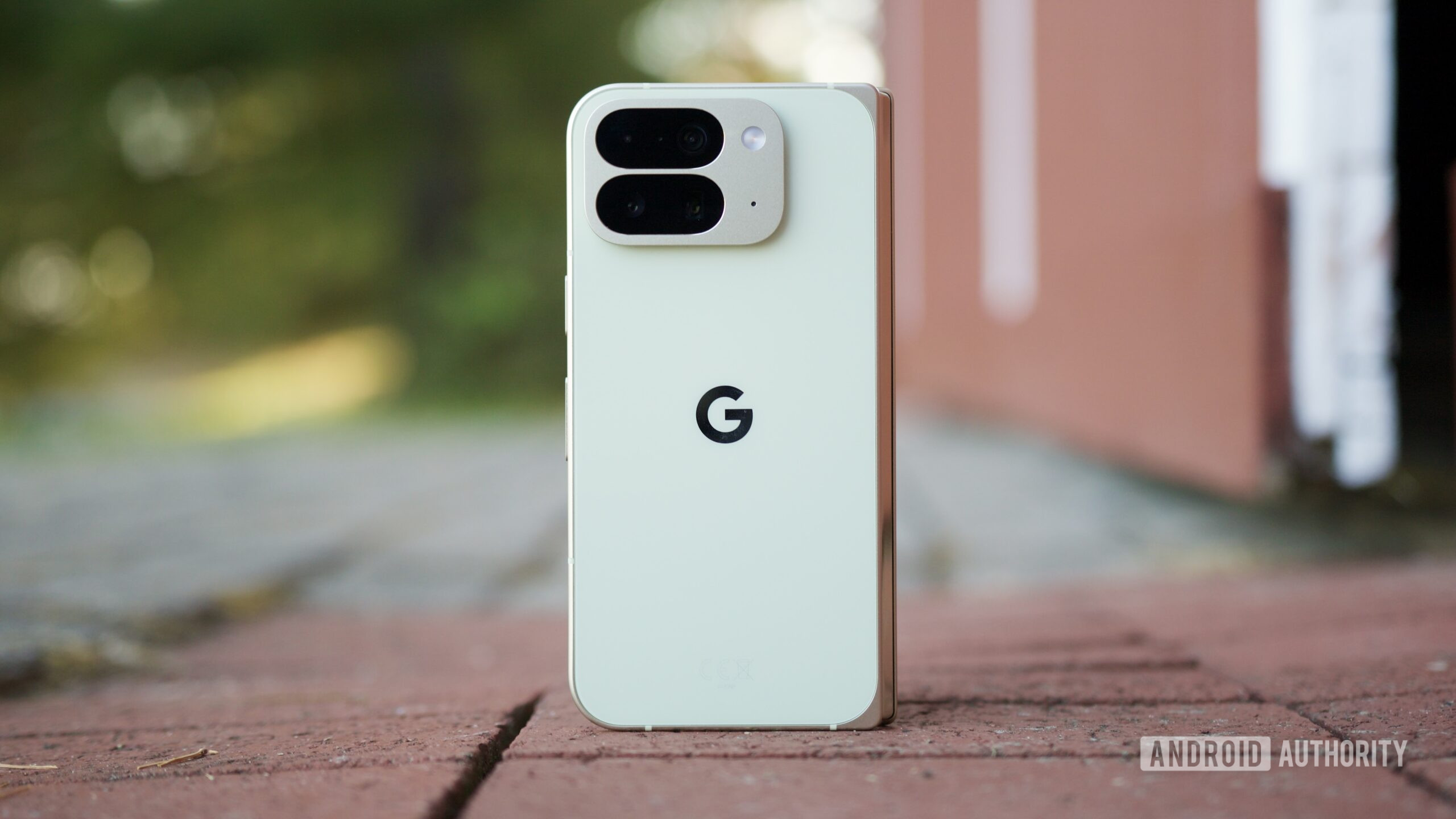
But here’s my take: for anyone who has hesitated to buy a foldable because they’re worried about durability, the Pixel 10 Pro Fold removes that objection entirely. Rain, splashes, dust, sand at the beach — none of it matters anymore. That peace of mind is worth a lot more than 2mm of thickness.
Tensor G5 Performance: The Elephant in the Room
If there’s one area where the Google Pixel 10 Pro Fold stumbles, it’s raw performance. The Tensor G5 is a capable chip for everyday tasks — app launching, multitasking on the big inner screen, and running Google’s AI features are all smooth. But when you pit it against the Snapdragon 8 Elite in the Galaxy Z Fold 7, the gap becomes uncomfortably visible.
Android Authority’s benchmarks showed the Tensor G5’s GPU performance lagging behind the Snapdragon 8 Elite by roughly 30%. In practical terms, this means demanding games won’t run as smoothly, and sustained performance during heavy workloads drops off faster. Google has always positioned Tensor as an AI-first chip rather than a benchmark champion, but at $1,799, some buyers will rightfully question why they’re getting mid-tier GPU performance in a premium device.
That said, for the vast majority of users — email, social media, productivity apps, video streaming, photography — the Tensor G5 is perfectly adequate. The AI features, including on-device transcription, Magic Eraser, and the new (if somewhat inconsistent) Magic Cue, are genuinely useful daily tools that benefit from the custom silicon.
Camera System: Flagship Quality with Foldable Compromises
Google’s computational photography prowess is well-established, and the Google Pixel 10 Pro Fold benefits enormously from it. The 48MP main camera produces excellent shots in good light with Google’s signature natural color science. Night Sight continues to be industry-leading, pulling remarkable detail from low-light scenes. The 5x telephoto at 10.8MP is a welcome addition for a foldable, giving you genuine optical reach that most folding phones simply can’t match.
However, as Tom’s Guide noted in their review, the camera system doesn’t quite reach the heights of the non-folding Pixel 10 Pro. The main sensor is smaller, the ultrawide is lower resolution at 10.5MP, and in challenging lighting conditions, the processing can occasionally struggle compared to its slab-form sibling. This is a common trade-off in foldables — physics dictates that a thinner device body limits sensor size — but it’s worth noting if camera performance is your primary buying criterion.
The dual front cameras (10MP on both inner and outer displays) are a practical luxury. Using the outer display as a viewfinder for the main cameras during selfies gives you dramatically better self-portrait quality than any dedicated selfie camera can achieve. This remains one of the best arguments for the foldable form factor in general.
Google Pixel 10 Pro Fold vs Galaxy Z Fold 7: The Real Comparison
This is the matchup that matters. Samsung’s Galaxy Z Fold 7 is thinner (8.9mm vs 10.8mm), lighter (215g vs 258g), and packs the more powerful Snapdragon 8 Elite. It also has a more refined multi-window experience with Samsung DeX and better app optimization for the large inner screen. On paper, Samsung wins the spec war in several key categories.
But the Pixel 10 Pro Fold fights back hard on three fronts. First, IP68 versus the Z Fold 7’s IPX8 — Google’s phone handles dust, Samsung’s doesn’t. Second, battery life is noticeably better on the Pixel. Third, the $200 price advantage ($1,799 vs $1,999) is meaningful in a category where every dollar counts. Google’s software experience is also cleaner, with faster OS updates and a less bloated interface.
The choice ultimately comes down to priorities. If you want the sleekest, most powerful foldable with the best multitasking software, the Z Fold 7 wins. If you want the most durable foldable with the best camera processing, longer battery life, and a lower price, the Pixel 10 Pro Fold is your pick.
What the Critics Say: Review Scores Roundup
The critical reception of the Google Pixel 10 Pro Fold has been positive but measured. Tom’s Guide gave it 3.5 out of 5, praising the displays and durability while dinging the bulk and GPU performance. Engadget scored it 88 out of 100, calling it “the tankiest foldable” and highlighting the exceptional battery life. Android Authority landed at 7 out of 10, expressing frustration with the recycled design from the previous Pixel 9 Pro Fold and noting that the camera underperforms relative to the standard Pixel 10 Pro.
The consensus is clear: the Google Pixel 10 Pro Fold is a very good foldable phone that excels in durability and battery life but asks you to accept compromises in thickness, weight, and raw processing power. Whether those trade-offs work for you depends entirely on what you value most in a daily driver.
Software and AI: Android 16 and Material 3 Expressive
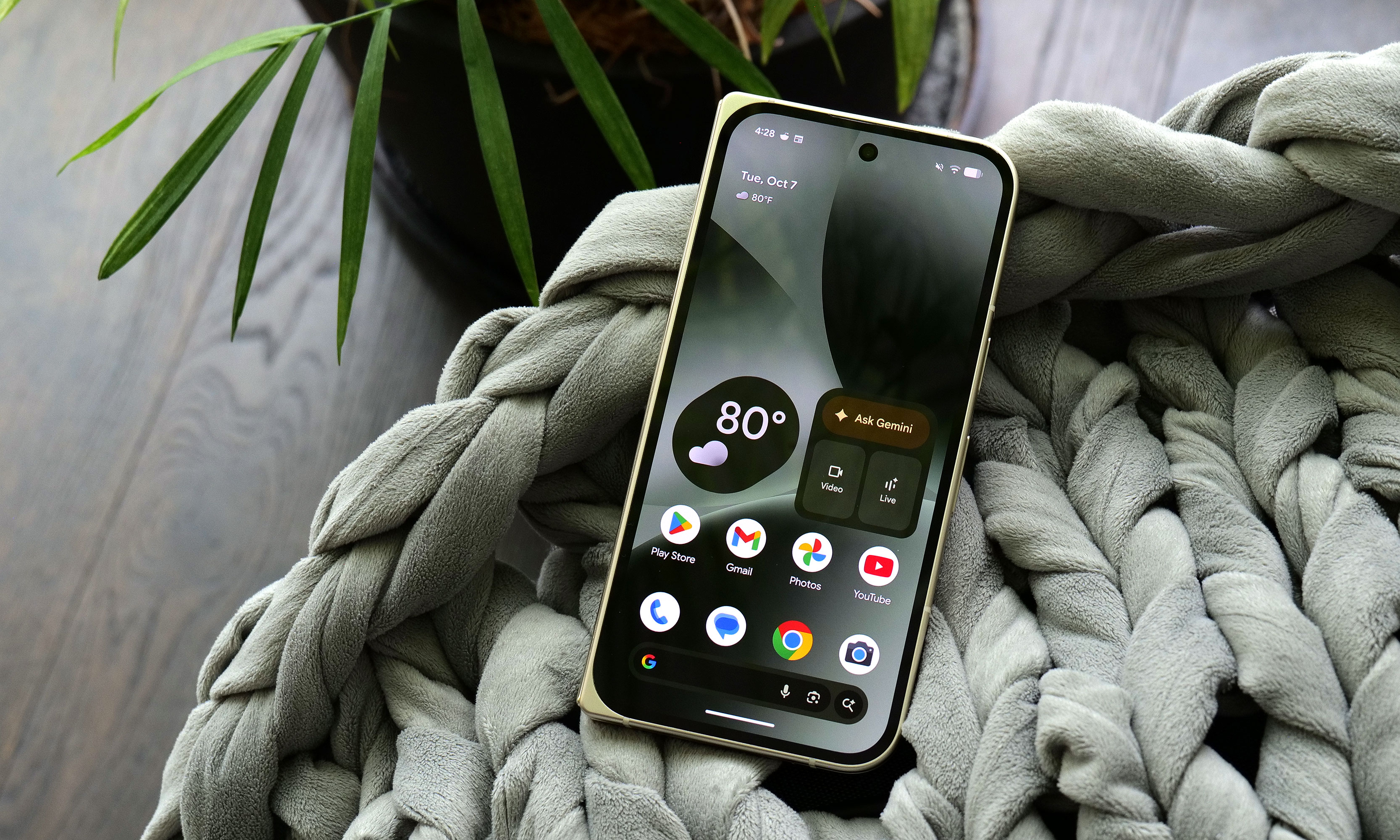
The Google Pixel 10 Pro Fold ships with Android 16 and Google’s new Material 3 Expressive design language. The UI is more colorful and animated than before, with dynamic theming that adapts to your wallpaper in more sophisticated ways. On the large inner display, the added screen real estate makes multitasking feel natural — side-by-side apps, floating windows, and the improved taskbar all work well.
However, there are notable software gaps. Android Authority pointed out the lack of app pinning and multi-app floating windows — features that Samsung’s One UI has offered for generations. For a device specifically designed for productivity on a large screen, these omissions feel like missed opportunities. Google’s Gemini AI integration is baked in throughout, but the new Magic Cue feature has been described as inconsistent by multiple reviewers, sometimes providing useful contextual suggestions and other times missing the mark entirely.
Charging and Battery Life: A Foldable Endurance Champion
Battery life is genuinely one of the Google Pixel 10 Pro Fold’s strongest cards. The 5,015mAh cell delivers all-day battery life with room to spare, even when using the power-hungry inner display extensively. Engadget measured 27 hours on the outer screen and 21 hours on the inner display — numbers that put most foldables (and many standard smartphones) to shame.
The charging situation is less impressive. 30W wired charging takes approximately 87 minutes for a full charge, which feels slow in 2025 when competitors offer 45W, 65W, or even 100W charging. The 15W wireless charging with Qi2 magnetic alignment is a nice addition — it means you can use standard MagSafe-compatible accessories — but it’s not going to win any speed contests. If you’re the type who tops up quickly before heading out, the slow charging could be a genuine annoyance.
Final Verdict: Should You Buy the Google Pixel 10 Pro Fold?
So should you buy the Google Pixel 10 Pro Fold? It’s a fascinating device that makes a bold bet: durability over slimness, endurance over raw speed. In a market where every foldable manufacturer is racing to make the thinnest possible device, Google chose to make the most rugged one. The IP68 rating, exceptional battery life, excellent cameras, and $200 price advantage over the Galaxy Z Fold 7 make a compelling case.
The compromises are real, though. At 258 grams and 10.8mm thick, this is not a phone for anyone who prioritizes pocketability. The Tensor G5’s GPU deficit versus the Snapdragon 8 Elite is measurable and relevant for power users. And the design feels more evolutionary than revolutionary coming from the Pixel 9 Pro Fold.
If you’ve been waiting for a foldable you can actually trust in daily life without babying it, the Google Pixel 10 Pro Fold is the first one that truly delivers on that promise. For early adopters and Google ecosystem loyalists, this is the foldable to buy in late 2025. For everyone else, the Galaxy Z Fold 7 remains a strong alternative that trades durability for refinement. Either way, the foldable market has never offered better choices — and that’s good news for all of us.
Navigating the foldable market or need help choosing the right tech for your workflow? Sean Kim offers tech consulting for professionals and creators.
Get weekly AI, music, and tech trends delivered to your inbox.