
AI Music Copyright 2025: 56 Lawsuits, Independent Musicians’ Class Action, and the Fair Use Showdown
October 23, 2025
MLOps Best Practices 2025: MLflow 3.0, W&B Weave, and the 5 Strategies Behind 87% Enterprise AI Adoption
October 24, 2025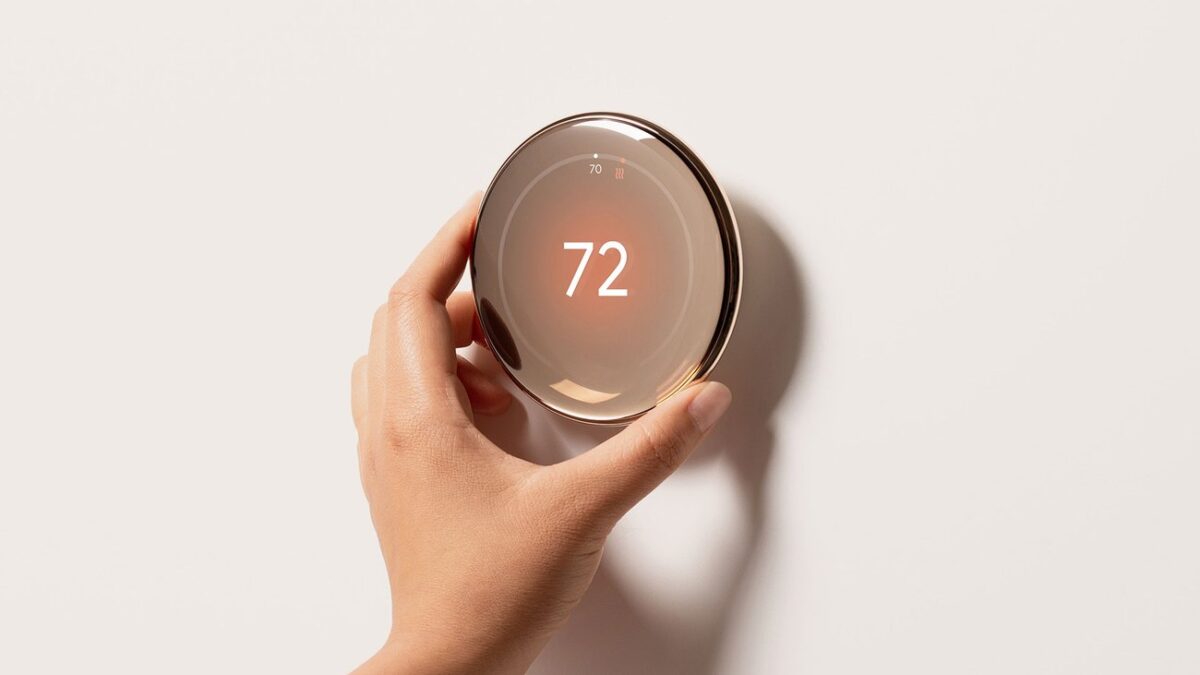
Here’s a number that got my attention: 14% off my heating bill in just three months. That’s not a marketing claim from Google — it’s the actual, verified result from real-world long-term testing of the Google Nest Learning Thermostat 4th generation. After more than a year on the market since its August 2024 launch, this AI-powered thermostat has had plenty of time to prove itself. As someone who’s spent 28+ years obsessing over precision control in professional audio studios, I appreciate hardware that delivers on its promises. Let me break down whether this $280 smart thermostat lives up to the hype in October 2025.
Google Nest Learning Thermostat Design: Premium Hardware That Belongs on Your Wall
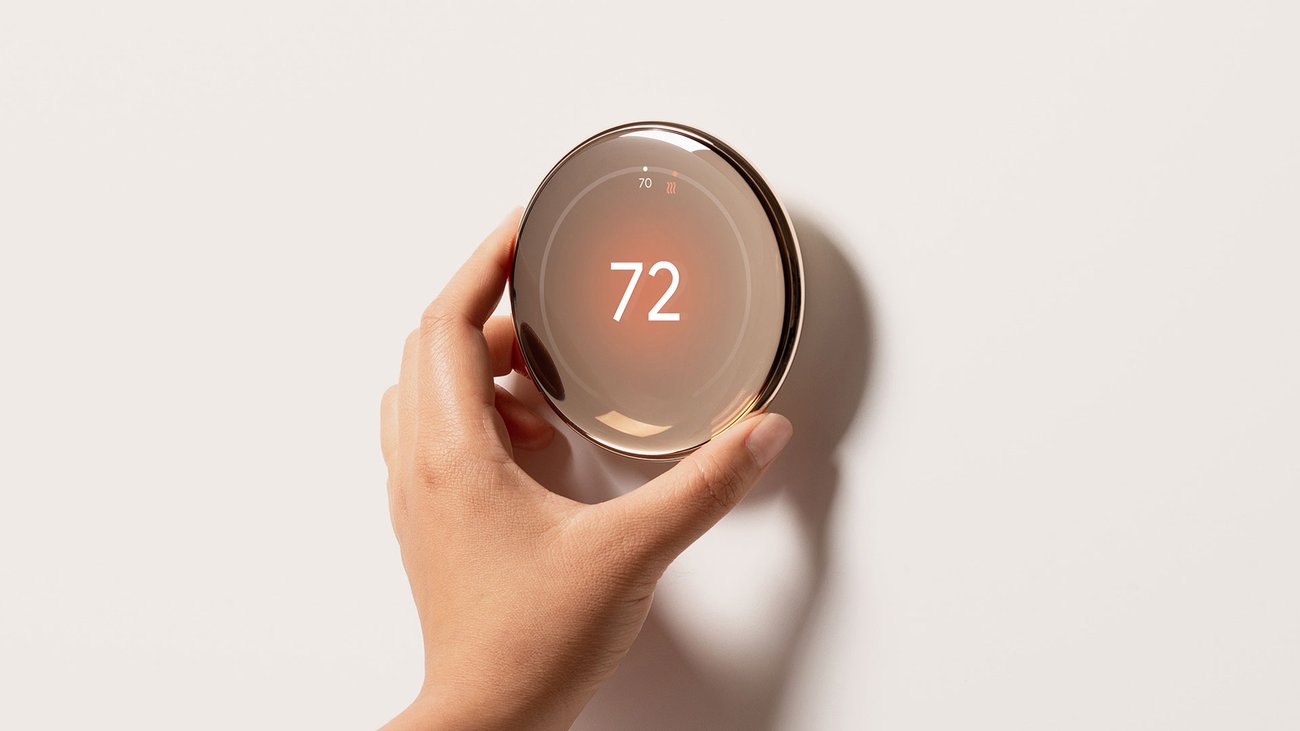
The first thing you notice is that 2.7-inch crystal LCD display — 60% larger than the previous generation. Google calls the feature “Dynamic Farsight,” and it’s genuinely useful. Walk toward the thermostat, and it displays personalized information: current temperature, weather, energy usage, or the time. It transforms a utility device into something that actually enhances your living space.
Available in Polished Obsidian, Polished Gold, and Polished Silver, the design language is unmistakably premium. The bangle-style form factor looks more like a piece of modern jewelry than a thermostat. Having handled professional studio equipment for nearly three decades, I can tell you the build quality here is exceptional — the weight, the finish, the satisfying click of the rotating bezel all signal that Google took the industrial design seriously.
Gemini AI-Powered Learning: Where the Google Nest Learning Thermostat Truly Shines
Smart thermostats have been around for over a decade, but the 4th gen Nest takes a fundamentally different approach. Google’s Gemini AI powers micro-adjustments throughout the day, learning your routines with a precision that previous generations couldn’t match. The “Adaptive Eco” feature automatically switches to energy-saving mode when it detects you’ve left home. “Smart Schedule” learns your weekly patterns, reducing the need for manual programming.
The energy savings numbers are compelling and now well-documented after a year of real-world use. Google’s official claim is an average of 12% on heating and 15% on cooling costs, with potential savings reaching up to 31%. Independent testing has backed this up — MobileSyrup’s three-month real-world review confirmed a 14% reduction in heating costs. For the average American household spending roughly $1,000 annually on heating and cooling, that’s a payback period of about two to three years — making the $280 price tag a genuine investment rather than an expense.
What separates this from competitors is the continuous improvement. Over the past year, firmware updates have refined the Gemini AI’s learning algorithms, making predictions more accurate the longer you use it. It’s a rare case where a product genuinely gets better with age. The “Natural Heating/Cooling” feature is worth highlighting as well — it learns to pre-heat or pre-cool your home so you arrive to the perfect temperature, rather than blasting the HVAC the moment you walk through the door. And “Smart Ventilation” optimizes when to use outside air versus mechanical climate control, further reducing energy consumption during mild weather.
Matter and Thread Support: Breaking Down the Smart Home Ecosystem Walls
If there’s one feature that future-proofs the Google Nest Learning Thermostat, it’s full Matter and Thread certification. In 2025, Matter support isn’t a nice-to-have — it’s essential. This means the Nest thermostat works seamlessly across Google Home, Apple HomeKit, and Amazon Alexa ecosystems. If you switch from an iPhone to Android (or vice versa), your thermostat doesn’t care. It just works.
Installation has also been dramatically simplified. The Google Home app provides step-by-step guided installation, and Google’s “Power Sharing” technology eliminates the need for a C-wire (common wire) — a hurdle that previously required professional electrician work in many homes. The compatibility list is impressively broad: most 24V HVAC systems including gas, electric, oil, forced air, heat pump, and radiant heating are supported.
The box includes a 2nd generation Nest Temperature Sensor, allowing the thermostat to account for temperature differences between rooms right out of the gate. You can connect up to six additional sensors for whole-home climate management, which is particularly useful for multi-story homes where temperature varies significantly between floors. In my experience with studio environments — where precise temperature control matters for both equipment longevity and acoustic consistency — this multi-sensor approach is exactly the right philosophy. One thermostat reading from a hallway simply cannot represent a whole home’s climate needs.
Nest vs Ecobee vs Amazon: How the Competition Stacks Up in 2025
At $279.99, the Nest Learning Thermostat sits firmly in premium territory. But premium pricing demands premium justification. Let’s see how the alternatives compare.
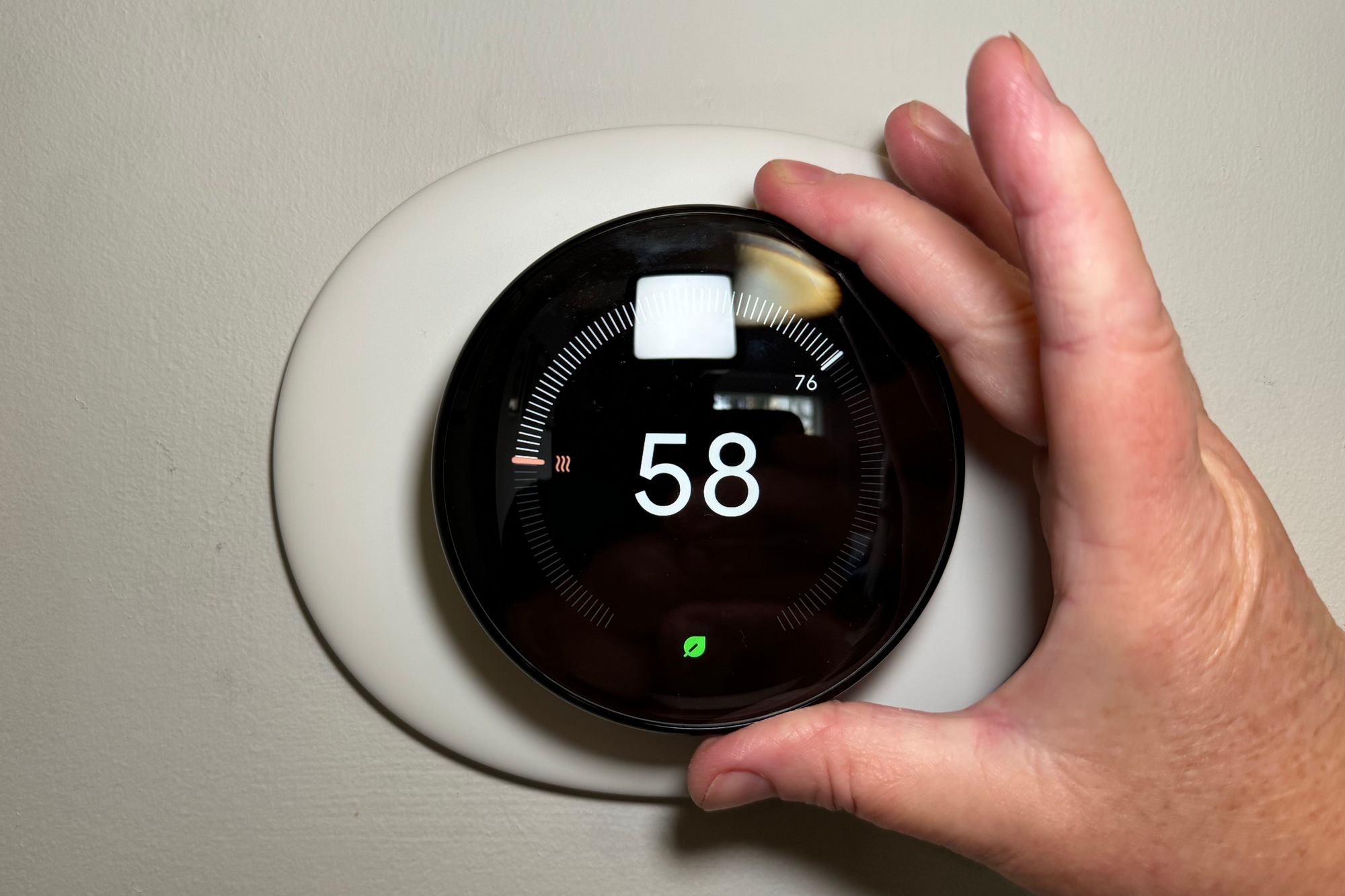
Ecobee Smart Thermostat Premium ($219-$249) is the closest competitor. It features a built-in Alexa speaker and air quality monitor — neither of which the Nest offers. It also has native Apple HomeKit support (though the Nest now matches this via Matter). The flat touchscreen produces less glare than the Nest’s curved display. However, Ecobee lacks anything comparable to Google’s Gemini AI learning engine, and the design, while functional, doesn’t match the Nest’s visual elegance. As Tom’s Guide noted in their review, the Nest’s learning capabilities remain unmatched in the category.
Amazon Smart Thermostat ($79.99) is the budget option. If you just need basic Alexa-controlled temperature scheduling and Energy Star certification, it gets the job done at a fraction of the price. But there’s no learning capability whatsoever — you’re programming everything manually. For anyone serious about automated energy optimization, it’s a non-starter.
Honeywell Home T9 ($169-$199) occupies the middle ground with room sensors and geofencing. But its app experience feels dated compared to Google Home, and the lack of Matter support in 2025 is a significant drawback for anyone building a multi-ecosystem smart home.
The verdict on competition: if AI-driven learning, Matter/Thread compatibility, and premium design are your priorities, the Google Nest Learning Thermostat 4th Gen justifies its price premium. Major publications including Tom’s Guide and BGR have reached the same conclusion, with BGR calling it simply the best smart thermostat available.
One Year Later: The Final Verdict on the Google Nest Learning Thermostat
After twelve months on the market, the Google Nest Learning Thermostat 4th Gen has delivered on its initial promises and then some. Continuous firmware updates have improved the Gemini AI’s accuracy, the Matter ecosystem has expanded significantly (meaning more compatible devices), and real-world energy savings data consistently validates Google’s claims. The timing is also worth noting — we’re in October 2025, right as heating season begins in most of the Northern Hemisphere. If you’re going to make the switch, doing it now means you’ll capture a full winter’s worth of savings.
There are minor drawbacks worth mentioning for the sake of completeness. The $280 price tag is undeniably steep compared to basic smart thermostats. The curved display, while beautiful, can catch glare from certain angles — the Ecobee’s flat screen handles this better. And if you’re deeply invested in the Amazon ecosystem with Echo devices throughout your home, the Ecobee’s built-in Alexa speaker might offer a more cohesive experience.
But these are minor quibbles in the grand scheme. For anyone serious about smart home climate control, the thermostat is arguably the highest-ROI device you can install. Every month of energy savings chips away at the upfront cost, and unlike many gadgets, this one pays for itself. Professional installation bumps the total to $435, but the DIY installation is straightforward enough that most homeowners can handle it. At $279.99 with a temperature sensor included, the 4th gen Nest sets the benchmark for what a smart thermostat should be in 2025. If you’re building or upgrading your smart home, this is the foundation to start with.
Get weekly AI, music, and tech trends delivered to your inbox.