FL Studio Beats: The Complete Step-by-Step Guide to Professional Beat Making in 2025
May 23, 2025
AI Music Copyright Lawsuits Suno Udio: Where the Major Label Cases Stand in May 2025
May 26, 2025
Six years. That’s how long Google left the Nest Hub Max sitting on kitchen counters without a meaningful hardware refresh — and in tech years, that’s practically prehistoric. Now, with Gemini for Home officially replacing Google Assistant and the original Nest Hub Max quietly disappearing from store shelves, everything points to an imminent Google Nest Hub Max 2 launch that could finally give Amazon’s Echo Show lineup a real fight.
Why the Google Nest Hub Max 2 Is Coming Now
The timing is no accident. Google’s smart home chief Anish Kattukaran publicly called smart displays “an incredible form factor” for Gemini and confirmed new hardware was in active development. Meanwhile, Google has been rolling out Gemini for Home across its entire Nest speaker and display lineup — replacing the aging Google Assistant with a conversational AI that can handle multi-step commands, preserve context across conversations, and even understand ambiguous requests.
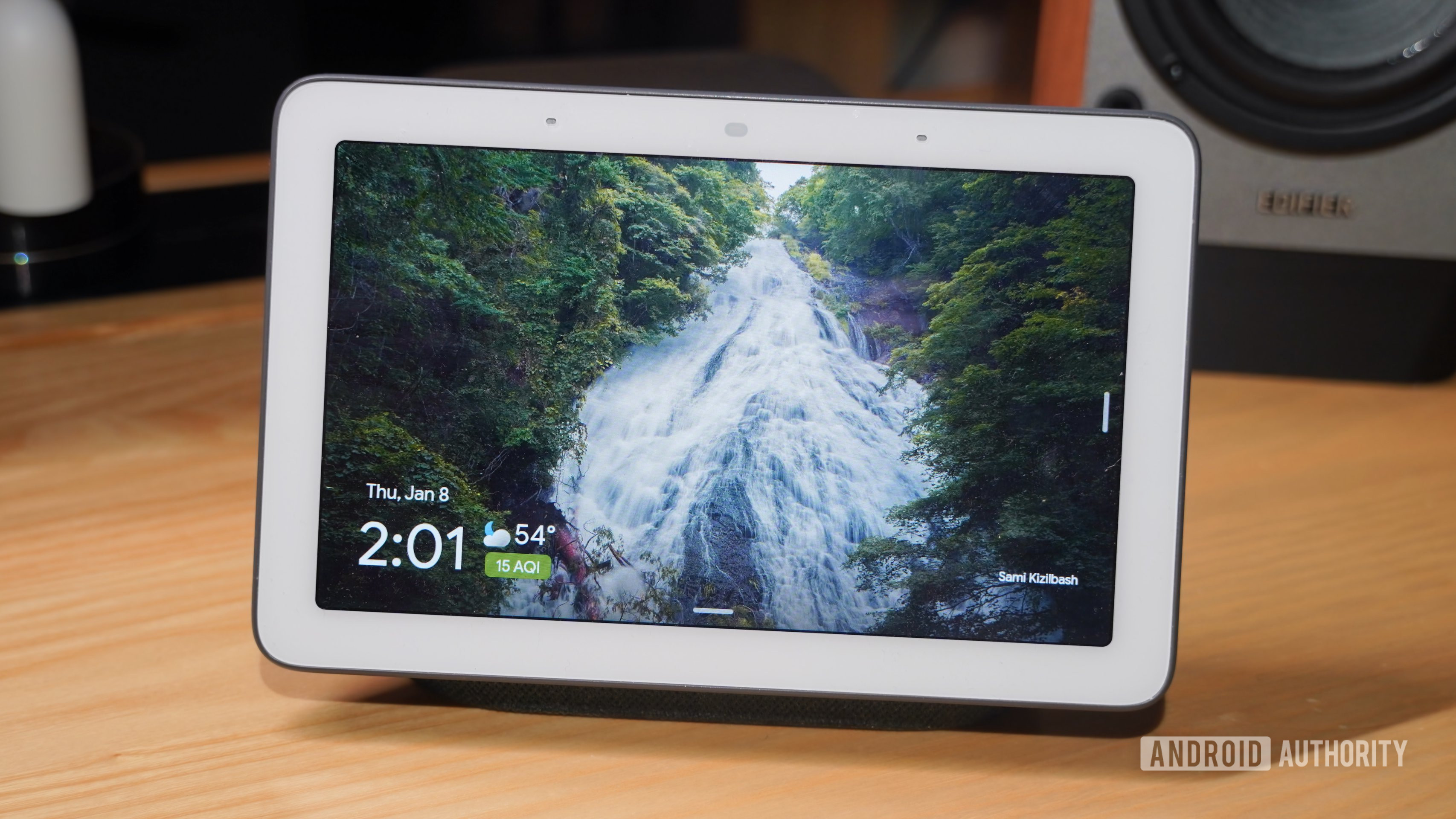
But here’s the real signal: Google quietly stopped selling the original Nest Hub Max in several markets by mid-2025. In the consumer electronics world, that’s the equivalent of clearing shelf space for the successor. The 2019 hardware — with its 10-inch LCD, aging processor, and limited on-device intelligence — simply can’t showcase what Gemini is capable of.
Google Nest Hub Max 2 Rumored Specs: What We Know So Far
While Google hasn’t confirmed specific hardware details, the rumor mill has been remarkably consistent. Multiple sources point to a substantial upgrade across every major specification:
- 12-inch OLED display — A major jump from the current 10-inch LCD. OLED means true blacks, wider viewing angles, and a display that actually looks premium in a dark room. This matches the industry trend: Amazon already pushed to a massive 21-inch panel with the Echo Show 21.
- Edge TPU for local Gemini inference — This is potentially the most significant upgrade. Running Gemini AI locally means faster response times, better privacy (less data sent to the cloud), and functionality that works even when your internet hiccups.
- Built-in Thread border router — Thread is the mesh networking protocol that Matter devices use for reliable, low-latency smart home communication. Having it built into the display means the Nest Hub Max 2 becomes a central hub for your entire Matter ecosystem.
- Improved camera system — The current 6.5MP Nest Cam is showing its age, especially against Amazon’s 13MP Echo Show camera. Expect a significant megapixel bump and better video calling quality.
- Enhanced speaker system — Audio quality has been a weak point. Better drivers and a redesigned acoustic chamber could make this a legitimate kitchen speaker, not just a screen with sound.
Gemini for Home: The Real Reason This Matters
Let’s be honest — a bigger screen and better camera alone wouldn’t justify the hype. What makes the Google Nest Hub Max 2 genuinely interesting is Gemini for Home, which represents the most fundamental shift in how we interact with smart displays since the category was invented.
The old Google Assistant was essentially a glorified command parser — you had to speak in a specific syntax, and it forgot everything after each interaction. Gemini for Home changes the paradigm entirely:
- Natural conversation — Say “turn on the lights” and then follow up with “actually, make them warmer” without repeating the context. Gemini remembers what you were talking about.
- Multi-action commands — “Get the house ready for movie night” can dim lights, close blinds, set the thermostat, and queue up Netflix — all from a single, natural request.
- Proactive intelligence — Instead of waiting for commands, Gemini can surface relevant information: “Your commute looks 20 minutes longer today” or “The air quality outside is poor — keeping windows suggestion: closed.”
- Third-party developer APIs — Google has opened the Gemini Home platform to developers, meaning smart home brands can build Gemini-native experiences directly into their apps and devices.
The fact that Gemini already works on Nest devices dating back to 2016 is impressive, but running it on dedicated hardware with an edge TPU — that’s where the experience becomes qualitatively different. Think instant responses, complex multi-device routines processed locally, and visual AI features that use the camera for context awareness.
Amazon Echo Show 21 vs Google Nest Hub Max 2: The Battle Lines
Amazon didn’t wait around. The Echo Show 21 already represents a different philosophy — a 21-inch Full HD display that’s essentially a wall-mounted smart TV with Alexa and Fire TV built in. It features a 13MP wide-angle camera, spatial audio processing, and deep integration with Amazon’s shopping and entertainment ecosystem.
Google’s counter-strategy appears to be intelligence over size. While Amazon bets on screen real estate and entertainment features, Google is betting that Gemini’s conversational AI and the Matter/Thread ecosystem will be more compelling for users who want a genuinely smart home — not just a voice-controlled TV in the kitchen.
There’s also the Apple factor. With Meta Portal discontinued and Apple pushing its HomePod + iPad + Apple Intelligence combination, the premium smart display market is really a two-horse race between Google and Amazon. The Google Nest Hub Max 2 needs to be Google’s definitive answer — not just an incremental update, but a statement product.
Matter 2.0 and the Smart Home Hub Opportunity
One angle that’s flying under the radar: the Google Nest Hub Max 2 could become the definitive Matter smart home hub. With Matter 2.0 introducing camera clusters and energy management clusters, a Thread-equipped display with local AI processing is perfectly positioned to serve as the central brain for an entire home automation setup.
Imagine this scenario: your Nest Hub Max 2 uses its Thread router to communicate directly with every Matter-compatible device in your home — no separate hubs, no cloud dependency for basic operations. The edge TPU processes Gemini commands locally, the Thread radio handles device communication with sub-second latency, and the OLED display serves as your visual command center.
This isn’t hypothetical. Google’s developer documentation already references expanded Home APIs for Gemini integration, suggesting that third-party manufacturers are being encouraged to build Gemini-aware devices that go beyond simple on/off commands.
The practical implications are significant. Current smart home setups often require a patchwork of hubs — a Hue Bridge for lights, a SmartThings hub for sensors, a separate Thread border router for newer devices. The Google Nest Hub Max 2 could consolidate all of this into a single device that sits on your kitchen counter, handles all protocols natively, and uses Gemini to orchestrate everything intelligently. For anyone who’s wrestled with smart home hub sprawl, that’s a compelling proposition.
There’s also the energy management angle. Matter 2.0’s energy clusters mean the Nest Hub Max 2 could track your home’s energy consumption across devices, suggest optimization routines, and even coordinate with smart thermostats and EV chargers — all processed locally through the edge TPU without sending your usage data to external servers.
My Take: What 28 Years in Tech Taught Me About Smart Display Timing
I’ve been watching the smart home space evolve since the X10 days — and if there’s one pattern I’ve learned, it’s that the hardware only matters when the software is ready. Google’s biggest mistake with the original Nest Hub Max wasn’t the hardware (which was solid for 2019). It was launching a smart display powered by an assistant that couldn’t hold a conversation longer than one sentence.
Gemini changes that equation fundamentally. I’ve been using Gemini on my existing Nest Hub for a few months now, and the difference is night and day — not in flashy features, but in the mundane moments. Asking follow-up questions without re-stating context. Getting genuinely useful suggestions instead of web search cards. Having a kitchen display that actually feels like it understands what I’m asking rather than pattern-matching keywords.
What concerns me is Google’s execution track record with hardware. They’ve killed more products than most companies have launched — Nest Secure, Google Home Max, Pixel Slate, the list goes on. For the Nest Hub Max 2 to succeed, Google needs to commit to the product for more than two years. Smart home devices aren’t smartphones; people expect them to work for a decade. If Google can match Apple’s hardware longevity with Gemini’s AI capabilities, they’ll have something genuinely special. If they treat it like another experiment — well, we’ve seen how that movie ends.
My prediction: the Google Nest Hub Max 2 will be announced at a fall 2025 hardware event, priced around $299-349, with the edge TPU and Thread router as its primary differentiators. The display will matter less than the intelligence running on it — and that’s exactly where Google should be playing.
The smart display category has been stagnant for years, waiting for the AI to catch up with the hardware vision. With Gemini for Home maturing rapidly and Matter 2.0 finally delivering on the unified smart home promise, the Google Nest Hub Max 2 arrives at precisely the right moment. Whether you’re deep in the Google ecosystem or weighing your options against Amazon’s Echo Show lineup, this is the device worth waiting for before making your next smart display investment.
Get weekly AI, music, and tech trends delivered to your inbox.