
Nintendo Switch 2 Pre-Order Guide: $449.99 Price, Full Specs, and 25+ Launch Games (2025)
April 30, 2025
Google I/O 2025: Project Astra Real-Time AI Assistant Demo Impresses — 6 Features That Redefine Multimodal AI
May 2, 2025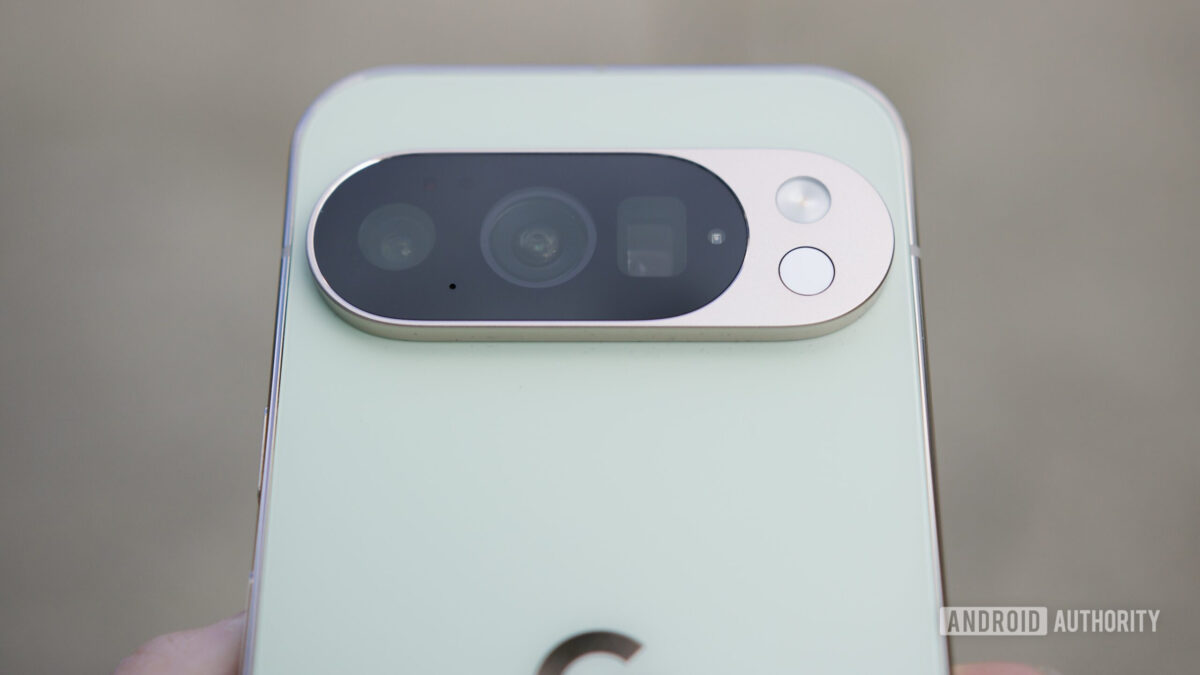
Samsung just got dumped, and the entire smartphone industry is paying attention. Google’s upcoming Pixel 10 Tensor G5 chip won’t be manufactured by Samsung Foundry anymore — it’s moving to TSMC’s cutting-edge 3nm process, the same fabrication node powering Apple’s A18 Pro and M4 chips. This isn’t just a supplier swap. This is Google finally admitting what Pixel fans have been screaming for years: the Tensor chip had a heat problem, and Samsung’s manufacturing was a big part of it.
The TSMC Switch: Why Pixel 10 Tensor G5 Changes the Game
Let’s start with the elephant in the room. Every Tensor chip from the original to the G4 has been manufactured by Samsung Foundry, and every generation has struggled with thermal throttling and power efficiency. The Tensor G4 in the Pixel 9 series made incremental improvements, but it still couldn’t match the efficiency of Qualcomm’s Snapdragon 8 Gen 3 or Apple’s A-series chips — both built on TSMC nodes.
According to Android Authority’s exclusive report, the Tensor G5 — codenamed “Laguna” — will be manufactured on TSMC’s N3E process. This is the same 3nm node that Apple uses for its latest silicon. The implications are massive: we’re talking about potential 30-35% efficiency improvements over Samsung’s 4nm process, which translates directly to better battery life, less throttling, and sustained performance under heavy AI workloads.
Tom’s Hardware reports that Samsung was reportedly blindsided by the decision. Internally at Samsung, the loss of Google’s contract has been referred to as “the Google incident” — a telling indicator of how significant this partnership shift really is. For a company that has long relied on its foundry business to maintain semiconductor dominance, losing a marquee client like Google to TSMC stings.
Pixel 10 Tensor G5 Hardware: What the Leaks Tell Us
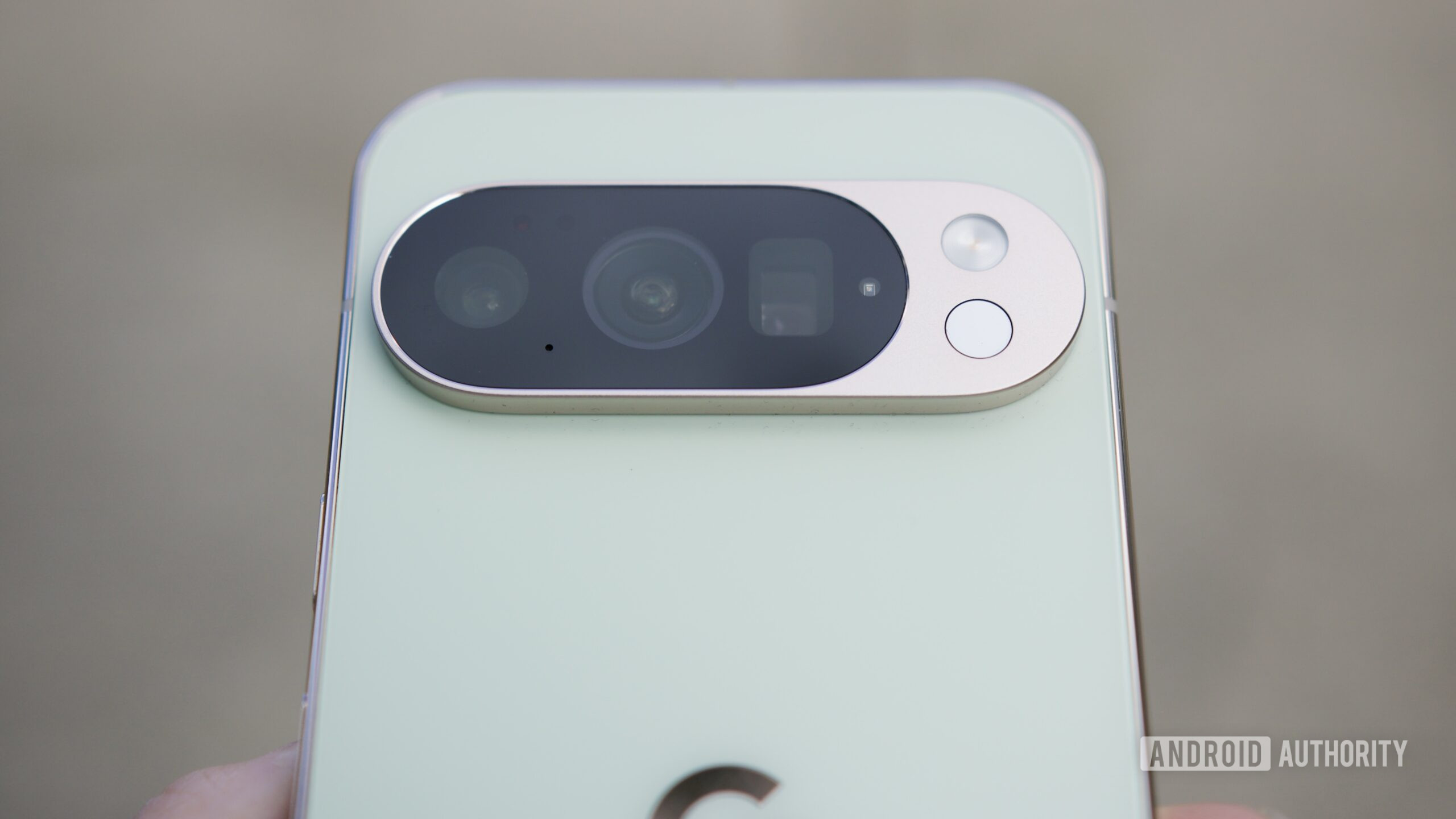
Beyond the chip, the Pixel 10 lineup itself is shaping up to be Google’s most ambitious hardware generation. CAD render leaks published by 9to5Google in March 2025 reveal a design that’s evolutionary rather than revolutionary — the signature camera bar remains, and the flat-sided aesthetic introduced with the Pixel 9 carries forward. Dimensions come in at approximately 152.8 x 72 x 8.6mm for the base Pixel 10, nearly identical to its predecessor.
But the real hardware story is the camera. For the first time, the base Pixel 10 is expected to feature a triple camera system, adding a telephoto lens that was previously reserved for the Pro models. This democratization of the telephoto capability is a direct response to competition from Samsung’s Galaxy S25 and Apple’s iPhone 16, both of which offer telephoto cameras on their non-Pro variants.
Expected Pixel 10 Specifications
- Processor: Tensor G5 (TSMC 3nm N3E), custom Google TPU for on-device AI
- RAM: 12GB (base) / 16GB (Pro/Pro XL)
- GPU: PowerVR-based (replacing Mali — another Samsung departure)
- Cameras: Triple lens on base model (wide + ultrawide + telephoto)
- Display: LTPO OLED, 120Hz adaptive refresh
- OS: Android 16 out of the box
- Expected launch: August 2025 (likely previewed at Google I/O in May)
AI-First Philosophy: Tensor G5 Isn’t About Benchmarks
Here’s where Google’s strategy diverges from every other chipmaker. While Qualcomm and Apple chase higher Geekbench scores and GPU rendering times, Google has consistently designed Tensor chips around on-device AI performance. The Tensor G5 doubles down on this approach — early analysis from Notebookcheck suggests the chip won’t top benchmark charts, but that’s by design.
Google’s custom TPU (Tensor Processing Unit) cores are purpose-built for machine learning inference. This means features like real-time language translation, on-device photo processing with Gemini AI models, advanced speech recognition, and computational photography that no competitor can match — all running locally without cloud dependency. The TSMC switch means these AI workloads can now run cooler and longer, which is where the real user experience improvement lies.
The GPU transition is equally noteworthy. Google is reportedly moving from ARM’s Mali GPU architecture to an Imagination Technologies PowerVR-based design. This mirrors Apple’s long-standing partnership with Imagination and could deliver significant graphics performance improvements, particularly in sustained gaming and video processing scenarios where Mali GPUs have historically throttled.

Pixel 10 vs. the Competition: Where Google Stands in 2025
The smartphone landscape heading into Google I/O 2025 is fiercely competitive. Samsung’s Galaxy S25 Ultra runs the Snapdragon 8 Elite with impressive efficiency gains. Apple’s iPhone 16 Pro Max leverages the A18 Pro — also on TSMC 3nm — to deliver industry-leading performance per watt. And Chinese manufacturers like Xiaomi and OnePlus are pushing aggressive pricing with flagship-tier Snapdragon chips.
Google’s play with the Pixel 10 isn’t about winning spec sheets. It never has been. The Pixel line has always been a showcase for Google’s software and AI capabilities, with hardware serving as the vehicle. But with the Tensor G5 on TSMC 3nm, Google finally eliminates its biggest hardware weakness: efficiency. If the chip delivers on the thermal and battery improvements that the process node suggests, the Pixel 10 could be the first Pixel that doesn’t require the usual “but” qualifier — as in “great camera, great software, but the chip runs hot and battery life is mediocre.”
Android 16 and Software Integration
The Pixel 10 will ship with Android 16, and Google is expected to showcase deep Tensor G5 integration at I/O 2025. Based on developer previews, Android 16 brings significant on-device AI enhancements including improved Gemini Nano capabilities, smarter notification management powered by contextual understanding, and new camera APIs that leverage the Tensor G5’s enhanced TPU cores.
Google’s seven-year update commitment continues, meaning a Pixel 10 purchased in 2025 will receive OS updates through 2032 and security patches even longer. This longevity story is increasingly important as smartphone upgrade cycles extend and consumers demand more value from premium purchases. Combined with the efficiency improvements from TSMC manufacturing, the Pixel 10 could age more gracefully than any previous generation.
What to Expect at Google I/O 2025
Google I/O 2025, scheduled for May 20-21, will almost certainly include Pixel 10 teasers, even if the full launch happens later in August. Based on previous years, expect detailed Tensor G5 architecture presentations, camera system demonstrations, and AI feature previews that showcase the chip’s machine learning capabilities. The TSMC partnership will likely be highlighted as a cornerstone of Google’s hardware maturation strategy.
According to a comprehensive roundup by Tom’s Guide, pricing is expected to remain competitive with the Pixel 9 series — starting around $799 for the base Pixel 10 and $999 for the Pixel 10 Pro. If Google can deliver TSMC-level efficiency at these price points while Samsung and Apple push their flagships above $1,000, the value proposition becomes compelling.
Sean’s Take: Why the TSMC Move Matters More Than You Think
After 28 years working in audio, music production, and tech, I’ve learned that the most impactful changes in hardware aren’t always the flashy ones — they’re the foundational ones. Google switching from Samsung Foundry to TSMC for the Tensor G5 reminds me of when Apple made the transition from Intel to its own silicon. The first M1 wasn’t necessarily faster than top-end Intel chips in every benchmark, but the efficiency gains fundamentally changed what a laptop could do. I see a similar inflection point here.
As someone who uses mobile devices extensively for field recording, remote session monitoring, and real-time audio processing, thermal management isn’t an academic concern — it’s a workflow issue. I’ve had Pixel phones throttle during extended recording sessions in ways that iPhones never did, and it always came down to the chip running too hot. If the Tensor G5 on TSMC 3nm can sustain AI-heavy workloads without throttling, that changes everything for professional mobile use cases.
The AI-first approach is what makes Google’s strategy uniquely interesting. While everyone else is chasing benchmark supremacy, Google is building custom silicon specifically optimized for on-device machine learning. In audio production, this translates to better real-time noise cancellation, more accurate speech-to-text transcription, and eventually, on-device mixing assistance powered by Gemini models. The hardware is catching up to the vision, and this TSMC partnership could be the catalyst that makes it all work.
The Pixel 10 with Tensor G5 represents more than a spec bump — it’s Google’s clearest signal yet that it’s serious about competing in premium hardware. The TSMC switch addresses the single biggest complaint about Pixel phones, and if the leaked specs hold true, this could be the generation that finally converts skeptics. Google I/O 2025 will tell us whether the reality matches the promise.
Get weekly AI, music, and tech trends delivered to your inbox.