Google AI Overviews Hits 1.5 Billion Users — Is This the End of Search as We Know It? (2025 Guide)
May 6, 2025
Microsoft Build 2025 Copilot Studio: 5 Autonomous Agent Features That Will Reshape Enterprise AI
May 7, 2025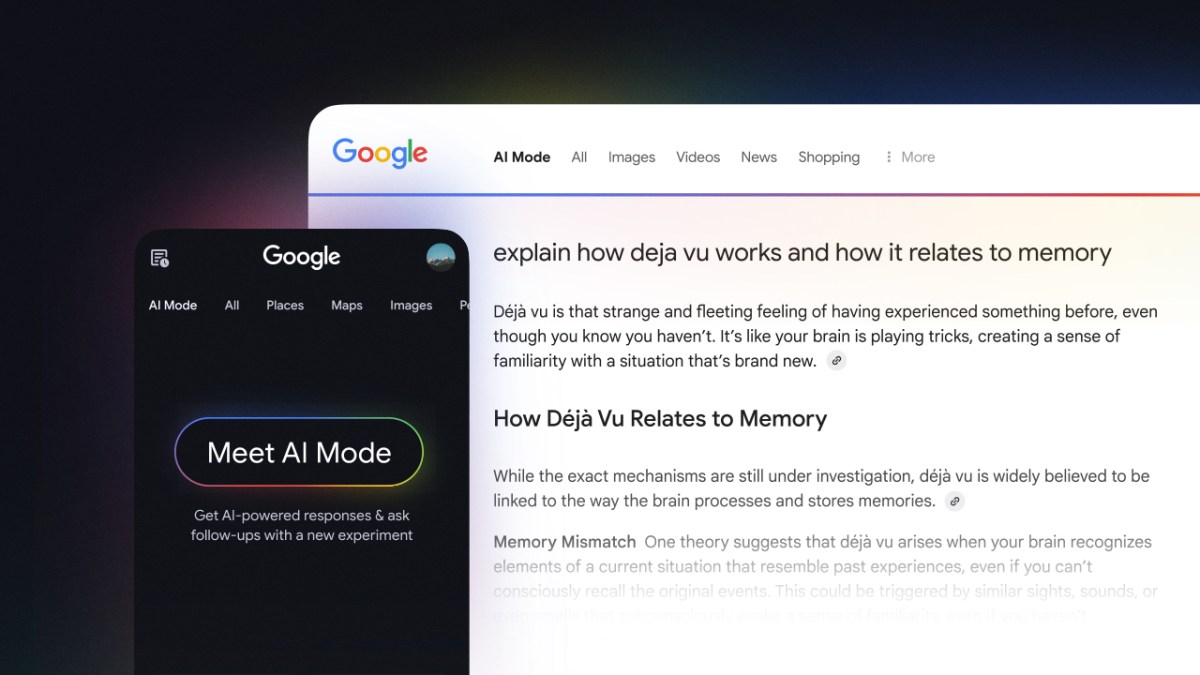
Forget everything you thought you knew about Google Search. In the span of two months, Google quietly rolled out the most significant search update in a decade — and most people barely noticed. Google I/O 2025 AI Overviews now handle multi-step reasoning, AI Mode has entered Search Labs, and nine European countries just got their first taste of AI-generated answers. All of this before the Google I/O 2025 keynote even begins on May 20.
What Are Google I/O 2025 AI Overviews — and Why Should You Care?
AI Overviews are not a minor UI tweak. They fundamentally change how Google answers your questions. Instead of returning ten blue links and hoping you piece together an answer, Google now synthesizes information from across the web into a coherent summary — right at the top of search results. Powered by Gemini 2.0, the latest iteration can break down complex, multi-part queries into subtopics, run parallel searches, and assemble a comprehensive answer in seconds.
Here is the key shift: you no longer need to know how to search well. The burden of formulating the perfect query has moved from the user to the AI. Ask “What’s the best mirrorless camera for concert photography under $2,000 that also works well for video?” and instead of five separate searches, you get one structured answer with reasoning.
AI Mode: Google’s Answer to ChatGPT and Perplexity
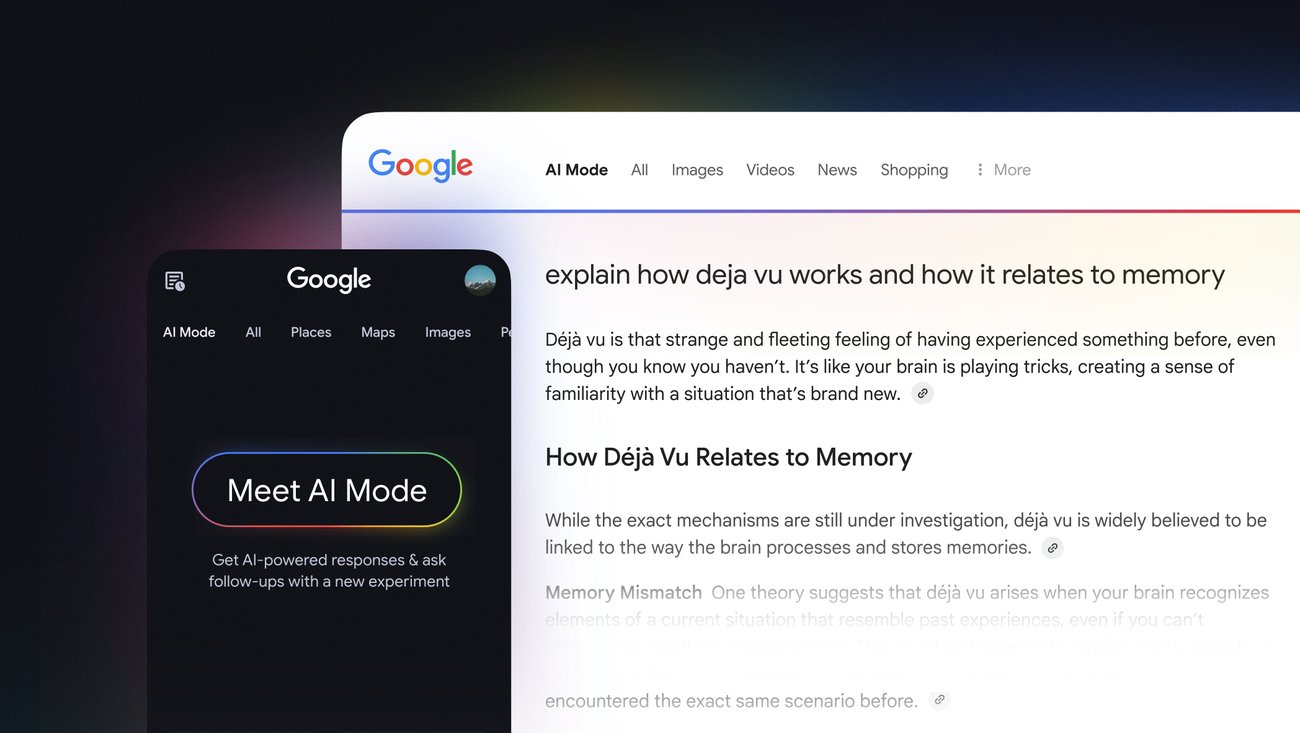
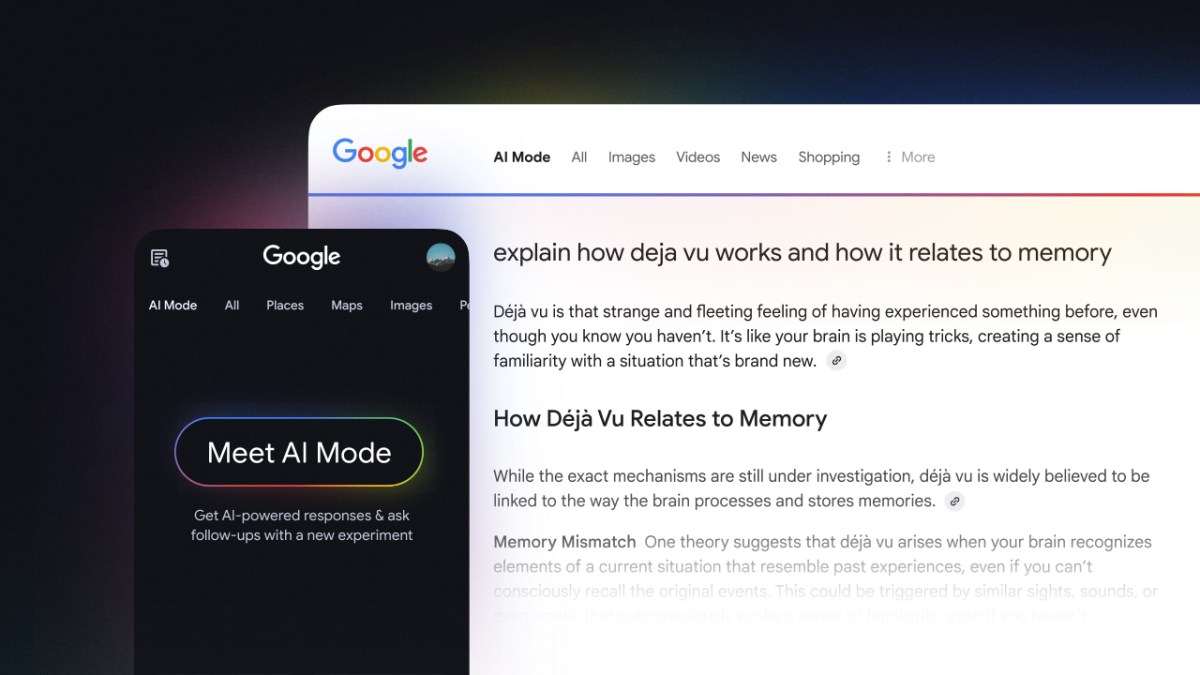
On March 5, 2025, Google introduced AI Mode — a dedicated tab within Google Search that functions more like a conversational AI assistant than a traditional search engine. Available initially to Google One AI Premium subscribers ($19.99/month) in the US through Search Labs, AI Mode is Google’s most direct response to the growing threat of ChatGPT Search and Perplexity.
The competitive context matters. According to SE Ranking’s research, ChatGPT currently holds 80.49% of the AI chatbot market share. But Google still commands nearly 90% of global search traffic. AI Mode is Google’s play to keep those users from migrating to conversational alternatives for complex queries.
What makes AI Mode different from simply chatting with Gemini? It is deeply integrated with Google’s search index. Every AI Mode response is grounded in real-time web data, not just a language model’s training data. You get the conversational depth of a chatbot with the freshness and breadth of Google Search.
The Query Fan-Out Technique: How Multi-Step Reasoning Actually Works
The technical innovation behind these upgrades is what Google calls “query fan-out.” When you submit a complex question, the system does not attempt to answer it in one pass. Instead, it decomposes your question into multiple sub-queries, executes them in parallel against the search index, and then synthesizes the results into a unified response.
Think of it this way: if you ask “Compare the environmental policies of Germany and France, and how they affect electric vehicle adoption rates,” the old Google would give you a mix of results about German environmental policy, French environmental policy, and EV stats — separately. The new system breaks this into at least four parallel queries, cross-references the results, identifies connections, and delivers a structured comparison. As Search Engine Land reported, this represents Google’s most ambitious attempt at reasoning within search.
European Expansion: AI Overviews Go Global
On March 26, 2025, Google expanded AI Overviews to nine European countries: Germany, Belgium, Ireland, Italy, Austria, Poland, Portugal, Spain, and Switzerland. The rollout covers five languages — English, German, Italian, Spanish, and French. This is significant because Europe has historically been cautious about AI deployment due to strict data protection regulations, including the EU AI Act.
The European launch signals that Google is confident enough in AI Overviews’ accuracy and compliance to push it into one of the most regulated markets on earth. For content creators and businesses operating in these regions, the implications are immediate: your content now competes not just for ranking position, but for citation within AI-generated summaries.
The SEO Impact: What Actually Changes for Content Creators
This is where things get real for anyone who creates content for a living — or runs a business that depends on organic search traffic. According to recent analysis, AI Overviews are already reshaping user behavior in measurable ways:
- 40-61% of AI Overviews use structured formats — content formatted as lists and bullet points has significantly higher chances of being cited in AI-generated summaries.
- Users referred through AI Overviews show 23% lower bounce rates — when someone clicks through from an AI Overview, they are more engaged with the destination content.
- 41% more time on site — AI Overview referrals spend considerably longer on pages they visit, suggesting higher intent and better content matching.
The counter-intuitive finding here is that AI Overviews may actually send higher-quality traffic to websites, even if overall click volume decreases. Users who click through an AI summary already have context — they are looking for depth, not surface-level answers.
For SEO strategy, the practical takeaways are clear: structure your content for citation (clear headers, bullet points, direct answers to questions), build topical authority so Google trusts your content as a source, and focus on depth over keyword density.
The Competitive Landscape: Google vs. Everyone
Google is not making these moves in a vacuum. The AI search space has become intensely competitive in 2025. Perplexity AI has carved out a significant niche with its citation-first approach. ChatGPT Search continues to grow. Microsoft’s Bing Copilot integrates deep AI capabilities. Even smaller players are finding ways to challenge Google’s dominance in specific verticals.
But Google has one enormous advantage: distribution. With nearly 90% of global search market share, Google does not need to convince users to switch to a new product. They just need to make the existing product smarter. AI Overviews and AI Mode do exactly that — they layer AI capabilities on top of the search experience billions of people already use daily.
The question for Google I/O 2025, which kicks off on May 20, is how much further they will push. Will AI Mode expand beyond Search Labs? Will AI Overviews become the default for all queries? The March announcements suggest Google is moving faster than most anticipated.
My Take: What 28 Years in Tech Taught Me About This Shift
I have been building technology workflows since the late 1990s — first in music production and audio engineering, then increasingly in AI-driven automation. Watching Google’s AI Overviews rollout reminds me of a pattern I have seen before: the shift from manual to automated workflows always starts slowly, then accelerates past the point where going back makes sense.
In the audio world, we saw this with digital recording replacing tape, with algorithmic mastering tools complementing (and sometimes replacing) human ears, and with AI-assisted mixing becoming standard in mid-tier studios. The pattern is always the same: the first version is impressive but flawed, the second version is quietly better, and by the third version, the old way feels painfully slow.
Google’s AI Overviews are in that second stage right now. The March 2025 updates — multi-step reasoning, European expansion, AI Mode — represent the quiet improvement phase. By the time Google I/O 2025 wraps up in late May, I expect we will be firmly in stage three. For anyone building content, products, or businesses that depend on search visibility, the time to adapt is not after the keynote — it is now. I have already restructured my own content pipelines to optimize for AI citation rather than traditional ranking, and the early results confirm what the data suggests: quality, structured content with clear expertise signals is what these systems want to cite.
The real winners in this transition will not be the ones who game the new system, but the ones who were already creating genuinely useful, well-structured content. AI Overviews are, in many ways, the ultimate quality filter — and that is a good thing for creators who prioritize substance.
With Google I/O 2025 just two weeks away, one thing is clear: the search experience we have known for 25 years is being rebuilt from the ground up. Whether you are a content creator, an SEO professional, or simply someone who Googles things every day, multi-step reasoning and AI Mode are not coming — they are already here. The keynote will reveal how far Google plans to take this, but the foundation has already been laid. Adapt now, or spend the rest of 2025 catching up.
Navigating AI-driven search changes for your business? Whether it is automation pipelines, AI integration, or technical consulting — let us talk.
Get weekly AI, music, and tech trends delivered to your inbox.