Best Monitors for Mac USB-C: 7 Top Displays for M4 Chips in 2025
May 5, 2025
Google I/O 2025 AI Overviews: Multi-Step Reasoning Is Already Reshaping Search
May 6, 2025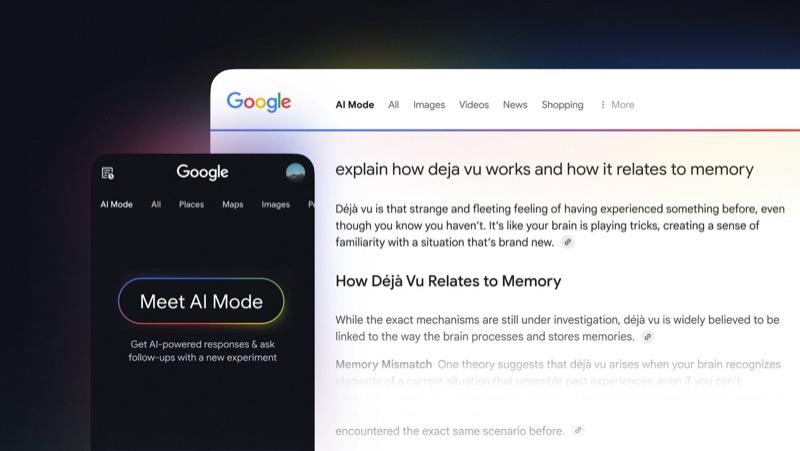
1.5 billion monthly users. 200+ countries. A 46% drop in click-through rates for publishers. Google AI Overviews didn’t just get an update at Google I/O 2025 — it got a complete transformation. Powered by a custom Gemini 2.5 model, Google Search now breaks your single question into hundreds of sub-queries and synthesizes the results into expert-level reports. This isn’t search anymore. This is something entirely new.
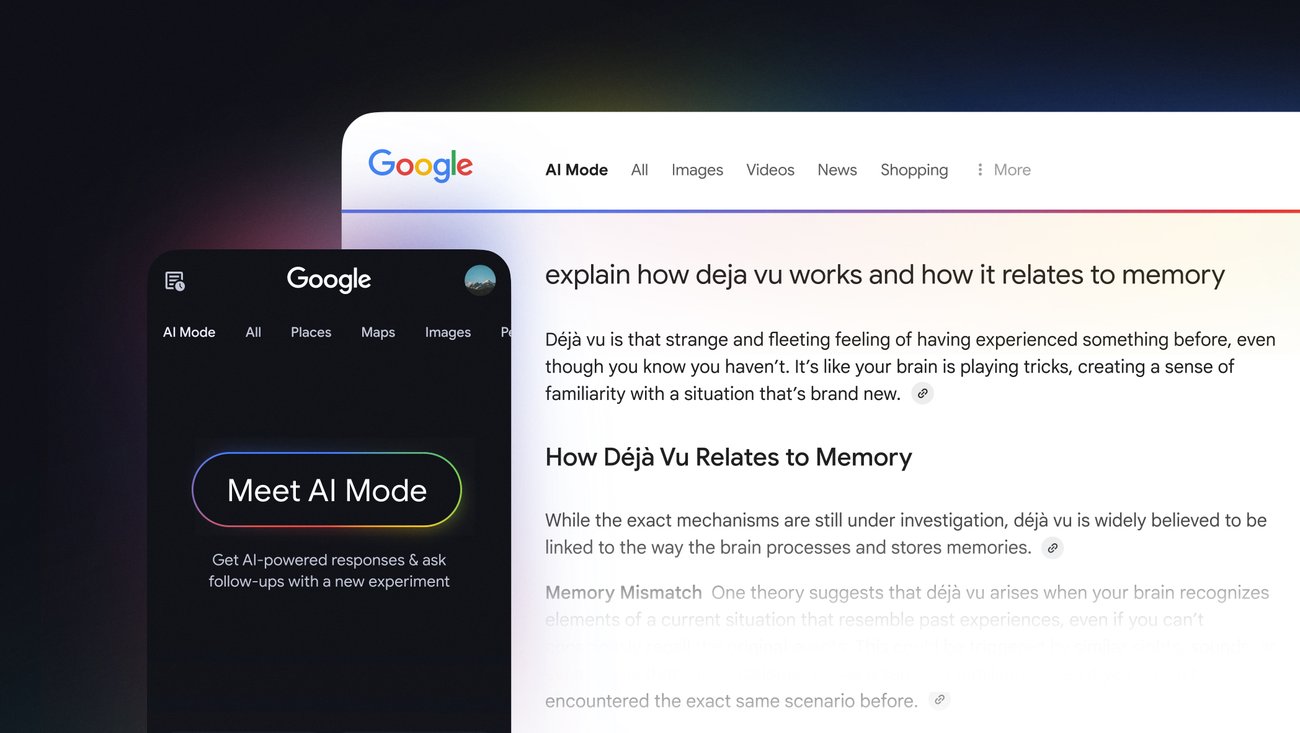
What Changed: Google AI Overviews at I/O 2025
At Google I/O 2025, the company announced three major shifts in how search works. First, AI Overviews expanded from a primarily English-language feature to a global service covering 200+ countries and territories with 40+ new languages — including Arabic, Chinese, Malay, and Urdu. Second, Google built a custom version of Gemini 2.5 Pro specifically designed for search reasoning. Third, they officially launched AI Mode as a full-fledged search interface, not just an experiment.
The numbers tell the story. According to Google’s official blog, search usage increased by 10% in major markets like the US and India where AI Overviews appear. Google frames this as evidence that AI doesn’t replace search — it makes people search more. Whether you buy that framing or not, the scale is undeniable: 1.5 billion people now interact with AI-generated summaries every month.
Multi-Step Reasoning and Query Fan-Out: The Technical Core of Google AI Overviews
The most significant technical advancement is what Google calls “query fan-out.” When you ask a complex question, the custom Gemini 2.5 model doesn’t just search for matching pages. Instead, it decomposes your question into multiple sub-topics and searches each one simultaneously. For standard queries, this means 8-12 sub-queries running in parallel. For Deep Search, the system fires off hundreds of sub-queries to build comprehensive, expert-level reports.
Here’s a practical example. If you ask, “What are the technical, legal, and cost considerations for a music producer adopting AI mastering in 2025?” — the old Google would try to find a single page that addresses this entire question. The new AI Mode breaks it into separate searches for AI mastering technology comparisons, music AI copyright issues, AI mastering service pricing, and more. It then synthesizes all results into a structured, multi-faceted answer.
Google describes this as moving “beyond information to intelligence.” The I/O 2025 keynote demonstrated Deep Search producing research-quality reports that would normally take a human hours to compile. The implications for how we consume information are profound — and for content creators, potentially existential.
The Publisher Impact: 46% CTR Drop and the Rise of Zero-Click Search
For publishers and content creators, the expansion of Google AI Overviews comes with a harsh reality check. According to Search Engine Journal’s analysis, click-through rates drop by 34-46% when AI summaries appear in search results. Even more alarming is the zero-click search trend: from May 2024 to May 2025, zero-click searches jumped from 56% to 69%.
Let that sink in. Seven out of ten searchers now get what they need from Google’s AI summary without clicking a single link. For blog operators, media outlets, and niche sites that depend on organic search traffic, this represents a fundamental shift in the traffic model they’ve built their businesses on.
The question isn’t whether this trend will continue — it’s how fast. With 40+ new languages now supported and Google actively expanding AI Overviews to every market, the global impact on web traffic is only beginning.
AI Mode vs. Traditional Search: What Coexists and What Gets Replaced
Google is careful to position AI Mode as complementary to traditional search, not a replacement. In practice, AI Overviews don’t appear for every query. Simple lookups — weather, stock prices, navigation — still work the old way. AI summaries activate selectively for complex, multi-part questions that benefit from synthesis and reasoning.
But the scope of what counts as “complex enough” keeps expanding. Informational queries — the kind that drive the majority of blog and media traffic — now almost universally trigger AI Overviews. According to DataCamp’s analysis of the I/O 2025 announcements, AI Overviews are driving a 10% increase in search usage where they appear, which suggests users are finding value in the AI-generated answers and asking more follow-up questions.
From a content strategy perspective, the traditional SEO goal of “ranking on page one” is no longer sufficient. The new game is about becoming a source that AI Overviews cite. This means E-E-A-T signals (Experience, Expertise, Authoritativeness, Trustworthiness), structured data, and — most importantly — unique perspectives and original analysis that AI can reference but not replicate.
My Take: What 28 Years in Tech and Audio Taught Me About This
As someone who has spent 28 years navigating the intersection of music and technology, Google’s latest move reminds me of the early 2000s when MP3s disrupted the music industry. Back then, you had two camps: the doomsayers declaring “music is dead” and the complacent insiders insisting nothing would change. The reality? Artists and labels that adapted to streaming built bigger audiences than ever before. Those who clung to the old model got left behind.
AI Overviews is the same story playing out in the search and content industry. Running this blog, I’ve already felt the shift firsthand. Informational keywords like “Dolby Atmos mastering tutorial” that used to drive steady organic traffic? AI Overviews now serves that information directly on the search page. But here’s the flip side — content with personal experience, original analysis, and a distinct point of view is getting picked up as a cited source in AI summaries, creating a new kind of visibility.
The takeaway is clear: content that AI can summarize has already lost its standalone value. Only content that AI cannot replicate — the kind built on lived experience, professional judgment, and original thinking — will survive. Just as the music industry reinvented its revenue model around live performance and fan communities (things you can’t digitize away), the content industry will reorganize around perspectives and expertise that no language model can fake.
Google AI Overviews at I/O 2025 isn’t just a feature update. It’s a declaration that the most fundamental activity on the internet — searching for information — is being restructured from the ground up. Gemini 2.5’s multi-step reasoning, the 200+ country expansion, Deep Search — all of it points in one direction: from the democratization of information to the democratization of intelligence. Whether you ride that wave or get pulled under depends on what you build today.
Practical Adaptation: What Publishers and Creators Should Do Right Now
The data is clear and the trend is accelerating — so what do you actually do? Here are the concrete shifts that will determine which content operations survive the Google AI Overviews era and which become digital ghost towns.
- Create proprietary data: Original surveys, experiments, or first-hand testing consistently outranks curated information — language models can’t synthesize what doesn’t yet exist on the web
- Build topical authority: A cluster of deeply interconnected posts on a specific niche is harder for AI to replace than isolated articles targeting single keywords
- Target bottom-of-funnel queries: Transactional and comparison searches still drive meaningful click-through even when AI Overviews appear — “best X for Y” and “X vs Y” queries retain strong CTR
- Publish interview-based content: Quotes and perspectives from real practitioners with verifiable credentials can’t be synthesized from existing web content
Second, audit your content for AI replaceability. If your page answers a question that a language model can answer equally well from publicly available information, that page is already at risk. Pure informational “what is” and “how to” posts without original data, first-hand experience, or proprietary analysis are the most vulnerable. Map what percentage of your organic traffic depends on these pages — that exposure number is your wake-up call.
Third, shift your traffic model from search-dependent to audience-owned. Email newsletters, direct community platforms, and social followings are immune to Google algorithm changes. The creators who weather the AI search disruption will be the ones who treat Google traffic as a bonus, not a lifeline. Building a direct audience relationship through platforms like newsletters or community memberships creates resilience no SEO update can take away.
Finally, optimize for AI citation, not just ranking. Study which content appears in AI Overviews for your target keywords — you’ll find that well-structured posts with clear topic sections, specific data points, and authoritative sourcing get pulled into AI summaries most consistently. Format your content to be citation-ready: precise headers, specific claims with sources, and unique insights that no aggregation can reproduce. Being cited by Google’s AI is the new page-one ranking. Content that earns this distinction shares one trait: it contains something a crawler could not have assembled on its own — your direct experience, your original analysis, or your professional judgment on a topic you know more deeply than any training dataset.
Interested in AI consulting or building automation systems for the new search landscape? Let’s talk.
Get weekly AI, music, and tech trends delivered to your inbox.