Mix Self-Assessment Techniques: 7 Ways to Review and Improve Your Mixes Like a Pro
December 26, 2025
Producer New Year Resolutions: 10 Ways to Level Up in 2026
December 29, 2025
A Nobel Prize in Chemistry. Over 3 million researchers using a single AI tool across 190+ countries. A mathematics competition performance at gold-medal level. And an automated lab where robots synthesize hundreds of new materials every day. If you had to sum up Google DeepMind 2025 in one sentence, it would be this: the year AI stopped being a research curiosity and became the backbone of scientific discovery itself.
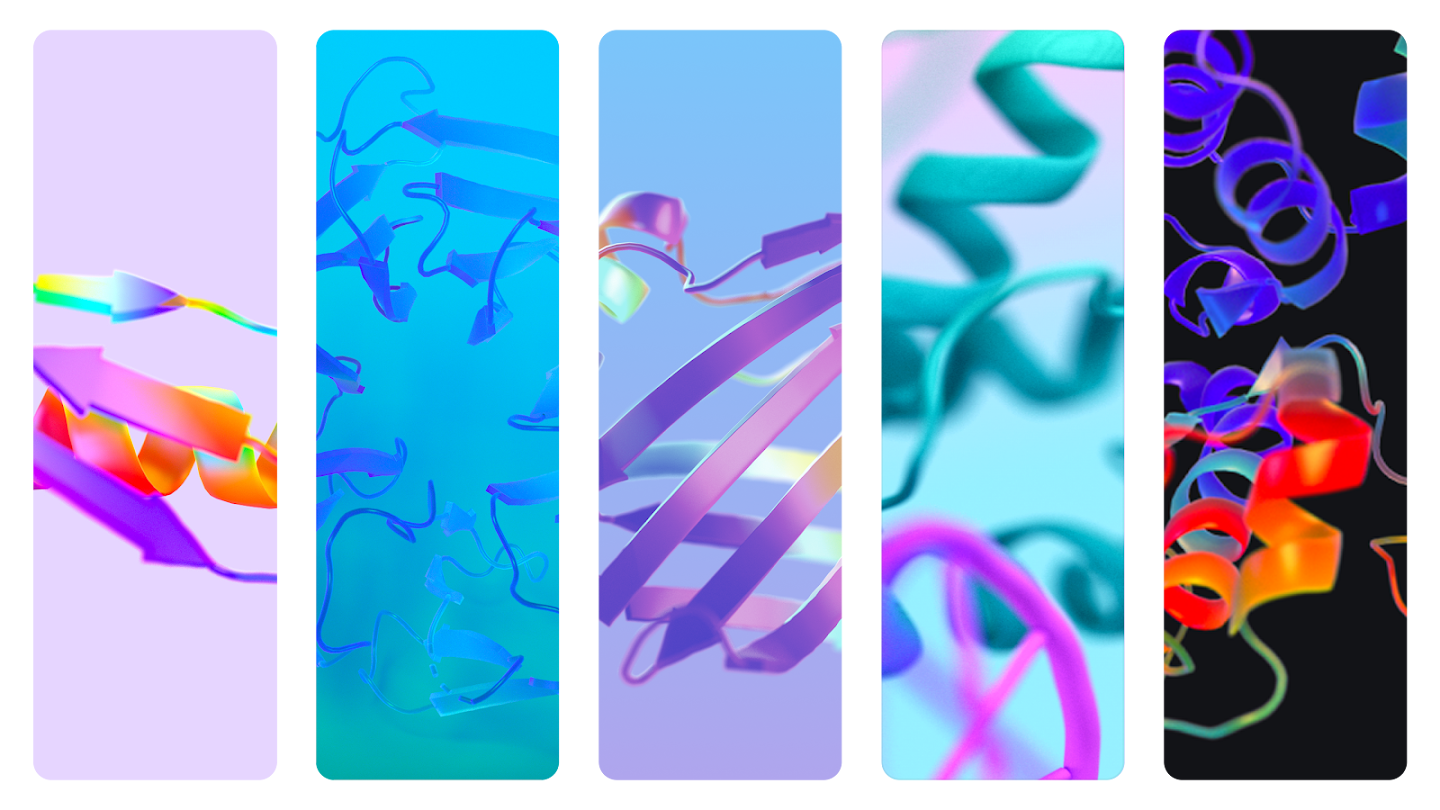
Google DeepMind 2025: AlphaFold’s Five-Year Transformation of Science
When AlphaFold burst onto the scene at CASP14 in 2020, effectively solving the protein folding problem that had stumped biologists for 50 years, many wondered if the hype would last. Five years later, the answer is resounding. According to Google DeepMind’s official impact report, the numbers tell a story that no one could have predicted:
- 3 million+ researchers across 190+ countries actively using AlphaFold
- 1 million+ users in low- and middle-income countries alone
- 200 million+ protein structures predicted
- 35,000+ academic citations
- 200,000+ research papers incorporating AlphaFold’s methodology
The 2024 Nobel Prize in Chemistry, awarded to DeepMind’s Demis Hassabis and John Jumper, cemented AlphaFold’s status as the most consequential AI application in scientific history. As Fortune noted, it was the fastest journey from scientific breakthrough to Nobel recognition in modern history, proving that “science is AI’s killer app.”
AlphaFold 3: Beyond Proteins to a Universal Digital Microscope
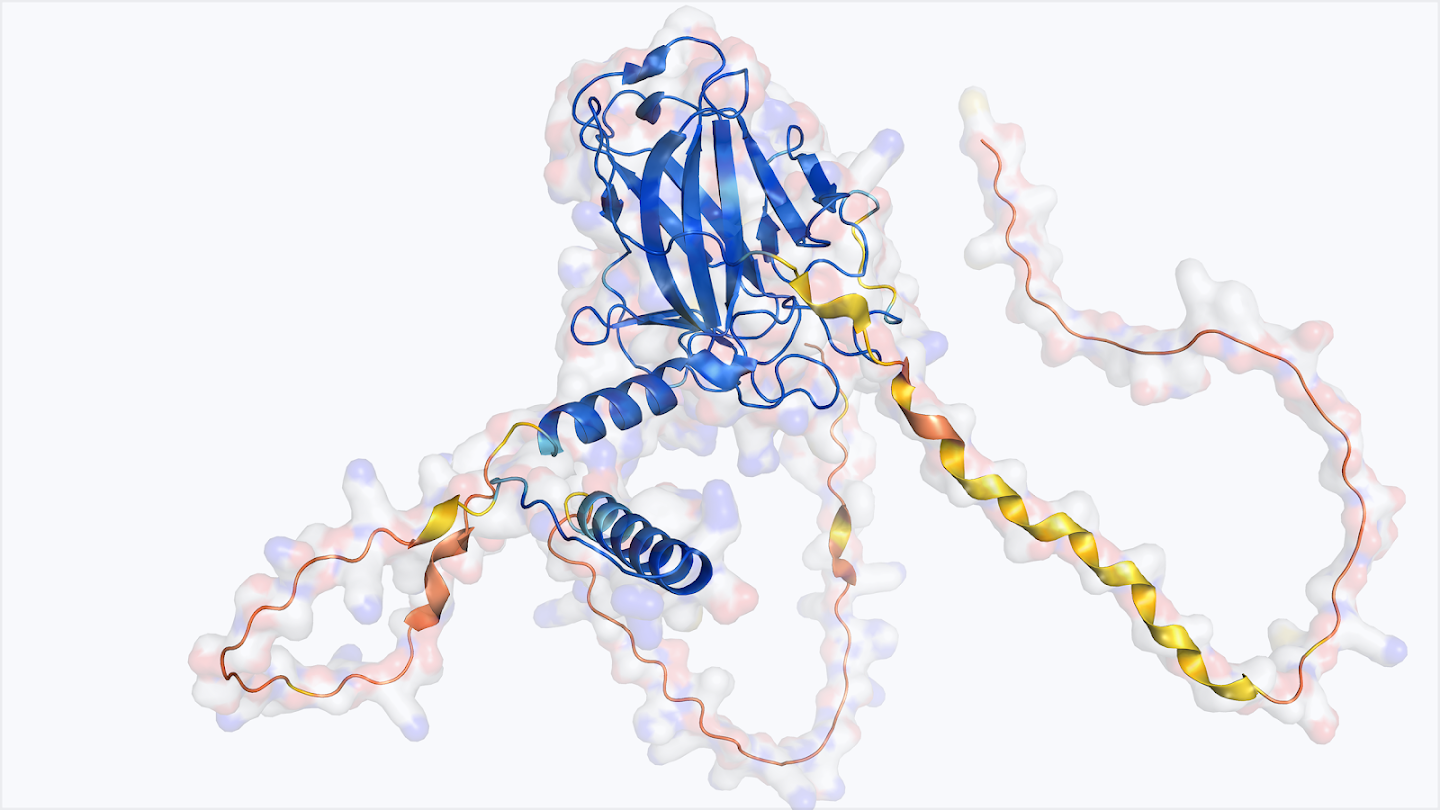
While AlphaFold’s original version focused on predicting protein structures, AlphaFold 3 dramatically expanded the scope of what’s possible. The latest iteration can now predict interactions between nearly all of life’s molecules, including DNA, RNA, and drug ligands. In an in-depth interview with MIT Technology Review, Nobel laureate John Jumper described AlphaFold 3 as a “universal digital microscope for molecular biology” and outlined three critical directions for the technology’s future.
First, AlphaFold 3 is accelerating vaccine development for neglected tropical diseases that affect millions in developing nations but receive relatively little pharmaceutical investment. By predicting how viral proteins interact with potential drug molecules, researchers can identify promising vaccine candidates in weeks rather than years.
Second, the technology is providing unprecedented insights into antibiotic resistance mechanisms. As superbugs become an increasingly urgent global health threat, understanding exactly how bacteria evolve resistance at the molecular level is essential for developing next-generation antibiotics.
Third, and perhaps most exciting, AlphaFold 3 is making previously “undruggable” protein targets accessible for drug discovery. Many diseases involve proteins with structures so complex that traditional drug design methods simply couldn’t find molecules that would bind to them effectively. AlphaFold 3’s ability to model these interactions in silico is opening entirely new therapeutic possibilities.
AlphaFold Spin-offs: AlphaProteo, AlphaMissense, and Isomorphic Labs
The AlphaFold ecosystem has also spawned several powerful derivative projects that demonstrate just how far this technology can reach. AlphaProteo represents a fundamental shift in bioengineering: rather than merely predicting existing protein structures, it can design entirely novel proteins from scratch. This means researchers can now create custom-built molecular tools for specific therapeutic or industrial purposes, something that was essentially science fiction just a few years ago.
AlphaMissense tackles one of genomics’ most persistent challenges by predicting the pathogenicity of genetic mutations. With the human genome containing millions of possible single-nucleotide variants, determining which ones actually cause disease has been painstakingly slow. AlphaMissense has classified approximately 89% of all possible missense mutations, providing researchers with a comprehensive map of genetic risk that accelerates rare disease diagnosis and genetic counseling.
Perhaps the most commercially significant development is Isomorphic Labs, DeepMind’s drug discovery spin-off company. In 2025, Isomorphic secured multi-billion dollar partnerships with pharmaceutical giants Eli Lilly and Novartis, signaling that AI-driven drug development has moved firmly from academic research into commercial reality. These aren’t speculative research agreements either. The partnerships involve concrete milestones for delivering drug candidates into clinical pipelines, with the first AI-designed molecules expected to enter human trials in the near future.
Gemini’s Explosive Evolution: From 2.0 to 3.0 in a Single Year
While AlphaFold dominated the scientific headlines, Google’s large language model Gemini had its own breakthrough year in 2025. The pace of iteration was remarkable: Gemini 2.5 launched in March, Gemini 3 arrived in November, and Gemini 3 Flash followed in December. Google’s official year-in-review characterized 2025 as “the year AI began to truly think, act, and explore alongside humans.”
The standout achievement was Gemini Deep Think, a specialized reasoning mode that achieved gold-medal standard at the International Mathematics Olympiad (IMO) and top-tier performance at the International Collegiate Programming Contest (ICPC). These aren’t simple pattern-matching tasks. They require deep logical reasoning, creative problem-solving, and the ability to construct multi-step proofs from first principles. The fact that an AI system can now compete at this level represents a genuine milestone in machine intelligence.
What makes Gemini’s 2025 trajectory particularly significant is the sheer speed of improvement. In the span of nine months, Google went from Gemini 2.5 to a model capable of reasoning at the level of elite human mathematicians. This pace of development has profound implications for every field that relies on complex analytical thinking, from financial modeling and engineering design to scientific research and strategic planning. The gap between AI reasoning and human expertise is closing faster than most experts predicted even two years ago.
AI Co-Scientist and the Automated Research Lab: A New Paradigm
Perhaps the most forward-looking development from Google DeepMind 2025 was the introduction of the AI co-scientist system. This multi-agent framework allows AI to actively participate in the scientific method, generating hypotheses, analyzing existing literature, and proposing experimental designs. Rather than simply being a tool that scientists use, the AI co-scientist acts as a collaborative partner in the research process itself.
Taking this concept even further, DeepMind announced in December 2025 that it would build its first fully automated research laboratory in the United Kingdom. The facility will combine Gemini’s language understanding with robotic systems capable of synthesizing and testing hundreds of new materials daily. The initial focus will be on developing novel superconductor and semiconductor materials, with the lab set to open in 2026.
This initiative is part of a broad partnership with the UK government that will give British scientists priority access to several cutting-edge DeepMind tools, including AlphaGenome (for genomic analysis), AlphaEvolve (for evolutionary biology research), WeatherNext (for climate prediction), and the AI co-scientist platform. The fact that DeepMind is now building physical research infrastructure, not just software, signals a new chapter in how AI companies approach scientific discovery.
The implications of this automated lab model extend far beyond materials science. If the concept proves successful, it could be replicated across pharmaceuticals, agriculture, energy storage, and virtually any field where experimental throughput is a bottleneck. Traditional research labs might run dozens of experiments per week. An AI-driven automated facility could run thousands, dramatically accelerating the pace at which humanity discovers new materials, new drugs, and new solutions to pressing global challenges.
What Google DeepMind 2025 Tells Us About 2026 and Beyond
Looking at the full picture of DeepMind’s 2025 achievements, several clear trends emerge that will shape the year ahead. First, AI is transitioning from academic research tool to industrial-scale infrastructure. The multi-billion dollar Isomorphic Labs partnerships and the automated research lab are concrete evidence of this shift. Second, AI reasoning capabilities are reaching human expert levels in increasingly demanding domains. Gemini Deep Think’s mathematical competition results aren’t just impressive demonstrations; they suggest that AI systems will soon be capable of contributing original insights in fields like mathematics and theoretical physics.
Third, and perhaps most importantly, the benefits of AI research are becoming genuinely global. With over 1 million AlphaFold users in low- and middle-income countries, the technology is democratizing access to cutting-edge scientific tools in a way that few other innovations have managed. Researchers in sub-Saharan Africa and Southeast Asia now have access to the same protein structure prediction capabilities as labs at Stanford or Cambridge. This is not charity; it is a fundamental reshaping of who gets to participate in scientific discovery, and it may prove to be one of Google DeepMind 2025’s most lasting contributions.
As we head into 2026, the automated lab’s full commissioning, further Gemini model evolution, and the potential entry of AlphaFold-derived drugs into clinical trials will be the key milestones to watch closely. The foundation that DeepMind systematically built throughout 2025 has set the stage for what could genuinely become the most transformative period in the entire history of AI-driven science and discovery.
For businesses and individuals alike, the rapid acceleration of AI research presents both extraordinary opportunities and urgent questions about how to adapt. Whether you’re actively exploring AI integration for your organization or simply trying to understand how these rapid advances will fundamentally reshape your industry, the time to start planning is now.
Looking to integrate AI into your workflow or build automation systems? Let’s discuss how these advances can work for your specific needs.
Get weekly AI, music, and tech trends delivered to your inbox.