GitHub Universe 2025 Preview: Copilot Coding Agent Goes GA, CLI Launch, and Everything Developers Need to Know
September 16, 2025
Best Laptops September 2025: Top Picks Across Every Category and Budget
September 16, 2025
“How do they make that chord sound?” — That was the only question running through my head the first time I heard a Flume drop. The shimmering supersaws, the chest-thumping sidechain pump, and those jazz-like chord voicings that somehow landed in an EDM track. Future bass synth design goes far deeper than browsing presets and hoping for the best.
After 28 years in audio production, I’ve watched genres rise and fall more times than I can count. But future bass has proven remarkably resilient since emerging around 2015, evolving continuously while remaining a core EDM genre. Artists like Illenium, San Holo, and Marshmello pushed it into the mainstream, and in 2025, it still dominates Spotify playlists and festival stages alike.
In this tutorial, we’ll break down the entire future bass production process — from synth design fundamentals to arrangement structure and mixing techniques. Whether you’re working in Serum or Vital, Ableton or Logic, the principles here apply across every DAW and synthesizer.

Future Bass Foundations: 130-160 BPM and the Half-Time Magic
Before diving into future bass synth design, you need to understand the genre’s skeleton. Future bass typically lives at 145-160 BPM, but the perceived rhythm feels half-time — kicks land on beat 1, snares on beat 3. This half-time groove creates the simultaneous energy of trap and the spaciousness of dubstep.
The drum programming backbone comes straight from trap. Consistent 8th-note closed hi-hats layered with 32nd-note rolls instantly inject energy. Place open hats at phrase endings and your transitions write themselves. The future bass snare is probably one of the genre’s most distinctive features — layer a snare with a clap, pitch-shift one element up a semitone, and apply shared reverb across all drum elements for spatial cohesion.
SuperSaw Construction: The Heart of Future Bass Synth Design
The most iconic sound in future bass is undeniably the supersaw — multiple detuned sawtooth oscillators stacked together to create that massive, shimmering wall of sound that defines the genre’s DNA.
Building a SuperSaw in Serum: Step-by-Step
- Oscillator A: Select Sawtooth waveform, set Unison to 7-16 voices, adjust Detune between 0.15-0.25
- Oscillator B: Set to Square waveform for added body, Unison 3-5 voices, volume -6dB below Oscillator A
- Filter: Apply Low-Pass filter, map Cutoff to an LFO for the characteristic swelling effect
- LFO 1: Set Rate to 1/4 or 1/8, map to Cutoff for rhythmic filter movement that opens and closes
- FX Chain: Reverb (30-40% wet), Chorus, then OTT compressor in that order
As Dan Larsson’s Serum tutorial on Loopmasters emphasizes, the detune amount is everything. Too little and the sound falls flat; too much and the pitch becomes unstable. The sweet spot sits between 0.15 and 0.25.
Pro tip: Vital (a free synthesizer) can create nearly identical supersaws using the same approach. If you’re looking for a Serum alternative, Vital is the best option for building pro-level future bass sounds without any budget constraints.
Extended Chord Voicings: When Jazz Harmony Meets EDM
What fundamentally separates future bass from other EDM genres is the sophistication of its chord voicings. Simple triads won’t cut it here. As the Native Instruments blog explains, you need to reach for 7ths, 9ths, 11ths, and 13ths to capture the genre’s emotional depth.
Practical Chord Progression Example
Starting with a 6-7-1 progression in G minor, extend each chord:
- Eb Major 9 → Eb, G, Bb, D, F (drop the root for cleaner voicing)
- F Dominant 7 → F, A, C, Eb
- G minor 9 → G, Bb, D, F, A
Here’s the critical technique: mute the root notes. When stacking chords, removing the root creates a jazzier, more sophisticated sound — the bass part handles the root anyway. Illenium and Seven Lions are known for voicing their chords across 4-5 octaves, which gives their supersaws that massive, full-spectrum sound that fills the entire audio space.
Sidechain Compression: The Secret Behind That ‘Pumping’ Sound
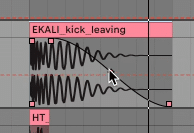
That rhythmic “breathing” quality in future bass chord pads — that’s sidechain compression at work. When you sidechain your chord pad to the kick or bass, the chord volume dips momentarily every time the kick hits, then swells back up.
Sidechain Setup Guide
- Method 1 — Classic Sidechain: Insert compressor on chord track → route kick as sidechain source → Attack 0ms, Release 100-200ms, Ratio 4:1 or higher
- Method 2 — Ghost Trigger: Create a separate kick track (output disabled) as sidechain source. Set release to 0.01 seconds for sharper, more aggressive pumping
- Method 3 — Volume Shaping Plugins: Xfer LFOTool, Nicky Romero Kickstart, or Shaperbox let you draw custom sidechain curves for precise control
I personally prefer the ghost trigger method. It keeps the sidechain rhythm consistent even when the kick pattern changes. The biggest advantage? You maintain that pumping feel even during breakdowns where the kick drops out entirely.
Arrangement Structure: From Buildup to Drop
Future bass arrangement is all about dramatic contrast between tension and release. Here’s the typical structure:
- Intro (8-16 bars): Filtered pads, vocal chops, reverse cymbals → set the mood
- Buildup (8 bars): Sustained strings, arpeggiator with opening filter automation, risers → maximize tension
- Drop (16 bars): Full supersaw chords + sidechained kick + half-time snare + vocal chops → energy explosion
- Breakdown (8 bars): Strip elements one by one, catch your breath
- Second Drop (16 bars): First drop + new layers (lead melody, additional synths)
- Outro (8 bars): Gradual fade
EDMProd’s production guide nails the core principle: “Create variation by strategically removing elements rather than constantly adding new ones.” Just dropping the hi-hats for a bar or resting the bass for a beat creates dramatic impact without cluttering your mix.
Bass Sound Design: Sub That Follows the Chord Roots
The bass part in future bass follows the chord progression’s root notes in an 8th-note pattern. Here’s the sound design approach:
- Oscillators: Saw + Sine (pitched down one octave) combination
- Filter: Low-pass for high-end softening
- AM Modulation: Amplitude modulation between oscillators adds movement
- Mono Mode: Always enabled (polyphonic bass muddies the low end)
- Layering: Apply steep high-pass filters (200Hz+) on rhythmic bass layers
“You don’t want a lot of low-end on every single bass layer.” The rhythmic upper bass layers should be aggressively high-passed at 200Hz or above so they don’t collide with the sub.
Mixing Checklist: 7 Future Bass-Specific Tips
- OTT Compression: Use Ableton’s Multiband Dynamics with the OTT preset or Xfer OTT (free) on the chord bus. This is the secret behind future bass’s “sparkly” character
- Stereo Imaging: Boost the mid channel to push leads forward while assigning the side channel to chord pads
- 150Hz Cut: Remove about 3dB around 150Hz on chord pads to prevent muddiness
- Parallel Compression: Apply a limiter to the drum bus and blend with the dry signal
- Reverb Strategy: Apply shared reverb across all drum elements for spatial cohesion — far more cohesive than individual reverbs
- Vocal Chop Processing: Autotune + granular delay + reverb combination creates surreal textures
- Mastering: iZotope Ozone’s Maximizer for punch and loudness. Target -14 LUFS
Essential Plugins and Tools
Here’s a roundup of the most-used tools in future bass production:
- Synthesizers: Xfer Serum (industry standard), Vital (free alternative), Native Instruments Massive
- Sidechain: Xfer LFOTool, Nicky Romero Kickstart, Cableguys Shaperbox
- Compression: Xfer OTT (free), FabFilter Pro-C 2, iZotope Neutron
- Reverb: Valhalla VintageVerb, FabFilter Pro-R, Soundtoys Little Plate
- Mastering: iZotope Ozone 10, FabFilter Pro-L 2
- DAWs: Ableton Live (Session View + Warp), FL Studio (Piano Roll), Logic Pro (built-in instruments)
As of 2025, Serum remains the number one choice for future bass producers. But Vital’s arrival has dramatically lowered the barrier to entry. On a tight budget, the combination of Vital + Ableton Lite + OTT (free) is enough to produce professional-quality future bass tracks.
Future bass isn’t just about picking presets and playing chords. The depth of synth design, the sophistication of harmony, and the tension-release dynamics of arrangement — master these three pillars and you’ll develop your own signature sound. Start experimenting with the techniques covered here today. The most important thing is that even if you start with presets, you don’t stop there — keep pushing until you find a sound that’s unmistakably yours.
Need professional mixing, mastering, or sound design consultation? Connect with a 28-year industry veteran.
Get weekly AI, music, and tech trends delivered to your inbox.