Eurorack Modular System Beginner Guide: Budget Setup for 2026
January 20, 2026
Best AI Tools 2026: Top Picks for Productivity, Coding, and Creative Work After CES
January 22, 2026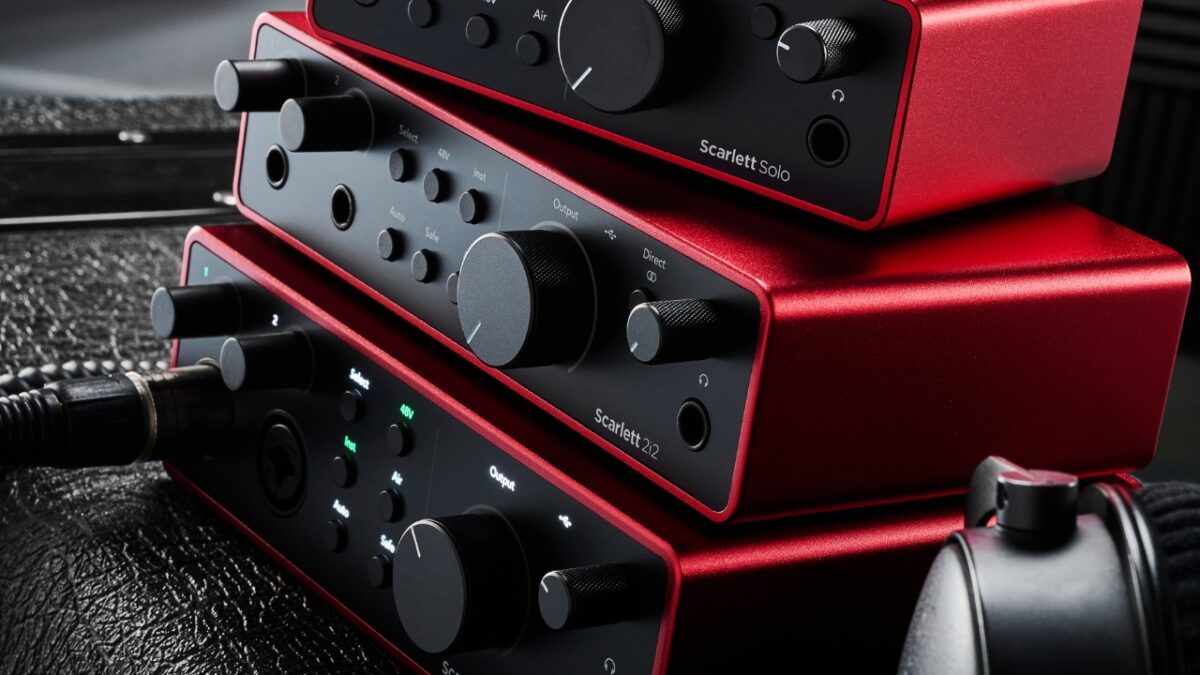
I’ve put my hands on hundreds of audio interfaces over 28 years in the studio, and I can’t remember the last time a rumored product generated this much quiet buzz. The Focusrite Scarlett 5th Gen doesn’t officially exist yet — but with NAMM 2026 right around the corner, the speculation is reaching a fever pitch. Let’s separate the wishful thinking from the realistic expectations.
Why the Focusrite Scarlett 5th Gen Hype Is Building Now
Focusrite has followed a roughly three-year refresh cycle since the original Scarlett launched in 2012. First gen (2012), second gen (2016), third gen (2019), fourth gen (2022) — if the pattern holds, we’re squarely in the window for a fifth-generation announcement. And the NAMM 2026 preview coverage is already hinting that Focusrite has something new in the pipeline.
The fourth gen was a legitimate leap forward. Auto Gain and Clip Safe changed the game for home recording, making it nearly impossible to clip your signal during tracking. But after two years of heavy use, the community’s wish list has grown considerably. SoundRef’s deep-dive review explicitly lists features that “must be addressed in the 5th Gen” — and the requests are both specific and reasonable.

7 Features We Expect from the Focusrite Scarlett 5th Gen
1. Built-In Compressor/Limiter — The Most Requested Feature
This is the elephant in the room. The current Scarlett lineup has no onboard compression, while competitors have been offering it at the same price point. The Universal Audio Volt 176 features a vintage-style compressor built right in, letting you tame vocals and dynamic instruments without any external hardware. The SSL 2+ MKII packs a legacy bus compressor. Even Audient’s iD series offers console-style saturation.
In my experience, the most common mistake in home studios is poor input level management. Auto Gain addressed this brilliantly, but for vocalists with wide dynamic range or acoustic instruments with sharp transients, a compressor is essential. If Focusrite evolves 4th Gen’s Clip Safe into a full DSP-based compressor, the Scarlett 5th Gen could once again redefine what’s possible at this price point.
2. Per-Channel Phantom Power — Freedom to Mix Condenser and Dynamic Mics
The current Scarlett 2i2 and Solo apply 48V phantom power globally — it’s all or nothing. This creates a real problem when you want a condenser mic on channel 1 and a dynamic on channel 2. While most modern dynamic mics handle phantom power fine, ribbon microphones can be destroyed by it. That’s not a theoretical risk; I’ve seen it happen in real sessions.
Per-channel phantom power is already standard on mid-range interfaces. Focusrite’s own Clarett+ line offers it. Bringing this down to the Scarlett tier in the 5th Gen would eliminate one of the most frequently cited pain points in user reviews and forums.
3. Digital Daisy-Chaining — A New Paradigm for Channel Expansion
One of the most interesting requests highlighted in the SoundRef review is the ability to digitally link multiple Scarlett units. Currently, expanding your channel count requires jumping to the 18i20 and using its ADAT input with a separate preamp. That’s a significant cost and complexity increase.
Imagine connecting two Scarlett 2i2 units via USB-C or a proprietary protocol to create a seamless 4-input system. For podcasters running multi-mic setups, small bands tracking live, or producers who need occasional extra inputs, this would be transformative. RME and MOTU have offered similar functionality at higher price points — bringing it to the sub-$200 market would be a major differentiator.
4. Front-Panel Direct Monitor Output Control
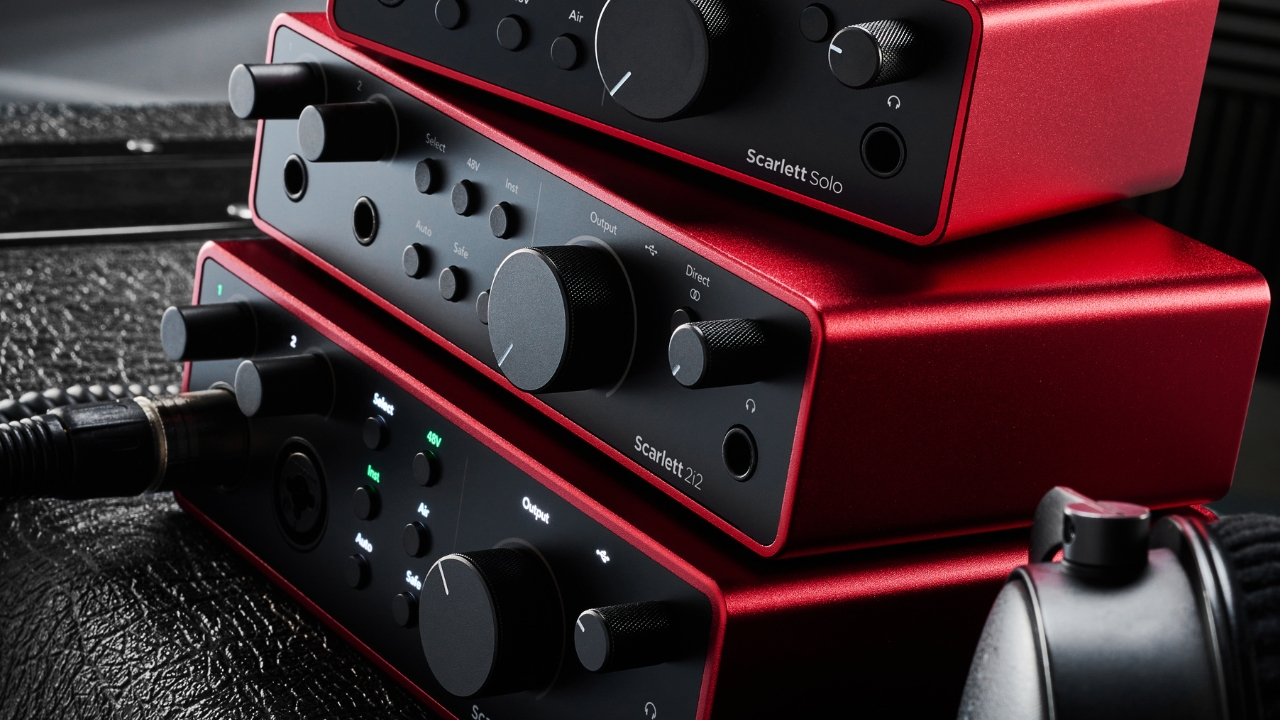
The 4th Gen Scarlett 2i2 front panel houses input gain knobs and a combined headphone/monitor volume knob. Adjusting the direct monitoring balance — the mix between your live input and your DAW playback — requires opening Focusrite Control 2 software. During a recording session, alt-tabbing to adjust monitoring is a workflow killer.
The SSL 2+ solved this years ago with a dedicated monitor mix knob on the front panel. It’s a simple, elegant solution that lets you physically blend your input signal with DAW playback in real time. If the Scarlett 5th Gen adds a hardware mix knob — even a small encoder — it would dramatically improve the live recording and tracking experience.
5. MIDI I/O Return — A Gift for Synth and Drum Machine Users
As BestAudioHub’s 2i2 review pointed out, the lack of MIDI support is a real limitation for producers using hardware synthesizers, drum machines, or MIDI controllers that rely on 5-pin DIN connections. The 3rd Gen Scarlett models offered MIDI — the 4th Gen dropped it.
Yes, you can buy a separate USB MIDI interface. But the appeal of an all-in-one solution is exactly why people choose the Scarlett in the first place. With USB-C offering significantly more bandwidth than previous USB generations, there’s room for Focusrite to include native MIDI over USB or restore physical MIDI ports on the 4i4 and above. The hardware synth renaissance makes this more relevant than ever.
6. Focusrite Control App Evolution — Expanded Mobile Control
Sound On Sound reported that Focusrite’s 4th Gen firmware update added remote multichannel Auto Gain via mobile app — a genuinely useful feature for setting levels from across the room. The January 27, 2026 Focusrite Control 2 update added preset export/import between computers and batch peak level clearing.
The trajectory is clear: Focusrite is investing heavily in software integration. For the 5th Gen, I’d expect full mixer control from iPad and iPhone, scene memory save/recall (critical for users who switch between different recording setups), and possibly AI-assisted room correction. The hardware is only half the product now — the software ecosystem matters just as much.
7. Surround Sound Monitor Groups — Preparing for Immersive Audio
According to Magnetic Magazine’s coverage, the 4th Gen 18i20 firmware update already added 2.1 and 5.1 surround monitor groups. This is a clear signal that Focusrite is taking immersive audio seriously at the prosumer level.
With Apple Music Spatial Audio and Dolby Atmos Music growing rapidly, the demand for affordable surround monitoring is only increasing. The 5th Gen could expand surround support to more models in the lineup and potentially offer 7.1.4 Atmos monitoring output presets. Making immersive audio accessible at the home studio level isn’t just nice to have — it’s becoming a competitive necessity.
Scarlett 4th Gen vs 5th Gen — Should You Buy Now or Wait?
This is the practical question everyone’s asking. The current Scarlett 4th Gen 2i2 sits at around $189, and at that price, the 69dB gain range (enough to drive an SM7B without a Cloudlifter), Auto Gain, and Clip Safe make it arguably the best value in audio interfaces. MusicRadar’s 2026 best audio interfaces list still ranks it at the top of the budget category.
Here’s my honest take after nearly three decades in this industry:
- Buy now if: You don’t have an interface or you’re still on a 2nd Gen or older. The 4th Gen’s Auto Gain alone is worth the upgrade — don’t wait months for something that may not arrive until late 2026.
- Wait if: You already own a 3rd or 4th Gen Scarlett. Unless your current unit is failing, the incremental improvements of a 5th Gen aren’t worth rushing to buy on launch day. Let the early adopters find the bugs.
- Consider alternatives if: You need compression now (UA Volt 176), MIDI now (SSL 2+ MKII), or more outputs now (Audient iD14 MKII). Don’t let the “next big thing” keep you from making music today.
NAMM 2026 and Focusrite — What’s the Announcement Timeline?
Focusrite has traditionally used NAMM as its primary stage for major product launches. The 4th Gen lineup was completed in 2024 with the release of the 16i16, 18i16, and 18i20, and 2025 focused on significant firmware updates rather than new hardware. That means the engineering team has had time to focus on what’s next.
One realistic possibility: rather than a full 5th Gen launch, we might see a “4.5 Gen” approach — same hardware with new DSP features unlocked via software. Focusrite has already demonstrated this capability with the ADAT expansion and surround monitoring updates. A software-first strategy would let them extend the 4th Gen’s lifecycle while testing features that could become native hardware in a true 5th Gen release down the road.
Either way, the evidence is clear that Focusrite is actively listening to user feedback. The ADAT expansion, surround monitor groups, and mobile remote control additions weren’t random updates — they directly addressed the community’s most vocal requests. Whether the Scarlett 5th Gen arrives as one big hardware refresh or as a series of incremental improvements, the trajectory is promising. NAMM 2026 should give us the first concrete answers.
Bottom Line: Why the Focusrite Scarlett 5th Gen Is Worth Watching
Every Scarlett generation has delivered a “how is this possible at this price?” moment. The 4th Gen’s Auto Gain and Clip Safe were that moment. The 5th Gen has the opportunity to do it again with built-in compression, per-channel phantom power, and digital daisy-chaining. Even one of these features making it into the final product would raise the bar for what a sub-$200 audio interface can do.
The audio interface market is more competitive than ever, with SSL, Universal Audio, Audient, and PreSonus all pushing hard at every price point. Focusrite doesn’t have the luxury of a conservative update. The Scarlett 5th Gen needs to be another leap — and based on what we’ve seen from the 4th Gen firmware evolution, I believe they know it.
If you’re navigating audio interface decisions or building out your studio setup, I’m always happy to share what 28 years of hands-on experience has taught me about getting the most out of your gear.
Whether you’re choosing your first audio interface or optimizing a professional studio workflow, we can help you make the right call.
Get weekly AI, music, and tech trends delivered to your inbox.