AI Developer Tools September 2025: 7 Best CLI and IDE Integrations Reshaping How We Code
September 17, 2025
Apple Mac Mini M5 Rumors: Compact Desktop Gets Pro-Level Performance
September 17, 2025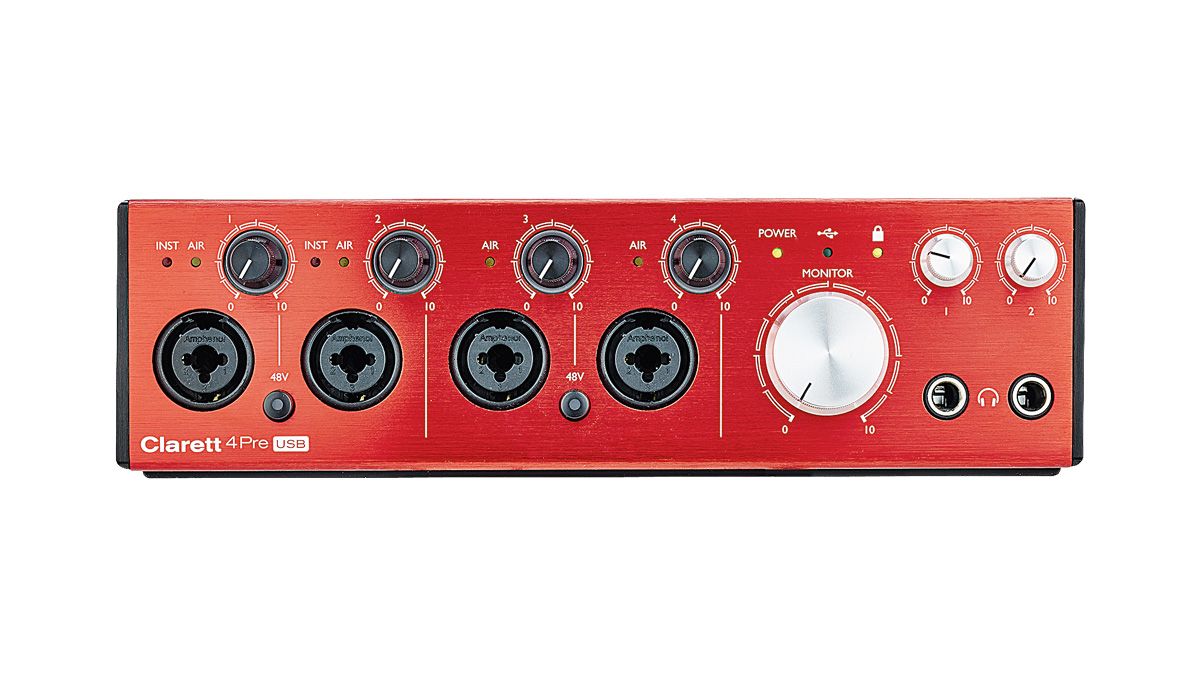
Here’s a number that stopped me mid-session: 124dB of dynamic range and -129dB EIN from a USB-C audio interface that costs under $750. The Focusrite Clarett+ 4Pre USB-C isn’t just another incremental upgrade — it’s the result of a supply chain crisis that accidentally produced a better product than the original Thunderbolt version it replaced.
The Focusrite Clarett+ 4Pre USB-C Story: How a Factory Fire Led to Better Specs
Let’s address the elephant in the room. The “plus” in Clarett+ exists because of the 2020 AKM semiconductor factory fire that disrupted converter chip supplies across the entire pro audio industry. Focusrite was forced to source new converters — and they chose Cirrus Logic chips that actually outperform the original AKM silicon. The result? Expanded dynamic range, lower THD+N, and a beefier headphone amplifier. Sometimes the best engineering happens under pressure.
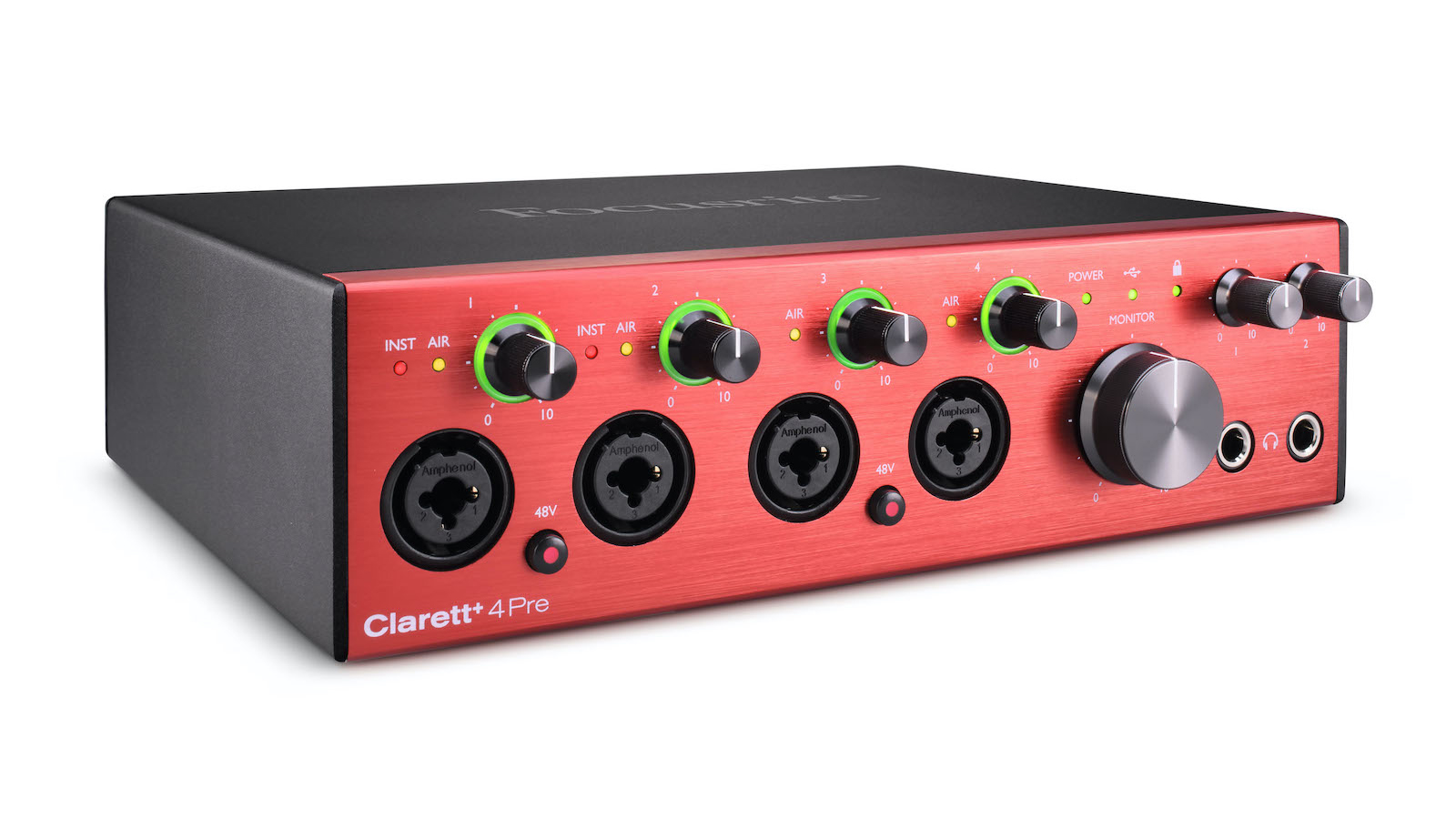
The Clarett+ 4Pre delivers an 18-in/8-out configuration at 24-bit/192kHz — a serious I/O count that puts many interfaces costing twice as much to shame. Four Clarett+ preamps with all-analogue Air mode, two Hi-Z JFET instrument inputs, ADAT expansion for up to 18 simultaneous inputs, MIDI I/O, and S/PDIF. All through a single USB-C cable that’s backward compatible with USB 2.0, USB 3.0, and Thunderbolt 3.
Air Mode: The ISA 110 Heritage in the Focusrite Clarett+ 4Pre USB-C
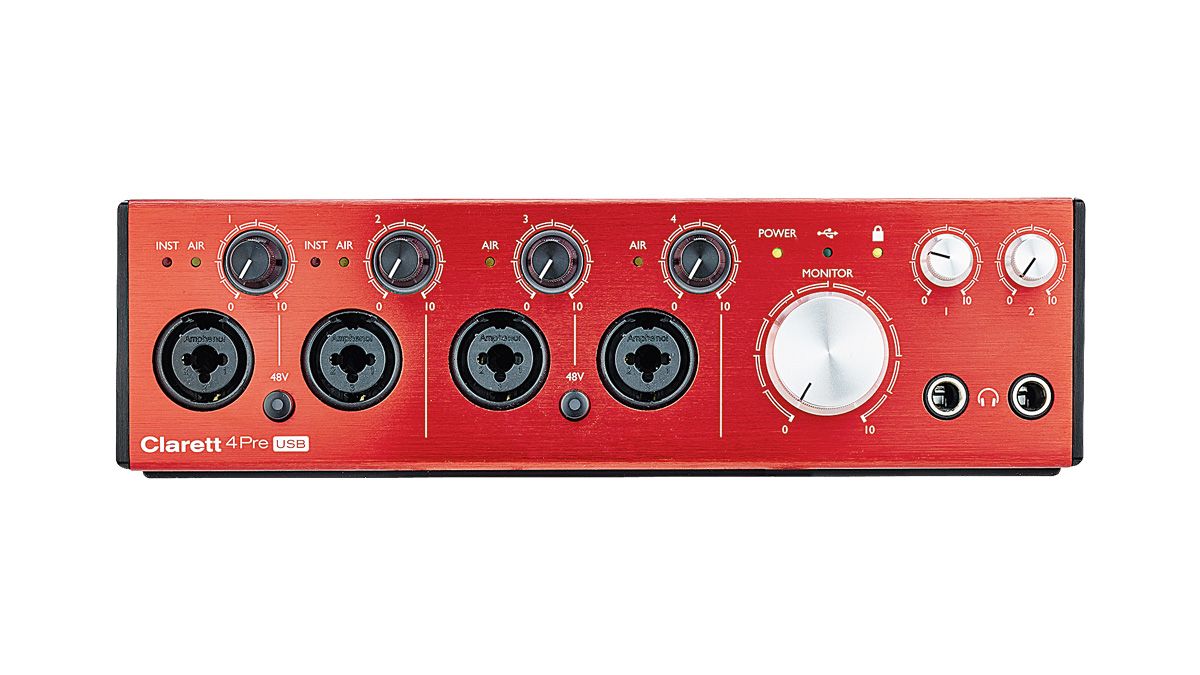
If you’ve ever had the privilege of tracking through a Focusrite ISA 110 — the preamp module originally designed for Rupert Neve’s consoles at AIR Studios — you know that unmistakable presence lift. The Air mode on the Clarett+ 4Pre isn’t a digital emulation or a simple EQ boost. It’s an all-analogue impedance switching circuit that physically changes how the preamp interacts with your microphone.
When you engage Air mode, the input impedance shifts, and the frequency response gains a gentle presence rise from approximately 1kHz upward. On vocals, this translates to immediate clarity without harshness. On acoustic guitar, it adds that “open” quality that usually requires a high-end outboard preamp. As Sound On Sound noted in their review of the Clarett USB range, the Air circuitry genuinely captures the character of Focusrite’s flagship preamp heritage — and I’d argue the + revision does it even better.
Having spent 28+ years in professional audio, I can tell you that the difference between a $200 interface preamp and a $2,000 standalone preamp often comes down to impedance interaction and headroom. The Clarett+ 4Pre doesn’t fully close that gap — no $749 interface does — but it gets remarkably close for vocal tracking, podcast recording, and acoustic instrument capture. The Air mode is particularly effective with large-diaphragm condensers and ribbon microphones, where impedance matching makes the most audible difference.
USB-C Latency: Does the Focusrite Clarett+ 4Pre USB-C Match Thunderbolt?
This is the question every serious home studio owner asks: can USB-C actually deliver professional-grade latency? The answer from Sound On Sound’s testing is a definitive yes — the Clarett+ achieves round-trip latency of approximately 5 milliseconds or below at low buffer sizes (32 samples). That’s the threshold where most vocalists and instrumentalists can monitor through their DAW without perceiving any delay.
To put this in perspective, many Thunderbolt interfaces from competing manufacturers achieve round-trip latency in the 3-4ms range. The Clarett+ 4Pre USB-C comes within striking distance of that figure while offering universal connectivity. You’re not locked into Thunderbolt-only Macs. You can use this interface with Windows machines, older MacBooks with USB-A (via adapter), and current Thunderbolt 3/4 Macs — all with the same cable and the same performance.
Focusrite’s USB driver architecture is mature and battle-tested. The original Clarett USB line established their reputation for rock-solid USB audio drivers, and the + revision benefits from years of refinement. Buffer underruns and driver instability — the traditional weak points of USB audio — are essentially non-issues here.
I/O Breakdown and Focusrite Control: Everything Under One Roof
Let’s walk through the full I/O complement, because the spec sheet undersells just how versatile this interface really is. On the front panel, you get four combo XLR/TRS inputs with individually switchable 48V phantom power and Air mode — each preamp has its own dedicated Air button, so you can apply the ISA transformer character to your vocal mic while keeping your drum overheads on the standard circuit. Below those are two Hi-Z JFET instrument inputs designed specifically for guitar and bass, with impedance characteristics that preserve the natural tone and dynamics of passive pickups.
Around the back, things get even more interesting. Four fixed line-level inputs on balanced TRS accept signals from external preamps, synths, or drum machines. Four balanced TRS outputs provide routing flexibility for headphone amps, monitor controllers, or outboard processing. The ADAT optical input adds eight additional channels at 48kHz (or four at 96kHz via S/MUX), which means you can connect an external 8-channel preamp like the Clarett+ OctoPre or a Behringer ADA8200 and suddenly have a 12-preamp recording rig. Add the S/PDIF coaxial I/O and the 5-pin DIN MIDI ports, and you’ve got a genuinely comprehensive studio hub.
The Focusrite Control software handles all routing and mixing from your computer. It’s not flashy — don’t expect the visual polish of Universal Audio’s Console app — but it’s reliable, low-CPU, and gives you complete control over input/output routing, monitor mixes, and headphone feeds. You can create independent cue mixes for performers on each headphone output, adjust input gains remotely, and save/recall presets for different session types. As Mix Online’s review noted, the software is straightforward and stays out of your way — exactly what you want during a recording session.
Clarett+ 4Pre vs Apollo Twin X: $749 vs $1,099+ and the I/O Gap
The most common cross-shopping scenario puts the Focusrite Clarett+ 4Pre USB-C against Universal Audio’s Apollo Twin X. Let’s break this down honestly, because both are excellent interfaces serving different philosophies.
The Apollo Twin X ($1,099+) gives you onboard UAD-2 DSP processing — real-time plugin processing for tracking with Unison preamp emulations, compressors, and reverbs without taxing your CPU. That’s a genuine advantage if your workflow depends on monitoring through specific plugin chains. However, the Twin X requires Thunderbolt connectivity (Mac-only for most users), offers only 2 preamps (vs. 4 on the Clarett+), and provides significantly less I/O overall.
The Clarett+ 4Pre counters with 4 preamps (double the Apollo), 18 total inputs when ADAT-expanded, universal USB-C connectivity, and a price tag that’s $350+ lower. You lose the onboard DSP, but modern CPUs — especially Apple Silicon — handle plugin processing so efficiently that the UAD advantage has narrowed considerably since 2020.
For podcasters needing 3-4 simultaneous microphone inputs, the Clarett+ wins outright — the Apollo Twin X simply can’t accommodate that many mics. For singer-songwriters tracking vocals and guitar simultaneously while monitoring through reverb, the Apollo’s Unison preamps offer a compelling workflow advantage. For small project studios that need expandable I/O and cross-platform compatibility, the Clarett+ 4Pre is the clear value leader.
Other competitors worth considering include the MOTU 828es (similar price, includes onboard DSP mixing, lacks the Air mode character) and the Focusrite Scarlett 4i4 4th Gen (~$230, significantly lower preamp quality and dynamic range, but excellent for pure beginners). As MusicRadar’s 4.5/5 review noted, the Clarett line occupies a sweet spot between consumer and professional that few competitors match at this price.
Who Should Buy the Focusrite Clarett+ 4Pre USB-C in 2025?
After evaluating the specs, the competitive landscape, and the real-world performance data, here’s my breakdown of the ideal Clarett+ 4Pre owner:
- Home studio producers who want professional-grade preamps without spending $1,500+ on a high-end interface. The 124dB dynamic range and -129dB EIN put this firmly in semi-pro territory.
- Podcasters and content creators running 2-4 microphones simultaneously. The four preamps with individual Air mode switches give you flexibility that most competing interfaces can’t match at this price.
- Singer-songwriters who track vocals and instruments live. The Hi-Z JFET inputs handle guitar and bass beautifully, and the sub-5ms latency means comfortable real-time monitoring.
- Small commercial studios that need expandable I/O. Connect an 8-channel ADAT preamp (like the Focusrite Clarett+ OctoPre) and you’ve got 18 inputs — enough for full band tracking.
- Cross-platform users who work on both Mac and Windows, or who don’t want to be locked into Thunderbolt-only ecosystems.
The software bundle sweetens the deal considerably: Ableton Live Lite, Pro Tools Intro+, Hitmaker Expansion, Antares Auto-Tune Access, and plugins from Softube, XLN Audio, Brainworx, and Relab. For someone setting up their first serious home studio, this bundle alone could save $500+ in software costs.
The only real drawback? No onboard DSP processing, which means you’re relying entirely on your computer’s CPU for plugin processing. In 2025, with Apple M-series and AMD Ryzen processors delivering massive core counts and efficiency, this is far less of a limitation than it was five years ago. But if zero-latency plugin monitoring is non-negotiable for your workflow, you’ll need to look at the Apollo line or RME’s TotalMix ecosystem.
At $749.99, the Focusrite Clarett+ 4Pre USB-C represents one of the strongest value propositions in the mid-range interface market. It delivers Thunderbolt-class audio quality through universal USB-C connectivity, with preamps that carry genuine heritage from Focusrite’s flagship ISA line. For most home studios and small production setups, it’s the sweet spot where professional quality meets practical pricing — and sometimes, that’s exactly where the smartest investment lives.
Looking for professional guidance on audio interface selection, studio signal chain optimization, or mixing and mastering for your productions?
Get weekly AI, music, and tech trends delivered to your inbox.