YouTube Creator Strategy 2026: Algorithm Changes and Revenue Diversification Guide
March 16, 2026
Klevgrand OneShot2 Review: A $120 Motion Engine Drum Sampler with 20,000 Samples and iPhone Control
March 17, 2026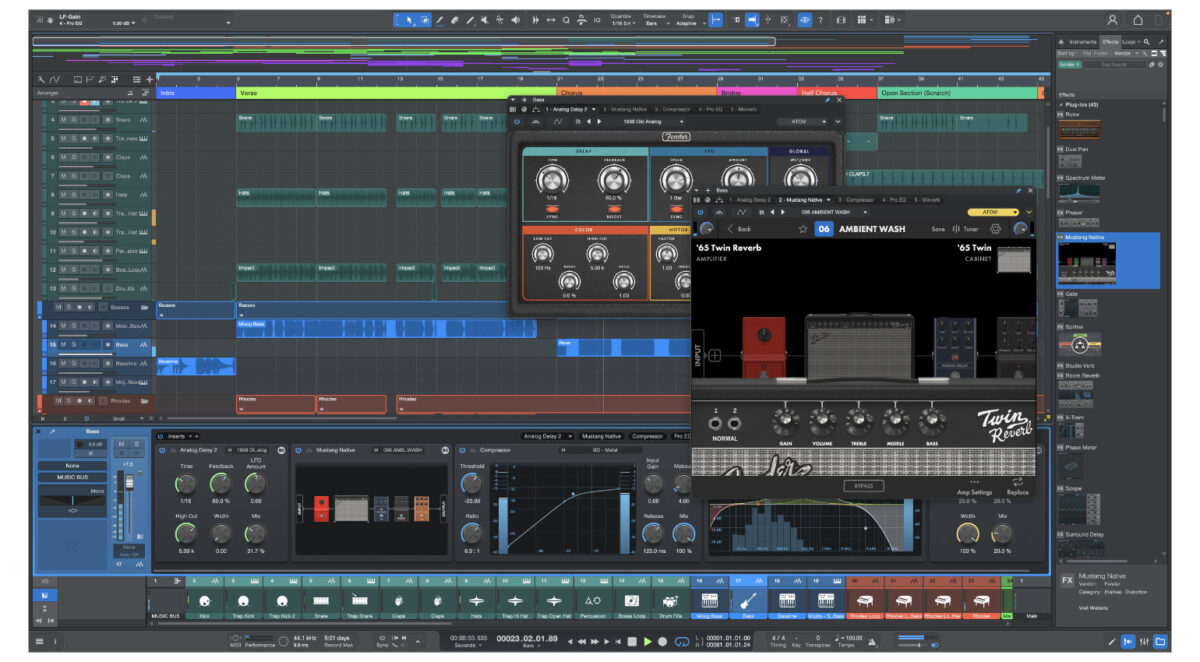
Fifty-seven amp models. Over a hundred effects. AI that converts your guitar audio straight to MIDI. All for $199. Fender Studio Pro 8 dropped at NAMM 2026 and it might just be the most compelling DAW proposition for guitar players in years — maybe ever. But is it actually good, or is this just a rebrand with a fresh coat of Fender paint? After spending serious time with it, here’s what you need to know.
From PreSonus to Fender: What Happened to Studio One
When Fender acquired PreSonus back in 2021, the industry raised a collective eyebrow. A guitar company buying a DAW and audio interface manufacturer? It felt like an odd pairing. Five years later, the strategy is crystal clear. PreSonus Studio One Pro has been fully absorbed into the Fender ecosystem, reborn as Fender Studio Pro 8. This isn’t just a logo swap — it’s a fundamental reimagining of what a guitar-centric production environment should look like.
The legendary Nile Rodgers demonstrated the software at NAMM 2026, and the Fender team shared a telling quote from artist beta testers: “Every artist we’ve put through it is like, ‘Wait a minute, that’s the plugin?!'” That kind of reaction doesn’t come from a simple rebrand.
The Studio One engine remains at the core — the same drag-and-drop workflow, the same stable audio engine, the same low-latency performance that Studio One users have relied on for years. But layered on top is an entirely new dimension of guitar-first features that no other DAW can match right out of the box.
57 Amp Models and 100+ Effects: Mustang Native and Rumble Native Built Right In
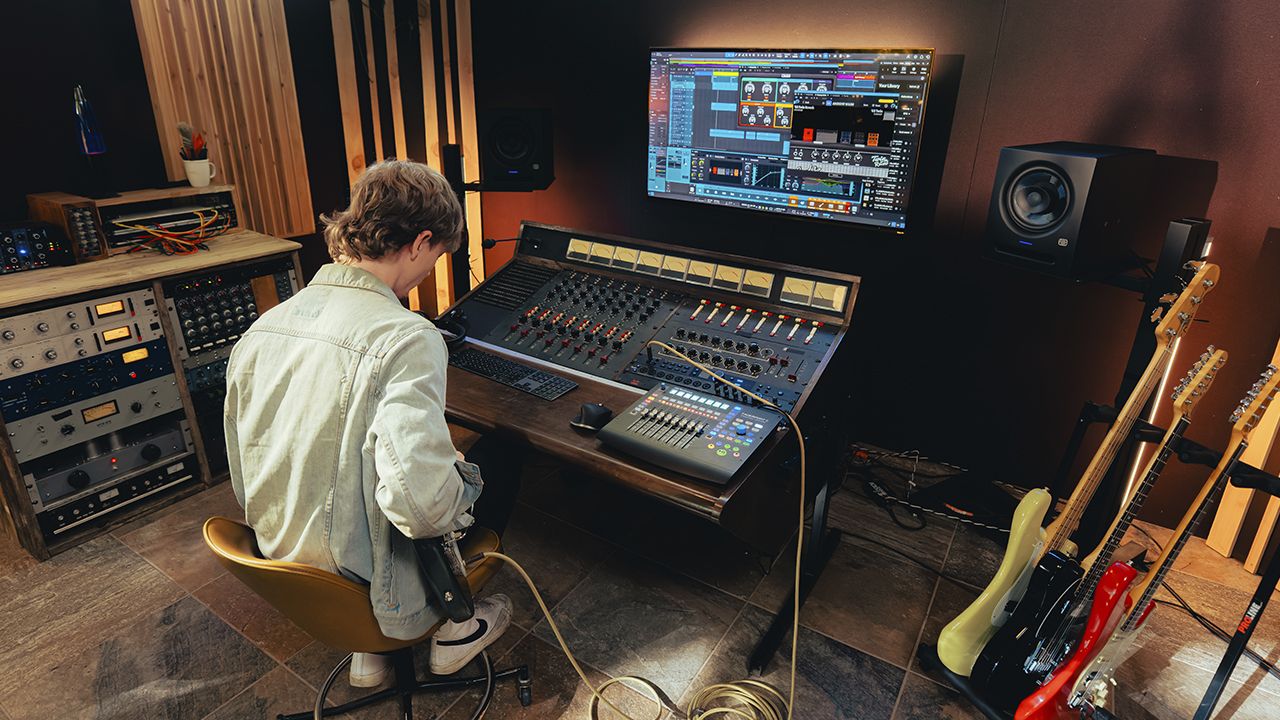
Let’s talk about the headline feature. Fender Studio Pro 8 ships with Mustang Native and Rumble Native plugins fully integrated — no separate purchase, no activation headaches, no additional cost. That’s 39 guitar amp models and 18 bass amp models, totaling 57 amp simulations that are ready to use the moment you install the DAW.
On top of that, you get over 100 effects pedal models. Vintage fuzz, modern delay, lush reverbs, modulation, compression — the full spectrum of tones a guitarist or bassist needs for professional recording and production. These aren’t stripped-down “lite” versions either. These are the same Mustang Native and Rumble Native plugins that previously sold separately and earned strong reviews in their own right.
To put this in perspective: Logic Pro ships with roughly 25 amp models. Ableton Live has zero built-in amp simulation. Cubase’s VST Amp Rack offers around 15. No other major DAW comes close to 57 high-quality, brand-authentic amp models included at no extra cost. If you’re a guitarist who’s been buying third-party amp sim plugins like Neural DSP, Amplitube, or Guitar Rig, Fender Studio Pro 8 potentially eliminates that entire expense. Check the official Fender Studio Pro page for the complete amp and effects roster.
AI Audio-to-Note/MIDI Conversion and Chord Assistant
The second headline feature is AI-powered Audio-to-Note and Audio-to-MIDI conversion. Record a guitar part as audio, and the AI analyzes your performance and converts it into MIDI notes. Having worked in music production for over 28 years, I can tell you that accurate polyphonic guitar-to-MIDI conversion has been one of the holy grails of audio technology. Separating individual notes from a strummed chord — with all its harmonic complexity, string noise, and dynamic variation — is exponentially harder than converting a monophonic vocal or single-note melody line.
The practical applications are enormous. Record a guitar riff, convert it to MIDI, layer it with a synth patch or orchestral strings. Transcribe your improvised solo into sheet music automatically. Use a guitar as a MIDI controller for virtual instruments without needing an actual MIDI guitar pickup. For guitarists who don’t play keyboard — which is a significant percentage of guitar-first musicians — this feature alone could justify the purchase.
The Chord Assistant complements this beautifully. Stuck on a progression? The AI suggests chord options, voicing variations, and harmonic substitutions. Combined with Audio-to-MIDI, you get a complete “play guitar → record → AI analysis → MIDI conversion → arrangement” pipeline without ever leaving the DAW.
Studio Verb, Voice FX Collection, and the Upgraded SampleOne
Beyond the headline features, Fender Studio Pro 8 is packed with production tools that deserve attention on their own merits.
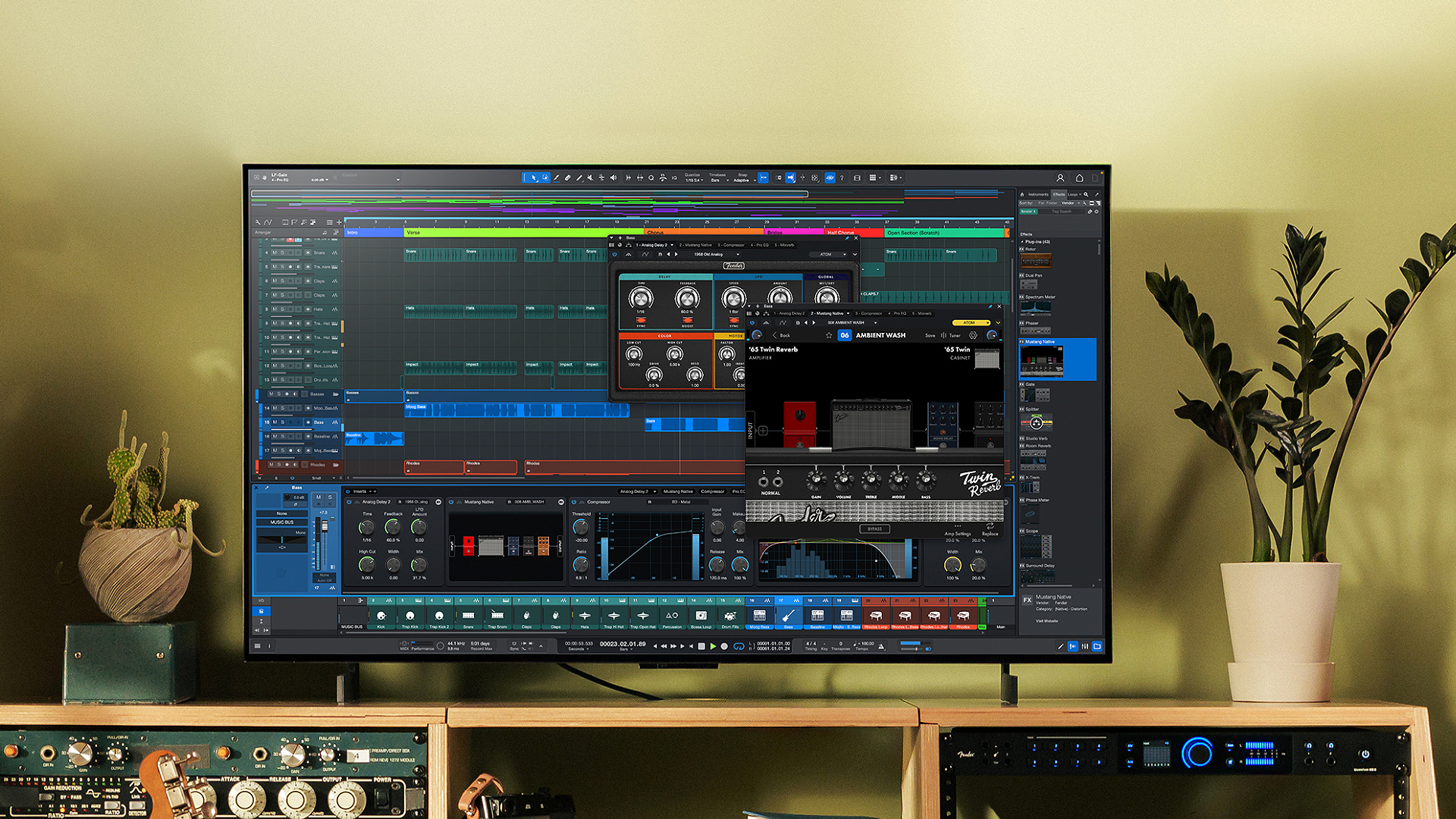
Studio Verb is this version’s sleeper hit. It’s a new reverb plugin that includes a genuinely clever feature called the “Ping Button.” When you’re dialing in a reverb setting, pressing ping sends a short impulse through the reverb engine, letting you hear the exact tail and spatial characteristics in isolation — without needing source audio playing. If you’ve ever spent twenty minutes tweaking a reverb only to realize the tail is all wrong once the music stops, you’ll immediately understand why this matters. It’s a small feature, but it demonstrates the kind of workflow-aware thinking that runs through this entire update.
The Voice FX Collection delivers six vocal effect types: De-Tuner, Delay, Transformer, Filters, Ring Modulator, and Vocoder. These aren’t just novelty effects. The Vocoder and Ring Modulator open up serious creative possibilities for electronic music production, experimental vocal processing, and sound design. The Transformer is particularly interesting for pitch-shifted vocal layering — a technique that’s become increasingly popular in modern pop and hip-hop production.
SampleOne, the built-in sampler instrument, has received a major upgrade with a new modulation matrix featuring 16 patch points, 14 modulation sources, and 24 destinations. That’s the kind of modulation depth you’d expect from a dedicated third-party sampler, not a bundled DAW instrument. Combined with the improved Impact drum sampler, Fender Studio Pro 8 gives you credible beat-making capabilities alongside its guitar-focused strengths.
Additional workflow improvements include a pre-installed VU meter, Splice integration for sample browsing, an Arrangement Overview for navigating complex sessions, and a Musical Metronome that provides more musical click patterns. Each of these is a small quality-of-life improvement, but collectively they add up to a meaningfully better production experience. Guitar World’s hands-on review goes deep on the day-to-day experience with these features.
The Connected Ecosystem: Fender’s Bigger Vision
What makes Fender Studio Pro 8 truly different from other DAWs isn’t just the software — it’s the ecosystem. Fender has built a connected music production environment that spans mobile, desktop, stage, and studio.
The Fender Studio mobile app lets you sketch ideas on your phone or tablet, then import them seamlessly into the desktop DAW for full production. Tone Master Pro pedal compatibility means your live performance tones transfer directly into your recording sessions — no re-amping, no tone-matching, no compromises. The same amp model you use on stage can be the same one in your mix.
On the hardware side, Fender has aligned an entire range of audio interfaces and controllers under the Studio brand. The entry-level AudioBox GO is perfect for mobile recording. The Quantum LT series (2, 4, and 16 channel variants) covers home studios to mid-size setups. The professional-grade Quantum HD series (HD2 and HD8) delivers the conversion quality and I/O count that commercial studios demand. And the Motion 16 and Motion 32 controllers provide tactile mixing control that integrates tightly with the DAW.
This vertical integration is reminiscent of what Universal Audio achieved with Luna and their Apollo interfaces, or what Apple does with Logic Pro and their hardware ecosystem. But Fender adds something neither of those companies can: authentic guitar amp modeling from the company that literally invented the electric guitar amplifier.
Pricing and the Bottom Line: Is Fender Studio Pro 8 Worth It?
Fender Studio Pro 8 is priced at $199.99 for the full version. Existing Studio One 7 users can upgrade for $99.99. Students get a discounted price of $139. Consider what you’re getting: 57 amp models, 100+ effects, AI audio-to-MIDI conversion, a Chord Assistant, Studio Verb with its ping button, Voice FX Collection, upgraded virtual instruments, Splice integration, and the connected ecosystem infrastructure. At $199, this is aggressively priced.
For context, the Mustang Native plugin alone previously cost around $99 as a standalone purchase. You’re essentially getting the DAW for the price of one plugin, with everything else thrown in. For Studio One 7 users, the $99.99 upgrade is practically a no-brainer — you’re getting the full Mustang and Rumble Native integration plus all the new features for less than what most individual plugin upgrades cost.
Of course, no DAW is perfect for everyone. If you’re primarily an electronic music producer, Ableton Live’s session view and clip-based workflow may still be more intuitive for your needs. If you work in film scoring or large-scale orchestral composition, Cubase or Logic Pro’s score editors remain stronger. But if you’re a guitarist, a bass player, a singer-songwriter, or any musician whose workflow centers around live instrument recording — Fender Studio Pro 8 is arguably the most complete, purpose-built solution available in 2026.
Fender spent five years turning its PreSonus acquisition into this. A DAW that doesn’t just accommodate guitarists — it was designed from the ground up to put them first. At $199, with no subscription required, it’s a statement of intent that’s hard to argue with.
Looking for help setting up your recording environment, professional mixing and mastering, or optimizing your DAW workflow? Sean Kim has 28+ years of experience and is ready to help.
Get weekly AI, music, and tech trends delivered to your inbox.