Best Noise-Cancelling Earbuds September 2025: Top 5 ANC Picks Compared
September 26, 2025
Fall 2025 Studio Upgrade Guide: 5 Best Gear Investments Under $1000
September 29, 2025
295 FDA AI diagnostic tools cleared in 2025 alone — and three of them might just change whether your cancer gets caught early or missed entirely. That’s not a hypothetical scenario anymore. As of September 2025, the FDA’s AI-enabled medical device list has crossed 1,240 authorizations, and the latest batch of approvals is targeting some of the deadliest diagnostic blind spots in modern medicine.
From an AI that reads bone marrow biopsies to catch blood cancers, to one that predicts your prostate cancer trajectory over the next decade, to an algorithm spotting a heart condition that most radiologists don’t even report — these aren’t incremental upgrades. They represent a fundamental shift in how diseases get diagnosed, and in some cases, whether they get diagnosed at all.
The Numbers Behind the Surge: FDA AI Diagnostic Tools 2025 Set a New Record
Before diving into the specific tools, the macro picture tells its own story. According to a taxonomy study published in npj Digital Medicine, the FDA has now authorized over 1,240 AI-enabled medical devices — and the majority of those approvals happened in just the last three years. In 2025 alone, 295 AI/ML medical devices received FDA clearance, making it the most prolific year in the agency’s history for AI approvals.
Radiology continues to dominate the landscape with roughly 956 devices, but the more interesting trend is the expansion into pathology, cardiology, and oncology. Over 96% of these devices come through the 510(k) pathway — the same streamlined process used for traditional medical devices. But the newer, more novel tools like the ones we’ll cover here are arriving through the FDA’s De Novo classification, which is reserved for truly first-of-a-kind devices.

ArteraAI Prostate: AI That Predicts Your Cancer’s 10-Year Trajectory
In July 2025, the FDA granted Breakthrough Device Designation to ArteraAI Prostate, a multimodal AI system that does something no human pathologist can do alone: analyze a prostate biopsy slide alongside clinical data — blood tests, Gleason grades, clinical staging — and calculate a patient’s individualized 10-year probability of cancer spread and mortality.
This isn’t just pattern recognition on a slide. ArteraAI’s model was trained on data from tens of thousands of digital prostate cancer tissue slides, and critically, it was validated against the STAMPEDE trial — one of the largest prostate cancer clinical trials ever conducted, involving 12,000 patients. The results showed ArteraAI outperformed the National Comprehensive Cancer Network’s (NCCN) traditional risk group criteria for predicting metastasis-free survival and cancer-specific mortality.
What makes this practically significant is the treatment decision it enables. Prostate cancer treatment spans a wide spectrum from active surveillance to aggressive combination therapies. ArteraAI helps clinicians identify which high-risk patients would genuinely benefit from adding therapies like Zytiga to their androgen deprivation therapy — and which patients can safely avoid the side effects of unnecessary treatment escalation.
Why This Matters for Patients
Prostate cancer is the second most common cancer in men globally, with roughly 1.4 million new diagnoses each year. The challenge has never been detection — PSA tests catch most cases — but accurately predicting which cases will become aggressive. Current risk stratification relies heavily on Gleason scoring and clinical staging, methods that haven’t fundamentally changed in decades. ArteraAI addresses this exact gap by incorporating tissue-level AI analysis that no human eye can replicate at scale, potentially reducing both over-treatment and under-treatment simultaneously.
The economic implications are equally significant. Unnecessary treatment escalation in prostate cancer costs the U.S. healthcare system billions annually. By providing more precise risk stratification, ArteraAI could help redirect resources toward patients who genuinely need aggressive intervention while sparing others from debilitating side effects.
Scopio Labs: The AI That Reads Bone Marrow Better Than a Microscope
Scopio Labs received a historic De Novo FDA clearance for the first-ever digital bone marrow aspirate application — an AI-powered system that analyzes bone marrow biopsies to help diagnose a range of blood disorders, including cancer. This is particularly significant because bone marrow analysis has been one of the last remaining manual processes in laboratory diagnostics.
Here’s how it works: Scopio’s platform uses high-resolution microscopic imaging to capture bone marrow aspiration samples, then automatically identifies and highlights different hematopoietic cell types in stained blood smears. The AI evaluates cell quality, estimates counts of blast cells (immature white blood cells that can indicate leukemia), and quantifies plasma cells — processes that traditionally require hours of manual counting under a microscope by a trained pathologist.
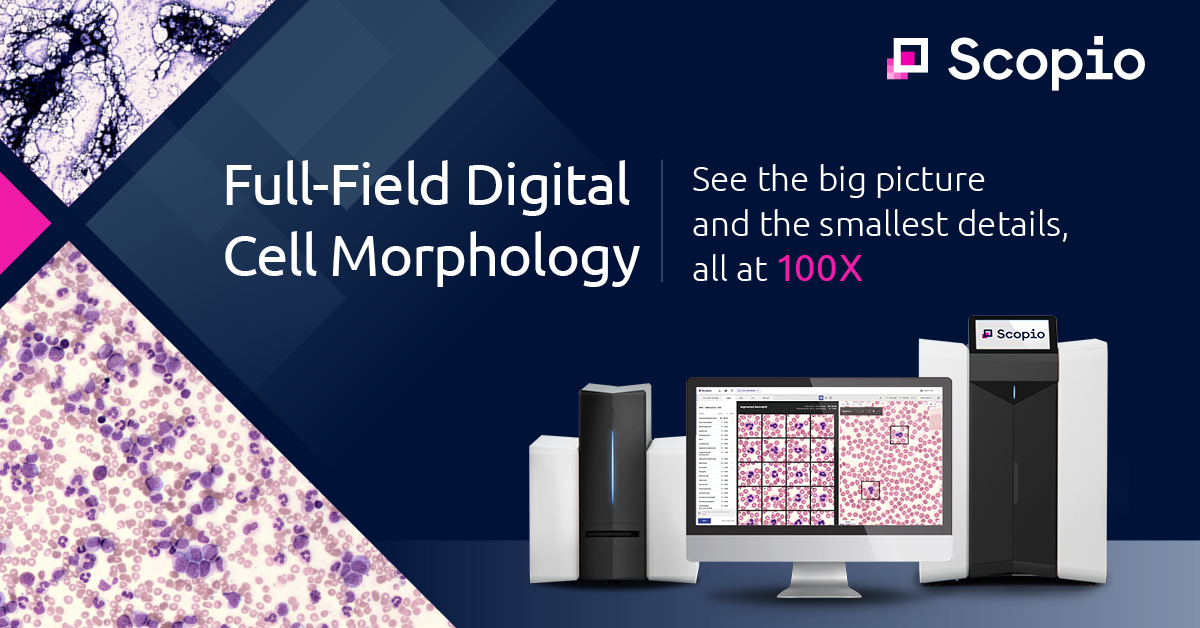
In July 2025, Scopio also unveiled its Complete Blood Morphology (CBM) analyzer, which represents the next evolution of this technology. The CBM system analyzes 10 times more cells than the current standard of care in blood cell morphology, bringing what the company calls “unprecedented scale, efficiency and standardization” to hematology through autonomous analysis and reporting.
To accelerate CBM’s market entry, Viola Growth invested $10 million in a Series D extension, bringing Scopio’s total funding to $52 million. The investment signals strong confidence in AI-driven hematology diagnostics as a viable, scalable clinical tool.
The Clinical Impact
Manual bone marrow analysis is time-consuming, subjective, and prone to inter-observer variability. Two pathologists examining the same sample can reach different conclusions. Scopio’s AI brings standardization to this process — every sample gets analyzed with the same algorithmic rigor. For patients with suspected blood cancers like leukemia, lymphoma, or myelodysplastic syndromes, this means faster, more consistent diagnoses.
Bunkerhill Health: Catching the Heart Condition That Hides in Plain Sight
Bunkerhill Health achieved the first-ever FDA clearance for an AI algorithm — Bunkerhill MAC — that detects and quantifies mitral annular calcification (MAC) on routine, non-gated chest CT scans. If you haven’t heard of MAC, that’s precisely the problem this tool is solving.
Mitral annular calcification is a chronic condition where calcium deposits accumulate in the mitral valve ring. Research has linked MAC with increased cardiovascular mortality, higher rates of stroke, and complications in structural heart procedures. Despite this significance, MAC is often not quantified — or even mentioned — in routine chest CT reports. Radiologists see hundreds of scans daily, and incidental findings like MAC frequently slip through unreported.
Bunkerhill MAC changes this equation. Running automatically on routine chest CTs that are already being performed for other indications, the algorithm flags and quantifies MAC without requiring any additional imaging or workflow changes. The system was developed and validated using data from 25+ leading academic medical centers, including Emory University, Thomas Jefferson University, and UCSF.
Why Incidental Finding Detection Matters
This category of AI tool — algorithms that detect conditions on scans already being performed for other reasons — may represent the highest-value application of AI in radiology. The imaging data already exists; patients have already undergone the scan. The only missing piece is analysis bandwidth, and that’s exactly what AI provides. Bunkerhill estimates that millions of chest CTs are performed annually in the U.S. alone, meaning MAC detection could be applied at massive scale with zero additional imaging burden.
The Bigger Picture: What 1,240+ FDA AI Authorizations Mean for Healthcare
These three tools represent different but complementary approaches to AI diagnostics:
- ArteraAI — Predictive AI that stratifies treatment decisions based on multimodal data
- Scopio Labs — Automation AI that standardizes historically manual diagnostic processes
- Bunkerhill Health — Opportunistic screening AI that extracts new diagnostic value from existing imaging
Together, they illustrate a maturing FDA AI ecosystem. The agency cleared 295 AI devices in 2025 — not just in radiology anymore, but across pathology, cardiology, oncology, and neurology. Companies like RapidAI are expanding into aortic disease surveillance, while Roche received Breakthrough Device Designation for the first AI-driven companion diagnostic for non-small cell lung cancer.
The regulatory pathway is also evolving. While 96% of current AI devices came through the familiar 510(k) process, the FDA’s January 2025 draft guidance introduced lifecycle management considerations specifically for AI — acknowledging that these tools learn and change in ways traditional devices don’t. This framework will be critical as AI models move from static, locked algorithms to continuously learning systems.
Adoption remains the key bottleneck. Despite over 1,240 FDA authorizations, many hospitals still lack the IT infrastructure, radiologist training, or reimbursement pathways needed to integrate AI diagnostics into routine clinical workflows. The American Hospital Association’s December 2025 letter to the FDA highlighted this gap, urging clearer guidance on post-market monitoring and interoperability standards. The technology is ready; the healthcare system is still catching up.
What to Watch Next
The AES Convention season and Apple’s September event may dominate tech headlines, but the quieter revolution happening in healthcare AI deserves equal attention. Three developments to watch through the end of 2025:
- Paige PanCancer Detect — FDA Breakthrough Device designation for an AI that detects cancer across multiple tissue types and organs, not just one. If cleared, it could be the most broadly applicable diagnostic AI yet.
- Continuously learning AI frameworks — The FDA’s upcoming final guidance on AI lifecycle management will determine whether AI devices can update their models post-market without full re-clearance.
- De Novo pathway growth — As more truly novel AI diagnostic tools emerge, expect the proportion of De Novo authorizations to increase relative to the dominant 510(k) pathway.
The gap between an AI tool receiving FDA clearance and reaching your local hospital is still measured in years, not months. But with 1,240+ authorizations and growing, the question is no longer whether AI will transform medical diagnostics — it’s how quickly radiologists, pathologists, and clinicians will integrate these tools into their daily workflows.
Interested in how AI is reshaping industries beyond healthcare? From music production to enterprise automation, the tools are evolving fast.
Get weekly AI, music, and tech trends delivered to your inbox.