FDA AI Diagnostic Tools 2025: 3 Groundbreaking Approvals That Are Rewriting How Diseases Get Caught
September 29, 2025
iPad 11 iPadOS 26 Liquid Glass Review: The $349 Tablet Just Got Desktop Windows, But Still No Apple Intelligence
September 29, 2025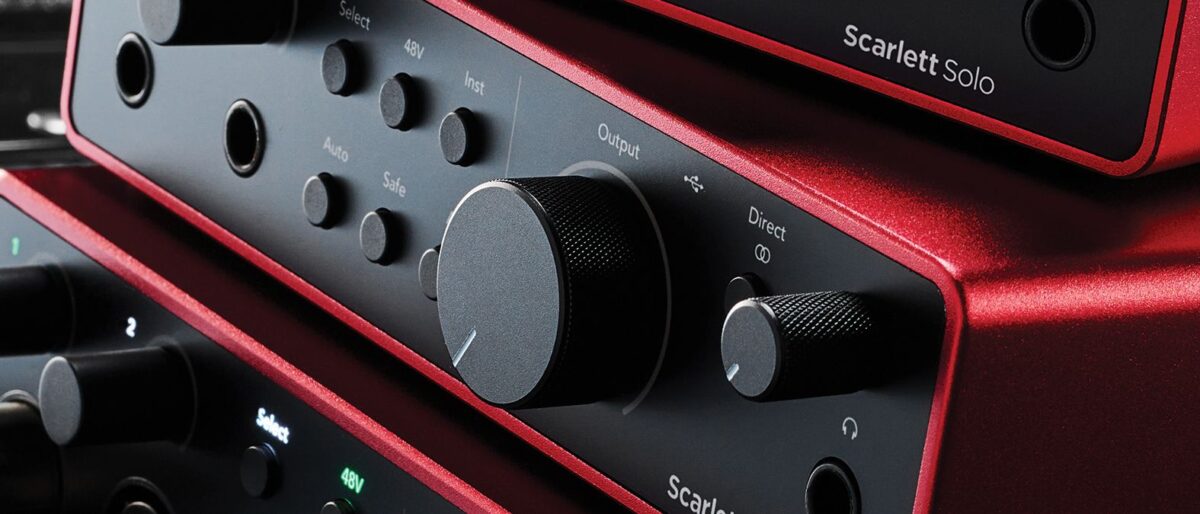
After 28 years of running studios, here’s an uncomfortable truth I’ve learned — a $5,000 microphone doesn’t sound 25 times better than a $200 one. With AES Convention season upon us and Apple dropping new hardware, fall 2025 is the perfect storm for studio upgrades. I’ve put together this studio upgrade guide 2025 edition with the best gear investments you can make under $1,000.
Why Fall 2025 Is the Best Time for Your Studio Upgrade Guide 2025 Shopping
September sits at a unique crossroads in the audio gear calendar. Apple’s annual hardware event and AES Convention happen within weeks of each other, pushing manufacturers to release new products before the holiday rush. When Focusrite drops their 4th generation Scarlett line, the 3rd gen suddenly appears at refurbished prices. ADAM Audio’s competitors start aggressive pricing. For budget-conscious producers, this creates a window where $1,000 can transform an entire signal chain.
The other factor working in your favor: technology has genuinely trickled down. Features that cost $2,000+ five years ago — like auto gain, built-in compression modeling, and ribbon tweeter technology — now appear in sub-$500 products. Let’s break down exactly where your money makes the biggest impact.
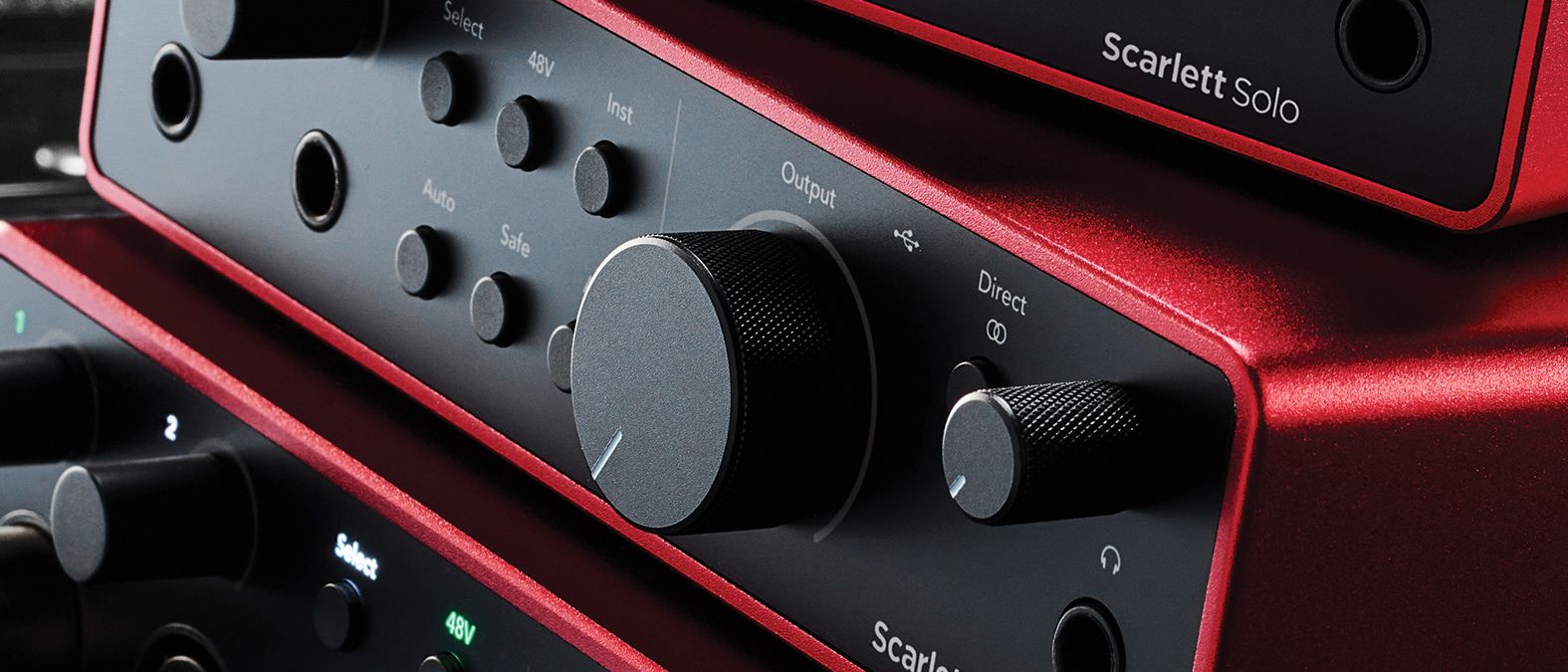
1. Audio Interface: Focusrite Scarlett 2i2 4th Gen ($189)
The audio interface is always priority number one in any studio upgrade guide 2025 edition. Everything passes through it — your mic signal, your monitor output, your headphone mix. The Focusrite Scarlett 2i2 4th Gen represents the biggest generational leap in this price range I’ve seen in a decade.
The preamp gain jumps from 56dB to 69dB, meaning you can drive ribbon mics and quiet dynamic mics without an external preamp. Dynamic range hits 120dB, which puts it in territory previously reserved for $500+ interfaces. USB-C handles both power and audio through a single cable — no more wall adapters cluttering your desk.
But the killer features are Auto Gain and Clip Safe. Auto Gain analyzes your source and sets optimal recording levels automatically. Clip Safe prevents distortion when unexpected peaks hit during vocal takes. The updated Air mode splits into Presence (subtle high-frequency lift) and Harmonic Drive (analog-style saturation), giving you more tonal options during tracking.
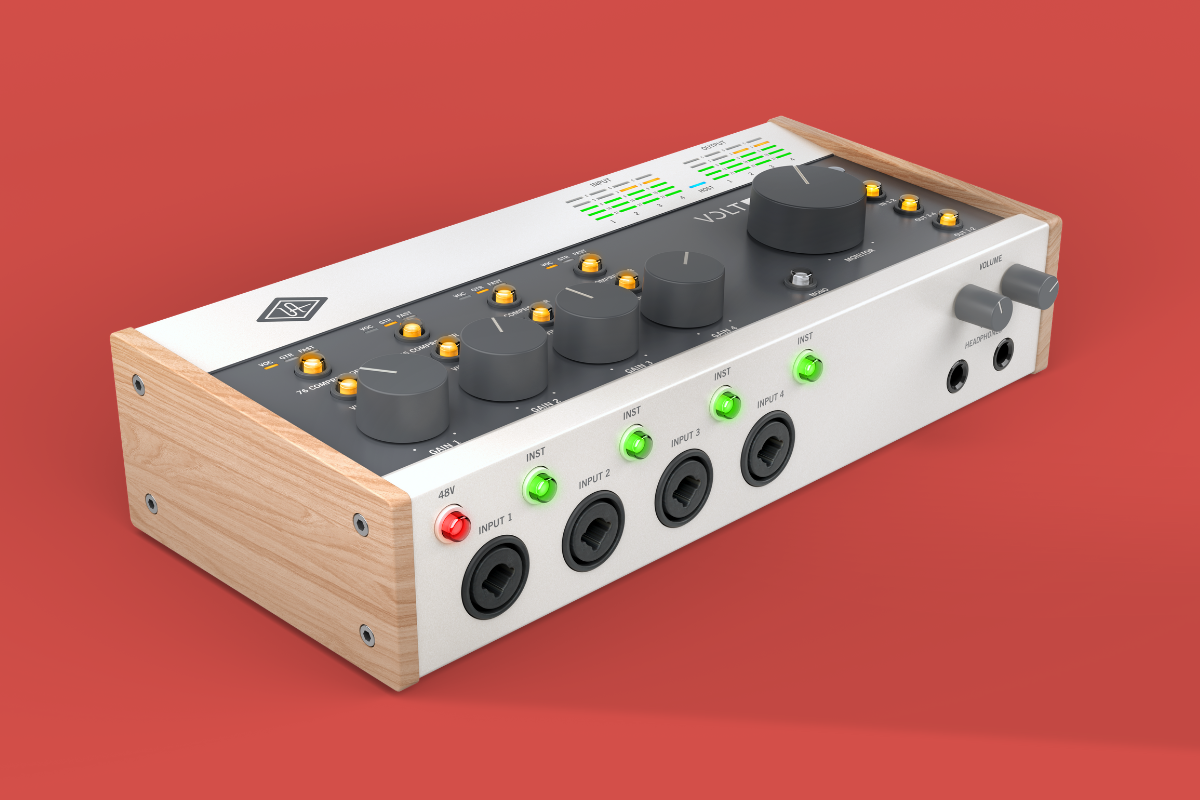
If you need more I/O, the Universal Audio Volt 476 ($369) adds UA’s legendary 610 tube preamp emulation and a built-in 1176 compressor. At 4-in/4-out with 24-bit/192kHz conversion, it’s the sweet spot for bands and podcasters who need multiple simultaneous inputs. The bundled software — Ableton Live Lite, Melodyne Essential, UJAM Virtual Drummer — adds genuine value to an already compelling package.
2. Studio Monitors: ADAM Audio T5V ($449/pair)
Below $500, the ADAM Audio T5V stands alone. ADAM’s signature S-ART ribbon tweeter technology reaching this price point is arguably the most significant development in budget monitoring this year. The 5-inch woofer paired with that ribbon tweeter delivers a frequency response of 45Hz to 25kHz — and more importantly, the high-frequency detail that separates ribbon tweeters from dome tweeters is immediately audible.
When I first switched to T5Vs as a reference pair, I discovered mud in the 200-400Hz range that my previous monitors had been hiding. That’s exactly what a good monitor should do — reveal problems instead of flattering your mix. The transient response is fast enough to catch timing issues in percussion and the stereo imaging is precise enough for detailed panning decisions.
The Yamaha HS5 ($399/pair) remains a formidable alternative with its tight upper-bass reproduction and excellent imaging. For untreated rooms, KRK’s Rokit Generation 5 deserves attention — the built-in LCD screen for DSP room correction addresses room acoustics from the monitor side, which is a genuinely useful feature for bedroom producers.
3. Microphone: Rode NT1 Signature Series ($159)
The Rode NT1 Signature Series holds the title of world’s quietest studio condenser microphone at just 4dBA self-noise. What that means in practice: you can record in a room that isn’t perfectly treated and still get usable, clean takes. At $159, the value proposition borders on absurd.
This is the analog-focused version of Rode’s 5th Generation NT1, stripping out the digital connectivity while retaining all the sonic improvements. The character is warm with a glossy high-end sheen that flatters most vocalists — the kind of detail that typically requires spending three times as much. The limited edition color options (red, green, purple, pink, blue) might seem like a gimmick, but they’ve turned the NT1 into a visual statement piece for studios and content creators doing on-camera work.
For situations where a condenser isn’t ideal — tracking guitar amps, snare drums, or vocals in untreated rooms — the Shure SM57 ($99) remains immortal. A dynamic mic in an untreated space will often outperform a condenser that picks up every room reflection.
4. Headphones: Beyerdynamic DT 900 Pro X ($300)
Monitors alone aren’t enough. Late-night sessions, neighbor-conscious mixing, and detail checking all demand quality headphones. The Beyerdynamic DT 900 Pro X is the best mixing headphone under $300 as of fall 2025, and it’s not particularly close.
The open-back design creates a wide, natural soundstage that gives your mix room to breathe — critical for making spatial decisions that translate to speakers. The STELLAR.45 driver delivers accurate, distortion-free reproduction across the spectrum. At 48 ohms, you can drive these directly from any audio interface without needing a dedicated headphone amp.
The frequency response is balanced with extended detail in the highs — revealing without being fatiguing. This is the balance that matters for long mixing sessions: you need to hear problems without your ears giving up after two hours. The velour ear pads and moderate clamping force make extended sessions comfortable, though as open-backs, sound leaks — you’ll want closed-back cans separately for tracking with a live mic.
5. Room Acoustics: DIY Treatment ($100-200)
The most underrated studio upgrade isn’t gear at all. A $5,000 microphone in an untreated bedroom will sound worse than a $200 mic in a properly treated space. Four absorption panels at first reflection points will dramatically improve both your recordings and your monitoring accuracy.
Companies like Acoustimac offer room-specific packages starting around $100-200 based on your room dimensions. If you’re handy with tools, DIY panels using rockwool and wooden frames can cost under $50 for a set of four. This isn’t a gear purchase — it’s an investment that makes every other piece of gear in your studio perform better. Think of it as unlocking performance you’ve already paid for but aren’t hearing.
Three Recommended Combos Under $1,000
Here are three budget-optimized combinations depending on your priorities:
- $500 Recording Focus: Focusrite Scarlett 2i2 4th Gen ($189) + Rode NT1 Signature ($159) + DIY Acoustic Panels ($100) = $448
- $750 Mixing Focus: Focusrite Scarlett 2i2 4th Gen ($189) + ADAM Audio T5V ($449/pair) + DIY Acoustic Panels ($100) = $738
- $1,000 Full Setup: Focusrite Scarlett 2i2 4th Gen ($189) + Rode NT1 Signature ($159) + ADAM Audio T5V ($449/pair) + DIY Panels ($150) = $947
Whichever combination you choose, one principle matters above all — don’t skip room treatment. A $200 set of absorption panels can deliver a bigger sonic improvement than a $500 gear upgrade. With AES Convention wrapping up and Black Friday approaching, October through November is when prices drop hardest. Build your list now, set your price alerts, and wait for the deals to land.
Need help choosing the right studio gear or optimizing your production workflow? 28 years of studio experience, one consultation away.
Get weekly AI, music, and tech trends delivered to your inbox.