How to Build a Eurorack Modular System: Beginner’s Budget Guide 2026
January 20, 2026
Focusrite Scarlett 5th Gen Rumors: 7 Features We Expect in the Next Update
January 21, 2026
What if I told you a fully functional Eurorack modular system beginner setup costs less than $500 in 2026? After NAMM 2026 dropped a wave of affordable modules from Behringer, Doepfer, and newcomers alike, this is genuinely the cheapest it has ever been to get into modular synthesis. As someone who has been working with audio gear for over 28 years, I have never seen the entry barrier this low. Here is exactly how to build your first system without destroying your bank account.
Why 2026 Is the Best Year to Start as a Eurorack Modular System Beginner
The Eurorack modular system beginner landscape has shifted dramatically. NAMM 2026 confirmed what many of us suspected: the race to make modular affordable is accelerating. Behringer unveiled the JT-2, a Jupiter-8-style paraphonic synthesizer for an estimated $299. BASTL showed their Citadel Alchemist, a 16HP hybrid synthesis engine. Make Noise introduced the Universal Skiff System for multi-channel modular setups. And Xaoc Devices revealed the Kamieniec II analog phaser.
Meanwhile, established budget champions like the Behringer Brains ($88 for 20 synthesis algorithms) and Doepfer A-124 Wasp Filter SE ($85) continue to offer incredible value. The ecosystem has reached a tipping point where quality modules under $100 are the norm rather than the exception. You can absolutely practice with free software like VCV Rack first, but the tactile experience of physical patching is irreplaceable — and now it is within reach for most musicians.
Step 1: Choosing Your Case and Power Supply
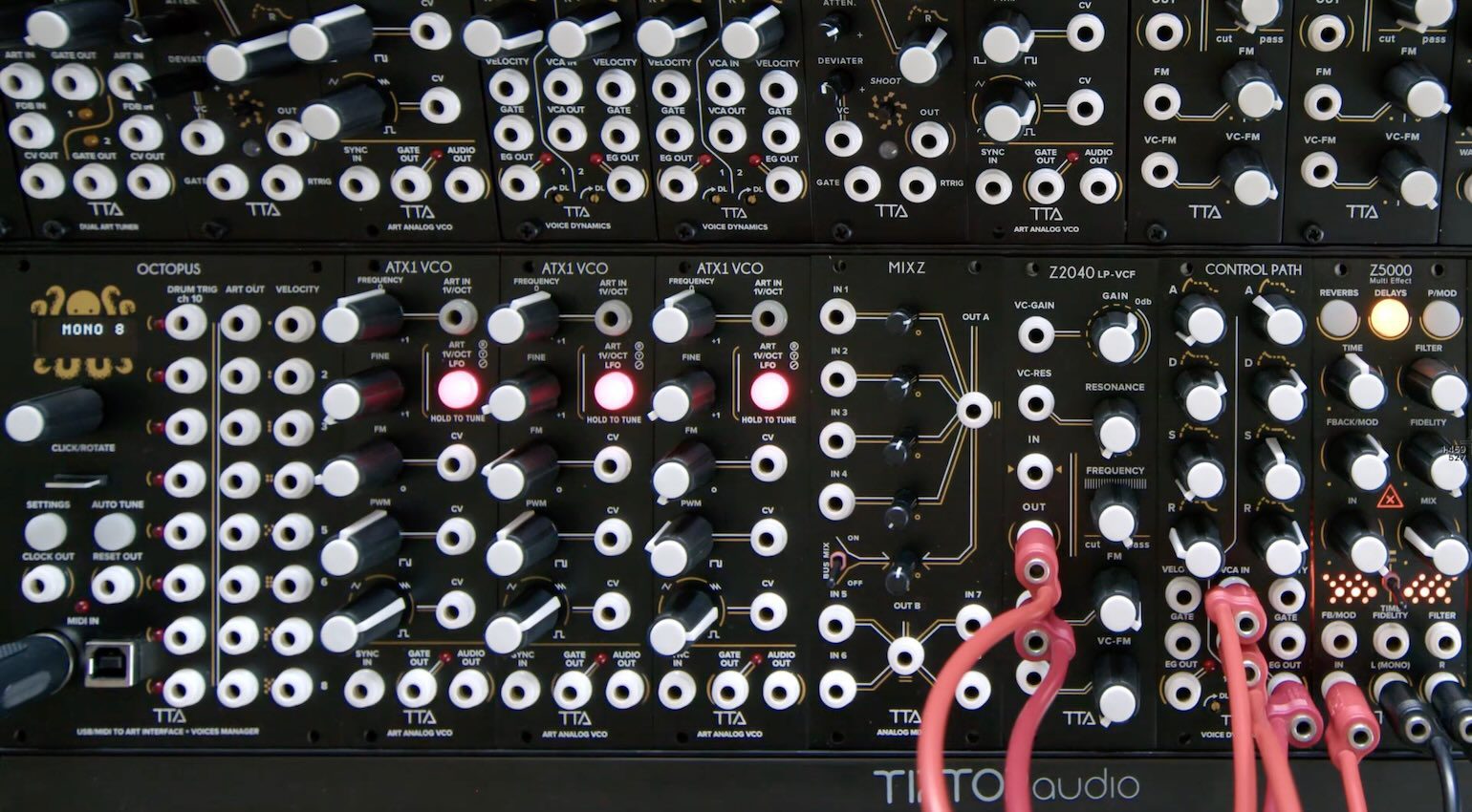
The case is the foundation of your Eurorack modular system. It is not just a box — it determines your power budget, expansion capacity, and portability. Three specs matter most: HP (horizontal pitch, the width measurement), number of rows, and power output in milliamps.
Recommended Beginner Cases Compared
- Doepfer A-100 LC1 ($172) — The classic wooden case from the company that literally invented Eurorack. 6U/84HP with rock-solid power. Proven reliability over decades.
- cre8audio NiftyCase ($193) — 84HP with built-in MIDI-to-CV converter and a basic sequencer. This is my top recommendation for absolute beginners because it eliminates the need for separate utility modules.
- Arturia RackBrute 3U ($222) — 88HP in a rugged metal frame. Connects seamlessly with Arturia semi-modulars like the MiniBrute 2 if you already own one.
- TipTop Audio Mantis ($335) — 2×10⁴HP (208HP total) with a generous 3A power supply. If you can stretch your budget, buying this upfront actually saves money long-term because you will not need a second case in six months.
The golden rule: always buy one size larger than you think you need. Every modular enthusiast will tell you the same thing — you will run out of space. Perfect Circuit’s budget guide echoes this advice and recommends planning for at least 30% empty space at purchase time.
Step 2: The Essential Modules — Four Pillars of Sound
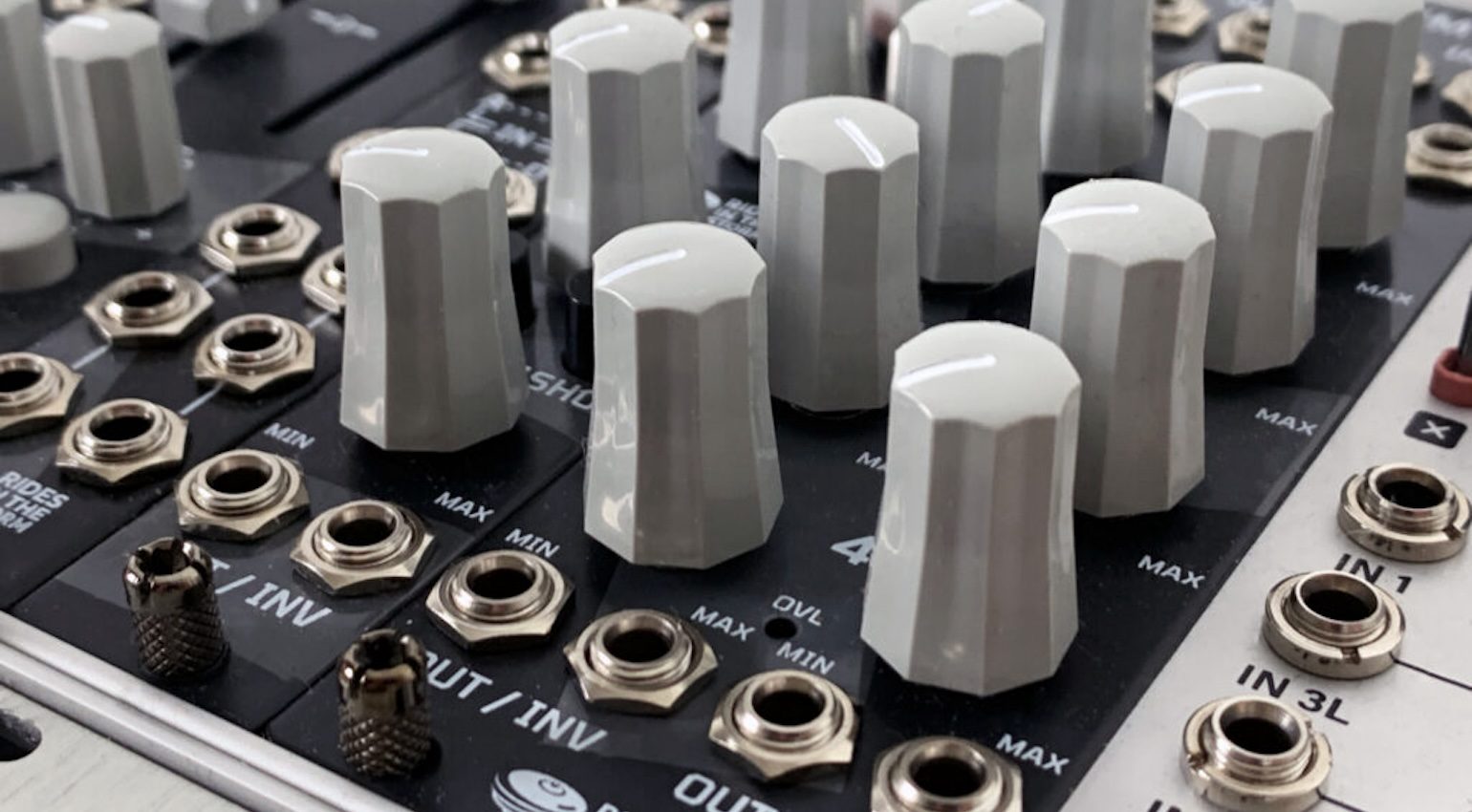
The basic signal flow in any Eurorack system is Oscillator → Filter → VCA → Output. Add a modulation source (LFO or envelope generator) and a sequencer, and you have a complete voice. Here is how to fill each role without overspending.
Oscillator (Where Sound Begins)
The Behringer Brains ($88) remains the undisputed budget king in 2026. It packs 20 synthesis algorithms — wavetable, FM, granular, string modeling, and more — into a single module. For context, the Mutable Instruments Plaits it draws inspiration from costs $279. The Brains delivers roughly 80% of that functionality at 30% of the price. For a Eurorack modular system beginner, this is the most capable first oscillator you can buy.
Filter (Sculpting the Tone)
The Doepfer A-124 Wasp Filter SE ($85) is a character filter inspired by the legendary EDP Wasp synthesizer. Its 12dB slope gives it a distinctive, biting quality that sits well in mixes. Crank the resonance and it self-oscillates, effectively becoming a second sound source. For more versatility, the Dreadbox Eudemonia ($86) combines a filter, mixer, and VCA in one module — outstanding value for tight setups.
VCA and Modulation
“You can never have enough VCAs” is a Eurorack proverb for good reason. VCAs control the amplitude of signals and are essential for dynamic, expressive patches. The Rides In The Storm FEG ($72) serves double duty as a function generator and envelope/LFO — perfect for beginners who need modulation without buying three separate modules. For dedicated VCAs, the Intellijel Quad VCA ($189) offers four channels with built-in mixing.
Sequencer and Output
The Behringer 182 Sequencer ($43) is a Roland System-100M clone that gives you 8-step analog sequencing at a jaw-dropping price. If you want something more sophisticated, the Arturia BeatStep Pro ($233) offers multiple sequencer tracks with MIDI, CV, and Gate outputs — excellent for bridging your Eurorack system with DAWs and other gear. For output, pair a Doepfer A-138s ($77, stereo mixer) with an Intellijel Outs ($164) to get both headphone monitoring and balanced line outputs for recording.
NAMM 2026 Spotlight: Behringer JT-2
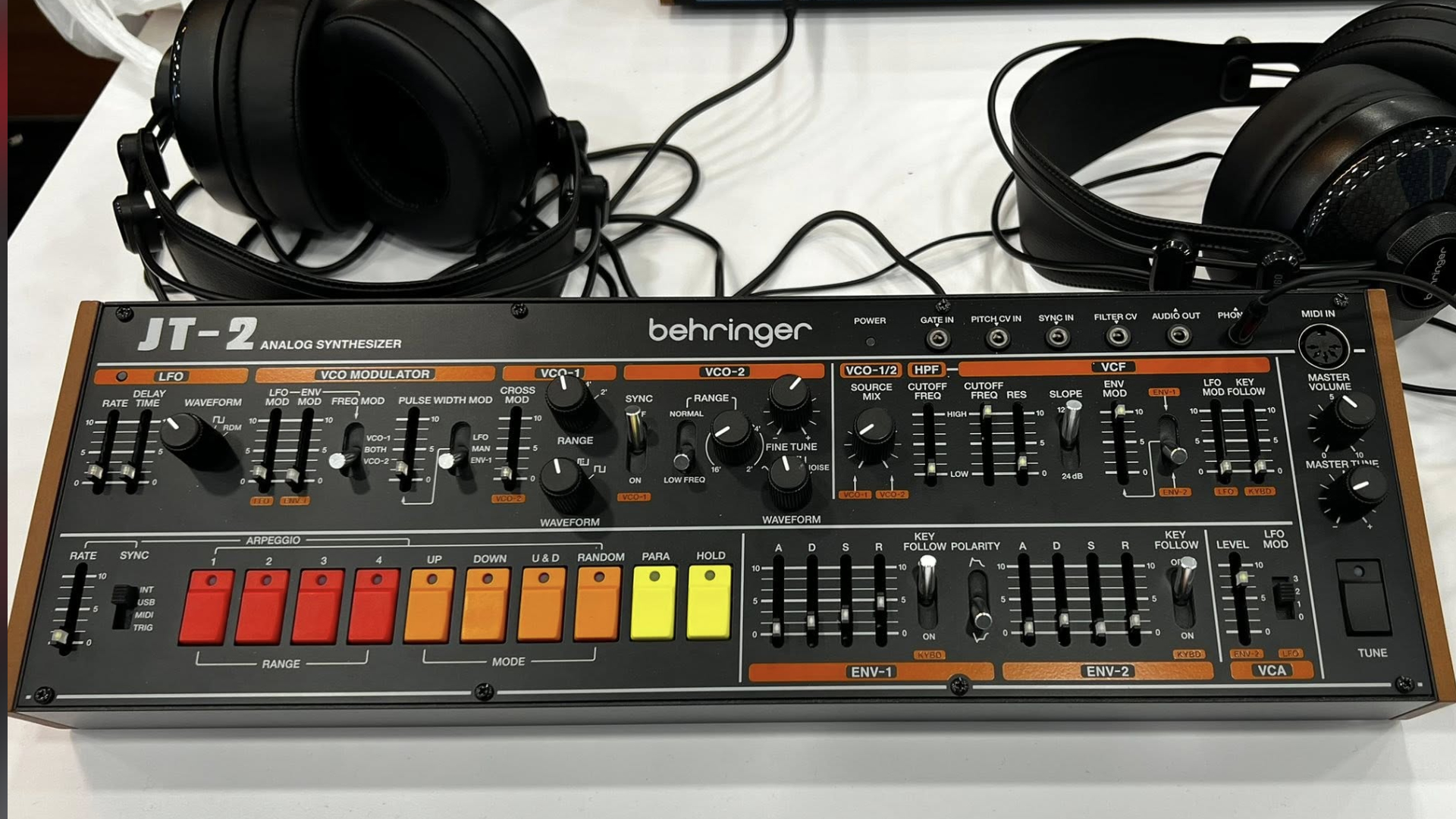
The biggest Eurorack story from NAMM 2026 is the Behringer JT-2. This Jupiter-8-inspired paraphonic analog synthesizer packs dual oscillators with cross-modulation and sync, lowpass and highpass filters, two envelope generators, an LFO, an arpeggiator, and front-panel MIDI — all for an estimated $299.
To put that in perspective, getting Jupiter-8 tones in Eurorack format used to mean spending well over $1,000 on individual modules. The JT-2 delivers a complete mono/paraphonic voice in a single module. For budget-conscious beginners, it could replace three or four separate modules and actually simplify your first system.
Other notable NAMM 2026 reveals include the Acid Rain Ziggurat Quantizer for precise pitch quantization, BASTL Citadel Alchemist (a 16HP hybrid synthesis powerhouse), Make Noise Universal Skiff System for multi-channel modular work, and the Xaoc Devices Kamieniec II analog phaser.
Three Budget Tiers: $500, $800, and $1,300
Tier 1: Minimal Starter (~$500)
- cre8audio NiftyCase ($193) — Case + built-in MIDI-to-CV
- Behringer Brains ($88) — Multi-algorithm oscillator
- Doepfer A-124 Wasp Filter SE ($85) — Character filter
- Rides In The Storm FEG ($72) — Envelope/LFO
- Behringer 182 Sequencer ($43) — Step sequencer
- Total: ~$481
This gets you a functioning mono synth voice with sequencing capability. The NiftyCase’s built-in MIDI-to-CV means you can also control it from your DAW right out of the box. It is a genuinely usable instrument, not just a toy.
Tier 2: Practical All-Rounder (~$800)
- Arturia RackBrute 3U ($222) — Sturdy case
- Behringer Brains ($88) — Oscillator
- Dreadbox Eudemonia ($86) — Filter + mixer + VCA combo
- Rides In The Storm FEG ($72) — Envelope/LFO
- Behringer 182 Sequencer ($43) — Sequencer
- Doepfer A-138s ($77) — Stereo mixer
- Intellijel Outs ($164) — Output module
- Total: ~$752
With proper headphone and line outputs, this system connects directly to your audio interface for recording. The Eudemonia’s combined filter/mixer/VCA saves HP while covering three essential functions. This is where Eurorack starts feeling like a serious production tool.
Tier 3: NAMM 2026 Special (~$1,300)
- TipTop Audio Mantis ($335) — Large 208HP case
- Behringer JT-2 ($299 est.) — Jupiter-8 voice
- Behringer Brains ($88) — Sub-oscillator and texture
- Rides In The Storm FEG ($72) — Additional modulation
- Arturia BeatStep Pro ($233) — External sequencer
- Doepfer A-138s ($77) — Mixer
- Intellijel Outs ($164) — Output
- Total: ~$1,268
This is the dream starter system for 2026. The JT-2 gives you lush Jupiter-8 analog tones while the Brains adds digital textures — together they cover an enormous sonic territory. The Mantis case leaves plenty of room for growth, and the BeatStep Pro provides sophisticated sequencing that bridges your modular with the rest of your studio.
Five Mistakes Every Eurorack Beginner Should Avoid
- Buying a case that is too small — You will outgrow 84HP within three months. Budget for at least one size up from what you think you need today.
- Hoarding oscillators — Beginners tend to buy sound sources and neglect “boring” utility modules like VCAs, multiples, and mixers. These utilities are what make modular patching actually interesting and expressive.
- Ignoring power consumption — Add up the milliamp draw of every module and stay within 70% of your case’s power capacity. Overloading your power supply causes noise, instability, and potential damage.
- Skipping the used market — Check GearNews for fair market values, then shop Reverb.com and the ModularGrid marketplace. Used modules typically sell for 30-40% below retail.
- Impulse buying without a plan — Use ModularGrid.net to build your virtual rack first. Simulate signal flow in VCV Rack. Only then should you open your wallet.
The Semi-Modular Alternative Path
If diving straight into Eurorack feels overwhelming, semi-modular synthesizers offer a lower-risk entry point. Instruments like the Arturia MiniBrute 2, Behringer Neutron, and Moog Mother-32 work as standalone synths while providing Eurorack-compatible patch points. When you are ready to expand, they integrate directly into a Eurorack case.
The Behringer Neutron in particular offers extraordinary value at under $300: dual oscillators, a multimode filter, BBD delay, and 56 patch points. Start with the Neutron, add a NiftyCase when curiosity strikes, and grow your system one module at a time. This incremental approach is the safest and most financially sustainable path into the Eurorack modular system beginner journey.
2026 has made the Eurorack entry point lower than ever. With NAMM 2026 delivering a fresh wave of affordable modules and complete voice solutions like the Behringer JT-2, building a meaningful first system for under $500 is a reality. The most important lesson is this: do not try to build the perfect system all at once. Start small, plan on ModularGrid, practice in VCV Rack, and let your system evolve alongside your musical direction. The modular journey is exactly that — a journey. And now there has never been a cheaper ticket to get on board.
Looking for help setting up your modular rig or optimizing your studio workflow? Sean Kim brings 28 years of audio engineering experience to every consultation.
Get weekly AI, music, and tech trends delivered to your inbox.