Google Pixel 10 Pro Fold Preview: Wider Cover Display, Tensor G5, and the First IP68 Foldable
August 13, 2025
Plugin Alliance August Deals: 5 Must-Have Mixing Plugins Under $30
August 14, 2025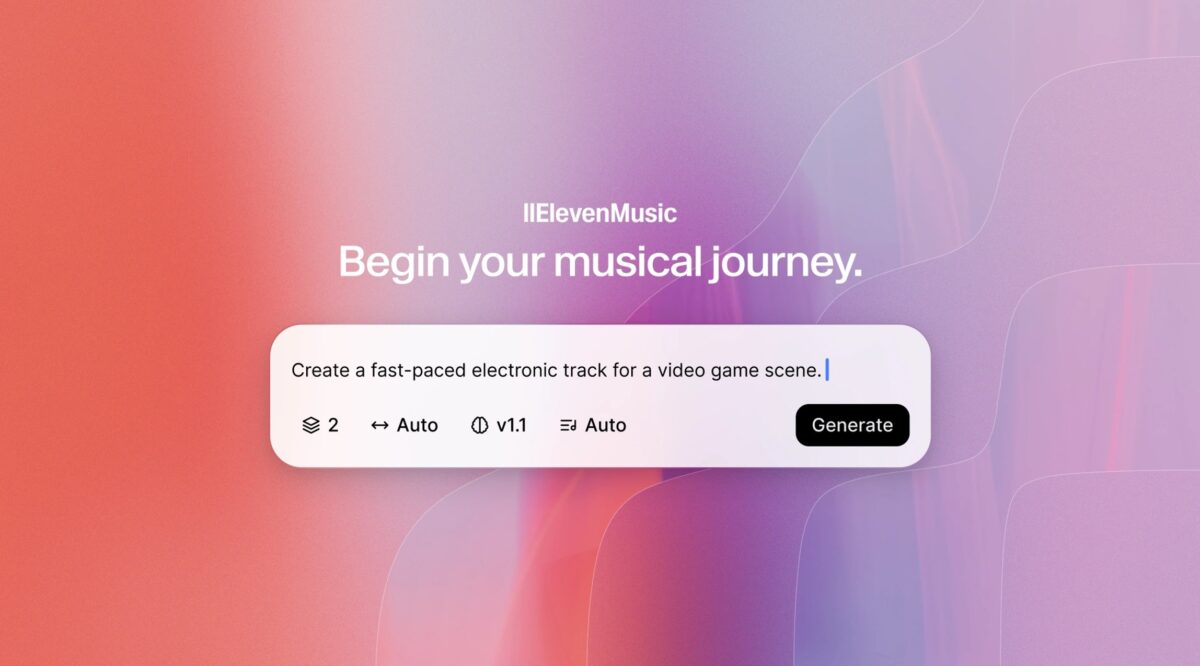
While Suno and Udio fight record label lawsuits over training data, the undisputed king of voice AI just quietly changed the game. ElevenLabs Eleven Music is here—a text-to-music AI generator that the company claims is fully cleared for commercial use. And the timing could not be more strategic.
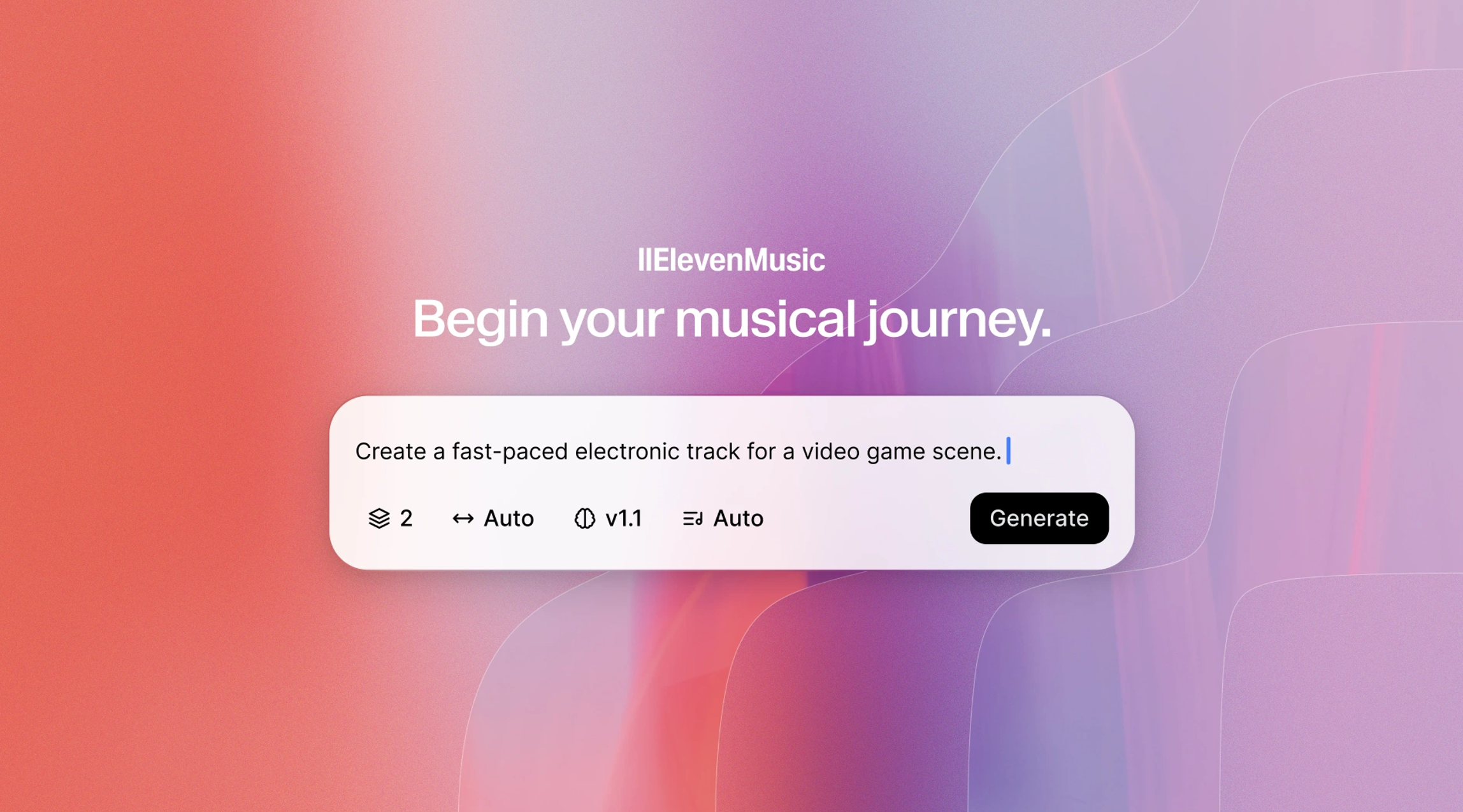
On August 5, 2025, ElevenLabs—the AI audio-generation unicorn valued at over $1 billion—officially launched Eleven Music. The tool generates complete songs from text prompts across genres ranging from indie rock to reggaeton, with both vocal and instrumental options. But the headline feature is not the music itself—it is the commercial licensing. ElevenLabs says the output is cleared for use in film, TV, podcasts, social media, ads, and games.
Why ElevenLabs Eleven Music Matters Right Now
To understand why Eleven Music is significant, you need to understand the current state of AI music generation. The two market leaders—Suno and Udio—are both embroiled in major copyright lawsuits from record labels. The core allegation: their models were trained on copyrighted music without permission. This creates enormous legal uncertainty for anyone using these tools commercially.
For content creators, filmmakers, and advertisers who have been eager to use AI-generated music in their projects, this legal ambiguity has been the single biggest blocker. You might generate a perfect track for your YouTube channel or podcast, but using it commercially carries an unquantifiable legal risk. That is the problem ElevenLabs is trying to solve.
ElevenLabs is walking into this gap with a clear message: our music is safe to use commercially. As TechCrunch’s Amanda Silberling reported, co-founders Piotr Dabkowski and Mati Staniszewski are positioning this as a natural extension of ElevenLabs’ existing audio expertise. The company has already proven it can build industry-leading voice synthesis tools. Now it is applying that same deep learning infrastructure to music.
Whether the “cleared for commercial use” claim holds up under legal scrutiny remains to be seen—ElevenLabs has not disclosed the specifics of its training data. But in a market where competitors face active litigation, even the positioning alone is a powerful differentiator. For businesses evaluating AI music tools, “we claim commercial clearance” beats “we are being sued by Universal Music Group” every time.
Inside Eleven Music: Features That Set It Apart
Text-to-Music Generation with Fine-Grained Control
At its core, Eleven Music takes text prompts and generates complete musical tracks. But this is not a simple “describe a mood and get a generic loop” tool. Users can fine-tune sound, lyrics, tempo, instrumentation, vocal style, and song structure. The prompt limit is under 2,000 characters—enough for highly specific creative direction.
The level of control here reflects ElevenLabs’ understanding that creative professionals need more than a magic button. They need parameters they can adjust, iterate on, and shape to fit specific project requirements. Whether you are scoring a short film or creating background music for a product launch video, the ability to specify not just genre but structure, tempo, and vocal approach is critical.
Multilingual Vocal Performance
One of Eleven Music’s standout features is multilingual vocal support. The tool can generate vocal performances in English, German, Spanish, and Japanese—a direct carryover from ElevenLabs’ industry-leading multilingual voice synthesis technology. You can also generate purely instrumental tracks, giving creators flexibility for different use cases.
This multilingual capability is particularly valuable for global content creators. A YouTube channel producing content in multiple languages can now generate region-specific background music with matching vocal styles—without hiring separate vocalists for each market.
Public API: The Developer Advantage
According to The Decoder’s Matthias Bastian, ElevenLabs plans to release a public API shortly after launch. This is a significant competitive advantage. While Suno and Udio operate primarily through their web interfaces, an API allows developers to integrate music generation directly into their own applications, workflows, and products.
The implications are substantial. Imagine a video editing tool that automatically generates background music matching the mood of each scene. Or a game engine that creates dynamic soundtracks in real-time based on player actions. ElevenLabs has also announced plans to integrate Eleven Music with its conversational AI platform, opening up scenarios where AI agents can generate contextual audio on the fly.

The Commercial Licensing Question: Promise vs. Reality
The “cleared for commercial use” claim is Eleven Music’s biggest selling point—and also its most scrutinized. ElevenLabs states that generated music can be used across film, TV, podcasts, social media, advertising, and gaming. The company offered a 50% launch discount through August 2025, signaling confidence in driving early adoption.
But there are important caveats that every potential user should understand. First, AI-generated music currently lacks copyright protection under U.S. law. This means someone else could generate a nearly identical track using a similar prompt, and you would have limited legal recourse. Second, there are no exclusivity guarantees—the same model serves all users.
ElevenLabs has also established clear prohibited uses: no political or religious content creation, no submitting generated tracks to commercial music libraries, and no using real artist names in prompts. These restrictions suggest a calculated approach to minimizing copyright dispute exposure—a lesson likely learned from watching competitors’ legal troubles.
Competitive Landscape: How Eleven Music Stacks Up Against Suno and Udio
The AI music generation market is heating up fast. Here is how the major players compare:
Suno has been the market leader in terms of user base and output quality, but the ongoing lawsuit from major record labels creates significant commercial risk. Users who need legal certainty for their projects face an uncomfortable gamble.
Udio similarly faces litigation and has been more focused on consumer-facing features than enterprise integration. The lack of API access limits its utility for developers building music into their own products.
ElevenLabs Eleven Music enters with three key differentiators: the commercial use claim, the planned API, and the backing of a proven AI audio company with deep technical expertise. The trade-off is that it is a newer entrant with less community feedback on long-term output quality and consistency.
The Hacker News community (207 points, 271 comments) reflected this nuanced view. The API was cited as a clear advantage, but vocal quality drew criticism—users felt the “studio-grade” marketing claim did not match the actual output. The consensus seemed to be: promising technology, but not yet a replacement for professional music production.
Practical Use Cases: Where Eleven Music Delivers Real Value
Based on the features and current quality level, Eleven Music is best suited for several specific scenarios:
- Content creators who need background music for YouTube videos, podcasts, or social media content but lack the budget for custom compositions or commercial licenses
- Game developers working on indie titles who need diverse soundtracks across multiple levels and environments
- Advertisers creating rapid prototypes or short-form video ads where speed matters more than bespoke production
- Filmmakers in pre-production who need temp tracks that closely match their creative vision for editing purposes
- App developers who want to integrate dynamic music generation via API into their products
Where Eleven Music falls short—at least for now—is in replacing professional music production for commercial releases, high-end film scoring, or any context where truly unique, copyright-protected compositions are required. The technology is advancing rapidly, but the gap between AI-generated and professionally produced music remains audible to trained ears.
There is also a workflow consideration worth noting. For teams that already use ElevenLabs for voice synthesis—narration, dubbing, or conversational AI—adding Eleven Music creates a unified audio production pipeline. Instead of juggling separate tools for voice and music, everything lives under one platform with a consistent API and billing structure. That kind of operational simplicity matters at scale.
From Voice AI to Audio AI: ElevenLabs’ Strategic Evolution
Eleven Music represents more than a new product—it signals ElevenLabs’ transformation from a voice AI company into a comprehensive audio AI platform. Starting with text-to-speech and voice cloning, the company has systematically expanded into every corner of AI audio generation.
The early numbers tell a compelling story. According to later reporting, the model generated over 14 million songs, and ElevenLabs subsequently launched a music marketplace that pays creators. This suggests the company is not just building tools—it is building an ecosystem where AI-generated music has a viable commercial lifecycle.
This ecosystem approach mirrors what we have seen in other AI verticals. OpenAI did not just build GPT—it built the ChatGPT platform, the API, the plugin ecosystem, and the enterprise tier. ElevenLabs appears to be following a similar playbook for audio: start with a breakthrough capability (voice synthesis), expand horizontally (music generation), and then build the marketplace infrastructure that turns one-off generations into a sustainable business model. The music marketplace, in particular, is a clever move—it creates a feedback loop where creators generate content, earn revenue, and stay on the platform.
As AI music generation technology matures, the most important question is shifting from “how good is this technology” to “how do we use it responsibly and effectively.” ElevenLabs Eleven Music is the first mainstream service to put commercial viability front and center. It is not perfect—the vocal quality needs work, the copyright implications remain legally untested, and the 2,000-character prompt limit constrains power users. But as a signal of where the AI music industry is headed, Eleven Music is an inflection point that creators, developers, and the broader music industry cannot afford to ignore.
Looking to build AI-powered music production pipelines or automate generative AI workflows? Sean Kim can help you navigate the rapidly evolving landscape.
Get weekly AI, music, and tech trends delivered to your inbox.