Visual Studio 2026 March Update: Custom AI Agents, Profiler Agent, and C++ Compiler Gains Up to 6.5%
March 20, 2026
GDC 2026 Festival of Gaming: 5 Takeaways from Google Genie 3 to the Indie Renaissance
March 20, 2026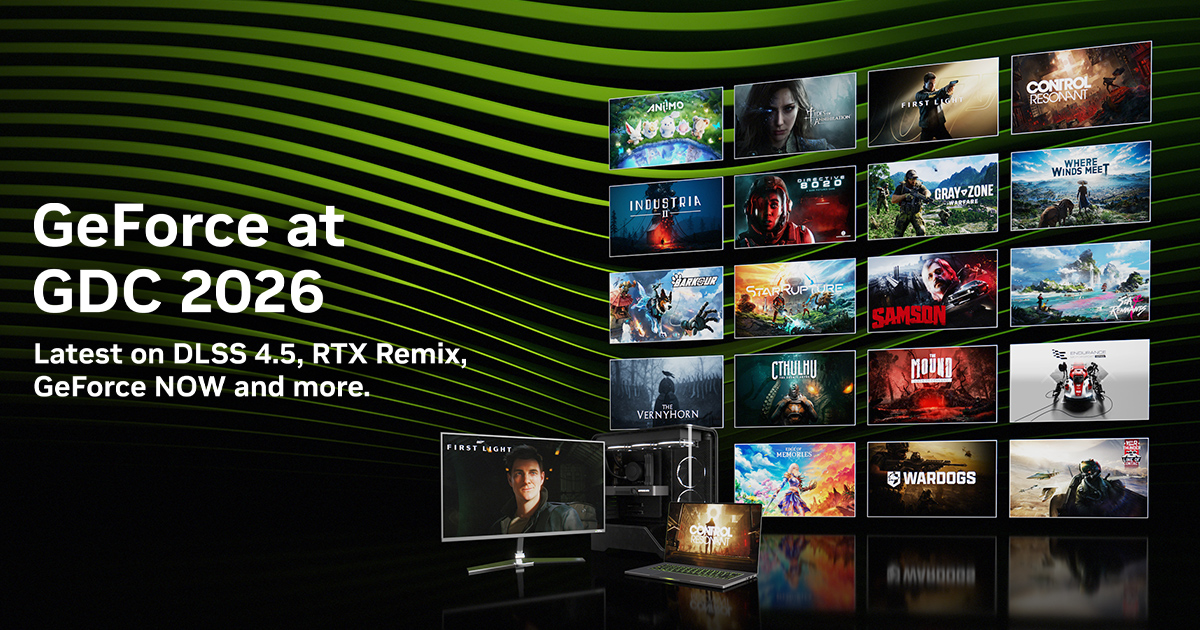
A 35% performance jump in 4K path-traced games — without touching your hardware. That is what NVIDIA just announced at GDC 2026 with DLSS 4.5 Dynamic Multi Frame Generation, and the best part is it arrives on March 31 as a free update through the NVIDIA app beta. If you own an RTX 50 series card, the next eleven days might be the longest wait of your gaming life.
What Is DLSS 4.5 Dynamic Multi Frame Generation?
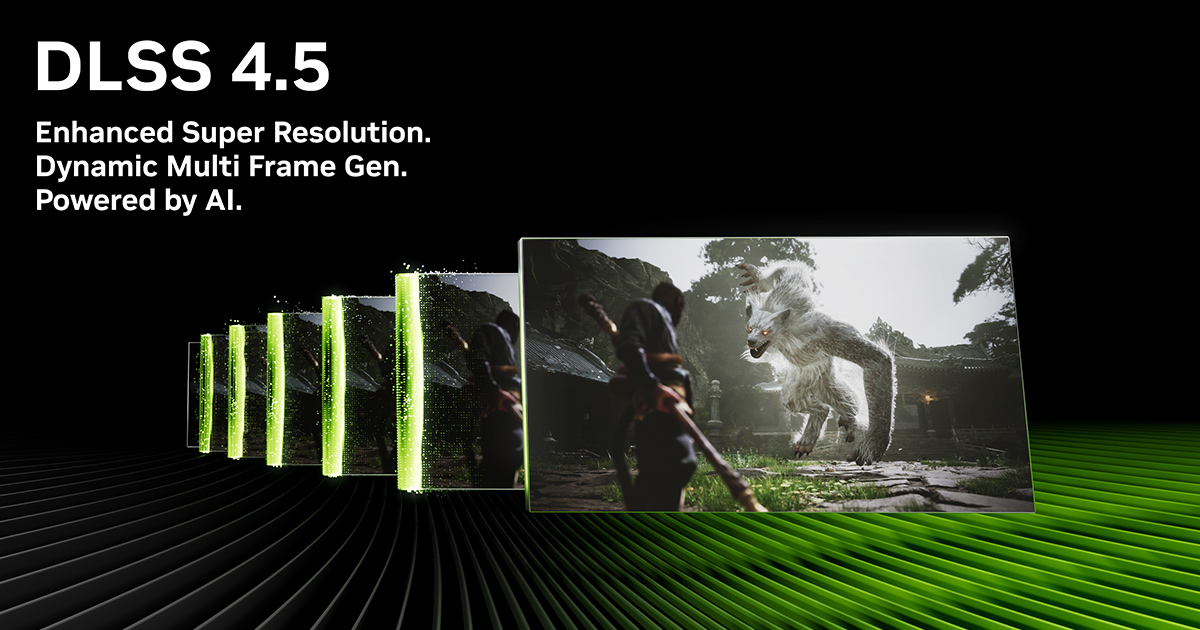
DLSS 4.5 introduces a fundamentally new approach to frame generation that NVIDIA describes as an “automatic transmission” for your GPU. Instead of locking you into a fixed frame multiplier — say 2X or 4X — Dynamic Multi Frame Generation automatically adjusts the multiplier on the fly based on scene complexity, GPU headroom, and real-time performance targets.
Think of it this way: during a calm dialogue scene, the system might generate fewer additional frames because your GPU already has plenty of headroom. Drop into an explosion-heavy firefight with ray-traced reflections bouncing off every surface, and Dynamic MFG ramps up to 6X — generating five extra frames for every rendered frame — to keep your frame rate buttery smooth. All of this happens without any manual intervention.
The 6X Mode: Five Extra Frames Per Rendered Frame
The headline feature within DLSS 4.5 Dynamic Multi Frame Generation is the new 6X mode, exclusive to RTX 50 series GPUs. Where the previous DLSS 4 topped out at 4X (generating three additional frames), 6X pushes that to five additional frames per single rendered frame. According to NVIDIA’s internal benchmarks, this delivers up to 35% more performance in demanding 4K path-traced scenarios compared to the 4X ceiling.
That 35% figure is not a synthetic number pulled from a controlled demo. NVIDIA demonstrated the gains across several titles including the upcoming 007 First Light with full path tracing enabled, CONTROL Resonant, and Tides of Annihilation. In each case, the 6X mode allowed the GPU to maintain 60+ FPS at 4K with path tracing cranked to maximum — a scenario that would have been unplayable just eighteen months ago.
To put this in perspective, consider the rendering pipeline. At 4K with full path tracing, a single rendered frame might take 30-40ms on even the RTX 5090. At native rendering, that caps you at roughly 25-33 FPS — far below the 60 FPS threshold that most gamers consider acceptable. With 6X mode, the GPU renders that single frame and DLSS generates five additional frames using its AI model, effectively multiplying your frame output sixfold. The result is a perceived frame rate well above 60 FPS, with the AI-generated frames filling in the motion data between each rendered frame.
But here is the critical detail: 6X mode is not always active. Dynamic MFG treats it as the upper ceiling, engaging it only when the scene demands maximum frame generation. During lighter scenes, the system scales back to 3X or 4X to preserve latency and power efficiency. This dynamic scaling is what separates DLSS 4.5 from a brute-force approach.
2nd-Generation Transformer Super Resolution
Frame generation gets the headlines, but the 2nd-gen transformer model for Super Resolution might be the more technically impressive advancement. NVIDIA has thrown 5x the compute at this new model compared to the original, trained it on massively expanded datasets, and — crucially — moved the entire pipeline to operate in linear color space rather than sRGB.
Why does linear space matter? When Super Resolution works in sRGB, bright highlights and dark shadows can introduce artifacts during the upscaling process because sRGB is a perceptually encoded space. Linear space gives the model physically accurate light values to work with, resulting in cleaner edges, more accurate specular highlights, and fewer ghosting artifacts in high-contrast scenes.
The practical impact is significant. Performance mode (rendering at roughly 50% resolution) now achieves visual quality comparable to native rendering. Even more impressively, Ultra Performance mode — which renders at just 33% resolution — has become viable for 4K gaming. That means an RTX 5070 running Ultra Performance can deliver visuals that previously required an RTX 5090 at native resolution, dramatically expanding the accessibility of high-end gaming experiences.
FP8 Precision: RTX 40 Series Gets a Boost Too
DLSS 4.5 does not leave older hardware behind entirely. Both RTX 40 and RTX 50 series cards support FP8 (8-bit floating point) precision for the Super Resolution model, which effectively doubles inference throughput compared to the FP16 path used previously. For RTX 40 owners, this means noticeably improved DLSS quality at the same performance cost — a genuine free upgrade.
RTX 20 and 30 series cards remain on the older CNN-based DLSS models and will not receive the transformer-based improvements or FP8 support. While these GPUs continue to benefit from existing DLSS 3.x frame generation (RTX 30) and Super Resolution (RTX 20), the gap between generations is growing wider with each update.
20 New Games and the Expanding DLSS Ecosystem
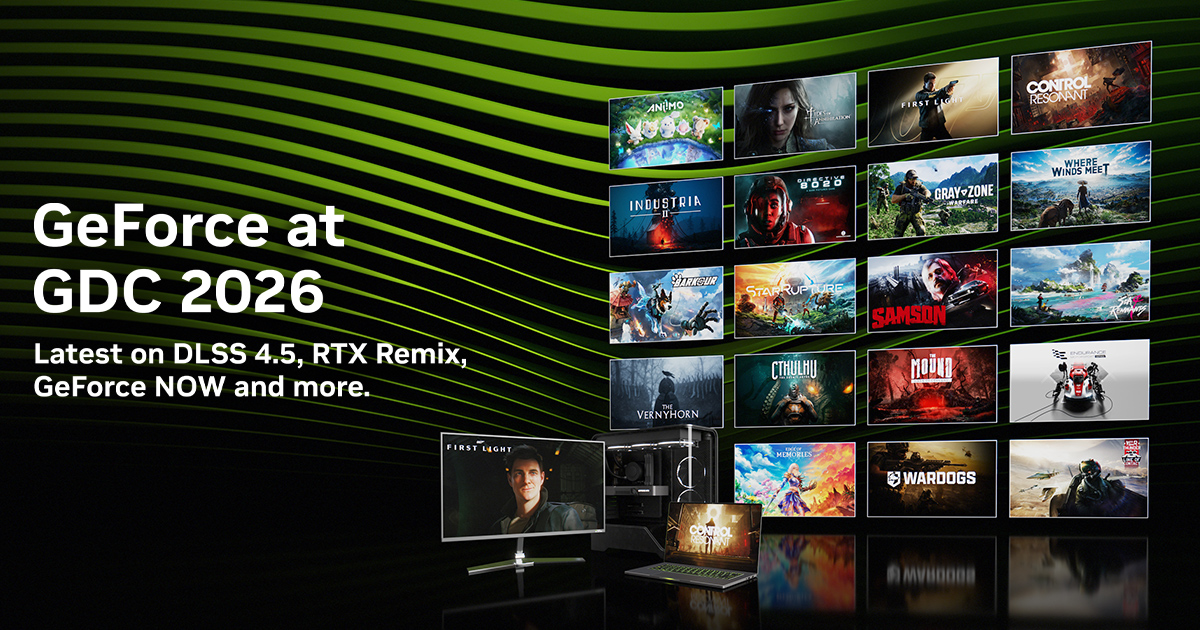
Alongside the technology update, NVIDIA announced 20 new titles receiving DLSS 4.5 support at launch. The highlight reel includes 007 First Light with full path tracing, CONTROL Resonant (the sequel to Remedy’s critically acclaimed original), and Tides of Annihilation. These join the existing library of over 400 games that already support some form of DLSS Super Resolution.
NVIDIA also spotlighted several other GDC 2026 announcements that complement the DLSS 4.5 rollout. RTX Remix received an Advanced Particle VFX system, and a playable Quake III Arena RTX demo is now available to showcase the technology. Perhaps most intriguingly, the Mega Geometry dense foliage system is coming to The Witcher 4, promising forest environments with individual leaf-level geometry rather than billboard textures.
Latency: The Elephant in the Room
Frame generation always raises the latency question, and rightfully so. Generating five additional frames means those frames are, by definition, predicted rather than rendered — and predictions introduce delay. NVIDIA addresses this with tighter NVIDIA Reflex integration in DLSS 4.5, which minimizes the render queue and reduces the latency penalty of generated frames.
According to Tom’s Hardware’s analysis, the latency impact at 6X mode is “minimal” in titles with proper Reflex implementation, though competitive FPS players will likely want to cap at 3X or 4X for the absolute lowest input lag. For single-player, story-driven, or visually demanding titles — exactly the games that benefit most from path tracing — the 6X mode’s latency trade-off is well worth the visual fidelity gains.
How to Get DLSS 4.5 on March 31
The rollout plan is straightforward. On March 31, 2026, NVIDIA will release GeForce Game Ready Driver 595.79 WHQL alongside an updated NVIDIA app beta. Dynamic Multi Frame Generation will be opt-in — you will need to enable it through the NVIDIA app’s per-game settings. The 6X mode requires an RTX 50 series GPU, while the 2nd-gen transformer Super Resolution and FP8 improvements will be available to RTX 40 and 50 series owners.
As PC Gamer noted, the opt-in nature means early adopters can test the feature while NVIDIA gathers feedback before a wider stable-channel release. Given the complexity of Dynamic MFG — which must adapt in real-time to wildly different game engines, rendering loads, and hardware configurations — this cautious rollout makes sense.
What This Means for the RTX 50 Value Proposition
DLSS 4.5 Dynamic Multi Frame Generation strengthens what was already a compelling case for the RTX 50 series. The 6X mode, exclusive to the latest generation, effectively adds another 35% to the performance ceiling in the most demanding scenarios. Combined with the 2nd-gen transformer Super Resolution making Performance and Ultra Performance modes genuinely viable at 4K, the RTX 5070 and 5070 Ti become serious contenders for high-end gaming at a fraction of the 5090’s price.
The pricing math becomes particularly interesting at the mid-range. An RTX 5070 running DLSS 4.5 Ultra Performance with 6X Dynamic MFG can now deliver a gaming experience that rivals — and in some frame rate metrics exceeds — what an RTX 5090 achieves at native resolution without frame generation. That is a remarkable democratization of high-end visual fidelity, even if purists will rightly point out that AI-generated frames are not identical to natively rendered ones.
For RTX 40 owners, the FP8 Super Resolution improvements provide a meaningful quality boost without requiring an upgrade. But the 6X frame generation ceiling and Dynamic MFG remain exclusive incentives to move to the 50 series — exactly as NVIDIA intended. The generational gap in AI-powered features is now wide enough that it constitutes a genuine reason to upgrade beyond raw rasterization performance.
With 400+ games already supporting DLSS and 20 more arriving alongside the 4.5 update, the ecosystem is mature enough that these features will see real-world use from day one. Whether you are planning a new build around the RTX 5070 Ti or sitting on a 4080 wondering if the upgrade is worth it, March 31 will be the day to run your own benchmarks. The numbers NVIDIA is promising are too good to ignore.
Want to stay ahead of GPU launches, driver updates, and AI-powered gaming tech? Sean covers the latest every week.
Get weekly AI, music, and tech trends delivered to your inbox.