AI Startup Funding February 2026: 5 Record-Breaking Deals Behind the $189B Month
February 19, 2026
AI Startup Funding February 2026: $189B Record Month — OpenAI’s $110B, Anthropic’s $30B, and 10 Rounds You Need to Know
February 19, 2026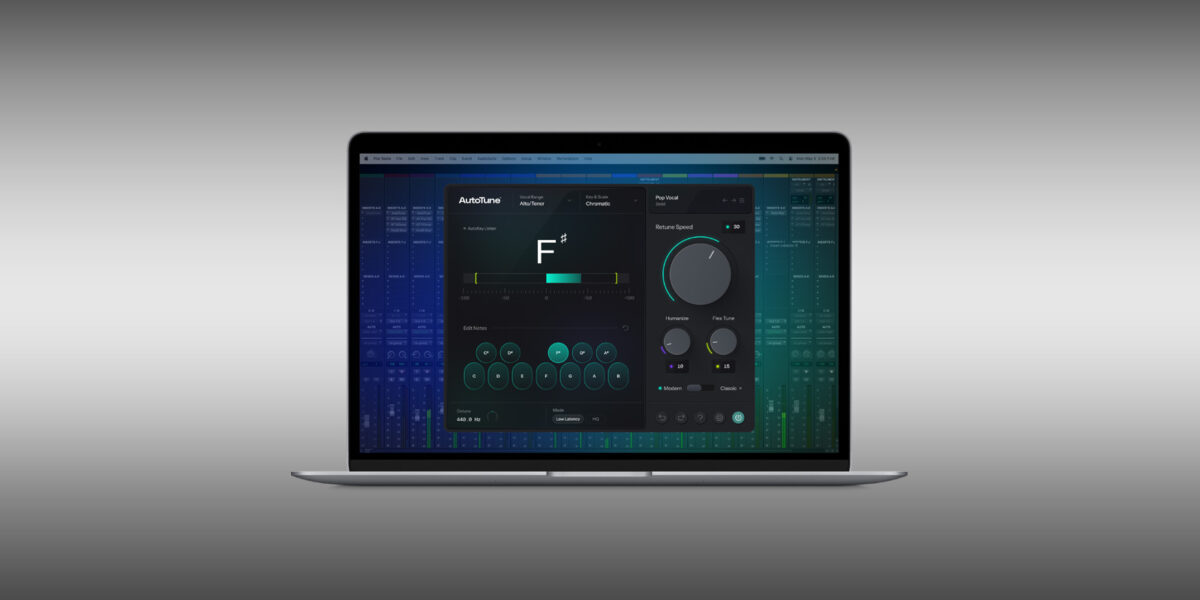
“That vocal sounds wrong… but somehow right.” After 28 years of engineering thousands of vocal sessions, I still remember the exact moment I pushed retune speed down to zero for the first time. A vocal tuning plugin I had been using purely for pitch correction suddenly became an entirely different instrument.
In 2026, creative vocal tuning is no longer T-Pain’s exclusive domain. From hyperpop and trap to indie pop and ambient — vocal tuning has evolved into an essential sound design tool. With the launch of Antares’ Auto-Tune 2026 bringing up to 35% greater CPU efficiency and dual processing modes, the creative possibilities have expanded even further.
1. Extreme Retune Speed Manipulation: From Robotic to Glitch
The foundation of creative vocal tuning starts with retune speed. Push it below 10ms and the vocal snaps instantly to the pitch grid, creating that iconic robotic voice effect. Sit between 20-40ms and you get subtle pitch artifacts — a unique character that neither sounds corrected nor natural, but something entirely new.
Auto-Tune 2026’s Classic Mode faithfully recreates the legendary hard-tuned sound of AutoTune 5, while Modern Mode adds Flex-Tune and Humanize parameters you can automate throughout a track. This means you can transition from transparent, natural vocals in the verse to aggressively processed vocals in the chorus — all within a single plugin instance. Slate Digital’s MetaTune takes a different approach with its single correction amount control, letting you apply light correction during writing and heavier processing for final mixes.

2. Formant Shifting: Redesigning the DNA of a Voice
Formants determine the resonant characteristics of the human voice. Adjust formants without changing pitch and you can completely alter a vocal’s perceived gender, age, and tonal color — all while keeping the same notes. This is what separates basic pitch correction from genuine creative vocal tuning.
Soundtoys Little AlterBoy remains one of the go-to tools for formant shifting. Push formants up for chipmunk textures, pull them down for deep, dark characters. Minimal Audio Evoke goes further with vocal resynthesis technology, completely reconstructing vocals into new sonic territories. Synchro Arts RePitch 2 combines formant control with pitch editing, maintaining tonal consistency while enabling creative transformation. As modern productions increasingly rely on vocal design and formant shaping, these tools have become essential for any producer working with vocals in 2026.
3. Vocoders and Harmonizers: Turning Vocals Into Synthesizers
The vocoder imposes vocal characteristics onto synthesizer sounds, creating hybrid human-machine textures. iZotope VocalSynth 2 combines vocoder, talkbox, formant filter, and Compuvox engines to build entirely new vocal textures within a single plugin. Stack multiple synthesis modes on top of each other and you get results that no single technique could achieve alone.
Harmonizer capabilities are equally powerful. Modern tuning plugins like Auto-Tune 2026 can generate multi-part harmonies from a single vocal take. LANDR VoxTune, bundled with VoxDeEss and VoxChain, offers an integrated approach — managing de-essing, processing, and harmony generation across your entire vocal chain. For producers working on stacked vocals across leads, doubles, and harmonies, Waves Tune Real-Time provides consistent tuning across multiple instances with minimal CPU overhead.
4. Pitch-Shift Reverbs and Auto-Tuned Delays: Tuning in Space
One of the most powerful techniques from The Pro Audio Files is the pitch-shift reverb. Place a pitch shifter on your reverb return and the reflections ring out at different intervals from the dry vocal, creating dreamy, surreal spatial textures that transform ordinary spaces into otherworldly environments.
The “throw delay” technique is equally powerful. In Soundtoys EchoBoy or FabFilter Timeless, increase feedback and place Auto-Tune on the delay return. Each repeating delay tap gets progressively pitch-corrected, creating an increasingly “refined” delay texture that evolves over time. Combine this with bit-crush automation using something like UAD OTO BISCUIT, and you add digital degradation — the vocal transforms and deteriorates within the space, creating a narrative arc of sound that keeps listeners hooked.
5. Multi-Plugin Stacking: Auto-Tune + Melodyne + VocalSynth
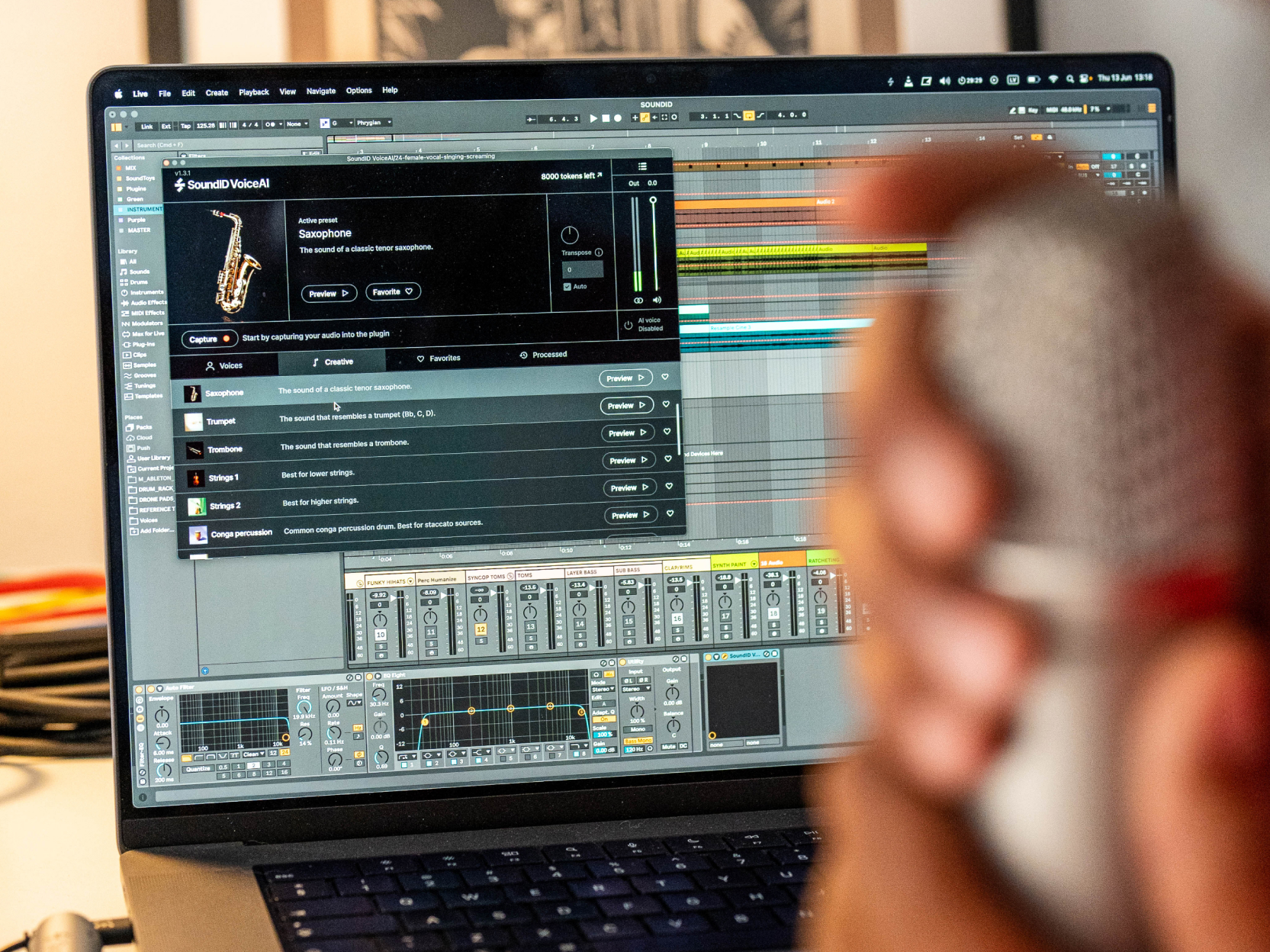
The pinnacle of creative vocal tuning is combining multiple plugins into a unified workflow. Start with Melodyne for surgical note-level editing, then apply Auto-Tune’s Classic Mode for overall character, and finish with VocalSynth 2 for final texture processing. This three-stage approach gives you granular control at every level — from individual note shapes to overall sonic identity.
Parallel processing is the secret weapon here. Run your heavily processed vocal chain alongside a completely dry channel, then blend them to taste. This preserves the original emotional content while adding textural richness. As The Pro Audio Files puts it, “The human voice is the most expressive instrument, and not only lends itself to creative production styles but sometimes needs it.”
The key mindset shift is treating vocals as instruments rather than just recordings of singers. The same Auto-Tune that “corrects” a vocal can also redefine it. Whether you start with retune speed extremes, formant redesign, vocoder synthesis, spatial processing tricks, or full plugin stacking — the difference between pitch correction and creative vocal tuning is simply a matter of intention. Try one of these five techniques in your next session — you might discover that the vocal isn’t just carrying the song’s melody, but defining its entire sonic identity.
Want to dive deeper into professional vocal processing or creative sound design? Connect with Sean Kim — 28 years of audio engineering experience at your service.