Best Budget Microphones 2026: 8 Top Vocal Mics Under $200 (Post-NAMM Guide)
January 27, 2026
Home Studio Setup Guide 2026: Complete Beginner to Pro Pathway
January 28, 2026
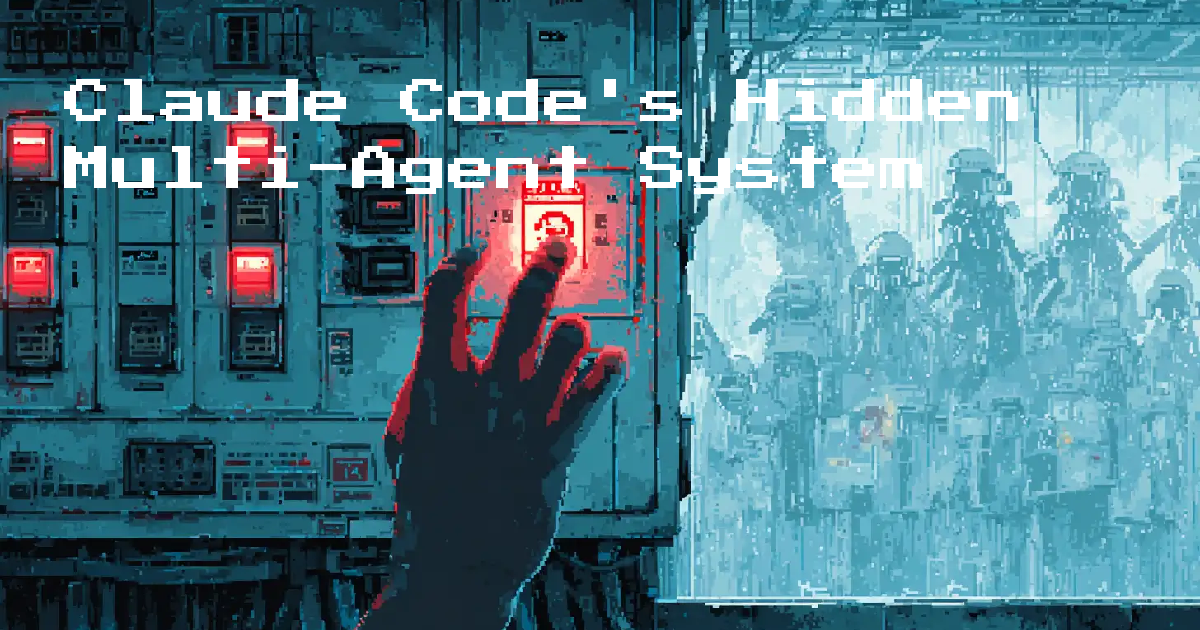
1,096 commits in a single release. That’s what Anthropic shipped on January 7, 2026, with Claude Code 2.1.0 — and most developers haven’t even scratched the surface of what Claude Code Multi-Agent Orchestration can actually do now. But the real bombshell came 17 days later, when a developer ran a simple strings command on the binary and uncovered an entire multi-agent swarm system hiding in plain sight.
Claude Code 2.1.0: The January 7 Release That Rewrote the Rules
Claude Code 2.1.0 wasn’t just an incremental update — it was a fundamental repositioning. Anthropic bundled 1,096 commits into this single release, transforming Claude Code from a capable coding assistant into something closer to production infrastructure. Here are the five features that matter most for Claude Code Multi-Agent Orchestration workflows.
1. Forked Sub-Agent Contexts: True Isolation
Before 2.1.0, sub-agents shared context in ways that could create unpredictable side effects. The new forked sub-agent contexts give each skill and slash command a completely isolated execution environment. This means one agent building your backend API won’t accidentally pollute the state of another agent working on your frontend — a critical prerequisite for any serious multi-agent workflow.
2. Skills Hot-Reload: 24x Faster Iteration
The iteration cycle for custom skills dropped from roughly two minutes to five seconds — a 24x improvement. Skills now activate instantly without restarting your session, which completely changes how you develop and test custom sub-agents. When you’re building a multi-agent pipeline, this kind of rapid feedback loop is the difference between shipping today and debugging for a week.
3. Hooks for Agents and Skills Frontmatter
Version 2.1.0 introduced hooks directly into agent and skill definitions via frontmatter. You can now scope PreToolUse, PostToolUse, and Stop logic at the individual agent level, giving you fine-grained control over state management, tool constraints, and audit logging. For orchestration systems running multiple agents, this is the control plane you didn’t know you needed.
4. Background Agent Support
Long-running processes like development servers, build watchers, and test suites can now run in the background without blocking Claude Code’s main thread. Combined with the forked contexts, this effectively lets you run parallel agent workflows where one agent monitors your test results while another refactors code.
5. 3x Memory Improvements
The 3x improvement in memory efficiency for long conversations directly impacts multi-agent viability. When you’re orchestrating multiple agents through a complex task, context window limits were previously the hard ceiling. This improvement doesn’t just help single sessions — it fundamentally expands what’s possible when agents need to maintain rich context across extended workflows.

The January 24 Discovery: TeammateTool and Hidden Swarm Mode
On January 24, 2026, developer Kieran Klaassen ran strings on the Claude Code binary (version 2.1.29) and found something remarkable: a fully-implemented multi-agent orchestration system called TeammateTool, feature-flagged off but completely functional. The same day, Mike Kelly independently made the same discovery, which quickly hit 281 points on Hacker News with over 207 comments.
13 Operations Across Four Categories
TeammateTool wasn’t experimental scaffolding — it was a production-grade system with 13 defined operations organized into four functional categories:
- Team Lifecycle:
spawnTeam,discoverTeams,cleanup— creating, finding, and tearing down agent teams - Membership:
requestJoin,approveJoin,rejectJoin— dynamic team composition with approval workflows - Coordination:
write(direct messaging),broadcast(group communication),approvePlan,rejectPlan— inter-agent communication and consensus - Graceful Shutdown:
requestShutdown,approveShutdown,rejectShutdown— coordinated termination to prevent orphaned processes
The Swarm Architecture: Team Lead + Specialists
The architecture follows a coordinator pattern that mirrors established multi-agent design:
- Team Lead: Plans and delegates, doesn’t write code directly
- Specialist Agents: Work in independent context windows with focused roles (frontend, backend, testing, documentation)
- Shared Task Board: Tracks dependencies and progress across all agents
- @mention Messaging: Agents communicate via mention-based messaging, similar to how humans collaborate in Slack
The storage structure was already defined: ~/.claude/teams/{team-name}/config.json for team configuration, messages/{session-id}/ for inter-agent communication, and ~/.claude/tasks/{team-name}/ for the shared task board.
claude-sneakpeek: The Community Unlocks Swarm Mode
Mike Kelly didn’t just discover TeammateTool — he built claude-sneakpeek, an npm package that bypassed the feature flags to enable native swarm orchestration before Anthropic’s official launch. The tool created an isolated configuration at ~/.claude-sneakpeek/claudesp/ that enabled delegate mode, team coordination, and parallel agent execution.
The feature gate required two internal functions (I9() and qFB()) to both return true — both were disabled in public releases. Kelly’s tool worked around this, giving early adopters a preview of what Anthropic would officially launch on February 6, 2026, alongside Claude Opus 4.6.
Why January 2026 Was the Inflection Point for AI Coding Agents
The combination of 2.1.0’s infrastructure improvements and the discovered TeammateTool represents a fundamental shift in how AI coding tools work. Before January, Claude Code was a powerful single-agent system. After January, the technical foundation for coordinated multi-agent development was proven — both through official features (forked contexts, hooks, background agents) and through the community’s discovery of what Anthropic was building next.
The community reaction told the story: optimists reported completing full projects in three days using swarm patterns, skeptics raised valid concerns about code review challenges and agent reliability, and pragmatists suggested using swarms primarily for scaffolding while keeping human oversight for production code.
Practical Multi-Agent Orchestration Patterns Enabled by 2.1.0
The combination of forked contexts, hooks, and background agent support in Claude Code 2.1.0 enables several concrete multi-agent orchestration patterns that were previously impractical. Understanding these patterns is essential for developers planning to adopt multi-agent workflows as the technology matures.
Pattern 1: Pipeline Orchestration
The most straightforward pattern chains agents sequentially: one agent generates code, another runs tests, a third reviews for security vulnerabilities, and a fourth handles documentation. With 2.1.0’s PostToolUse hooks, you can automatically trigger each stage when the previous one completes. The forked contexts ensure that the security review agent can’t accidentally modify the code that the test agent is validating — each operates on its own snapshot.
Pattern 2: Parallel Fan-Out
For tasks that can be decomposed into independent subtasks — like generating API endpoints for different resources, or running compatibility tests across multiple environments — the background agent support lets you fan out work to multiple agents simultaneously. Each agent runs in its own forked context with dedicated memory allocation, thanks to the 3x memory improvements. A coordinator agent can use PreToolUse hooks to monitor progress and merge results once all parallel tasks complete.
Pattern 3: Review and Iteration Loops
Perhaps the most powerful pattern combines a builder agent with a reviewer agent in a feedback loop. The builder generates code, the reviewer evaluates it against defined criteria (test coverage, performance benchmarks, code style), and if the review fails, the builder receives specific feedback and iterates. With skills hot-reload, you can rapidly adjust the review criteria without restarting either agent. This pattern already mirrors what the TeammateTool swarm architecture would formalize with its approvePlan and rejectPlan operations.
The Broader Context: January 2026 in the AI Coding Landscape
Claude Code’s January developments didn’t happen in isolation. The entire AI coding ecosystem was accelerating toward multi-agent architectures during this period. Steve Yegge’s Gas Town project demonstrated coordinating 20-30 parallel Claude Code agents via tmux with seven distinct worker roles. The open-source community was building frameworks like Claude Flow for cross-agent memory sharing and task decomposition. Meanwhile, VS Code was preparing its own multi-agent development features, eventually announced in February 2026.
What made Anthropic’s approach distinctive was the depth of the infrastructure investment. While other solutions layered orchestration on top of existing tools, Claude Code 2.1.0 built coordination primitives directly into the runtime — hooks, forked contexts, and background processes became first-class citizens. The discovered TeammateTool took this even further with a complete communication protocol that included not just task assignment but consensus mechanisms, graceful shutdown coordination, and team lifecycle management.
For developers evaluating their options in this rapidly evolving space, the January 2026 Claude Code updates represent a clear signal: multi-agent coding isn’t an experimental curiosity anymore — it’s becoming the standard architecture for complex AI-assisted development. The question isn’t whether to adopt multi-agent patterns, but when and how aggressively to invest in them.
What This Means for Your Development Workflow
If you’re already using Claude Code, the 2.1.0 features are available right now via claude update. The immediate wins are practical: skills hot-reload dramatically speeds up custom tool development, forked contexts eliminate state pollution between sub-agents, and hooks give you production-grade observability over agent behavior.
For teams considering multi-agent workflows, the January discoveries proved that the architecture scales — Anthropic was already building the coordination layer, and it matches established patterns like leader-directed orchestration, parallel swarm execution, and pipeline workflows. The official launch with Opus 4.6 in February will make these capabilities generally available, but the building blocks shipped in January.
The key takeaway: Claude Code Multi-Agent Orchestration isn’t a future promise — it’s infrastructure that’s already shipping. January 2026 was when AI coding tools crossed the line from “helpful assistant” to “coordination platform,” and that shift changes what’s possible for every developer building with AI.
Building multi-agent AI pipelines or need help architecting automation systems? Let’s talk about what’s possible with the latest Claude Code orchestration features.
Get weekly AI, music, and tech trends delivered to your inbox.