7 Best PC Cases 2025: Airflow, Cable Management & Aesthetics Ranked
June 19, 2025
UAD Apollo x4 Heritage Edition Review: Is the $2,400 Plugin Bundle Worth the Premium?
June 20, 2025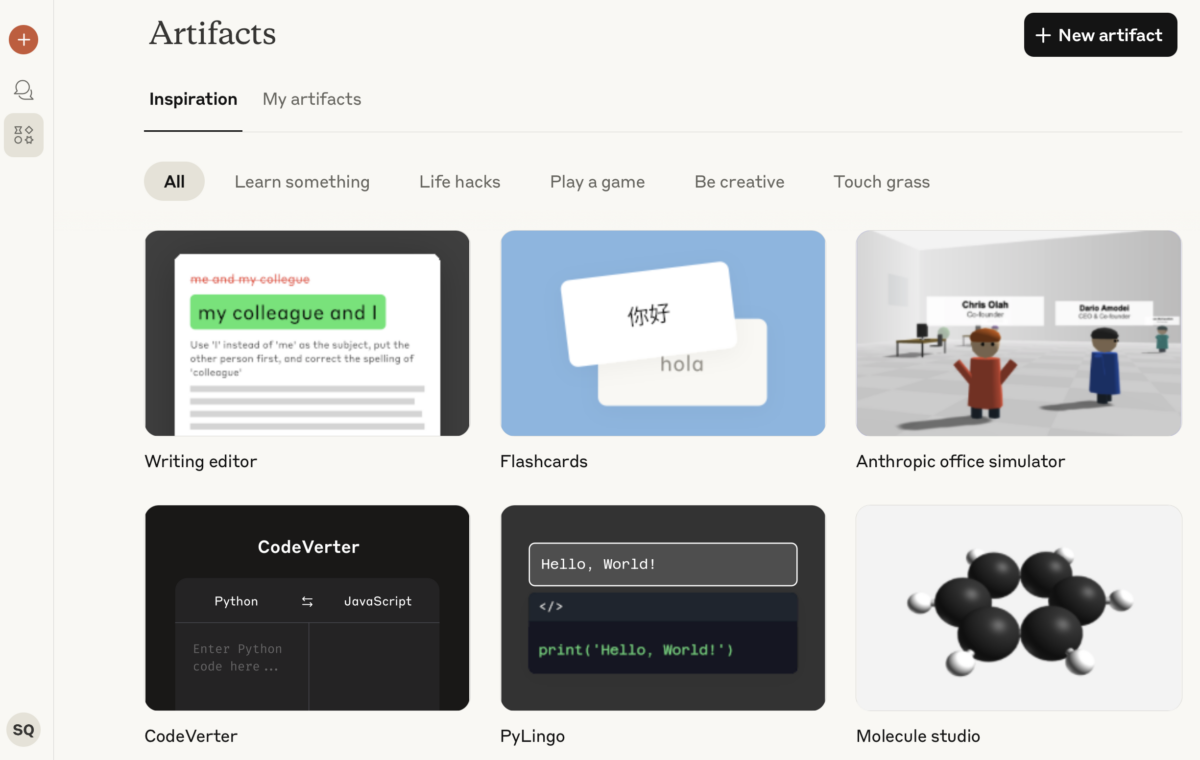
Over 500 million artifacts created since launch — and Anthropic just decided that wasn’t ambitious enough. On June 25, 2025, Claude Artifacts received a massive update that transforms what used to be simple code previews into fully interactive, shareable applications. If you’ve been waiting for AI to finally close the gap between “describe what you want” and “here’s a working app,” this is the moment.
What Changed With Claude Artifacts in June 2025
Before this update, Claude Artifacts were already useful — you could generate code snippets, preview React components, and visualize data. But the experience stopped at “preview.” You couldn’t really build something functional and hand it to someone else to use. That limitation is now gone.
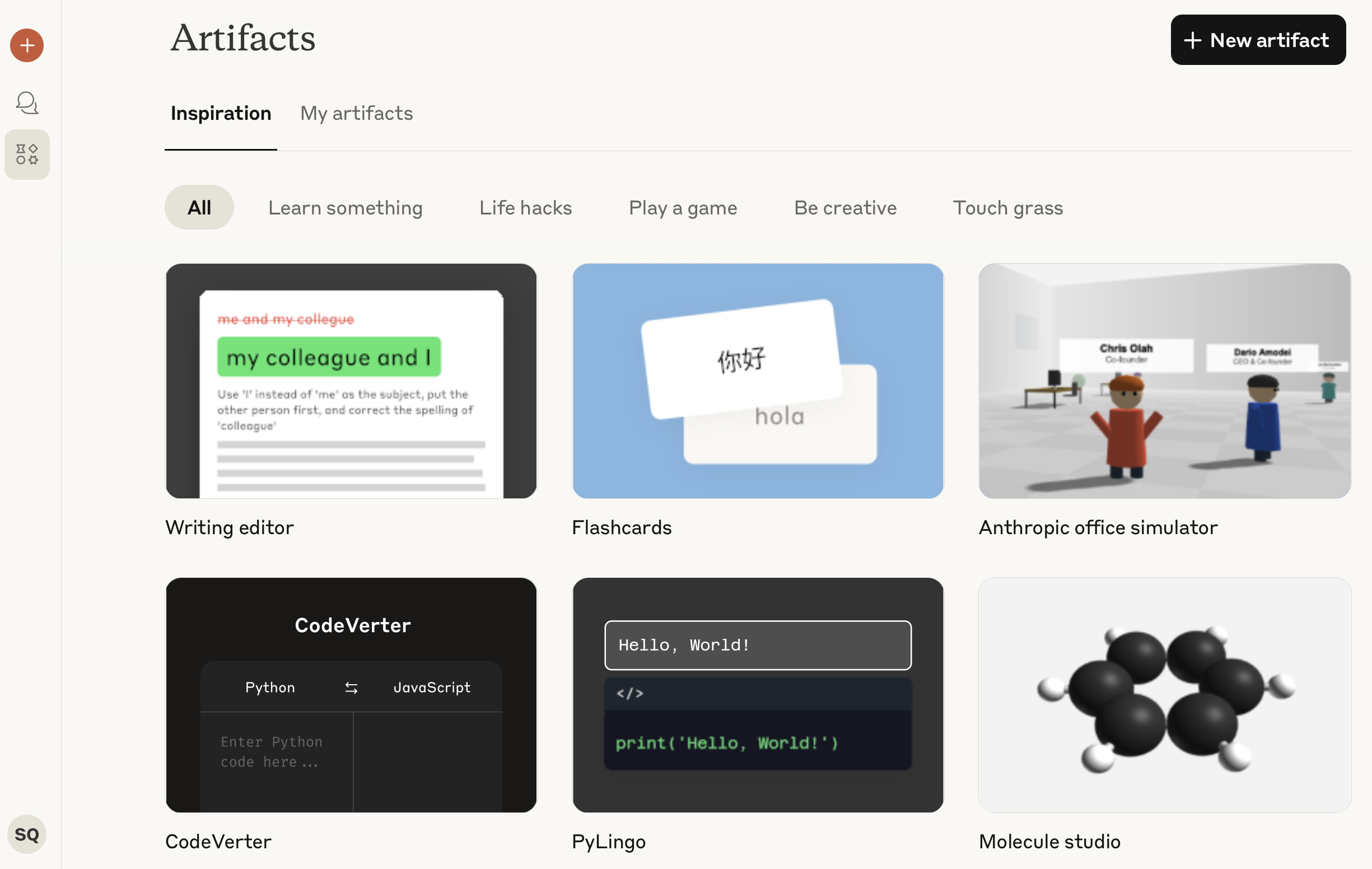
The June 2025 update introduces full app-building capabilities directly within the Claude interface. Users can now create interactive applications — think data analyzers, flashcard generators, quiz tools, budgeting calculators, even games with branching narratives — all through natural conversation. No code editor. No terminal. No deployment pipeline. You describe what you want, Claude builds it as a React component with immediate preview, and you share it via a link.
According to InfoQ’s coverage, Anthropic has created a dedicated workspace where these artifacts live. Non-technical users can build tools that embed Claude’s intelligence directly into the application logic. The result is something that feels more like an app platform than a chatbot.
Claude Artifacts as a No-Code App Platform: How It Works
The mechanics are straightforward but powerful. When you ask Claude to build something — say, an interactive vocabulary trainer for a language you’re studying — it generates a React component that runs right inside the Artifacts panel. You can see the app, interact with it, request changes through conversation, and iterate until it works the way you want.
Here’s what makes this different from typical AI code generation:
- Immediate visual feedback: No copy-pasting into a code editor. The app renders live as Claude writes it.
- Conversational iteration: “Make the buttons bigger,” “Add a dark mode toggle,” “Include a score counter” — Claude updates the artifact in real-time.
- Shareable via link: Anyone can use your artifact without creating an account. Usage counts against the viewer’s subscription, not the creator’s.
- AI-native logic: The apps can leverage Claude’s intelligence for things like adaptive tutoring, content analysis, or dynamic recommendations.
There are constraints, of course. Artifacts can’t make external API calls, don’t have persistent storage, and are limited to text-based completions. But within those boundaries, the creative possibilities are surprisingly broad.
Real-World Use Cases: What People Are Building
Within days of the announcement, the community response was explosive. Here are some of the more compelling use cases emerging:
Education and tutoring: Teachers are building adaptive quiz tools that adjust difficulty based on student responses. A history teacher can create an interactive timeline explorer. A language instructor can build a conversation practice tool — all without writing a single line of code manually.
Data analysis: Upload a spreadsheet description, and Claude builds an interactive analyzer with charts, filters, and summary statistics. It’s not replacing full BI tools, but for quick, one-off analyses, it’s remarkably effective.
Interactive games: Choose-your-own-adventure stories, trivia games, puzzle generators — the gaming community has been particularly creative with this feature.
Productivity tools: Meeting agenda generators, project estimation calculators, decision matrix builders. These are the kinds of micro-tools that usually require either a developer or a subscription to some SaaS platform.
Prototyping: Product managers and designers are using Artifacts to prototype interactive mockups. Instead of static wireframes, they can build clickable prototypes that demonstrate actual logic and user flows.
Internal business tools: Companies are creating custom onboarding checklists, inventory trackers, and client intake forms. These are the kinds of tools that would normally sit in a backlog for months waiting for developer bandwidth. With Artifacts, an operations manager can have a working version in an afternoon.
The Competitive Landscape: Claude Artifacts vs. OpenAI Canvas vs. Google Gems
This update positions Anthropic squarely against several competitors. OpenAI’s Canvas offers a similar split-panel editing experience but focuses more on document and code editing rather than standalone app creation. Google’s Gems allow users to create custom AI personas, but they don’t produce interactive applications in the same way.
What sets Claude Artifacts apart is the full loop: conversation to working app to shareable link. Canvas is powerful for collaborative writing and coding, but it doesn’t produce deployable artifacts. Gems are about customizing AI behavior, not building tools. Anthropic has carved out a unique position — they’re essentially offering a no-code development environment powered by one of the most capable language models available.
The accessibility model is also noteworthy. Claude Artifacts are available across Free, Pro, and Max plans. While Free users have limitations on usage volume, the core functionality is there. This is a deliberate democratization play — Anthropic wants as many people as possible building on this platform.
There’s also a strategic dimension worth considering. By making Artifacts the default way people interact with Claude for tool-building, Anthropic creates an ecosystem lock-in that goes beyond chat quality. Users who build dozens of artifacts on Claude are unlikely to switch to a competitor, even if the underlying language model improves elsewhere. The artifacts themselves become the moat.
What This Means for the Vibe Coding Movement
The term “vibe coding” — building software through natural language descriptions rather than traditional programming — has been gaining traction throughout 2025. Claude Artifacts is perhaps the purest expression of this philosophy so far. You don’t need to understand React, JavaScript, or CSS. You describe the vibe, and Claude handles the implementation.
This has profound implications for who gets to build software. A marketing manager who needs a custom ROI calculator doesn’t need to file a ticket with engineering. A teacher who wants an interactive classroom tool doesn’t need to learn to code or pay for a custom solution. A small business owner who needs a simple customer intake form can build one in minutes.
The counterargument, naturally, is about quality and limitations. Artifacts-built apps won’t replace professionally engineered software. They can’t connect to databases, authenticate users, or handle complex backend logic. But that’s not the point. The point is that a huge percentage of the tools people need are relatively simple — and for those, the traditional development pipeline has always been overkill.
Limitations You Should Know About
Before you start planning to replace your development team, some important caveats:
- No external API calls: Your artifact can’t fetch data from third-party services. Everything runs within the Claude sandbox.
- No persistent storage: Data doesn’t save between sessions. Each time someone opens the artifact, it starts fresh.
- Text-based completions only: The AI component within artifacts is limited to text generation. No image generation, no audio processing, no multimodal outputs within the app itself.
- React-only: The underlying framework is React. If you need something that React can’t handle well in a single component, you’ll hit walls.
- Sharing model: When someone uses your shared artifact, it counts against their Claude subscription. This limits viral distribution since viewers need their own accounts for full functionality.
These are reasonable constraints for a first major release. The question is how quickly Anthropic will expand these boundaries. Persistent storage and external API access would transform Artifacts from a clever tool into a genuine application platform.
It’s also worth noting what’s not a limitation: complexity. Within the React sandbox, you can build surprisingly sophisticated UIs with state management, animations, conditional rendering, and multi-step workflows. The ceiling is higher than most people assume on first glance. The constraint isn’t what the app can do internally — it’s what it can connect to externally.
Looking Ahead: Where Claude Artifacts Could Go Next
With 500 million artifacts already created before this update, the usage numbers are only going to climb. Anthropic has effectively built a marketplace-ready infrastructure — artifacts are shareable, embeddable, and powered by a subscription model. It’s not hard to imagine an “Artifact Store” where creators publish and monetize their tools.
For developers, this isn’t a threat — it’s an opportunity. The artifacts that gain traction will eventually need to be rebuilt as proper applications with backends, authentication, and scale. Claude Artifacts becomes the prototyping and validation layer, and professional development becomes the production layer.
For everyone else, this is arguably the most tangible demonstration of AI’s promise yet. Not generating text that sounds human, not creating images from prompts, but building functional tools that solve real problems — from a conversation.
The broader implication is clear: the barrier between having an idea and having a working tool is collapsing. Anthropic has positioned Claude not just as an assistant that answers questions, but as a builder that ships products. Whether you’re a solo entrepreneur validating a concept, a teacher creating classroom resources, or a team lead prototyping an internal workflow — Claude Artifacts makes the path from thought to functional app shorter than it has ever been. That’s the update worth paying attention to.
Exploring AI-powered automation, no-code tools, or building your own tech pipeline? Sean Kim helps businesses design and implement systems that work.
Get weekly AI, music, and tech trends delivered to your inbox.