Enterprise AI Tools 2026: 7 Platforms That Shipped Agentic Features While You Were Still Piloting Chatbots
February 20, 2026
GitHub Copilot Agent Mode: 5 Ways Repository-Wide AI Context Changes How You Code
February 23, 2026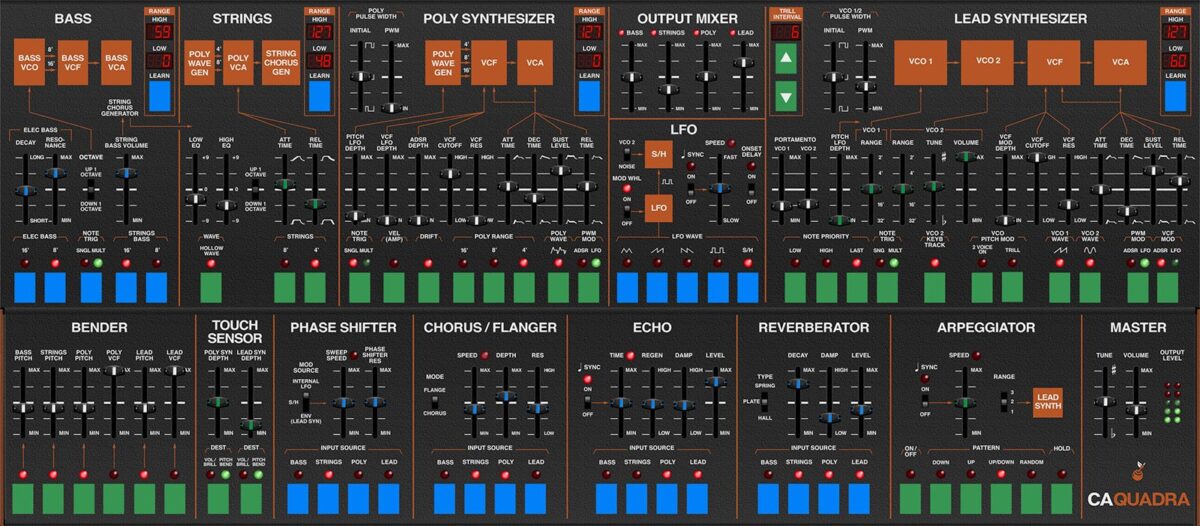
Have you ever seen an original ARP Quadra in person? With fewer than 800 units ever made and secondhand prices north of $5,000, this 1978 “unicorn” synthesizer has been out of reach for most musicians — until now. Cherry Audio Quadra brings all four sections of this legendary instrument into your DAW for just $49.
Cherry Audio Quadra — The First-Ever Software ARP Quadra
The original ARP Quadra was a bold experiment in synthesis: four distinct synthesizer sections — Bass, Poly, Lead, and Strings — housed in a single keyboard. Produced from 1978 to 1981, it was plagued by reliability issues and limited production runs, making it one of the most coveted and least accessible vintage synths in history. Cherry Audio has done what no other developer has attempted: a faithful, super-accurate emulation of the Quadra that doesn’t just replicate the original but substantially improves upon it.
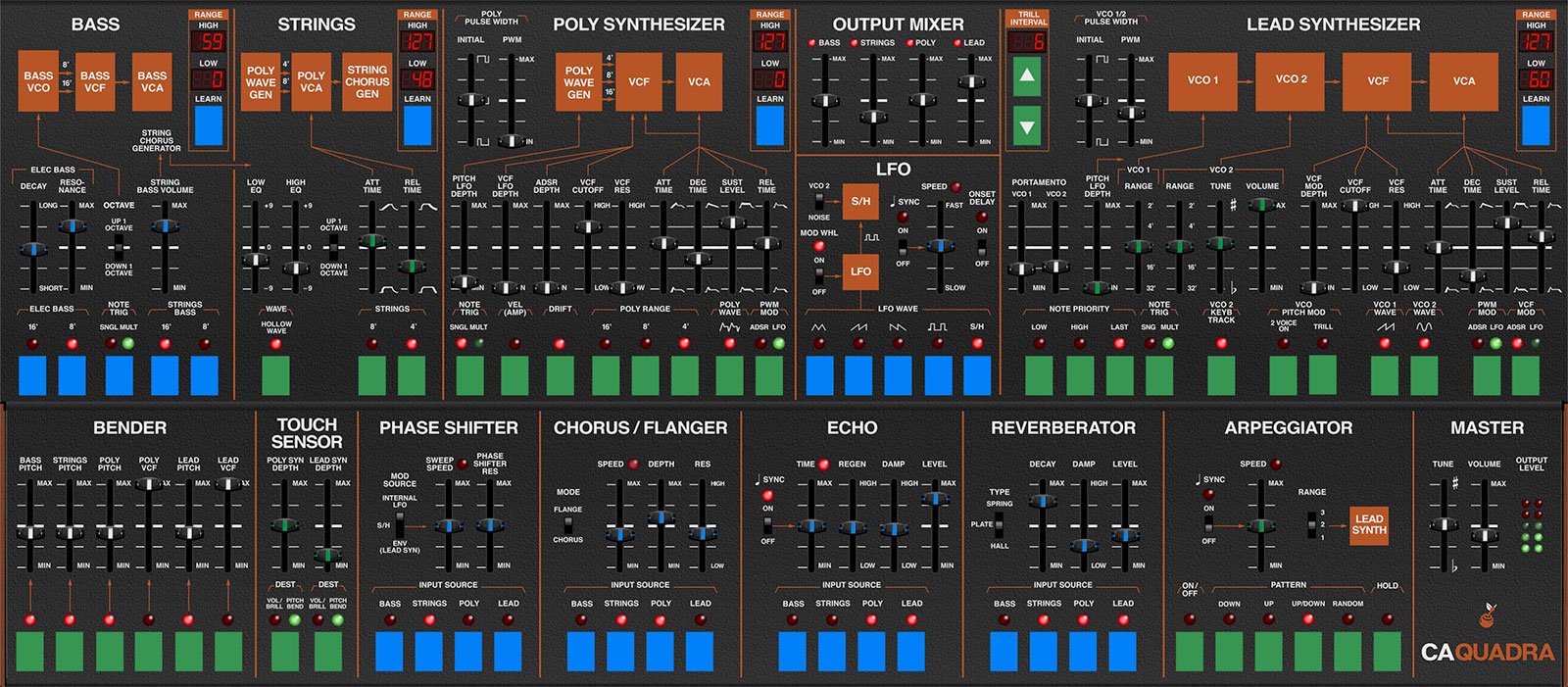
Four Synth Sections — Each One a Standalone Instrument
The heart of the Cherry Audio Quadra lies in its four independent synthesizer sections. Each section can be freely assigned to any region of the keyboard, giving you total flexibility for splits, layers, and creative combinations that the original hardware could only dream of.
Poly Synthesizer Section
The paraphonic Poly section has received the most dramatic upgrades from the original. Cherry Audio added an extra octave of range, oscillator drift control for authentic analog behavior, velocity sensitivity (something the 1978 hardware completely lacked), pulse-width modulation, and several new waveforms. The result is a section that captures the warmth of the original while delivering modern playability and expression.
Bass, Strings, and Lead Sections
The Bass section delivers the deep, resonant low-end that made the original Quadra a secret weapon on countless recordings. The Strings section produces lush ensemble-style pads that sit beautifully in any mix. And the Lead section now features a tempo-syncable arpeggiator with note priority options, turning it into both a powerful lead voice and a rhythmic sequencing tool. All three sections benefit from enhanced modulation capabilities that go well beyond what ARP originally implemented.
Beyond Emulation — What Cherry Audio Quadra Adds to the Original
What separates Cherry Audio Quadra from a simple clone is the thoughtful modernization. Cherry Audio identified every limitation of the original instrument and addressed them without compromising the character that made the ARP Quadra special in the first place.
- Full-Featured LFO — The original’s rudimentary LFO has been replaced with a multi-waveform, tempo-syncable modulation source
- Accurately Modeled 14-Stage Phaser — The iconic ARP phaser sound, faithfully recreated
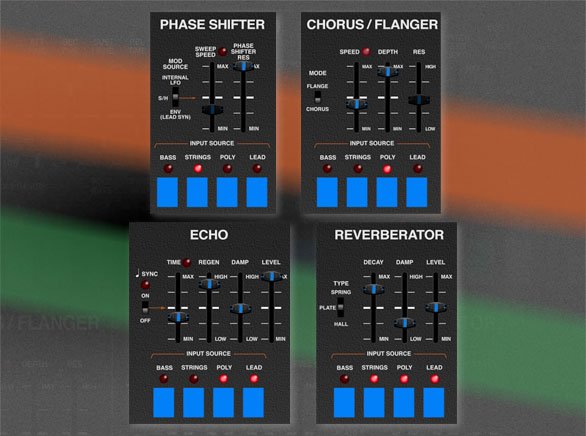
- Three Additional Effects — Chorus/flanger, studio-quality reverb (plate, hall, and spring types), and tempo-syncable echo, each independently assignable to any section
- Multi-Out Support — Route each of the four sections to separate mixer channels in your DAW for individual processing
- 450+ Presets — Crafted by veteran sound designer James Terris and other industry professionals, covering everything from classic analog textures to modern cinematic sounds
- Touch Sensor Aftertouch — A recreation of the original Quadra’s unique touch-response system
- Drift Control — Adjustable oscillator drift for authentic analog behavior, from perfectly stable to wonderfully unpredictable
$49 for a Unicorn — The Value Proposition
At $49, Cherry Audio Quadra is available in AU, VST, VST3, AAX, and standalone formats. A free 30-day demo lets you test everything before committing. You can download it directly from the Cherry Audio website or pick it up at Plugin Boutique.
System requirements are refreshingly modest: macOS 10.13 or later (with Apple Silicon support), Windows 7 or later, a quad-core processor, and 8GB of RAM recommended. The lightweight CPU footprint means you can comfortably run multiple instances — in fact, Cherry Audio’s own demo showcases four simultaneous instances (16 synth sections) running smoothly.
MusicRadar called it “the ’70s unicorn getting its moment in the spotlight,” while MusicTech praised it as “an ultra-rare software synthesizer that punches far above its price tag.” Those assessments are spot-on.
Whether you’re an electronic producer hunting for authentic analog textures, a sound designer exploring complex layered patches, or a composer looking for a versatile polysynth that won’t break the bank, the Cherry Audio Quadra delivers. The four-section architecture, combined with modern improvements and multi-out routing, makes it one of the most creatively flexible vintage emulations available today.
Sound Design Deep Dive — Capturing the ARP Magic
Having spent considerable time with both the original hardware and Cherry Audio’s emulation, the attention to sonic detail is genuinely impressive. The Quadra’s signature sound came from its unique filter topology — each section uses different filter configurations that Cherry Audio has modeled down to the component level. The Bass section’s distinctive 24dB/octave lowpass filter creates that punchy, resonant bottom end that cuts through dense mixes without muddiness.
The Poly section’s filter behavior is particularly noteworthy. In paraphonic mode, each voice triggers the same filter envelope, creating that characteristic “blooming” effect when playing chords — something that true polyphonic synths simply can’t replicate. Cherry Audio preserved this quirk while adding per-voice envelope triggering as an option, giving you the best of both worlds.
One detail that showcases Cherry Audio’s commitment to accuracy: the Strings section includes the original’s distinctive resonance spike at around 1.2kHz that gave those string pads their cutting presence. Most musicians would consider this a flaw, but it’s exactly what made the Quadra strings so recognizable on recordings by Genesis, Tony Banks, and countless others in the late ’70s and early ’80s.
Real-World Performance and CPU Considerations
In my testing across multiple DAW environments — Logic Pro X, Ableton Live 11, and Pro Tools — Cherry Audio Quadra consistently delivers stable performance with reasonable CPU usage. Running all four sections simultaneously with effects engaged, I measured approximately 8-12% CPU usage on a 2019 MacBook Pro (2.4GHz 8-Core i9), which puts it in line with other high-quality virtual analog synths.
The plugin’s polyphony handling deserves special mention. While the original hardware was limited to specific voice counts per section, Cherry Audio allows up to 32 voices total, intelligently distributed across active sections. In practice, this means you can layer complex arrangements without hitting voice stealing, something that would have been impossible with the original Quadra’s 5-voice Poly section and single-voice Lead section.
Latency performance is excellent across all major buffer sizes. Even at 128 samples, I experienced no audible delay or timing issues when playing complex splits across multiple sections. The preset loading is nearly instantaneous — a significant improvement over some vintage synth emulations that can take several seconds to initialize complex patches.
Essential Patches and Programming Techniques
Cherry Audio includes 400+ presets that showcase the Quadra’s versatility, but the real magic happens when you start programming your own sounds. Here are some techniques I’ve discovered that leverage the four-section architecture effectively.
The “Taurus Stack” Bass Technique
One of my favorite discoveries involves combining the Bass and Lead sections for incredibly fat low-end sounds. Set the Bass section to its standard deep filter setting, then tune the Lead section down two octaves and add subtle detuning. The interaction between the two oscillator sets creates harmonic complexity that rivals dedicated bass synthesizers. This technique works particularly well for genres like synthwave and progressive rock where that vintage ARP character is essential.
Dynamic Splits and Performance Setup
The keyboard splitting capabilities open up performance possibilities that go far beyond the original hardware. I’ve been using a setup where the bottom two octaves trigger the Bass section, the middle range runs both Poly and Strings sections (with slightly different velocity curves), and the top octave activates the Lead section with its arpeggiator engaged. This creates an incredibly expressive single-patch setup that responds dynamically to playing style and velocity.
Cherry Audio’s implementation allows individual velocity curves for each section, so you can set the Strings to respond to light touches while requiring harder strikes to bring in the Lead section. This level of performance control transforms the Quadra from a static layering tool into a genuinely expressive instrument.
How Cherry Audio Quadra Fits in Today’s Production Landscape
At $49, Cherry Audio Quadra occupies a unique position in the current synthesizer market. While you can find individual vintage-style synths for similar prices, none offer the specific combination of sounds and workflow that the Quadra architecture provides. The closest competitors would be something like Arturia’s V Collection (which doesn’t include a Quadra) or individual purchases of multiple Cherry Audio synths, which would quickly exceed the Quadra’s price point.
The plugin integrates seamlessly with modern production workflows. MIDI learn functionality works flawlessly for hardware controller integration, and the preset browser includes intelligent tagging that makes finding specific section combinations effortless. For producers working in retro-influenced genres — synthwave, indie electronic, neo-soul — the Quadra provides authentic period-correct sounds that sample libraries simply can’t match.
What impressed me most is how relevant the Quadra concept remains in 2024. The four-section approach mirrors how many producers layer modern soft synths, but having everything integrated with matched analog character and shared modulation sources creates coherence that separate plugins struggle to achieve. It’s a reminder that sometimes the best innovations are improvements on forgotten ideas rather than completely new concepts.
For anyone producing music that benefits from warm, characterful analog synthesizer tones, Cherry Audio Quadra represents exceptional value. It’s not just about recreating 1978 — it’s about taking those sounds forward into contemporary music production with all the conveniences and reliability that modern software provides.
Need professional mixing, mastering, or sound design consultation? Sean Kim brings 28 years of music and audio expertise to every project.