Best Plugins of 2025: Editor’s Choice Awards for VSTs and Effects
December 31, 2025
NAMM 2026 Preview: Top 10 New Gear and Plugin Announcements to Watch
January 1, 2026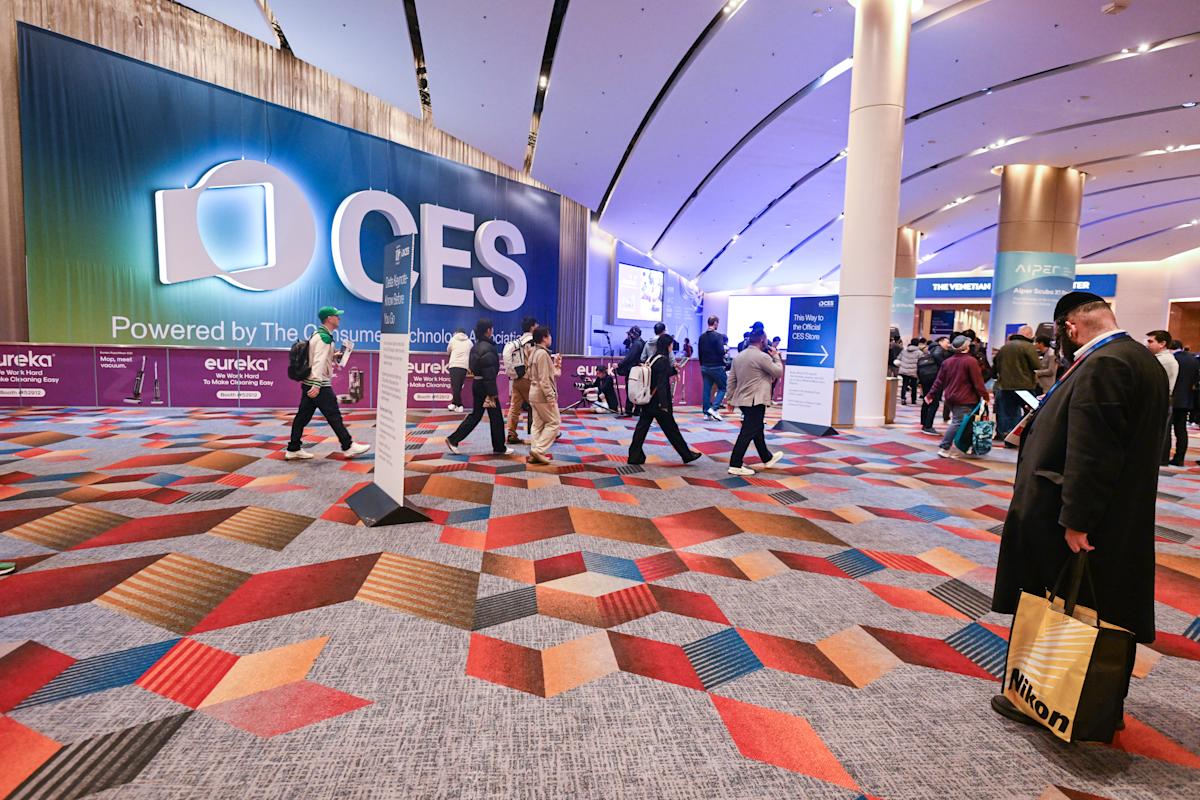
The biggest CES 2026 AI announcements are just days away, and this year’s show is shaping up to be a defining moment for the entire technology industry. From January 7 through 10 in Las Vegas, AI won’t just be a buzzword on a banner — it will be the foundational infrastructure embedded in virtually every product category on the show floor. When NVIDIA, AMD, and Intel all schedule their keynotes on the same day (January 5), you know the stakes are high.
If 2025 was the year AI proved what it could do in the cloud, CES 2026 is where we’ll see it arrive in our pockets, living rooms, cars, and factories. I’ve been tracking the confirmed keynotes, leaked roadmaps, and official press releases for weeks, and what’s coming is nothing short of a paradigm shift. Here’s a comprehensive breakdown of everything worth watching when the curtain goes up next week.
NVIDIA Jensen Huang Keynote: The Rubin Platform and the Dawn of Physical AI
If there’s one presentation that could set the tone for all of CES 2026, it’s Jensen Huang’s special address on January 5. Last year, the NVIDIA CEO sent shockwaves through the industry with the Blackwell architecture reveal. This time, expectations are even higher — and for good reason.
The centerpiece is expected to be the next-generation Rubin platform, NVIDIA’s successor to Blackwell that promises another generational leap in AI compute performance. But what makes this keynote particularly exciting is the expected focus on Physical AI — the concept of AI systems that understand and interact with the physical world, not just digital data.
NVIDIA’s Cosmos world foundation model is anticipated to take center stage here. Think of it as a large-scale model trained not on text or images, but on the physics of the real world — enabling robots and autonomous vehicles to navigate, manipulate objects, and make decisions in complex physical environments. This isn’t science fiction; NVIDIA has been building toward this for years through its Omniverse platform, and CES 2026 could be where the pieces finally come together in a public demonstration.
There’s also the confirmed partnership between NVIDIA and Siemens on an Industrial AI Operating System. Siemens CEO Roland Busch is delivering his own keynote at CES, and the collaboration aims to bring AI-driven automation to manufacturing floors worldwide. For businesses watching from the sidelines, this is the signal that industrial AI has moved from pilot programs to production-ready deployment.
AMD Lisa Su and Intel: The AI PC Race Heats Up
AMD CEO Lisa Su takes the stage on January 5 as well, and her keynote is expected to showcase the Ryzen AI 400 series processors. These chips represent AMD’s most aggressive push into on-device AI processing, featuring significantly upgraded NPU (Neural Processing Unit) capabilities that can handle AI workloads locally without relying on cloud servers.
What’s particularly interesting for content creators and gamers is AMD FSR Redstone — a next-generation AI upscaling technology that could redefine visual fidelity in both gaming and creative applications. AMD has been steadily closing the gap with NVIDIA’s DLSS technology, and FSR Redstone appears to be their most sophisticated implementation yet, using dedicated AI silicon to reconstruct frames with remarkable accuracy.
Intel isn’t sitting this one out either. The company has confirmed a January 5 launch event for its Core Ultra Series 3 processors, built on the 18A process node. Intel’s approach to AI PCs centers on distributing AI workloads across CPU, GPU, and NPU cores simultaneously — a heterogeneous compute strategy that could deliver more consistent AI performance across a wider range of applications.
Lenovo rounds out the AI PC ecosystem picture with its AI-focused Tech World event on January 6, where we can expect to see how these new silicon platforms translate into actual laptops, desktops, and workstations that everyday users and professionals will buy. The message from all four companies is clear: 2026 is the year your computer runs AI natively, not through a browser tab connected to a distant data center.
Smart Home AI Agents: Google Gemini vs. Amazon Alexa+ Showdown
For most consumers, the most tangible CES 2026 AI announcements will come from the smart home arena. Two massive platform transitions are converging at exactly the right moment: Google is actively replacing its legacy Assistant with Gemini, while Amazon is pushing forward with Alexa+ — both aiming to transform simple voice assistants into genuine AI agents that understand context, anticipate needs, and take proactive action.
The difference between an assistant and an agent is crucial here. Current smart home devices respond to explicit commands: “turn off the lights,” “set a timer.” The next generation, powered by large language models and multimodal understanding, will recognize patterns in your behavior, coordinate multiple devices simultaneously, and handle complex multi-step requests without requiring you to spell out every detail. As Gizmodo’s CES preview notes, AI will be “inescapable across every product category” this year.
Samsung is positioning AI-driven customer experiences as its central CES theme, with demonstrations spanning its entire home appliance lineup — from refrigerators that manage your grocery list using computer vision to washing machines that optimize cycles based on fabric analysis. LG is going even further with CLOiD, a humanoid robot designed for household assistance that moves beyond the robot vacuum paradigm into something genuinely new.
Smart glasses with integrated AI are also expected to make a significant showing. The convergence of lightweight AR optics with on-device AI processing opens up use cases that felt impossible just two years ago — real-time translation overlays, contextual information about objects you’re looking at, and hands-free AI assistance that doesn’t require pulling out your phone. AI-powered TV features including advanced frame interpolation will also demonstrate how AI is becoming invisible infrastructure in entertainment devices, improving picture quality without any user intervention.
CES Foundry: Immersive AI and Quantum Computing Experiences
New for 2026 is CES Foundry, a dedicated exhibition zone that CES organizers describe as an immersive space focused specifically on AI and quantum computing. Unlike traditional booth setups, Foundry features large-scale stages for live demonstrations and hands-on areas where attendees can directly interact with cutting-edge technology.
Confirmed exhibitors include AMD, NVIDIA, Qualcomm, Samsung, LG, SoundHound AI, and XREAL. The inclusion of SoundHound AI is particularly noteworthy — their voice AI technology has been quietly powering conversational interfaces in restaurants, cars, and smart devices, and CES could be where they showcase their next leap in natural language understanding. XREAL’s presence signals that spatial computing and AI-enhanced augmented reality will be a major thread throughout the show.
The Foundry zone also reflects a broader shift in how CES itself is evolving. As AI technology becomes more sophisticated, static product displays aren’t enough — attendees need to experience AI in action to understand its capabilities. Expect live coding demonstrations, real-time AI model training visualizations, and interactive robotics showcases that blur the line between trade show and technology playground.

Physical AI and Robotics: From Factory Floors to Your Front Door
Arm’s trend analysis for CES 2026 identifies Physical AI and Edge AI as the defining forces of this year’s show, and it’s easy to see why. The convergence of more powerful edge processors, better sensor fusion, and foundation models trained on physical-world data is creating a new category of AI that doesn’t just think — it acts.
LG’s CLOiD humanoid robot is perhaps the most consumer-facing example, but the implications run far deeper. Sony Honda’s Afeela EV, also expected at CES, represents the automobile as an AI-native platform — where the car itself becomes an intelligent agent that understands your preferences, optimizes routes based on real-time conditions, and provides an AI-powered in-cabin experience that goes well beyond today’s infotainment systems.
Advanced robot vacuums showcasing deeper home integration will demonstrate how even mature product categories are being transformed. These aren’t just better at cleaning — they’re mapping your home in 3D, recognizing objects, coordinating with other smart devices, and making autonomous decisions about when and how to operate. It’s a preview of a future where dozens of AI-powered devices in your home work together seamlessly.
On the industrial side, the NVIDIA-Siemens partnership brings digital twin technology and AI-driven quality control to manufacturing. Edge AI means these systems can operate in real-time on the factory floor without depending on cloud connectivity — critical for applications where milliseconds matter, like robotic assembly or autonomous material handling.
What to Watch: Your CES 2026 AI Preview Checklist
With so much happening across the show floor, here are the key themes and announcements to track as CES 2026 unfolds.
- Physical AI — Robots, autonomous vehicles, and industrial automation where AI meets the physical world through foundation models and advanced sensors
- AI PCs — NPU-equipped processors from AMD, Intel, and Qualcomm making on-device AI processing the default computing paradigm
- Edge AI — Private, responsive, and personalized AI experiences running directly on devices without cloud dependency
- AI Agents — Next-generation smart home assistants from Google and Amazon that understand context and take proactive action
- AI Upscaling — AMD FSR Redstone, LG 5K displays, and AI-powered frame interpolation transforming visual quality across gaming and entertainment
- Humanoid Robots — LG CLOiD, Sony Honda Afeela, and other consumer-facing robots signaling a new era of human-machine interaction
- Spatial Computing — AI-enhanced smart glasses and AR devices from XREAL and others merging digital information with the physical world
The overarching narrative of CES 2026 is unmistakable: AI is leaving the cloud and entering the physical world. It’s moving into silicon, into robots, into vehicles, and into every corner of our homes. Starting with the triple keynote punch from NVIDIA, AMD, and Intel on January 5, this CES will document a historic inflection point — the moment AI stopped being something we accessed through a screen and started becoming something woven into the fabric of our physical environment.
Whether you’re a tech professional evaluating which platforms to build on, a business leader assessing AI’s impact on your industry, or simply someone who wants to understand where technology is headed, the next ten days in Las Vegas will provide answers. I’ll be covering the most significant announcements in detail as they happen — the future of AI is about to get very real, very fast.
Curious how the AI technologies unveiled at CES 2026 could create opportunities for your business? From automation pipelines to AI integration strategy, getting ahead starts with the right technical guidance.
Get weekly AI, music, and tech trends delivered to your inbox.