OpenRouter July 2025 Update: Free Tier Shakeup for the Unified API Powering 200+ AI Models
July 23, 2025
Best USB-C Chargers July 2025: GaN Multi-Port Picks for Travel
July 23, 2025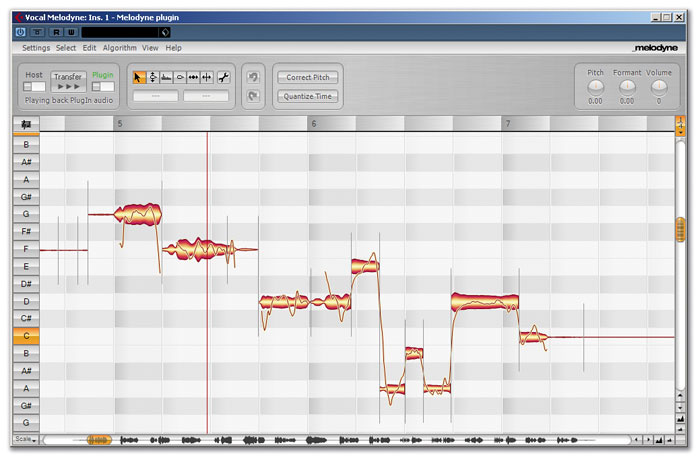
Seventeen years after Peter Neubäcker walked onto a stage and blew every jaw in the room by editing individual notes inside a polyphonic piano recording, we are still waiting for the next seismic leap. Melodyne 6 hasn’t been announced. In fact, Celemony confirmed in June 2025 that it “hasn’t even been scheduled yet.” But that silence tells us something. After 28 years working in professional audio, I’ve learned that when a company this focused goes quiet, they’re usually building something significant.
Where Melodyne 6 Stands Right Now
Let’s be clear about what we know versus what we’re speculating. Melodyne 5.4.2 is the current release, and it’s firmly in maintenance mode. The latest updates from Celemony have focused on macOS Sequoia compatibility, ARA stability improvements, and trackpad scrolling fixes. There are no public beta programs, no leaked screenshots, no cryptic social media teasers. Celemony is a company that ships when they’re ready, not when marketing says so.
Meanwhile, the competitive landscape has shifted dramatically. Steinberg’s SpectraLayers Pro 11 now offers AI-powered separation of up to seven stems. Antares shipped Auto-Tune Pro 11 with improved real-time processing. Cubase VariAudio and Logic’s Flex Pitch continue to eat into Melodyne’s territory for basic pitch work. The pressure on Celemony to deliver something substantial with Melodyne 6 has never been higher.
DNA Direct Note Access: The Foundation Everything Builds On
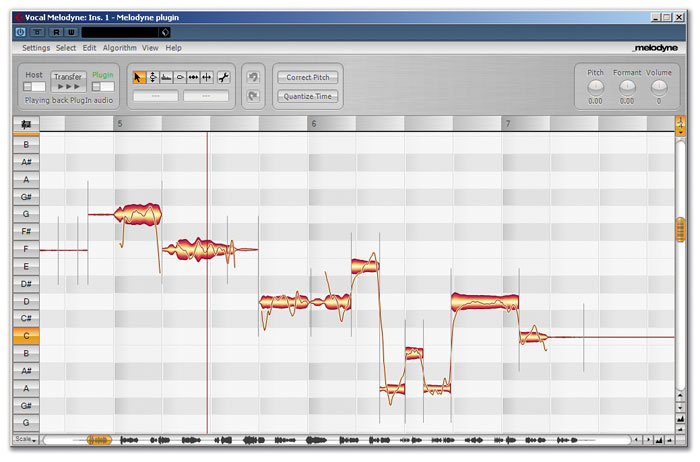
To understand where Melodyne 6 might go, you need to understand what makes Melodyne fundamentally different from every competitor. DNA (Direct Note Access), first demonstrated in 2008, remains the only technology that can identify and isolate individual notes within a polyphonic audio file for editing. Not stems. Not frequency bands. Individual musical notes, with their pitch, timing, formants, and amplitude independently adjustable.
This isn’t the same thing as what SpectraLayers or iZotope RX does. Those tools perform spectral separation—pulling apart layers of audio based on frequency content and AI pattern recognition. DNA actually understands the musical structure of what it’s hearing. It knows that a C3 and an E3 and a G3 are sounding simultaneously, and it lets you grab the E3 and move it to an F3 without touching the other two.
In my studio work, this distinction matters enormously. When a client sends me a piano track where three notes in a chord voicing are slightly off, Melodyne lets me fix those specific notes. No other tool does this with the same level of musical intelligence.
Peter Neubäcker’s Research Roadmap: Reading Between the Lines
The most revealing window into Melodyne 6’s potential direction comes from Peter Neubäcker’s interview with Sound On Sound, where Celemony’s founder outlined several active research areas. He was careful to avoid committing to timelines—classic Neubäcker—but the topics he mentioned paint a compelling picture of what Melodyne 6 could eventually deliver.
Multi-Microphone Ensemble Processing
Imagine recording a string quartet with individual microphones and having Melodyne understand the entire ensemble as a coherent musical entity. Neubäcker described research into processing multiple microphone feeds simultaneously, where the software would recognize that the same musical event appears across several mics and handle phase relationships, timing offsets, and bleed intelligently.
For orchestral recording engineers, this would be transformative. Currently, if you need to fix a slightly flat note from the second violin, you’re dealing with bleed from every other instrument on that mic, plus the same note bleeding into the room mics, overheads, and spot mics. Multi-mic awareness would let Melodyne correct the note consistently across all channels.
Advanced Vibrato and Portamento in Polyphonic Contexts
Melodyne already handles vibrato and pitch drift in monophonic audio beautifully. But in polyphonic material, separating one voice’s vibrato from another’s is an enormous signal processing challenge. Neubäcker indicated that improved vibrato and portamento analysis within polyphonic recordings is an active research area.
This matters for anyone working with vocal ensembles, brass sections, or string arrangements where individual performers have distinct vibrato characteristics. Getting this right would mean the difference between a polyphonic edit that sounds natural and one that sounds processed.
Improved Formant Analysis
Formants are what make a voice sound like a specific person rather than a generic pitch. When you shift a vocal up or down without proper formant handling, you get chipmunk effects or unnaturally deep tones. Melodyne 5 already has formant control, but Neubäcker suggested deeper formant analysis is in the pipeline—likely involving more sophisticated modeling of how formants behave across different pitch ranges and vowel sounds.
With the explosion of AI voice processing tools flooding the market, Celemony has clear motivation to ensure their formant handling remains best-in-class.
Remainder Signal Control
This is perhaps the most technically interesting research area. When DNA separates notes from polyphonic audio, there’s always a “remainder”—the noise, room ambience, transient artifacts, and harmonic content that doesn’t cleanly map to identified notes. Better control over this remainder signal would mean cleaner edits, fewer artifacts, and more transparent processing.
The Competitive Landscape: Why Melodyne 6 Needs to Be Big
The pitch correction and audio editing market in 2025 looks nothing like it did when Melodyne 5 launched. Here’s what Celemony is up against:
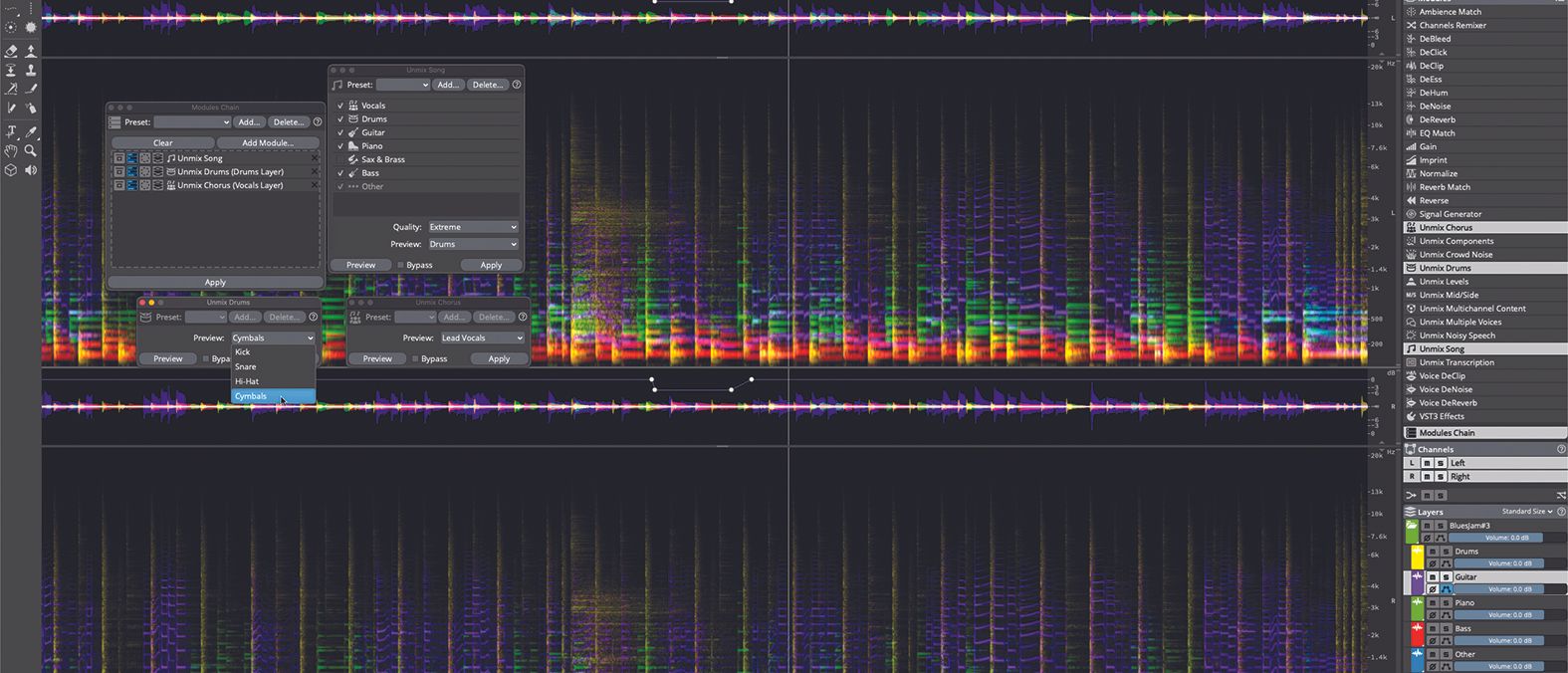
SpectraLayers Pro 11 has become genuinely impressive. Steinberg’s AI-powered spectral editing tool can now separate audio into up to seven individual stems with results that were unthinkable three years ago. While it doesn’t offer note-level polyphonic editing like DNA, for many practical use cases—isolating a vocal from a mix, removing a specific instrument—it gets the job done. As Sound On Sound has noted, the choice between these tools increasingly depends on the specific task.
Auto-Tune Pro 11 continues to dominate real-time pitch correction. Antares knows their lane—live performance, quick tracking corrections, the “Auto-Tune effect”—and they’re excellent at it. Melodyne has never seriously competed in real-time, and I doubt Melodyne 6 will try to. But Auto-Tune’s improving offline capabilities are worth watching.
DAW-integrated tools like Cubase VariAudio and Logic Flex Pitch handle 80% of basic vocal tuning tasks without leaving the DAW. For many producers, “good enough” pitch correction built into their DAW means they never open Melodyne at all. This is Celemony’s biggest existential challenge—not the specialized competitors, but the “good enough” built-in tools.
What I’d Actually Want from Melodyne 6
After using Melodyne professionally since version 3, here’s my honest wishlist—and based on conversations with other engineers, I don’t think I’m alone:
- Real-time or near-real-time DNA processing. The current analyze-then-edit workflow is fine for post-production, but increasingly frustrating in fast-paced sessions. Even a “preview quality” real-time mode for polyphonic editing would be game-changing.
- AI-assisted note detection. Melodyne’s detection is already excellent, but complex passages with dense harmonic content still require manual correction of detected notes. Machine learning could dramatically improve first-pass accuracy.
- Better ARA 2 integration. The ARA bridge between DAW and Melodyne still has rough edges—occasional sync issues, undo complications, and performance hiccups. A deeper, more stable integration would remove the single biggest friction point in daily use.
- Cloud-based processing for heavy tasks. Multi-mic ensemble processing on a full orchestral session will require enormous computational power. Offloading to cloud processing could make features feasible that would be impractical on local hardware.
- Melodyne Essentials that actually competes. The entry-level tier needs polyphonic editing. Period. If Celemony wants to stay relevant against free DAW tools, the on-ramp needs to be more compelling.
The Tonalic Factor: Celemony’s Other Bet
One reason Melodyne 6 may be taking longer than expected is Celemony’s investment in Tonalic, their adaptive musical intelligence product. Tonalic takes a fundamentally different approach to music creation—using real musician performances to generate musically intelligent accompaniments and variations rather than relying on sample libraries or AI generation.
This matters for Melodyne’s future because the underlying technology—deep musical analysis, understanding of harmonic relationships, modeling of how real instruments behave—is directly applicable to improving DNA. The research flowing into Tonalic likely feeds back into Melodyne’s core algorithms. Celemony may be building both products on a shared foundation that will make Melodyne 6 substantially more capable when it eventually arrives.
Realistic Timeline: When Could Melodyne 6 Actually Ship?
Celemony’s release history tells us something useful. Melodyne 4 shipped in 2015. Melodyne 5 came in 2019—a four-year gap. If we assume a similar cycle, Melodyne 6 would have been expected around 2023-2024. We’re now well past that window, and Celemony has explicitly said it’s not even scheduled.
My best guess? We might see a Melodyne 6 announcement in late 2025 or early-to-mid 2026, with the actual release following several months later. But this is pure speculation. Celemony has earned the right to take their time—every major Melodyne release has been worth the wait.
What I am confident about is this: when Melodyne 6 does arrive, it won’t be an incremental update. The length of the development cycle, the breadth of Neubäcker’s research interests, the competitive pressure from AI-powered tools, and the technology flowing from Tonalic all point toward something substantial. Whether that’s multi-mic ensemble editing, real-time DNA, AI-enhanced detection, or something none of us have imagined, Celemony has historically delivered breakthroughs rather than bullet points.
For now, Melodyne 5.4.2 remains the most musically intelligent pitch editing tool available. No AI stem separator or DAW-integrated tuner has replicated what DNA does at the note level. The question isn’t whether Melodyne 6 will be relevant—it’s whether Celemony can deliver it before the competition closes the gap for good.
Whether you’re optimizing your pitch editing workflow, exploring polyphonic processing, or need professional mixing and mastering for your next project—Sean Kim brings 28+ years of audio engineering expertise to every session.
Get weekly AI, music, and tech trends delivered to your inbox.