
Spring/Summer 2025 Music Production Gear Buying Guide: Best Value Picks You Need Now
May 29, 2025
Google I/O 2025 Gemini 2.5 Pro & Flash — Complete Keynote Breakdown 10 Days Later
May 30, 2025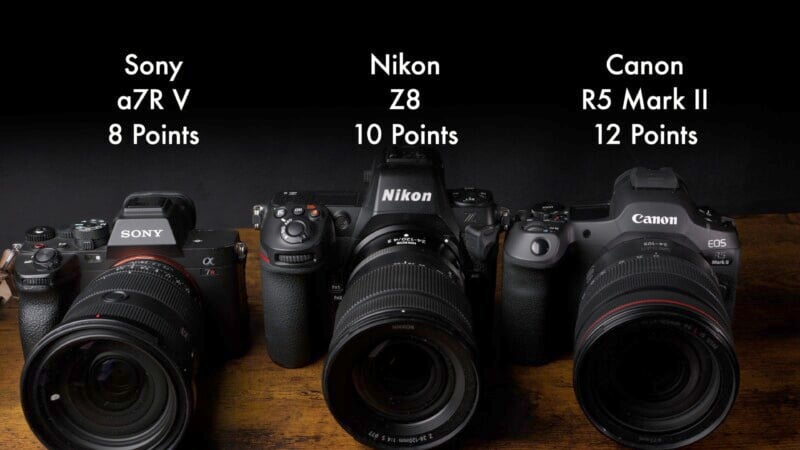
$4,299 and six months later — was the Canon EOS R5 Mark II review hype justified, or did the honeymoon end? After the initial wave of glowing first-impression reviews faded, a very different picture emerged from photographers who actually lived with this camera day in, day out. Spoiler: it’s complicated, and the answer depends entirely on what you shoot.
The Stacked CMOS Sensor: Canon’s Biggest Leap in a Decade
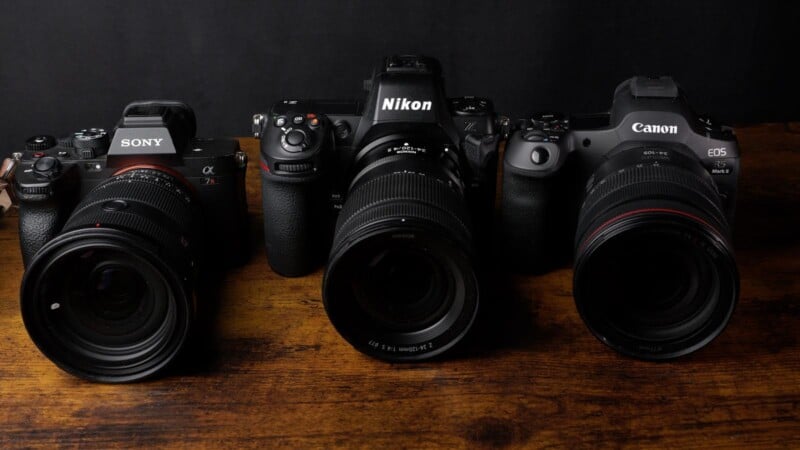
Let’s start with what genuinely changed everything. The Canon EOS R5 Mark II introduces a back-illuminated stacked CMOS sensor — the same architecture that made Sony’s A1 and A9 series legendary for sports photography. Canon’s implementation reduces rolling shutter distortion by approximately 60% compared to the original R5, and the difference is immediately visible when shooting fast-moving subjects.
This isn’t just a spec-sheet improvement. The stacked sensor architecture enables 30 frames per second continuous shooting with full autofocus tracking, and it makes 8K 60p RAW video recording genuinely practical rather than theoretical. In real-world shooting, this translates to capturing split-second moments — a bird taking flight, a basketball player mid-dunk, a child’s fleeting expression — with a consistency that the original R5 simply couldn’t match.
However, there’s an important trade-off that many initial reviews glossed over. According to DPReview’s in-depth analysis, low-light stills past ISO 6400 are actually slightly noisier than the original R5. The stacked sensor prioritizes readout speed over raw light-gathering efficiency. For studio photographers who rarely push ISO beyond 3200, this is irrelevant. For event photographers working in dimly lit venues, it’s worth knowing before you upgrade.
Eye Control AF: The Feature Everyone Talks About (For Better and Worse)
Eye Control AF is the Canon EOS R5 Mark II’s marquee feature — and also its most polarizing one. The concept is brilliant: look at a subject through the viewfinder, and the camera moves the autofocus point to wherever your eye is directed. In theory, it’s the fastest possible way to select a focus point.
In practice? Opinions split sharply. Fstoppers noted that Eye Control AF “works great for some, frustrating for others,” and that assessment holds up after extended use. The calibration process matters enormously — rush through it, and you’ll get inconsistent results. Take the time to calibrate properly in different lighting conditions, and it becomes genuinely useful.
After six months of use, photographers who’ve adapted to Eye Control AF report they can’t imagine going back. But it requires patience and a willingness to recalibrate periodically. If you wear glasses, the accuracy drops noticeably — something Canon needs to address in future firmware updates.
Pre-Capture and AI Subject Detection: The Silent Revolution
While Eye Control AF grabbed headlines, the combination of pre-capture and AI-powered subject detection may be the R5 Mark II’s most impactful features for working photographers. Pre-capture records images to a buffer before you fully press the shutter — meaning you can capture moments that happened up to half a second before you reacted.
For wildlife photography, this is transformative. As B&H Photo’s field testing demonstrated, the pre-capture feature combined with AI subject detection makes capturing birds in flight dramatically more reliable. The camera offers three sport-specific AF modes (football, volleyball, basketball) and supports up to 10 registered face profiles for priority tracking during events.
One long-term user reported shooting over 17,000 images with the R5 Mark II in real-world wedding and portrait scenarios, noting that the autofocus tracking represented a significant improvement over the original R5. Minor bugs surfaced — a playback flash issue and a distractingly loud shutter sound — but the fundamental AF performance was rock-solid.
8K Video and the Overheating Question
The original R5’s overheating issues were infamous — practically becoming a meme in the video community. So how does the Mark II handle extended video recording?
Significantly better, but with caveats. Independent overheating tests reveal the following recording limits with Auto Power Off Temperature set to High:
- 8K RAW 60p: approximately 18 minutes
- 8K 30p: approximately 37 minutes
- 4K 120p: approximately 22 minutes
- 4K 60p: approximately 2 hours
Canon’s optional active cooling fan grip extends these times substantially, but it adds bulk and cost. For most hybrid shooters who alternate between stills and short video clips, the R5 Mark II’s thermal management is perfectly adequate. For dedicated video production requiring continuous long-take recording, you’ll still want to consider the cooling grip or plan your shooting schedule around thermal limits.
Canon R5 II vs Sony A7R V vs Nikon Z8: The $4,000 Showdown
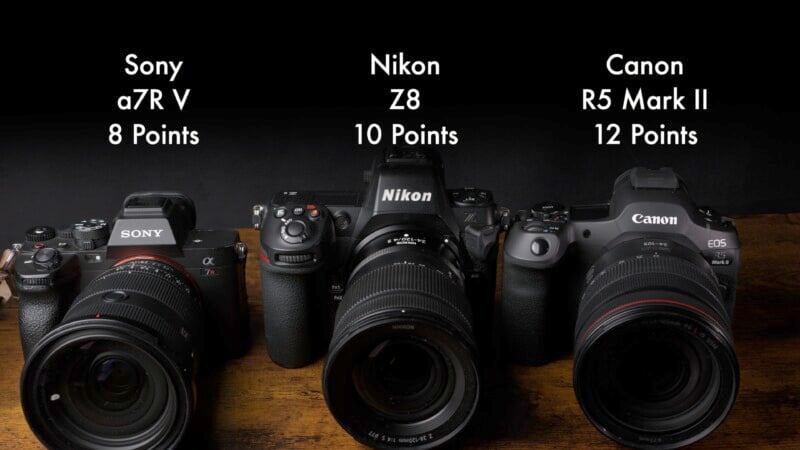
At this price point, you’re choosing between three exceptional cameras. PetaPixel’s comprehensive comparison ranked the Canon R5 II first overall, but the nuances matter more than the ranking:
- Canon EOS R5 Mark II ($4,299): Best hybrid (stills + video), fastest AF system, Eye Control AF, 8K 60p. Trade-off: most expensive, slightly noisier at extreme ISO.
- Sony A7R V ($3,898): Best pure photography image quality, AI-powered AF with dedicated processing unit, smallest and lightest body. Trade-off: video specs lag behind Canon.
- Nikon Z8 ($3,997): Best value proposition, excellent all-around performance, largest body with the most professional ergonomics. Trade-off: smallest native lens ecosystem of the three.
The choice comes down to priorities. If video is a significant part of your workflow, the Canon R5 II is the clear winner. If you’re primarily a landscape or studio photographer who prioritizes image quality per pixel, the Sony A7R V edges ahead. If budget matters and you want the most camera for your dollar, the Nikon Z8 delivers exceptional value.
Firmware Evolution: Canon’s Ongoing Commitment
One aspect that deserves attention in any long-term review is firmware support. Canon has been actively developing the R5 Mark II’s firmware, now at version 1.2.0 with EOS Multi Remote support. The journey hasn’t been entirely smooth — version 1.1.0 was temporarily pulled due to a playback bug with 2TB+ cards, then re-released as 1.1.1 with the fix.
This pattern — rapid iteration, honest bug acknowledgment, and steady feature additions — signals that Canon views the R5 Mark II as a long-term platform rather than a ship-and-forget product. For a $4,299 investment, that commitment matters enormously.
The Honest Verdict: Who Should Buy (and Who Shouldn’t)
After six months of real-world data, multiple long-term reviewers have converged on a surprisingly similar conclusion: the Canon EOS R5 Mark II is a camera you could realistically shoot with for 10+ years. We’re in an era of incremental improvements where camera bodies have reached a level of maturity that makes generational leaps increasingly rare.
Buy the R5 Mark II if: You’re a sports/action/wildlife photographer who needs the stacked sensor and pre-capture. You’re a hybrid shooter who needs best-in-class video alongside professional stills. You’re upgrading from a DSLR or early mirrorless body and want a camera that’ll last a decade.
Skip it if: You already own the original R5 and primarily shoot studio or landscape work — the upgrade doesn’t justify $4,299 for your use case. You’re on a budget — the Nikon Z8 gives you 90% of the performance for $300 less. Battery life is critical to your workflow — the R5 Mark II is underwhelming here, and it won’t accept some popular third-party LP-E6 batteries.
The Canon EOS R5 Mark II isn’t a perfect camera — no camera is. But it’s an exceptionally capable one that rewards photographers who take the time to learn its systems and adapt their workflow to its strengths. Six months in, the photographers who committed to this body aren’t looking back. That says more than any spec sheet ever could.
Get weekly AI, music, and tech trends delivered to your inbox.