Anthropic MCP Connectors Hit 50+: Claude Now Embeds Slack, Notion, and GitHub in One Interface
February 12, 2026
Samsung Galaxy S26 Ultra AI: 5 On-Device Gemini Nano 3 Features That Change Everything
February 13, 2026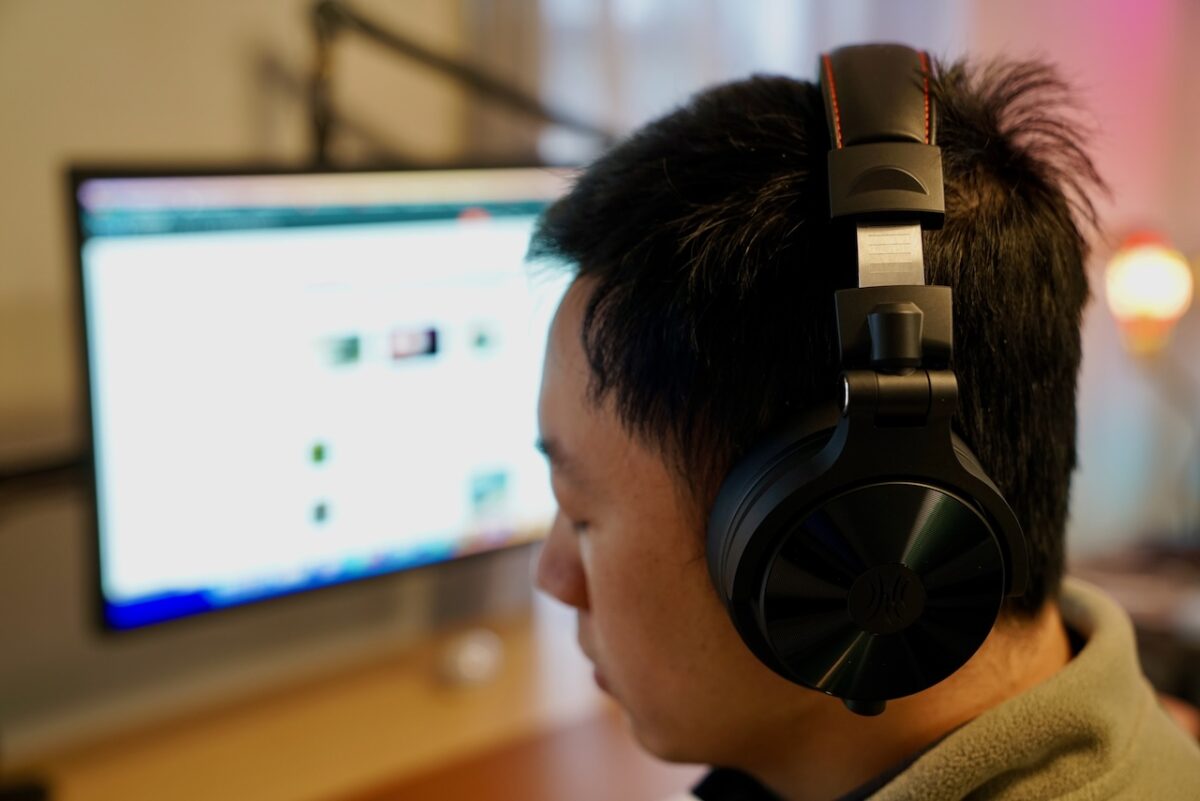
Finally — wireless studio headphones low latency enough for actual music production are here, and they’re not a gimmick. Two years ago, suggesting wireless headphones for tracking would get you laughed out of any serious studio. But in February 2026, we have models hitting 16ms latency. Compare that to Bluetooth’s 150–300ms, and you start to understand why this is a genuine paradigm shift.
In this comparison, I’m breaking down three wireless studio headphones that use proprietary 2.4GHz protocols to bypass Bluetooth’s latency bottleneck entirely. The AIAIAI TMA-2 Studio Wireless+ (16ms), OneOdio Studio Max 1 (20ms), and Audeze Maxwell (~25ms) each serve different workflows and budgets. By the end of this guide, you’ll know exactly which one fits your production style — and which scenarios still demand a wired connection.
Why Wireless Studio Headphones Low Latency Is Finally Possible in 2026
The breakthrough isn’t about making Bluetooth faster — it’s about abandoning Bluetooth for studio use entirely. Standard Bluetooth codecs (SBC, AAC, aptX) introduce at minimum 40ms of latency due to the encoding-decoding pipeline, with real-world figures typically landing between 150–300ms. That’s completely unusable for tracking, and even noticeable during editing.
According to MusicRadar’s 2026 studio headphone roundup, the new generation of proprietary 2.4GHz wireless protocols has cracked the latency problem at the hardware level. By using dedicated transmitters (dongles) that communicate directly with the headphones — bypassing Bluetooth’s codec stack — manufacturers have achieved latencies between 16 and 25 milliseconds. For context, most audio interfaces introduce 3–10ms of latency on their own, so adding 16ms from wireless transmission keeps the total well within the “imperceptible” threshold for tracking and monitoring.
The important caveat: wired headphones remain the gold standard for critical mixing and mastering, where every millisecond and every nuance in frequency response matters. But for composition, arrangement, beat-making, and even tracking — the 16–25ms range these headphones deliver is a genuine game-changer. The practical workflow is hybrid: wireless for creative freedom during production, wired for final mixdown precision.
AIAIAI TMA-2 Studio Wireless+ — 16ms and Modular Brilliance
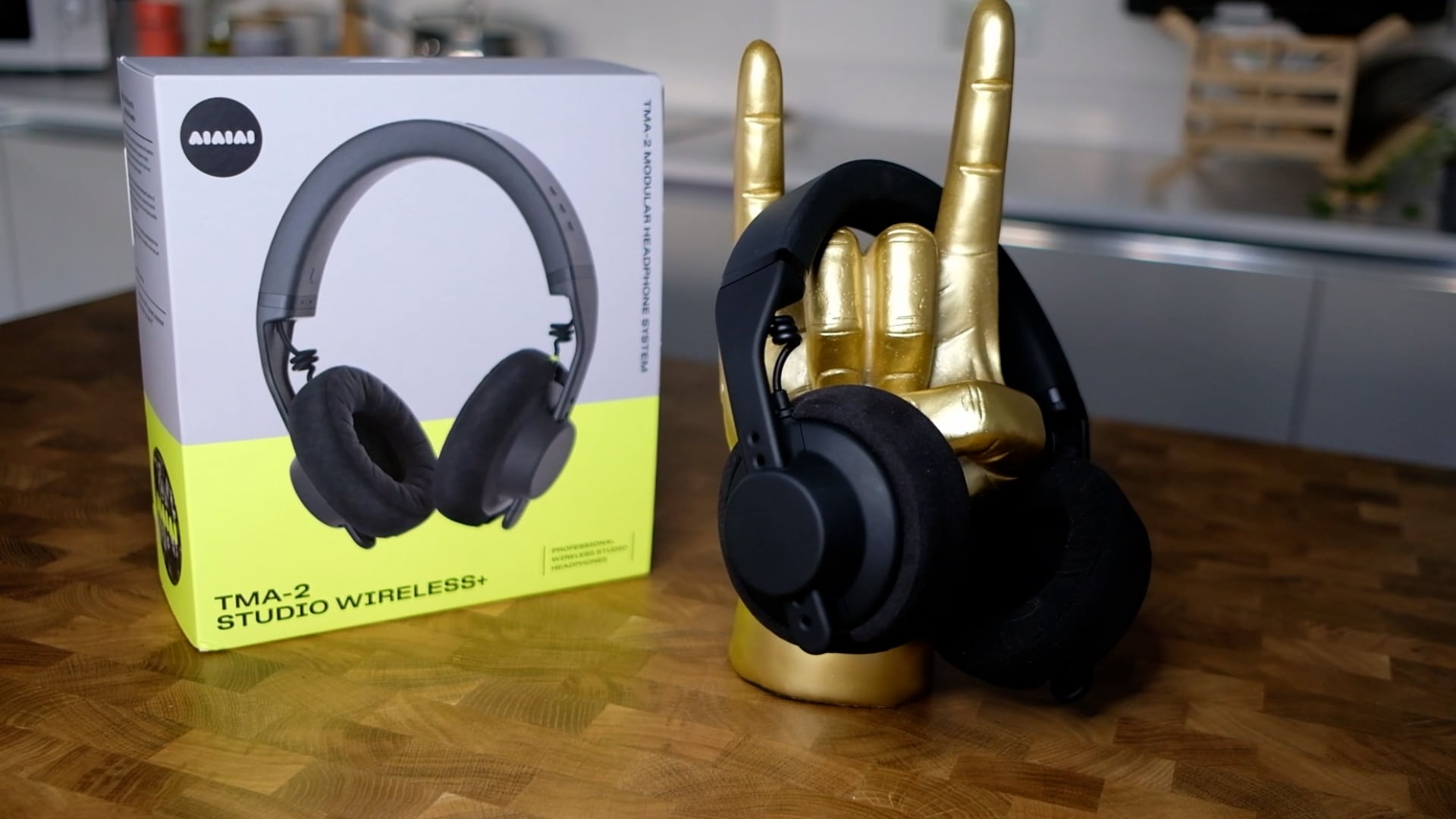
The Danish company AIAIAI has been a cult favorite among producers for years, and the TMA-2 Studio Wireless+ might be their most impressive release yet. With the proprietary W+ Link technology delivering a measured 16ms latency, it currently holds the crown for the lowest-latency wireless studio headphone on the market.
ProducerHive’s in-depth review scored it 8.1 out of 10, with the headline literally asking “16ms Latency, Really?!” — and confirming that yes, it delivers. Here’s what makes this model stand out:
- Drivers: 40mm bio-cellulose — flat frequency response optimized for accurate monitoring
- Latency: 16ms via W+ Link 2.4GHz / Bluetooth available as secondary connection
- Modular design: Headband, ear cushions, and speaker units are all individually replaceable
- Eco-friendly materials: Recycled plastic body, carbon-neutral Alcantara cushions
- Wired fallback: 3.5mm cable connection when battery runs out
- Score: ProducerHive 8.1/10
The modular design is particularly noteworthy for professionals. Instead of replacing the entire headphone when a cushion degrades or a driver needs upgrading, you swap individual components. Over a 3–5 year lifecycle, this can represent significant cost savings — and it’s a welcome sustainability angle in an industry drowning in disposable electronics.
The premium pricing positions this firmly in the professional segment. But if you need the absolute lowest wireless latency available and appreciate build quality that lasts, the TMA-2 Studio Wireless+ is the current benchmark.
OneOdio Studio Max 1 — 20ms at an Unbeatable $169.99
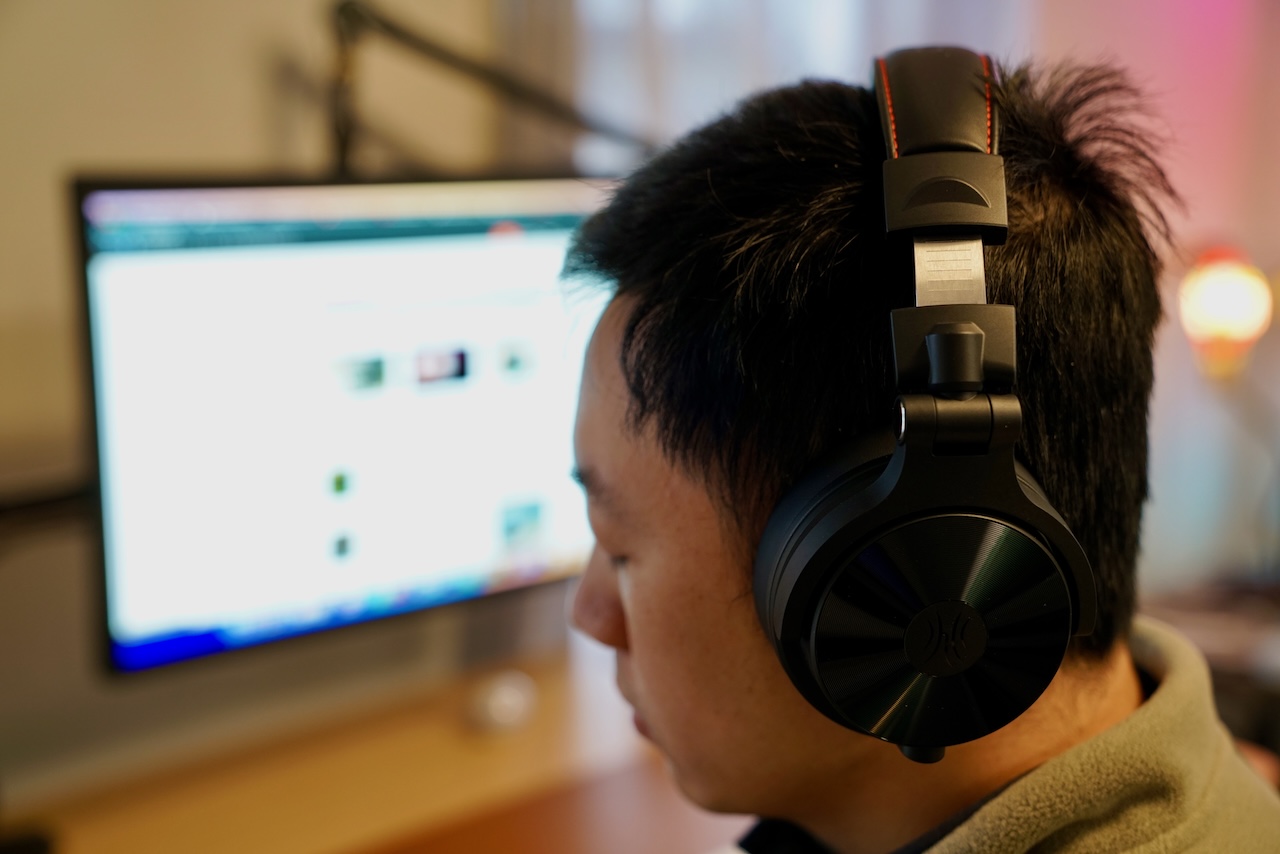
When I first saw the specs — 20ms latency at $169.99 — I was skeptical. But TechWalls’ hands-on review confirmed that OneOdio’s RAPID WILL+ protocol genuinely delivers on its promise. This is the most affordable entry point into low-latency wireless studio monitoring, and it comes with some features that embarrass more expensive competitors.
- Drivers: 50mm dynamic with LDAC support for high-resolution Bluetooth streaming
- Latency: 20ms via RAPID WILL+ 2.4GHz protocol
- Battery: 120 hours — not a typo, one hundred and twenty hours
- Sound signature: V-shaped profile with boosted lows and highs, optimized for DJ monitoring and beat-making
- Foldable + reversible housing: Enables single-ear DJ-style monitoring
- Price: $169.99
That 120-hour battery life is genuinely absurd. You could use these for 8 hours a day, 5 days a week, for 3 weeks straight before needing a charge. For mobile producers, touring DJs, or anyone who’s ever had headphones die mid-session, this alone might be the deciding factor.
The caveat is the V-shaped sound signature. The emphasized bass and treble make beats feel energetic and punchy during creation, but this tuning isn’t ideal for critical mixing where you need a flat, honest frequency response. Think of the Studio Max 1 as your creative-phase workhorse — composing, arranging, beat-making, and DJ sets — rather than your final-mix reference headphone. At this price point, that’s more than a fair trade.
Audeze Maxwell — 25ms with Planar Magnetic Sound Quality That Defies Its Price
The Audeze Maxwell is the wildcard in this comparison. Originally designed as a premium wireless gaming headset, it packs 90mm planar magnetic drivers that deliver sound quality most people associate with headphones costing $500 or more. Headphones.com called it “The Greatest Value in Wireless Headphones” — and for music production purposes, that assessment holds up remarkably well.
- Drivers: 90mm planar magnetic — the level of detail and imaging is in a different league from dynamic drivers
- Latency: ~25ms via 2.4GHz USB dongle
- Battery: 80 hours
- AI noise-filtering microphone: Excellent for vocal recording sessions or communication during remote collaboration
- Weight: 490g — the one significant drawback; may cause fatigue in extended sessions
- Price: $300
The planar magnetic advantage is hard to overstate. Where dynamic drivers can sometimes smear transients or blur low-frequency details, the Maxwell’s 90mm planars deliver separation and imaging that genuinely surprised me. String textures, reverb tails, subtle compression artifacts — everything is presented with a clarity that makes this headphone a legitimate reference tool, not just a “good wireless option.”
At 490 grams, though, this is a heavy headphone. For sessions under 2 hours, it’s perfectly comfortable. Beyond that, you’ll want to take breaks. The AI noise-filtering microphone is a nice bonus for producers who do remote sessions or voice calls during production — it’s significantly better than the mics found in most headsets.
Which One Should You Buy? A Scenario-Based Recommendation
All three headphones solve the fundamental problem — wireless monitoring with latency low enough for real production work. But they serve distinctly different use cases:
- Lowest latency for tracking and real-time monitoring: AIAIAI TMA-2 Studio Wireless+ (16ms) — the professional’s choice when every millisecond matters
- Best value and marathon battery life: OneOdio Studio Max 1 ($169.99 / 20ms / 120hr battery) — the beat-maker’s and DJ’s dream at an unbeatable price
- Best pure sound quality in a wireless headphone: Audeze Maxwell (90mm planar magnetic / $300) — when audio fidelity is your top priority and you can tolerate the weight
- Consumer ANC headphones (Sony WH-1000XM6, Sennheiser Momentum 4): Great for commuting, not for production — 200ms+ latency makes them unsuitable for any real-time monitoring
The Hybrid Workflow: The Real Answer for 2026
Here’s what I’d recommend as the most practical approach: use any of these three wireless headphones during creative phases — composition, arrangement, sound design, beat-making — where the freedom of movement genuinely enhances your workflow. Then switch to wired reference headphones for final mixing and mastering, where you need absolute transparency and zero latency.
The days of wireless headphones being a compromise for studio work are over. At 16–25ms, these models deliver monitoring accuracy that was impossible just two years ago. The question is no longer “can I use wireless in the studio?” — it’s “which wireless headphone matches my production style?” Whether you prioritize the rock-bottom latency of the AIAIAI, the incredible value of the OneOdio, or the audiophile-grade sound of the Audeze Maxwell, there’s now a legitimate wireless option for every producer.
Choosing the right monitoring setup is one of the most impactful decisions you can make for your production quality. If you’re building or upgrading your studio environment and want guidance on how these headphones fit into a complete monitoring chain — from headphones to room treatment to interface selection — the team at Greit Studios has been through this process with dozens of producers.
Need help selecting the right monitoring setup for your studio, or want professional advice on integrating wireless headphones into your workflow?
Get weekly AI, music, and tech trends delivered to your inbox.