
Google Gemini 3 Flash Outscores GPT-5 on 4 Benchmarks While Costing 70% Less: What Developers Need to Know
December 1, 2025
Best Plugins of 2025: Editor’s Choice Awards for VSTs and Effects
December 2, 2025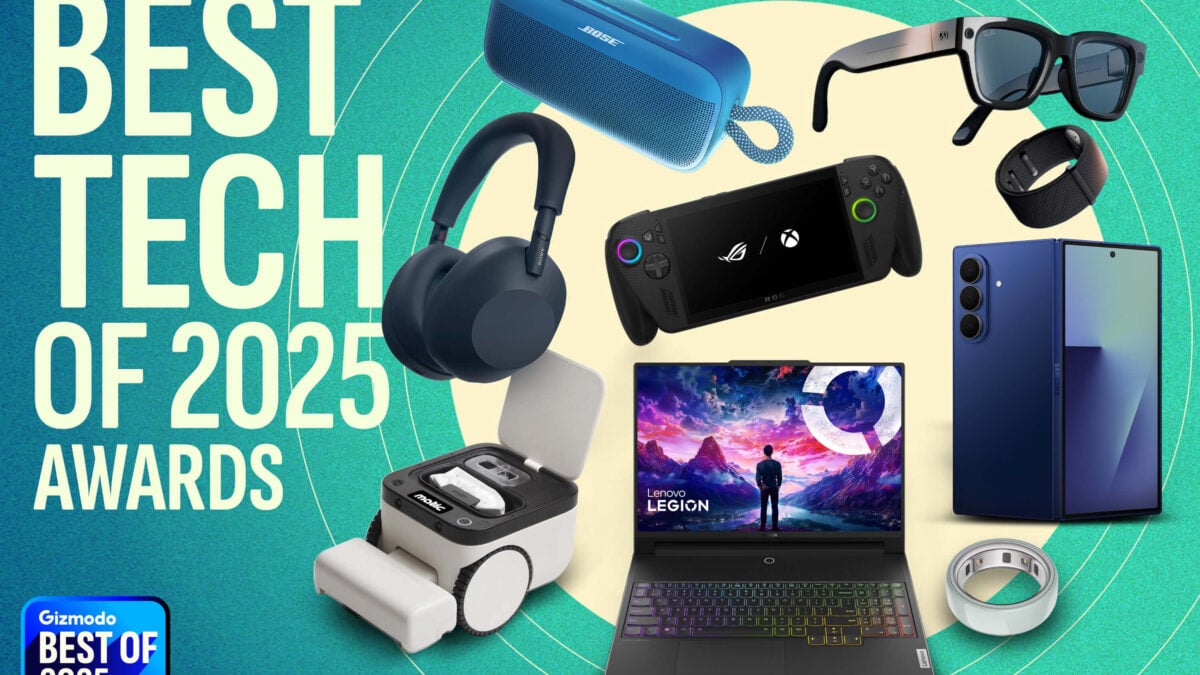
Every major tech publication just dropped their “best of 2025” lists — and after cross-referencing Gizmodo, Engadget, TechRadar, and CNN Underscored, a clear picture emerges. Some products dominated every single list. Others were surprising dark horses that nobody saw coming in January. Here are the best tech products 2025 delivered that actually earned their awards, organized by category so you can find exactly what matters to you.
Best Smartphones of 2025: Samsung and Google Trade Blows
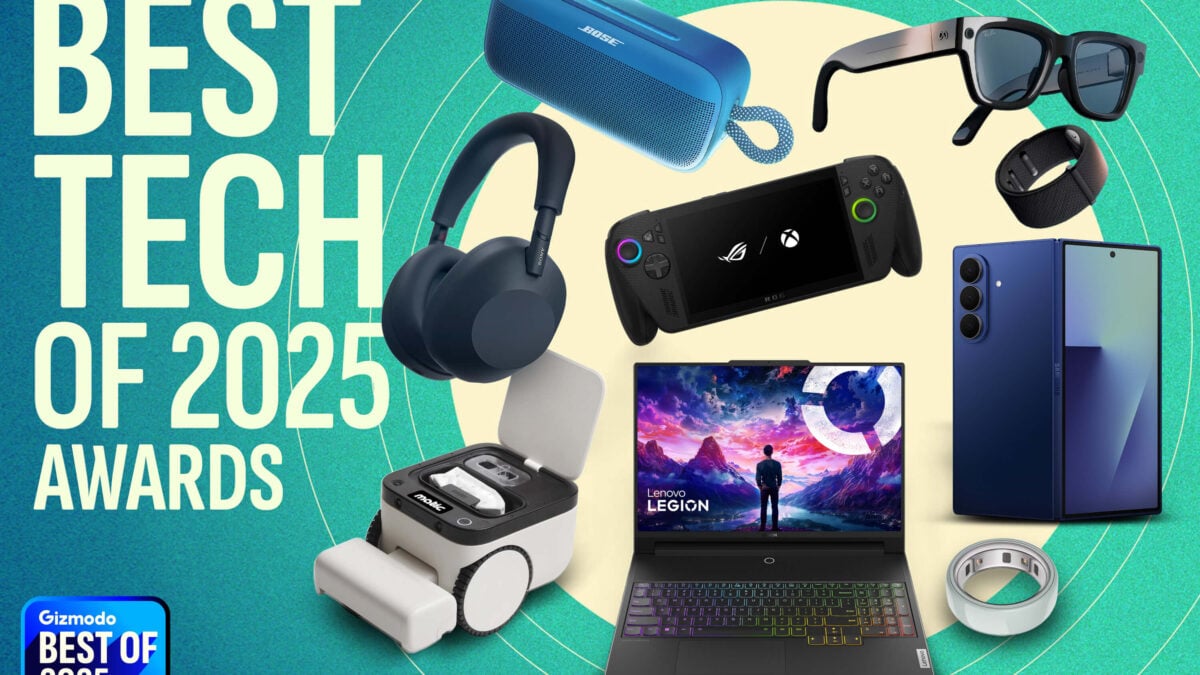
The smartphone wars of 2025 came down to two heavyweights. Samsung’s Galaxy S25 Ultra swept Gizmodo’s Best Tech of 2025 Awards in the Best Android Phone category with its refined S Pen integration, a 200MP camera system that finally delivers on its megapixel promise, and Qualcomm’s Snapdragon 8 Elite chipset pushing sustained performance numbers that embarrass last year’s flagships. Samsung leaned into on-device AI hard — Galaxy AI features like Live Translate and Circle to Search matured from gimmicks into genuinely useful daily tools.
But Google’s Pixel 10 Pro took Engadget’s Best of 2025 overall Best Phone crown. The Tensor G5 chip — Google’s first fully custom silicon — finally eliminated the thermal throttling issues that plagued earlier Pixels. The computational photography remains unmatched: Night Sight with 8x zoom, real-time Magic Eraser, and Best Take that actually works in group shots. At $899, it undercuts the S25 Ultra by $200 while matching it feature for feature in most categories.
Apple’s iPhone 17 Pro earned best iPhone honors across the board, though reviewers noted the upgrades felt incremental. The new 48MP ultrawide camera and ProMotion improvements are welcome, but the real story is Apple Intelligence finally reaching feature parity with Google and Samsung’s AI suites. The budget category went to the Google Pixel 9a — proving that $499 can still buy a flagship-quality camera experience.
Best Laptops and Desktops of 2025: Apple M5 vs the World
Apple’s MacBook Pro 14-inch with M5 chip dominated Gizmodo’s Best MacBook category. The M5’s 3nm architecture pushes single-core performance 25% ahead of M4 while somehow improving battery life to 22 hours of real-world usage. For creative professionals running Logic Pro, Final Cut, or Blender, this machine is the benchmark everything else gets measured against.
Engadget gave their Best Laptop nod to the MacBook Air M4 instead — recognizing that most people don’t need Pro-level power. The Air’s combination of fanless design, 18-hour battery, and enough performance for 90% of professional workflows makes it the better recommendation for the majority of buyers.
On the Windows side, the Asus Zenbook S16 impressed with its Intel Lunar Lake processor delivering legitimate all-day battery life in a Windows ultrabook for the first time. The gaming crowd gravitated toward Lenovo Legion Pro 7i with its RTX 5080 mobile GPU pushing desktop-class frame rates.
The desktop surprise of 2025? Framework Desktop won Gizmodo’s Best Desktop — a modular, fully upgradeable PC that lets you swap everything from the GPU to the motherboard without buying a new system. The right-to-repair movement finally produced a product that competes on performance, not just ideology.
Best Audio Gear of 2025: AirPods Pro 3 and Sony XM6 Reign Supreme
Two products appeared on literally every best-of list this year. Apple’s AirPods Pro 3 won best earbuds across Gizmodo, Engadget, and TechRadar simultaneously. The third generation added a built-in heart rate sensor for workout tracking, real-time language translation across 12 languages, and adaptive noise cancellation that adjusts 48,000 times per second. The H3 chip’s computational audio creates a soundstage that rivals open-back headphones — something no in-ear should be able to do.
Sony’s WH-1000XM6 similarly swept the over-ear headphone category. The sixth generation refined what was already the industry benchmark: 40 hours of battery life, multipoint Bluetooth connecting to three devices simultaneously (up from two), and an auto-EQ feature that scans your ear shape to optimize frequency response. At $349, they remain the headphones to beat — and nobody has.
For budget buyers, the CMF Buds 2 Plus by Nothing earned Gizmodo’s nod as the best budget earbuds — delivering 80% of the AirPods Pro 3 experience at 20% of the price. The smart speaker category saw Amazon’s Echo Studio (2025) upgrade with spatial audio processing that finally makes Dolby Atmos music sound the way it’s supposed to.
Best Gaming Hardware of 2025: Switch 2 Changes Everything
Nintendo’s Switch 2 wasn’t just the best console of 2025 — it was arguably the most impactful tech product of the year. Magnetic Joy-Cons, a 1080p HDR display in handheld mode, DLSS-powered graphics that punch above their weight, and backward compatibility with the entire Switch library. Nintendo proved that innovation doesn’t require the most powerful hardware — it requires the best ideas.
The GPU market saw AMD finally compete at the high end again. The AMD Radeon RX 9070 XT won Gizmodo’s Best GPU for delivering RTX 4080-class performance at a $549 price point, while NVIDIA’s RTX 5070 Ti took Engadget’s crown with superior ray tracing and DLSS 4 frame generation. For CPUs, AMD’s Ryzen 7 9800X3D continued its gaming dominance — the 3D V-Cache advantage shows no signs of diminishing.
Handheld gaming PCs had a breakout year. The Asus ROG Xbox Ally X earned Gizmodo’s Best Handheld PC with its seamless Xbox Game Pass integration and improved battery life, while the 8BitDo Pro 3 controller proved that third-party accessories can outperform first-party offerings in ergonomics and customization.
Best Wearables and Smart Home of 2025: Health Tech Gets Serious
The wearable space shifted decisively toward health monitoring in 2025. Apple Watch Series 11 took Engadget’s Best Smartwatch with its new blood pressure monitoring — the first FDA-cleared wrist-based BP sensor in a consumer device. Google’s Pixel Watch 4 won best Android smartwatch with superior Fitbit integration and a 3-day battery life that Apple still can’t match.
The Oura Ring 4 Ceramic took the smart ring crown — sleeker, more accurate sleep tracking, and a new stress monitoring feature that measures electrodermal activity. The Whoop 5.0 won best health tracker for serious athletes, with its subscription-based model now including blood oxygen trends, respiratory rate, and recovery scores that integrate with over 50 fitness apps.
Smart home products finally got good in 2025. The Matic robot vacuum broke Gizmodo’s mold by actually navigating without bumping into furniture — using LIDAR and computer vision to create real-time 3D maps. The Eero Pro 7 router made WiFi 7 accessible to average households, supporting 200+ connected devices without the configuration headaches that plagued earlier mesh systems.
Best Cameras and AR/VR of 2025: From Mirrorless to Mixed Reality
Sony’s A1 II earned Engadget’s Best Camera for its 50.1MP full-frame sensor with 120fps burst shooting and AI-powered subject tracking that can distinguish between 73 different animal species. Fujifilm continued their comeback with the X-E5 winning best mirrorless at Gizmodo — a compact, retro-styled body that attracts photographers who care about the shooting experience as much as the specs.
The drone market crowned DJI again, with the DJI Neo 2 winning Engadget’s top spot. At 135 grams, it’s the lightest capable drone ever made — perfect for content creators who need aerial footage without carrying a full production rig.
AR and VR had a polarizing year. Ray-Ban Meta AI Glasses Gen 2 won best non-display smart glasses at Gizmodo — the AI assistant integration makes them genuinely useful rather than a novelty. Apple’s Vision Pro with M5 chip took the XR headset crown, though at $3,499, it remains a product for early adopters and professionals rather than mainstream consumers.
Best Tech Products 2025: Accessories and Unsung Heroes
Some of the best tech products of 2025 aren’t flashy flagships — they’re the accessories that make everything else work better. Logitech’s MX Master 4 won best mouse from both Gizmodo and Engadget, adding a glass tracking sensor that works on literally any surface including transparent glass. The Keychron Q16 HE 8K earned best keyboard honors with its hall-effect magnetic switches delivering 8,000Hz polling rate — once reserved for $300+ gaming boards, now accessible at $199.
Charging technology matured significantly. Anker’s Prime Charger (160W, 3 Ports) with smart display won best GaN charger at Gizmodo — one charger that can simultaneously fast-charge a MacBook Pro, iPhone, and iPad without throttling. The Alienware AW2725Q monitor earned best high-refresh-rate display with its 27-inch, 4K 240Hz panel that serves both creative professionals and competitive gamers.
2025 proved that the tech industry still knows how to surprise us. From Nintendo reimagining the handheld console to Framework proving that modular desktops can compete with monolithic systems, the best products weren’t always from the biggest companies or the most expensive price brackets. The common thread across every award winner? They solved real problems rather than creating new ones — a standard every tech product should aspire to in 2026.
Want a curated weekly breakdown of the tech products and trends that actually matter? Skip the noise.
Get weekly AI, music, and tech trends delivered to your inbox.