Bitwig Connect 4/12 Review: The $599 USB-C Interface That Bridges DAW and Modular Hardware
June 13, 2025
Mistral AI Codestral: Why This 86.6% HumanEval Coding Model Is a Serious GitHub Copilot Challenger
June 16, 2025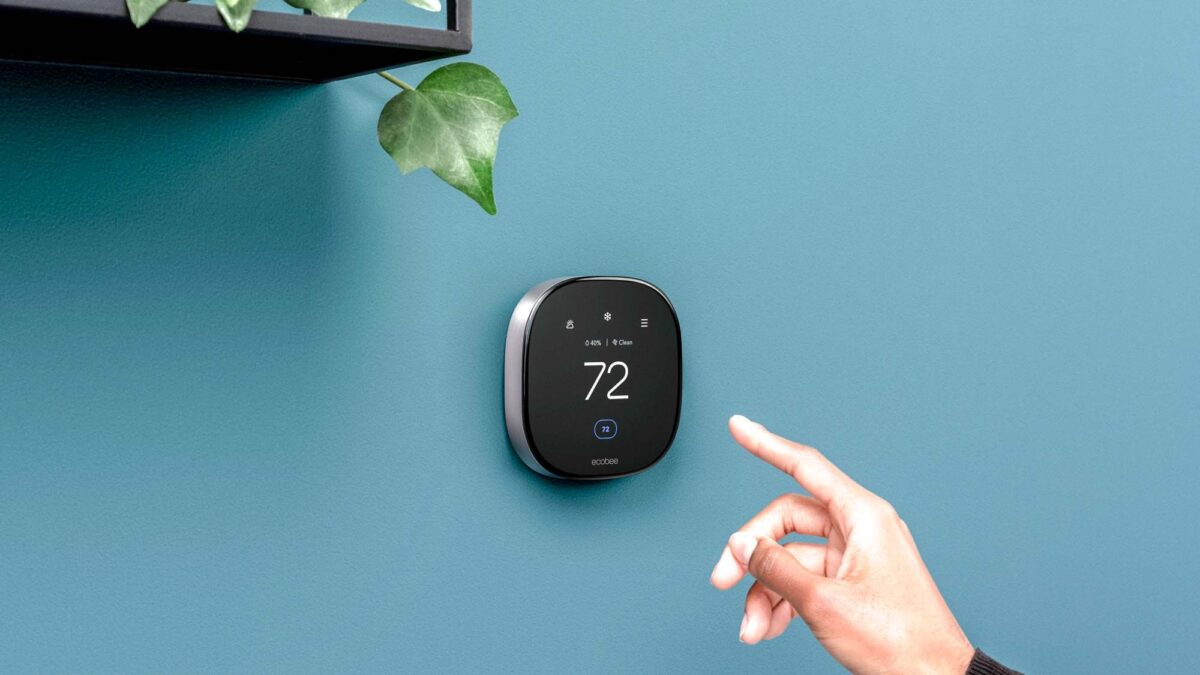
Your thermostat is silently draining your wallet. The average American household spends over $2,000 a year on energy bills, and nearly half of that goes straight to heating and cooling. The best smart thermostats 2025 promise to cut that number by 20-30% — but only if you pick the right one. After comparing every spec, feature, and real-world energy report from Google Nest, Ecobee, and Honeywell, here’s exactly which one deserves a spot on your wall this June.
Why June 2025 Is the Best Time to Upgrade Your Thermostat
Summer is when your HVAC system works hardest — and when a smart thermostat pays for itself the fastest. All three major players have rolled out significant updates in early 2025. Google launched the Nest Learning Thermostat 4th Generation with a completely redesigned interface. Ecobee pushed a major firmware update to its Smart Thermostat Premium adding improved occupancy detection. And Honeywell Home refreshed the T9 lineup with full Matter protocol support. The timing couldn’t be better for a head-to-head comparison.
Best Smart Thermostats 2025: The Three Contenders at a Glance
Before diving into the details, here’s a quick snapshot of what each thermostat brings to the table in June 2025:
Google Nest Learning Thermostat (4th Gen) — $279
- Display: 2.7″ borderless LCD with customizable Flair designs
- Connectivity: Wi-Fi 6, Bluetooth 5.0, Matter-compatible, Thread border router
- Sensors: Built-in temperature, humidity, occupancy, ambient light
- Compatibility: Google Home ecosystem, works with 95% of HVAC systems
- Energy Savings: Google claims up to 27% on cooling bills using AI-driven schedules
- Standout Feature: Dynamic Flair display that adapts the screen art to weather and time of day
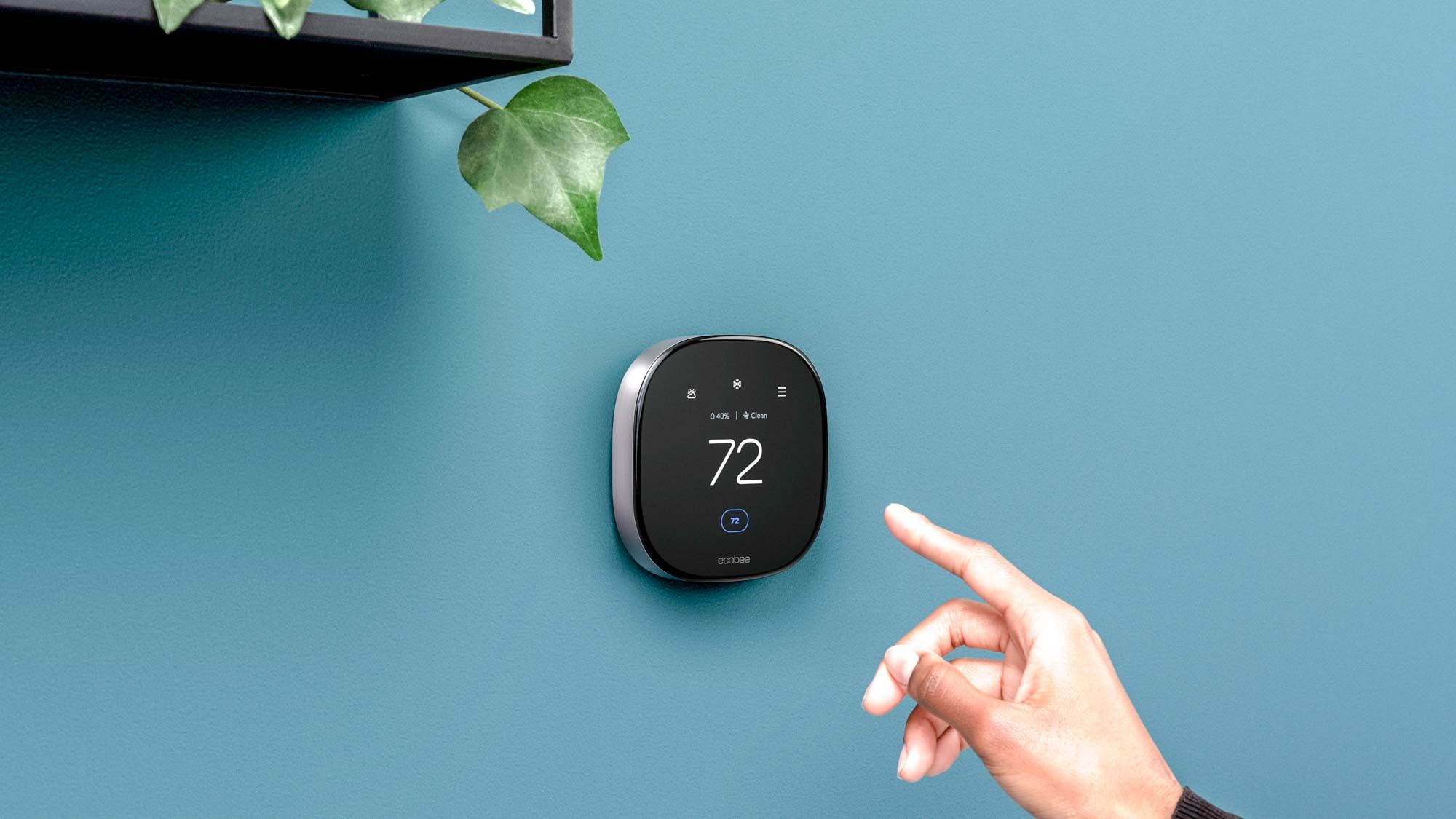
Ecobee Smart Thermostat Premium — $249
- Display: Full touchscreen with zinc alloy metal frame
- Connectivity: Wi-Fi, Bluetooth, Matter-ready via firmware update, built-in Alexa
- Sensors: Built-in temperature, humidity, occupancy, includes 1 SmartSensor for remote rooms
- Compatibility: Works with Alexa, Apple HomeKit, Google Home, SmartThings
- Energy Savings: Ecobee reports average savings of 26% on annual HVAC costs
- Standout Feature: Included SmartSensor for multi-room temperature balancing + built-in Alexa speaker with Spotify Connect
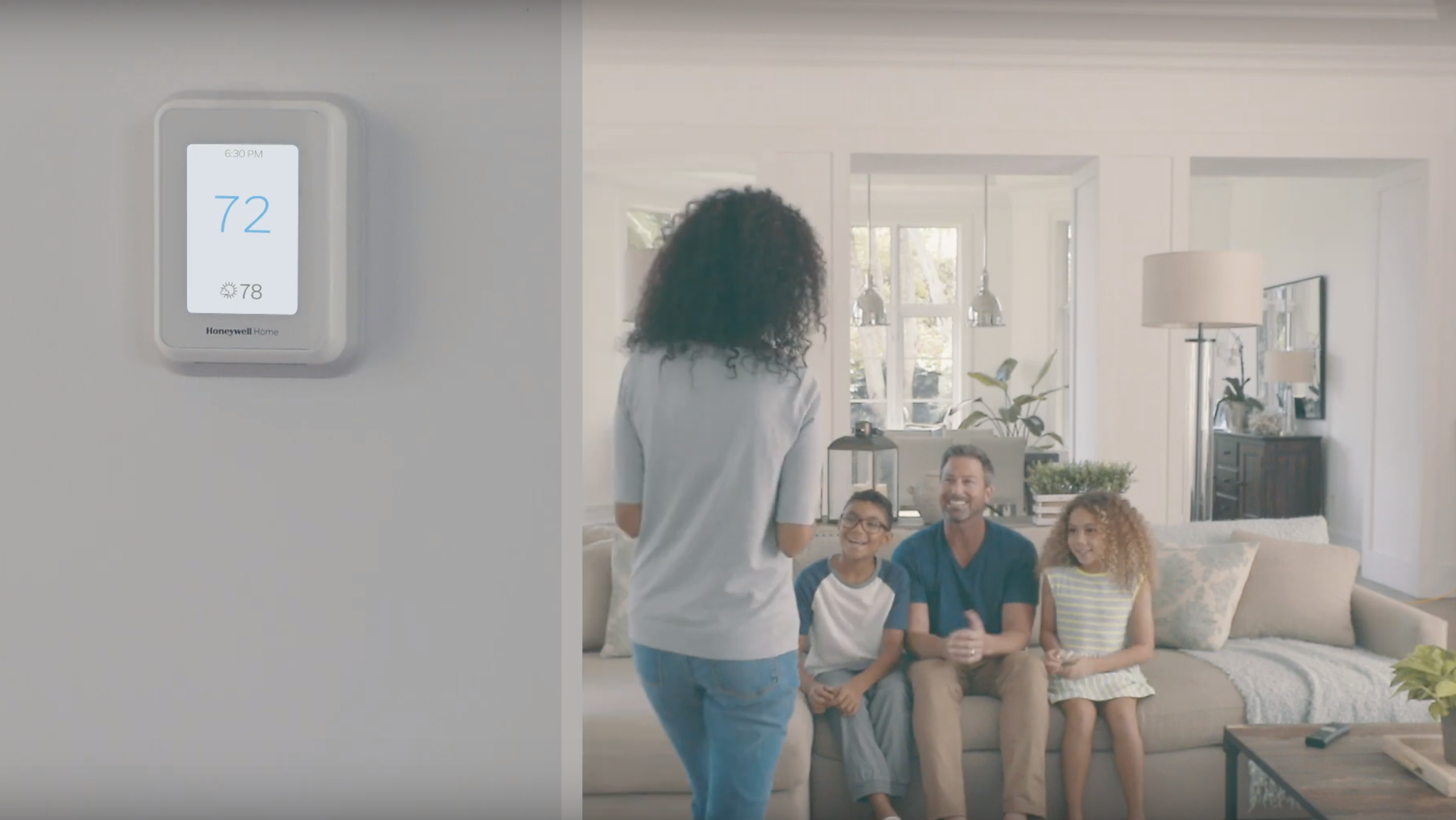
Honeywell Home T9 Smart Thermostat — $199
- Display: Touchscreen LCD with intuitive swipe navigation
- Connectivity: Wi-Fi, Bluetooth, Matter-compatible (2025 firmware update)
- Sensors: Built-in temperature and humidity, optional Smart Room Sensors ($39 each)
- Compatibility: Works with Alexa, Google Home, Apple HomeKit, IFTTT
- Energy Savings: Up to 23% annual savings based on Honeywell’s usage data
- Standout Feature: Most affordable option with room-by-room comfort control via optional sensors
Matter Protocol Support: The Game Changer in 2025
If you’re building (or expanding) a smart home in 2025, Matter protocol support isn’t optional — it’s essential. Matter is the universal smart home standard backed by Apple, Google, Amazon, and Samsung that lets devices from different ecosystems talk to each other seamlessly.
Here’s where each thermostat stands:
- Google Nest 4th Gen: Native Matter support out of the box. Also functions as a Thread border router, which means it can serve as a hub for other Thread-based smart devices like door sensors and smart blinds. This is a major advantage for Google Home users building a Thread mesh network.
- Ecobee Smart Premium: Matter-ready via a firmware update released in March 2025. Full compatibility confirmed, though it doesn’t function as a Thread border router. The built-in Alexa still works alongside Matter.
- Honeywell Home T9: Matter support added via the January 2025 firmware update. Works with all major Matter controllers. The simplest implementation of the three — it connects, it works, no frills.
The bottom line: all three now support Matter, but the Nest 4th Gen has the deepest integration thanks to its Thread border router capability. If you’re already invested in Thread devices, that’s a meaningful differentiator.
Energy Savings: Real Numbers, Not Marketing Claims
Every thermostat maker touts impressive savings figures, but how do they actually compare when you strip away the marketing?
Google Nest 4th Gen uses machine learning that adapts to your schedule over roughly two weeks. Google’s own data shows an average of 10-12% savings on heating and 15% on cooling. The new AI-driven scheduling in the 4th Gen pushes those numbers higher — up to 27% on cooling in hot climates — by factoring in local weather forecasts and pre-cooling your home before peak rates.
Ecobee Smart Premium takes a different approach. Its eco+ community energy savings program aggregates anonymized data from millions of Ecobee users to optimize schedules collectively. Ecobee’s 2024 annual report showed that eco+ participants saved an average of 26% on annual HVAC costs. The included SmartSensor means you’re optimizing based on where people actually are, not just where the thermostat is mounted.
Honeywell Home T9 relies on geofencing and a straightforward adaptive schedule. It learns your patterns but doesn’t employ the same level of AI prediction as Nest or crowd-sourced optimization as Ecobee. Real-world savings typically land around 20-23%. Where it shines is simplicity — the T9’s scheduling interface is the most intuitive of the three, so you’re more likely to actually use the advanced features.
Installation and HVAC Compatibility
This is where many buyers get tripped up. Not every thermostat works with every HVAC system, and a C-wire (common wire) can make or break your installation.
- Google Nest 4th Gen: Requires a C-wire or the Nest Power Connector (included in the box). Compatible with 95% of 24V HVAC systems including heat pumps, forced air, radiant, and dual-fuel setups. Installation takes about 30 minutes with the redesigned app-guided process.
- Ecobee Smart Premium: Includes a Power Extender Kit for homes without a C-wire — the most flexible solution of the three. Compatible with most 24V systems and the widest range of multi-stage and heat pump configurations. Ecobee’s compatibility checker on their website is genuinely accurate.
- Honeywell Home T9: Requires a C-wire with no adapter included. If your home doesn’t have one, you’ll need a $30 third-party add-a-wire adapter or a professional install. Supports standard HVAC systems and most heat pumps, but doesn’t handle some complex multi-zone setups that Ecobee can.
Verdict on installation: Ecobee wins on compatibility breadth. The included Power Extender Kit eliminates the most common installation headache.
Smart Home Ecosystem Integration
Your thermostat doesn’t live in isolation. Here’s how each one plays with the broader smart home landscape:
- Google Nest 4th Gen: Deep Google Home integration. Automations tie into Nest cameras, Nest doorbells, and Pixel devices. The Home/Away Assist feature uses data from all Google Home devices (phones, speakers, cameras) for occupancy detection. However, it dropped native Works With Nest API support — third-party integrations now go through Google Home APIs only.
- Ecobee Smart Premium: The Swiss Army knife. Native support for Alexa (built-in), Apple HomeKit, Google Home, and Samsung SmartThings. The built-in Alexa speaker doubles as a small Echo device — you can play Spotify, control other Alexa devices, and use it as an intercom. Hands-down the most ecosystem-flexible option.
- Honeywell Home T9: Works with Alexa, Google Home, Apple HomeKit, and IFTTT. The IFTTT support is a notable bonus that neither Nest nor Ecobee offers natively — it opens up creative automations with hundreds of services. The Honeywell Home app is clean and responsive, though less feature-rich than the Google Home or Ecobee apps.
Room Sensors and Multi-Zone Comfort
A single thermostat in the hallway doesn’t know that your upstairs bedroom is 5 degrees hotter than the living room. Room sensors fix this, and it’s where these three products diverge significantly.
- Google Nest: The 4th Gen relies on the built-in occupancy sensor and data from other Google Home devices. Nest does sell a separate temperature sensor ($39), but its integration is basic — it can trigger the thermostat to favor a specific room’s temperature on a schedule. No averaging across multiple sensors.
- Ecobee: Comes with one SmartSensor included ($79 for a 2-pack of additional sensors). The system averages temperatures across rooms with detected occupancy, prioritizing comfort where you actually are. Supports up to 32 sensors per thermostat. This is Ecobee’s killer feature and has been for years.
- Honeywell T9: Smart Room Sensors are sold separately ($39 each, $70 for a 2-pack). The T9 can prioritize rooms by time of day or occupancy. Supports up to 20 sensors. A solid middle ground between Nest’s basic approach and Ecobee’s all-in strategy.
If multi-room comfort is your top priority, Ecobee is the clear winner. The included sensor, higher sensor limit, and smarter occupancy-based averaging make it the best option for larger homes with uneven heating.
Build Quality, Design, and Display
These devices sit on your wall 24/7 — looks matter.
- Google Nest 4th Gen: A major redesign from the iconic 3rd Gen round shape. The new model features a slim, borderless 2.7″ LCD with customizable Flair art that makes it look more like a piece of wall decor than a thermostat. Available in Polished Silver, Polished Gold, and Polished Obsidian. Premium feel with a satisfying haptic dial.
- Ecobee Smart Premium: Zinc alloy frame with a glass front panel. The most “device-looking” of the three — a rectangular touchscreen that feels like a small tablet. The built-in speaker grille at the top is subtle. It won’t disappear into your wall like the Nest, but it looks elegant in a modern home.
- Honeywell T9: Clean, minimalist white rectangular design. It’s attractive but clearly the most utilitarian of the three. The touchscreen is responsive and the swipe interface is intuitive. Doesn’t try to be a design statement — it’s a thermostat, and it looks like a good thermostat.
The Verdict: Which Smart Thermostat Should You Buy in June 2025?
There’s no single “best” smart thermostat — but there is a best one for you. Here’s the breakdown:
Buy the Google Nest Learning Thermostat 4th Gen ($279) if: You’re deep in the Google ecosystem, want the most advanced AI-driven scheduling, care about design aesthetics, and are building a Thread-based smart home. The 27% cooling savings and Thread border router functionality make it the most future-proof choice.
Buy the Ecobee Smart Thermostat Premium ($249) if: You have a multi-room home with uneven temperatures, want maximum ecosystem flexibility (Alexa + HomeKit + Google Home), or need the easiest installation for homes without a C-wire. The included SmartSensor and 26% average savings make it the best overall value.
Buy the Honeywell Home T9 ($199) if: You want a reliable, no-nonsense smart thermostat at the best price, value IFTTT integration for custom automations, or prefer the simplest user interface. It does 90% of what the other two do at 70% of the price.
For most households, the Ecobee Smart Thermostat Premium hits the sweet spot of price, features, and compatibility. But if you’re a Google Home power user, the Nest 4th Gen’s Thread router capability and AI scheduling are genuinely compelling reasons to spend the extra $30. And the Honeywell T9 remains the smart pick for budget-conscious buyers who don’t want to sacrifice core smart thermostat functionality.
Whichever you choose, upgrading from a manual or basic programmable thermostat to any of these three will start paying for itself within the first cooling season. Your wallet — and your HVAC system — will thank you.
Get weekly AI, music, and tech trends delivered to your inbox.