NeurIPS 2025 Best Papers: 5 Groundbreaking AI Studies Reshaping the Field
December 3, 2025
Best Smartphones of 2025: iPhone 17 Pro Max vs Galaxy S25 Ultra vs Pixel 10 Pro — Who Wins?
December 3, 2025
Thirty-five products. Nine categories. One mission: cut through the noise and tell you exactly which best music production gear of 2025 actually earned a permanent spot in working studios this year. From Serum 2’s long-awaited arrival to Apogee’s immersive-format interfaces, 2025 delivered hardware and software that didn’t just iterate — it redefined workflows.
After spending the year testing gear in sessions, reading every major publication’s year-end picks (Sound On Sound, MusicRadar, MusicTech), and cross-referencing what producers actually bought on Reverb, here are the standouts that matter — organized by category so you can jump straight to what you need.
Best Synth Plugins & Software: Serum 2 Finally Arrives
If 2025 had a single defining software moment, it was Xfer Records dropping Serum 2. The revamped interface, ultra-high-definition wavetable rendering, and AI-assisted sound design tools made it an instant upgrade for the millions of producers who built their careers on the original. At $189, it remains one of the best values in music production.
Spectrasonics Omnisphere 3 went even bigger — 26,000 new patches, an Omni FX Rack, and 300+ hardware profiles that turn your MIDI controller into a hands-on synth experience. It’s $499, but for composers and sound designers working across film, TV, and games, nothing else covers this much ground in a single plugin.
Arturia Pigments 5 introduced an AI Patch Assistant and new spectral synthesis engines, making complex sound design accessible to producers who don’t have a PhD in DSP. Meanwhile, Native Instruments Absynth 6 returned from the dead — rebuilt on modern architecture with MPE compatibility and a UI that no longer looks like it’s from 2008.
For reverb addicts, ValhallaDSP ValhallaFutureVerb at $50 delivered yet another essential spatial tool from Sean Costello’s one-person operation — arguably the best dollar-per-quality ratio in all of music software.
Best Hardware Synths & Drum Machines: Sequential and Akai Lead the Pack
The Sequential Fourm earned Sound On Sound’s Gear of the Year nod, and deservedly so. This two-oscillator, four-voice analogue synth packs poly aftertouch into mini-keys without sacrificing that sumptuous vintage sound Sequential is known for. At around $999, it’s the analogue poly synth that makes the “do I really need hardware?” question irrelevant.
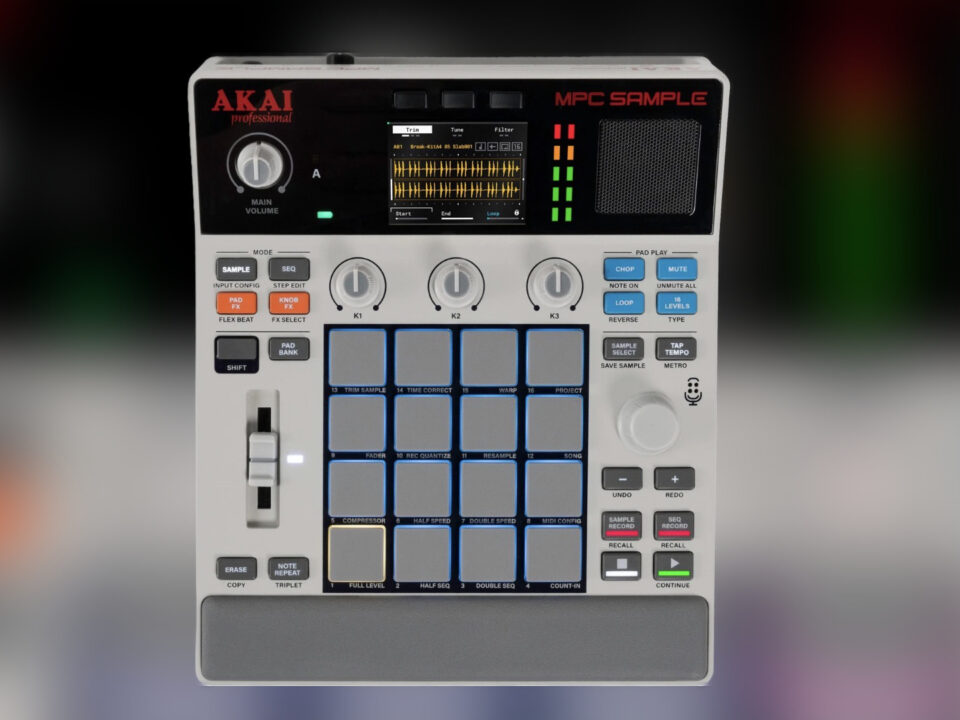
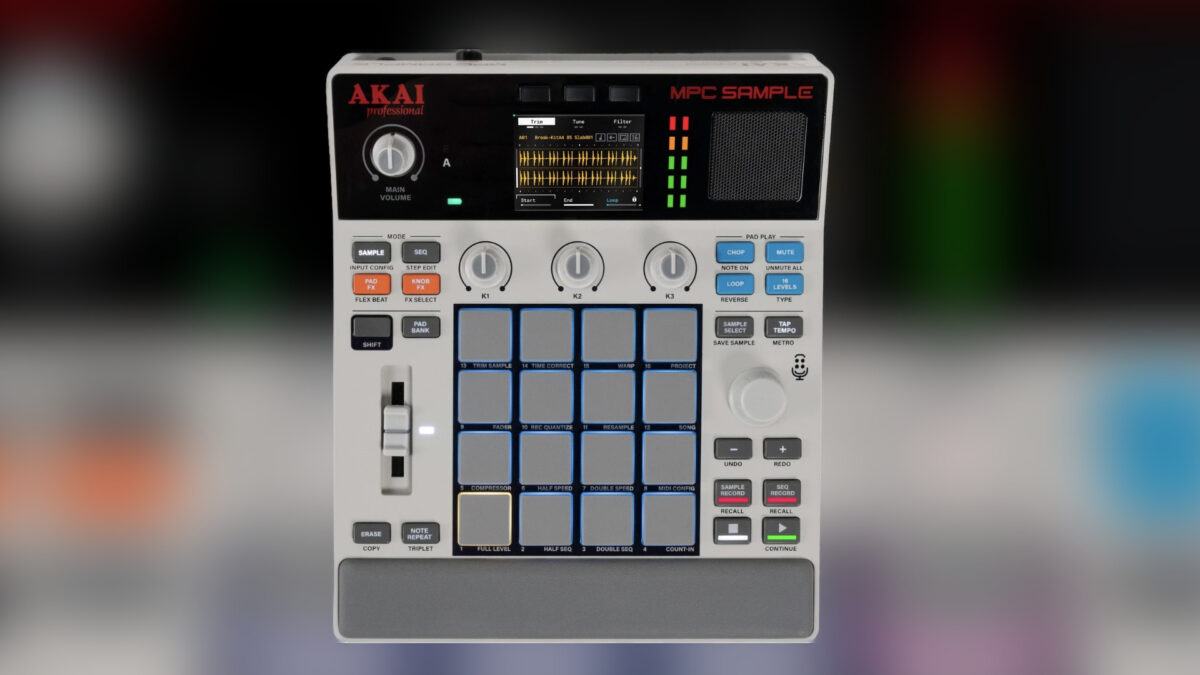
The Akai MPC Live III brought significantly more CPU power to the standalone MPC formula, meaning there’s far less reason to hook up a laptop to finish projects. MusicRadar called it out for “powerful processing, expressive hands-on control, and near limitless creative sound options” — and at $1,299, it’s a complete production studio you can take anywhere.
The wildcard of the year? Erica Synths x Hexinverter Hexdrums. This mostly-analogue desktop drum machine converts sounds from Hex’s Mutant Drum series into a standalone beatmaking beast that, according to every reviewer who touched it, “sounds massive right out of the box.” Both MusicRadar and Sound On Sound featured it in their year-end picks.
Roland re-entered the conversation with the TR-1000 Rhythm Creator, a fresh take on their iconic TR lineage at a more accessible $499 price point. And Arturia AstroLab 37 offered V Collection sounds in a compact hardware format for $699 — a stage-ready solution for keyboardists who want Arturia’s legendary sound engine without a laptop.
Best Audio Interfaces 2025: Apogee Takes the Crown
The Apogee Symphony Studio earned Sound On Sound’s Gear of the Year in the interface category — and it’s easy to see why. With generous output channels designed for immersive mixing formats (Dolby Atmos, anyone?), high-end monitor control, and mic inputs that rival dedicated preamps, it’s the interface that says “I’m done compromising.” Starting at $2,495, it’s an investment, but one that future-proofs your studio for spatial audio.
The Universal Audio Apollo Twin X Gen 2 remains the professional sweet spot at $1,099. Near-zero-latency UAD plugins through Unison preamps and rock-solid Thunderbolt 3 performance make it the interface most producers upgrade to — and stay with for years.
Budget producers got a serious win with the Focusrite Scarlett 2i2 4th Gen ($189). Auto Gain, Clip Safe, and Air Mode are features that used to live only in premium interfaces. Sub-5ms latency on Mac is frankly absurd at this price. The PreSonus Quantum HD8 ($799) and RME ADI-2/4 Pro SE ($2,199) rounded out the mid-to-high range with class-leading specs and SOS recognition.
Best Studio Monitors & Headphones: ADAM’s D3V Surprises Everyone
The biggest surprise in monitoring this year was the ADAM Audio D3V. At roughly $350, these compact active monitors pack ADAM’s signature D-ART ribbon tweeter, passive radiators, 200W stereo amplification, and a built-in USB-C DAC. Sound On Sound picked them as a highlight — and for producers working in small rooms or needing a reliable secondary reference, they punch absurdly above their weight class.
At the high end, the Amphion One18X ($2,990/pair) refined an already beloved design with an improved tweeter and reduced distortion. And for those building world-class rooms, the Focal Utopia Main 112 three-way system set the standard for what’s possible in 2025 — if your budget allows it.
In headphones, the Beyerdynamic DT 880 Pro ($199) continued its reign as the best overall studio headphone — semi-open, accurate, and comfortable enough for 12-hour sessions. The Sennheiser HD 490 PRO ($249) offered an exceptional open-back alternative, while the Focal Lensys Pro (~$399) earned praise for both comfort and an exciting sound that reveals exactly where your mix needs work.
Best MIDI Controllers & Portable Production: Ableton Push 3 Dominates Sales
According to Reverb’s year-end data, the Ableton Push 3 overtook the Roland SP-404 MKII as the best-selling production controller of 2025. The standalone version ($1,999) effectively turns Push into a complete computer-free production station, while the controller-only version ($999) remains the deepest Ableton integration available.
The Novation LaunchControl XL 3 emerged as MusicRadar’s pick for all-in-one control — powering and sending data over a single USB cable to both software and hardware instruments. At ~$199, it’s the controller that does everything without needing its own power supply.
For portable production, Ableton Move ($449) continued Ableton’s expansion into hardware — a portable sketchpad, groovebox, and sampler that captures ideas on the go. And the Akai MPK Mini IV ($119) refreshed the best-selling budget controller with MPC-style pads and a generous software bundle.
Best Studio Outboard & Microphones: Cranborne’s PWM Compressor Steals the Show
The Cranborne Audio Brick Lane 500 won Sound On Sound’s admiration as a “brilliantly well-designed PWM compressor” that pushes the envelope of what a compressor can achieve at an affordable price point (~$599). For 500-series enthusiasts, it’s the compressor that punches well above its weight.
Neve made hardware portable with the 88C (~$1,499) — a dual-channel VCA compressor that runs on USB-C power with adaptive attack and channel linking. And at the top of the food chain, the SSL Oracle ($6,000+) delivered an analogue signal path with digital recall and both E-series and G-series EQ flavours — the dream console channel strip for hybrid studios.
In microphones, the FLEA M 251 FET (~$3,500) offered a fresh take on the legendary ELA M 251 with modern reliability, while the Lauten Audio LT-386 Eden (~$2,499) impressed with its three-voice valve condenser design (Neutral/Gentle/Forward modes). And for anyone starting out, the Audio-Technica AT2020 ($99) proved yet again that you don’t need thousands of dollars to get great vocal recordings.
The Trends That Defined 2025 Music Production Gear
Looking across all nine categories, three trends dominated the best music production gear of 2025:
- AI Integration Went Mainstream: From Serum 2’s AI-assisted sound design to Pigments 5’s AI Patch Assistant, artificial intelligence moved from gimmick to genuine workflow enhancement. The tools that got it right made complex tasks faster without removing creative control.
- Immersive Audio Infrastructure: The Apogee Symphony Studio and PreSonus Quantum HD8 both emphasized multi-channel output for Dolby Atmos and spatial audio mixing — a clear signal that immersive formats are no longer niche.
- Standalone Hardware Renaissance: The Akai MPC Live III, Ableton Push 3, and Ableton Move all pushed the “no laptop needed” philosophy further. Producers increasingly want to create without staring at a screen, and manufacturers listened.
Whether you’re building your first home studio or upgrading a professional room, 2025 gave us exceptional options at every price point. The best gear this year didn’t just sound good — it made the creative process faster, more intuitive, and more enjoyable. And honestly, that’s what great music production gear has always been about.
Need help choosing the right gear for your studio setup, or looking for professional mixing and mastering to make the most of your new equipment?
Get weekly AI, music, and tech trends delivered to your inbox.