Open Source AI Models August 2025: Phi-4, Mistral Medium 3.1, and Falcon H1 Reshape the Landscape
August 28, 2025
Best USB-C Monitors for MacBook: August 2025 Picks with 90W+ Charging
August 28, 2025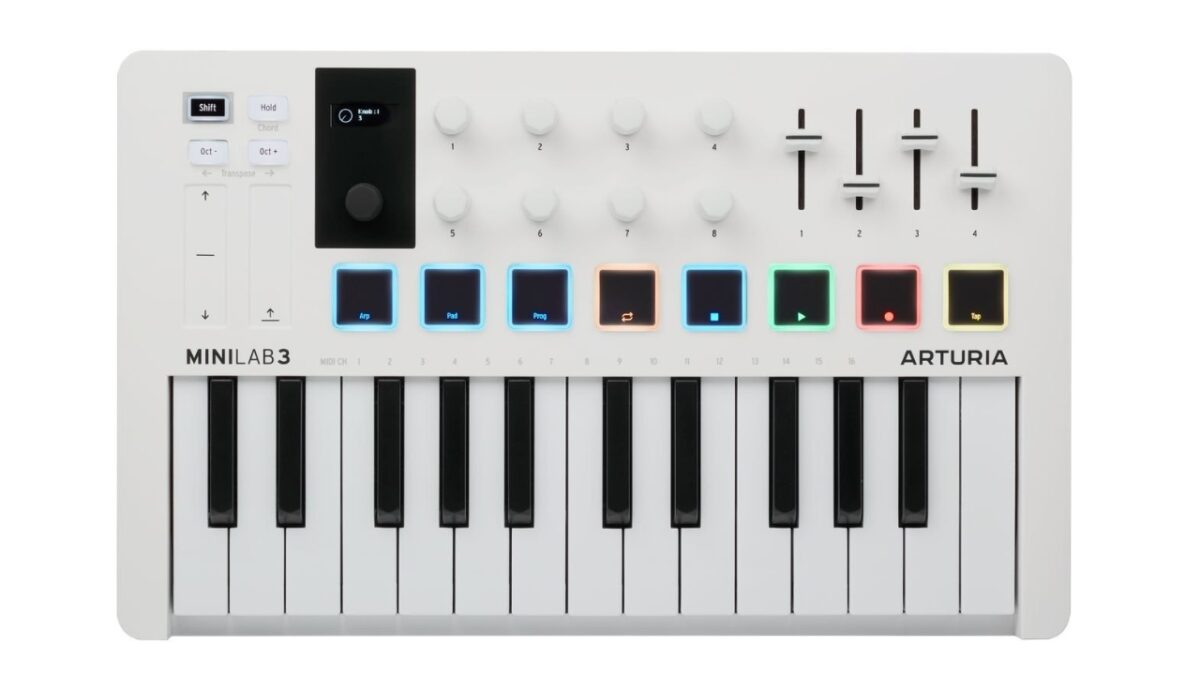
You’ve downloaded a DAW, watched three YouTube tutorials, and now you’re staring at your laptop screen trying to click notes into a piano roll one by one. Stop. A $99 MIDI keyboard will change everything about how you make music — and I say that as someone who’s been producing for over 28 years.
The best MIDI keyboard for beginners doesn’t need 88 weighted keys or a $500 price tag. What it needs is responsive keys, decent pads, solid DAW integration, and bundled software that actually helps you learn. I’ve tested dozens of controllers over the years, and in 2025, the sub-$150 category has never been stronger. Here are the five that deserve your attention — and your money.
What Makes a Great Beginner MIDI Keyboard?
Before diving into the picks, let’s talk about what actually matters when you’re starting out. A MIDI keyboard doesn’t make sound on its own — it sends data to your computer, where your DAW and virtual instruments do the heavy lifting. That means the controller’s job is to make that interaction feel natural and inspiring.
Key factors for beginners: velocity-sensitive keys (so soft and hard presses sound different), drum pads for beat-making, knobs or faders for tweaking sounds, and bundled software so you’re not spending even more money on day one. Portability matters too — if it sits in a closet because it’s too bulky, it’s worthless.
1. Arturia MiniLab 3 — Best Overall for Beginners ($99)
The Arturia MiniLab 3 is the best MIDI keyboard for beginners who want the most complete package under $100. Period. MusicRadar named it their top cheap MIDI keyboard, and after spending time with it, I understand why.
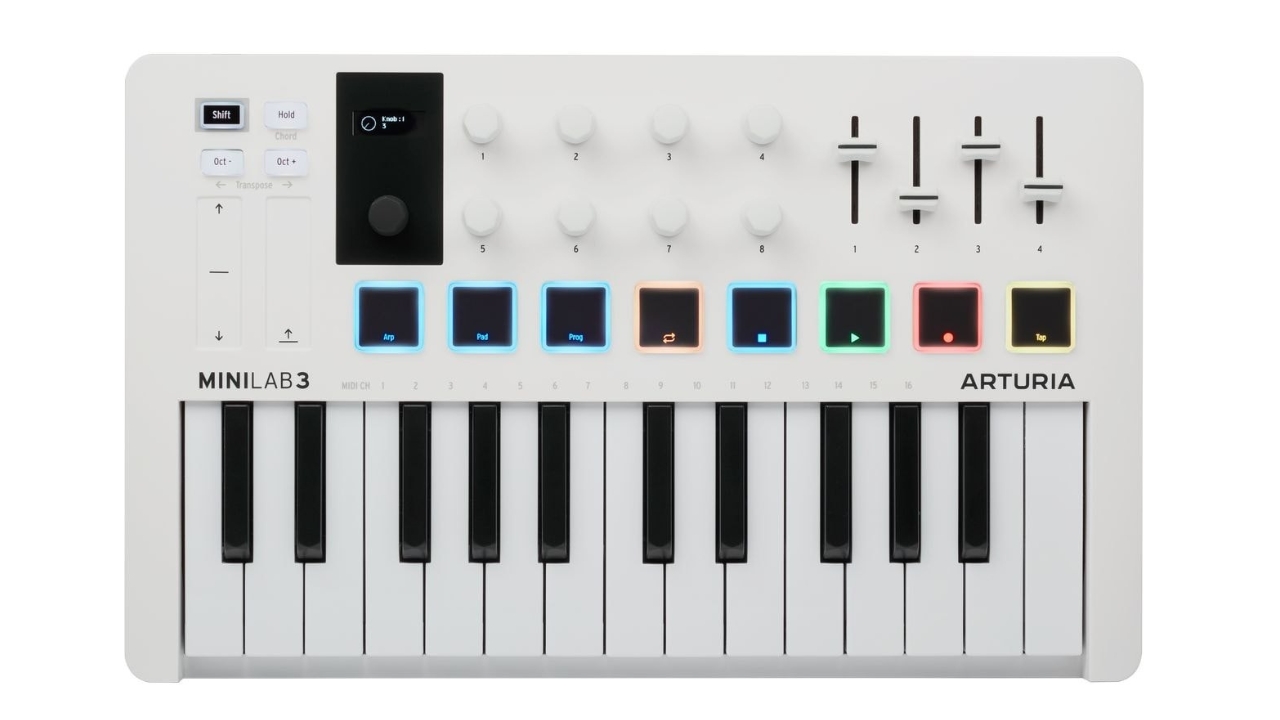
What sets it apart is the combination of 25 slim keys with aftertouch — a feature you almost never see at this price. Aftertouch lets you add expression by pressing harder after the initial key strike, which makes synth pads and strings sound dramatically more alive. You also get 8 endless encoders, 4 faders, 8 RGB-backlit pads, and both USB-C and 5-pin DIN MIDI output.
The software bundle is exceptional: Analog Lab Intro gives you access to over 500 synth presets from Arturia’s legendary V Collection, plus you get Ableton Live Lite and UVI Model D (a gorgeous Steinway piano). For a beginner, this is months of exploration without spending another dollar.
Arturia also deserves credit for building this with 50% recycled plastic and fully recyclable packaging — sustainability matters, even in music gear.
- Pros: Aftertouch at $99, 4 faders + 8 knobs, DIN MIDI out, excellent software bundle, USB-C
- Cons: Mini keys won’t satisfy piano players, no sustain pedal input on some versions
- Best for: Producers who want maximum control surface in a compact form
2. Akai MPK Mini MK3 — Best for Beat Makers ($99)
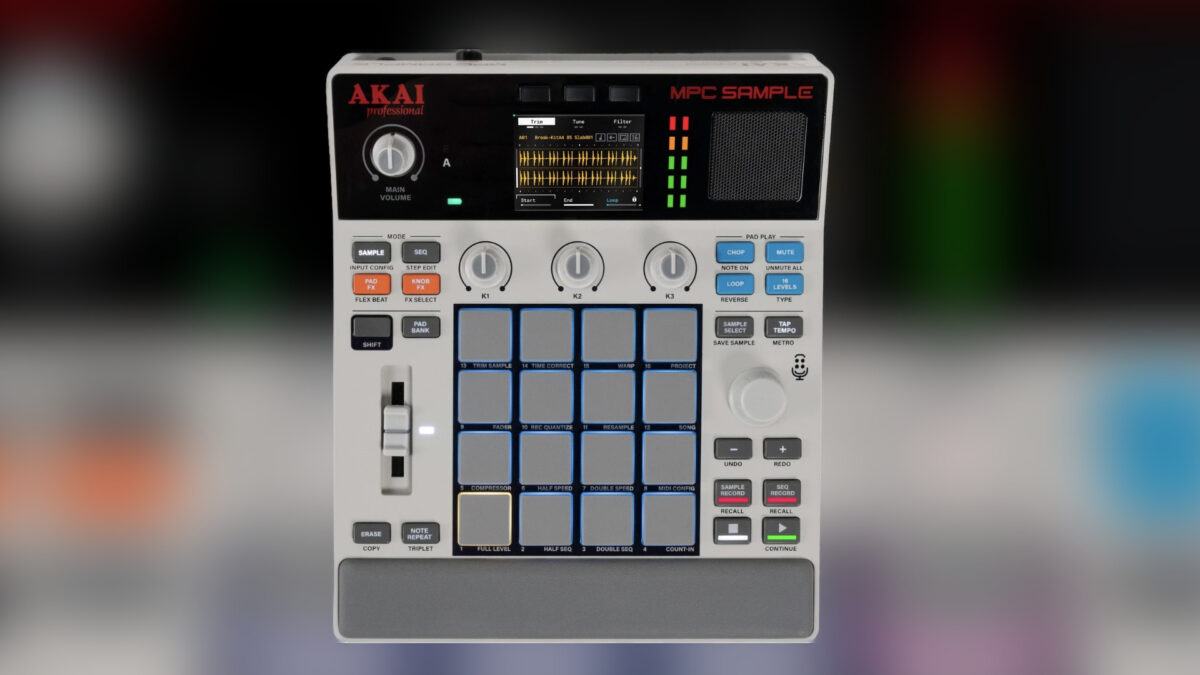
If your music starts with drums and grooves rather than melodies, the Akai MPK Mini MK3 is the best MIDI keyboard for beginners in the beat-making world. Those 8 pads use the same technology found in Akai’s professional MPC series — and you can feel the difference immediately.
The Gen 2 keybed across 25 velocity-sensitive keys is responsive enough for melodies and chord progressions, though keyboard purists will notice the trade-offs of mini keys. Where this controller shines is workflow: the OLED display shows parameter values in real time, the 8 continuous rotary knobs feel precise, and the built-in arpeggiator adds instant inspiration.
The included MPC Beats software is genuinely useful — it’s a full DAW designed around beat-making, complete with sample chopping, sequencing, and a library of instruments including Hybrid 3, Mini Grand, and Velvet. At 750g, you can literally toss this in a backpack.
- Pros: MPC-quality pads, OLED display, MPC Beats DAW included, ultra-portable (750g)
- Cons: Basic DAW integration compared to competitors, mini keys feel cramped for chord work
- Best for: Hip-hop producers, beat makers, and anyone who works with samples
3. Novation Launchkey Mini MK3 — Best for Ableton Users ($109)
If you’ve chosen Ableton Live as your DAW — or you’re leaning that direction — the Novation Launchkey Mini MK3 is practically a no-brainer. No other controller in this price range integrates as deeply with Ableton’s Session View.
The 16 RGB velocity-sensitive pads double as clip launchers, drum triggers, and scale/chord selectors. The transport controls let you record, stop, and navigate directly from the hardware. The built-in arpeggiator and Fixed Chord mode turn simple key presses into complex musical ideas — perfect for beginners who don’t yet know music theory.
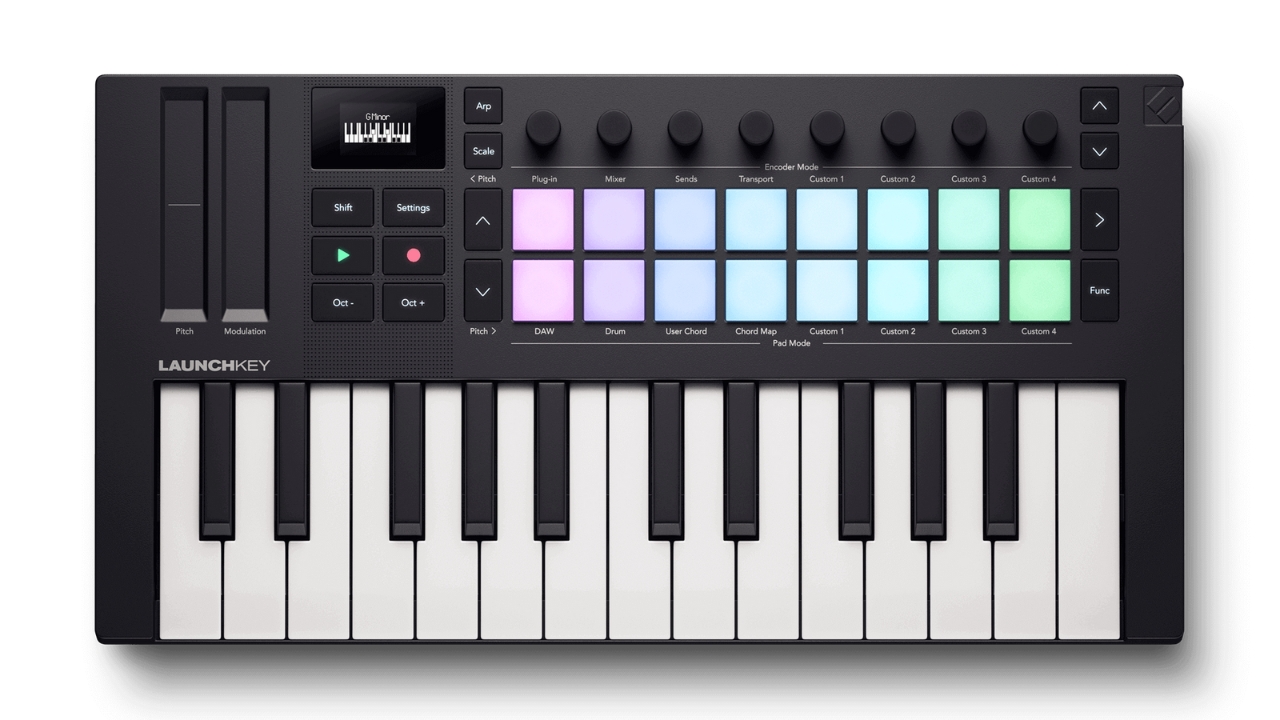
Beyond Ableton, the Launchkey Mini MK3 also works well with Logic Pro, Reason, and any HUI-compatible DAW. The software bundle includes Ableton Live Lite, plus instruments from Spitfire Audio and XLN Audio. The 3.5mm TRS MIDI output lets you connect to hardware synths without an adapter.
- Pros: Best-in-class Ableton integration, 16 pads, chord mode, arpeggiator, strong software bundle
- Cons: Keys and pads feel less premium than MiniLab 3, limited without Ableton
- Best for: Ableton Live users, electronic music producers, live performers
4. Alesis V25 MKII — Best Value Under $80
At roughly $79, the Alesis V25 MKII delivers a shocking amount of features for the money. This is the controller I recommend when someone says “I’m not sure if music production is for me yet” — because the financial risk is minimal, but the capability is real.
The 25 synth-action keys are full-size (not mini), which is a significant advantage if you have any piano background. You get real pitch bend and modulation wheels — not strips or buttons — plus 8 backlit pads, and an arpeggiator with 6 modes including Note Repeat. For someone who wants to play chords and melodies comfortably while also having pads for drums, this is the sweet spot.
The bundled MPC Beats software and 7 expansion packs give you plenty of content to work with, and 60 free Melodics lessons help you actually develop keyboard skills. The trade-off? Build quality is adequate but not premium, and there’s no OLED display or advanced DAW integration.
- Pros: Full-size keys at $79, pitch/mod wheels, 6-mode arpeggiator, great software bundle
- Cons: Plastic build feels budget, no MIDI output, limited knob count (4)
- Best for: Budget-conscious beginners who want full-size keys
5. M-Audio Keystation Mini 32 MK3 — Most Affordable at $49
Sometimes you just need keys. The M-Audio Keystation Mini 32 MK3 strips everything down to the essentials: 32 velocity-sensitive mini keys, octave buttons, a volume knob, and USB power. That’s it. And at $49, it’s the most accessible entry point into MIDI keyboard territory.
What makes this work is the key count — 32 keys gives you almost three full octaves visible at once, which is more comfortable for two-handed playing than the 25-key alternatives. At just 490 grams (barely over a pound), it’s the lightest controller on this list and fits into any laptop bag.
The included MPC Beats, 3 virtual instruments, and 60 Melodics lessons round out the package. No, you don’t get pads or knobs — but if your primary need is playing melodies and chords into a DAW, this $49 controller does the job surprisingly well.
- Pros: Just $49, 32 keys (7 more than competitors), ultra-lightweight (490g), includes software
- Cons: No pads, no knobs, no MIDI output, minimal controls
- Best for: Absolute beginners on a tight budget, mobile producers who only need keys
Best MIDI Keyboard for Beginners: Quick Comparison
Here’s how these five controllers stack up side by side:
- Arturia MiniLab 3 ($99) — 25 slim keys, aftertouch, 8 pads, 8 knobs, 4 faders, USB-C, DIN MIDI
- Akai MPK Mini MK3 ($99) — 25 mini keys, 8 MPC pads, 8 knobs, OLED display, 750g
- Novation Launchkey Mini MK3 ($109) — 25 mini keys, 16 pads, 8 knobs, deep Ableton integration
- Alesis V25 MKII ($79) — 25 full-size keys, 8 pads, pitch/mod wheels, 6-mode arpeggiator
- M-Audio Keystation Mini 32 MK3 ($49) — 32 mini keys, minimal controls, ultra-portable
Which One Should You Buy?
After testing all five, here’s my honest recommendation based on how you plan to make music:
Go with the Arturia MiniLab 3 if you want the most versatile controller with the best build quality. The aftertouch, faders, and Analog Lab bundle make it the best overall value. Choose the Akai MPK Mini MK3 if you’re drawn to beat-making and hip-hop — those MPC pads are unmatched at this price. Pick the Novation Launchkey Mini MK3 if Ableton Live is your DAW — the integration is genuinely deeper than anything else under $150.
Grab the Alesis V25 MKII if you want full-size keys without spending $100+ — it’s the best budget option for people who actually want to play keyboard parts. And if you’re truly just dipping your toes in, the M-Audio Keystation Mini 32 MK3 at $49 lets you start making music today with almost zero financial commitment.
The truth is, any of these five controllers will dramatically improve your workflow compared to clicking notes with a mouse. The best MIDI keyboard for beginners is ultimately the one you’ll actually use — so pick the one that matches how you want to create, plug it in, and start making music.
Need help choosing the right gear for your studio setup, or looking for professional mixing and mastering services?
Get weekly AI, music, and tech trends delivered to your inbox.