New Plugin Releases January 2026: 10 Best VSTs from NAMM, FabFilter Pro-C 3 to Free UA 610
January 22, 2026
Hugging Face Open Model Rankings 2026: How Chinese AI Labs Rewrote the Leaderboard in One Year
January 23, 2026
CES 2026 just wrapped, and the AI landscape looks completely different from six months ago. NVIDIA announced the Rubin platform promising a 10x reduction in inference costs. Samsung committed to putting Gemini AI on 800 million devices by year’s end. But here’s the thing — the tools that will actually transform your workflow right now aren’t the ones making headlines on stage. These are the best AI tools 2026 has to offer across productivity, coding, and creative categories — 10 picks I’ve personally vetted and use regularly.
Productivity: The Best AI Tools 2026 for Getting Things Done
1. ChatGPT — Still the Most Versatile All-Rounder
OpenAI’s ChatGPT now runs on GPT-4o alongside the o1 reasoning model, maintaining its position as the Swiss Army knife of AI tools in 2026. Custom GPTs let you automate repetitive workflows, while the same interface handles data analysis, web browsing, and DALL-E image generation without switching apps. The Plus plan runs $20/month, but the new Go tier at $8/month offers a compelling entry point for lighter users.
The o1 reasoning mode is where things get genuinely impressive. Complex tax calculations, business plan analysis, legal document review — anything requiring step-by-step logical thinking shows a noticeable performance jump over previous models. According to Google’s AI Agent Trends Report, companies adopting AI agents save an average of 40 minutes per interaction across their workforce. If you only pay for one AI subscription in 2026, ChatGPT is probably it.
2. Claude — The Long Document Champion
Claude from Anthropic commands a 200K token context window, making it the undisputed champion of long-document processing. Upload an entire book-length PDF for analysis or feed it a massive codebase in one shot. The Artifacts UI feature generates interactive interfaces and documents in real-time during conversation — perfect for rapid prototyping and planning documents.
If ChatGPT is the Swiss Army knife, Claude is the precision scalpel. Many users prefer Claude over ChatGPT for writing quality and instruction-following, especially on tasks involving 10+ page reports or complex analytical work where the difference becomes stark. For professionals who work extensively with long documents, Claude’s context window advantage alone justifies the subscription.
3. Perplexity — Search, Reimagined
Perplexity has fundamentally changed what search means. Ask a question and it searches the web in real-time, synthesizes multiple sources, and delivers answers with citation links. The biggest win? It minimizes the hallucination problem through citation-based verification — every claim links back to its source.
Writing research reports, investigating competitors, tracking the latest tech trends — all the time you spent clicking through 10 Google results and piecing information together, Perplexity collapses into a single query. The free tier is surprisingly powerful, and Pro unlocks more precise answers with unlimited searches.
4. NotebookLM — Google’s Most Underrated Free Tool
Google’s NotebookLM might be the most underrated AI tool of 2026. Upload PDFs, web pages, or YouTube videos, and it answers questions based exclusively on your uploaded sources — virtually eliminating hallucinations. The killer feature is Audio Overviews, which converts your uploaded documents into podcast-style conversations.
Students can upload lecture materials for exam prep. Professionals can turn 100-page reports into 10-minute audio summaries. And it’s completely free. For document-heavy workflows, NotebookLM is a genuine game-changer that most people still haven’t discovered.
Coding: AI Pair Programmers That Ship Real Code
5. Cursor — The New Standard for AI-Native IDEs
Cursor is a VS Code fork rebuilt from the ground up as an AI-native IDE. Beyond simple autocomplete, its Agent Mode handles multi-file edits and refactoring in one go. The experience of having AI understand your entire project context and intervene at every moment of coding is fundamentally different from plugin-based approaches.
Among developers, Cursor has already cemented its place as the power user’s choice. Inline diffs, lightning-fast autocomplete, project-wide context awareness — it delivers the lowest-friction experience for everyday coding flow. There’s a free tier, but the real value shows up at Pro ($20/month).
6. GitHub Copilot — The Industry Standard Evolves
GitHub Copilot remains the most widely adopted AI coding tool. Its native VS Code integration is still the smoothest in the market, and the newly added Agent Mode upgrades Copilot from a suggestion engine to an autonomous task executor. As of late 2025, roughly 85% of developers regularly use AI coding tools, and Copilot is typically the first one they try.
Starting at $10/month for individual developers (or free tier), the accessibility is unmatched. For teams, the seamless connection to the GitHub ecosystem — Issues, PRs, Actions — means AI assists across the entire DevOps pipeline, not just the code editor.
7. Claude Code — The Terminal-Native Agent
Anthropic’s Claude Code opened an entirely new category in AI coding tools. Running directly in the terminal rather than an IDE, it understands git history, grasps entire project structures, and executes large-scale refactoring or architecture changes. Launched in late 2025, it earned a 46% “most loved tool” rating in developer satisfaction surveys within just a few months.
If Cursor is your everyday coding partner, Claude Code is your project-level strategist. It shines on architecture decisions requiring whole-codebase understanding, large-scale migrations, and complex bug tracking where context is everything. MIT Technology Review named generative coding one of the 10 breakthrough technologies of 2026 — tools like Claude Code are exactly why.
Creative: Best AI Tools 2026 from Pixels to Soundwaves
8. Midjourney — The Gold Standard for Visual AI
Midjourney v6.1 produces the most beautiful AI-generated images, period. The depth of textures, the naturalism of lighting, the overall aesthetic coherence — while other tools generate “accurate” images, Midjourney generates “inspiring” ones.
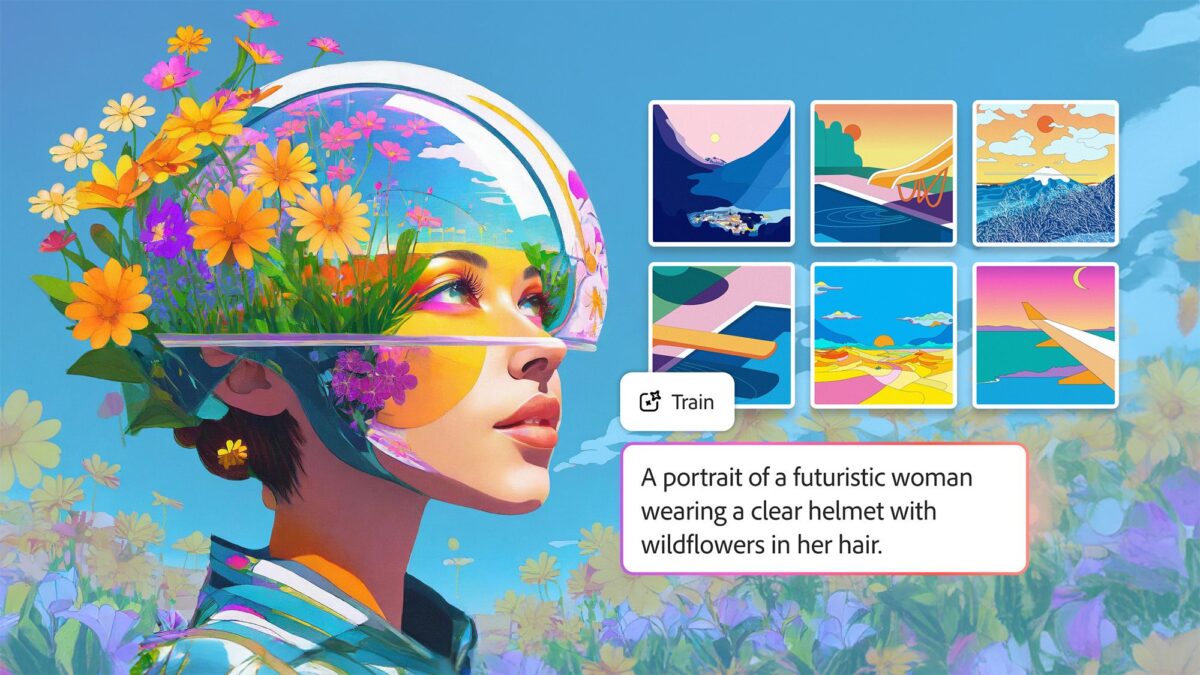
Starting at $10/month for the Basic plan, it’s become essential for designers, marketers, and content creators. The upcoming v7 promises further improvements in text rendering and photorealism, keeping Midjourney firmly ahead of the pack. If commercial safety is your priority, Adobe Firefly is worth considering. For prompt accuracy, DALL-E 3 is the strongest alternative.
9. Suno — Full Songs from Text Prompts
Suno generates complete songs with vocals and instruments from text prompts in 30 to 60 seconds. From sad indie ballads to club tracks with EDM drops — specify the genre and out comes surprisingly convincing music.
It’s not replacing professional musicians yet, but for YouTube background music, podcast intros, ad music, and prototyping, it’s already practical. Free credits let you start with zero commitment. The copyright debate around AI-generated music continues, but the tool’s capability is undeniable.
10. HeyGen — The AI Avatar Video Game-Changer
HeyGen is an AI avatar video creation tool that supports 4K resolution with lip-sync across 175+ languages. Feed it a script and produce professional-quality video without ever standing in front of a camera.
Educational content, product demos, internal communications, multilingual marketing videos — HeyGen dramatically reduces video production cost and time. For companies targeting global markets, the 175-language lip-sync feature alone can deliver significant ROI. As confirmed at CES 2026, AI video is one of the fastest-growing segments in the market.
How to Choose Your Best AI Tools 2026 Stack
The defining trend of 2026’s AI tools is the shift toward autonomous agents and reasoning capabilities. The era of simple text generation is over — tools are evolving into agentic AI that analyzes problems and solves them through multi-step processes. The key isn’t picking the single best tool. It’s finding the right combination for your workflow.
- General productivity: ChatGPT (versatility) + Perplexity (research) + NotebookLM (document analysis)
- Developers: Cursor (daily coding) + Claude Code (project-level) + Copilot (team collaboration)
- Creators: Midjourney (images) + Suno (music) + HeyGen (video)
As CES 2026 confirmed, AI is expanding beyond digital tools into the physical world. Now is the perfect time to build your AI tool stack. If you’re interested in AI-powered workflow automation or tech consulting, let’s continue the conversation below.
Need help building AI-powered automation or integrating these tools into your workflow? With 28+ years in tech and audio, I can help you find the right stack.
Get weekly AI, music, and tech trends delivered to your inbox.