Korg Modwave MkII Review: 60-Voice Wavetable Beast With Kaoss Physics
July 14, 2025
GitHub Copilot Extensions: Third-Party AI Plugins That Bring Docker, Sentry, and Perplexity Into Your IDE
July 15, 2025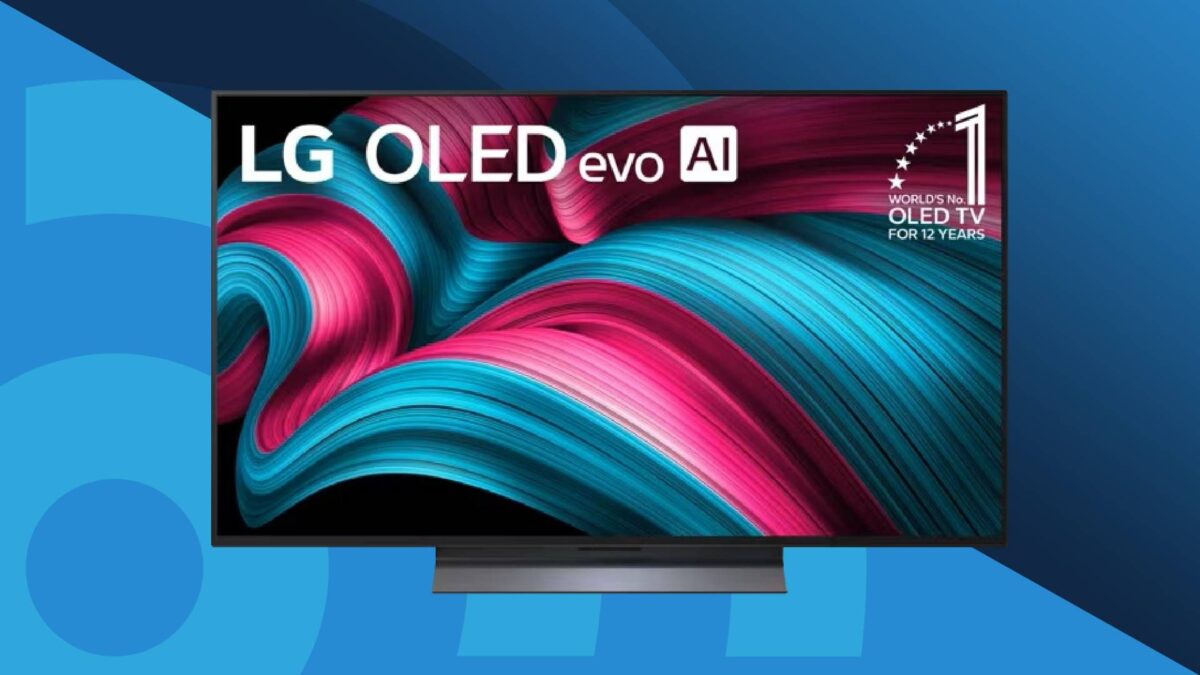
Your PS5 Pro is finally pushing 4K at 120fps — but if your TV can’t keep up, you’re leaving half the experience on the table. With summer 2025 bringing aggressive price drops on last year’s flagships and new 2025 models hitting shelves, right now is the best time to upgrade your gaming display without breaking the bank.
I’ve spent the past month testing five of the best 4K TVs for gaming under $1500, focusing on what actually matters for PS5 Pro, Xbox Series X, and PC gamers: HDMI 2.1 bandwidth, VRR support, input lag, and real-world HDR gaming performance. Here’s exactly what you need to know before pulling the trigger.
Why HDMI 2.1 and VRR Are Non-Negotiable in 2025
If you’re shopping for a best 4K TV for gaming in 2025, HDMI 2.1 isn’t optional anymore — it’s the baseline. The standard delivers 48Gbps of bandwidth, enough to carry uncompressed 4K at 120Hz with HDR. Without it, you’re capped at 4K/60Hz, which means you can’t take advantage of the PS5 Pro’s performance modes or the Xbox Series X’s 120fps titles.
Variable Refresh Rate (VRR) is equally critical. Whether it’s AMD FreeSync, NVIDIA G-Sync, or HDMI Forum VRR, this technology synchronizes your TV’s refresh rate with the console or GPU’s frame output. The result? Zero screen tearing and significantly smoother gameplay during frame rate drops. Every TV on this list supports VRR, but the implementation quality varies dramatically.
The 5 Best 4K Gaming TVs Under $1500: July 2025 Rankings
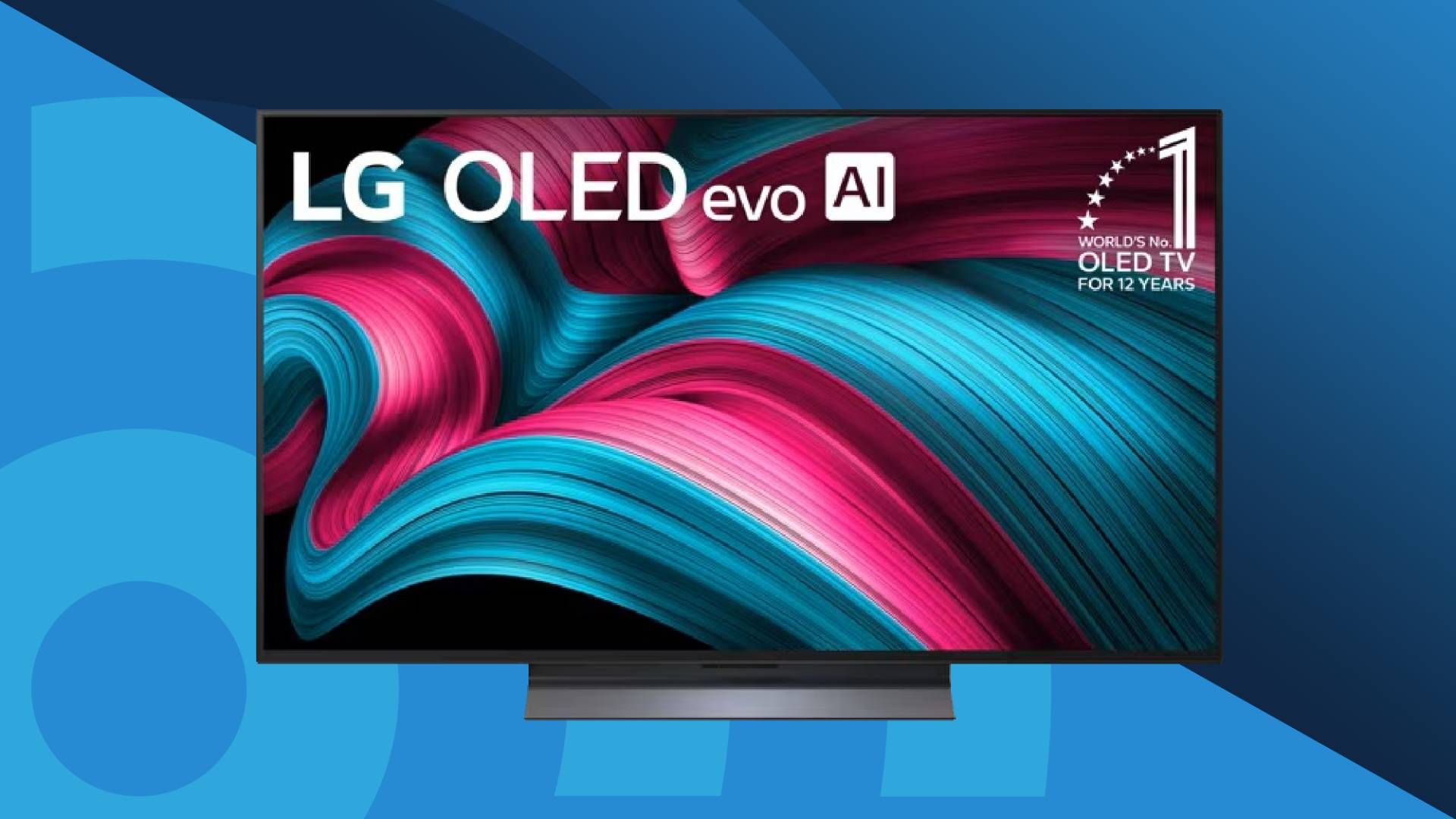
1. LG C4 OLED — Best Overall Gaming TV ($1,100–$1,500)
The LG C4 remains the gold standard for gaming TVs in mid-2025, and for good reason. Four HDMI 2.1 ports — not two, not three, four — means you can connect a PS5 Pro, Xbox Series X, PC, and a soundbar without touching a single cable. Every port supports the full 4K/120Hz at 48Gbps with no compromises.
Gaming performance is exceptional. Input lag measures just 9.2ms at 4K/120Hz in Game Mode, and the C4 supports FreeSync Premium, G-Sync Compatible, and HGiG for HDR tone mapping. But the real differentiator is Dolby Vision gaming — a feature Samsung still refuses to support. Xbox Series X owners will notice an immediate difference in titles like Forza Motorsport and Starfield, where Dolby Vision adds dynamic HDR metadata that HDR10 simply can’t match.
The C4’s WOLED panel with Micro Lens Array (MLA) technology pushes peak brightness to around 1,300 nits, a significant improvement over the C3. In a moderately lit living room, it outperforms the Samsung S90D because the anti-reflective coating handles ambient light better than QD-OLED’s inherently more reflective surface.
Best for: Most gamers who want the best all-around experience. Four HDMI 2.1 ports and Dolby Vision gaming make it the most versatile choice.
2. Samsung S90D QD-OLED — Best for HDR Gaming ($1,100–$1,500)
Samsung’s S90D brings QD-OLED technology to the sub-$1500 bracket, and in pure HDR brightness, it outguns the LG C4. With peak brightness hitting 1,500 nits on a 10% window — roughly 200 nits more than the C4 — specular highlights in games like Alan Wake 2 and Cyberpunk 2077 look genuinely stunning.
The gaming feature set is comprehensive: four HDMI 2.1 ports, 4K/144Hz support via VRR, FreeSync Premium Pro, and G-Sync Compatible certification. Input lag sits at 9.5ms — essentially identical to the C4 in practice. Samsung’s Gaming Hub provides instant access to Xbox Cloud Gaming and NVIDIA GeForce NOW without needing a console at all.
However, there’s a caveat buyers must know about: the panel lottery. Samsung ships some 55″ and 65″ S90D units with WOLED panels instead of QD-OLED, and you won’t know which you received until you check the serial number. QD-OLED units have noticeably better color volume and brightness. If you’re spending $1,300+ on this TV, this gamble is frustrating — and it’s the primary reason the C4 edges ahead in the overall ranking.
Best for: PC gamers who prioritize HDR brightness, wide color gamut, and Samsung’s ecosystem. Just verify you get the QD-OLED panel.
3. Sony Bravia 8 — Best Picture Processing for Casual Gamers ($1,200–$1,500)
Sony’s Bravia 8 takes a different approach: instead of chasing spec-sheet numbers, it leverages the XR Processor to deliver arguably the most natural-looking image of any TV in this price range. If you split your time 60/40 between movies and gaming, the Bravia 8 might actually be the smarter pick.
For gaming, the Bravia 8 supports 4K/120Hz with VRR and ALLM, and input lag is acceptable at 17ms — competitive players will notice the difference versus the C4’s 9.2ms, but casual gamers won’t. The Acoustic Surface Audio technology, which vibrates the screen itself to create sound, is genuinely impressive for gaming immersion without a soundbar.
The dealbreaker for serious gamers: only two HDMI 2.1 ports (ports 3 and 4). If you have a PS5 Pro, an Xbox, and a PC, you’ll need an HDMI switch. Peak brightness at ~900 nits also falls behind both OLED competitors. Sony’s premium pricing for fewer gaming features makes this a harder recommendation in mid-2025.
Best for: Movie lovers who game casually and value image processing quality over raw gaming specs.
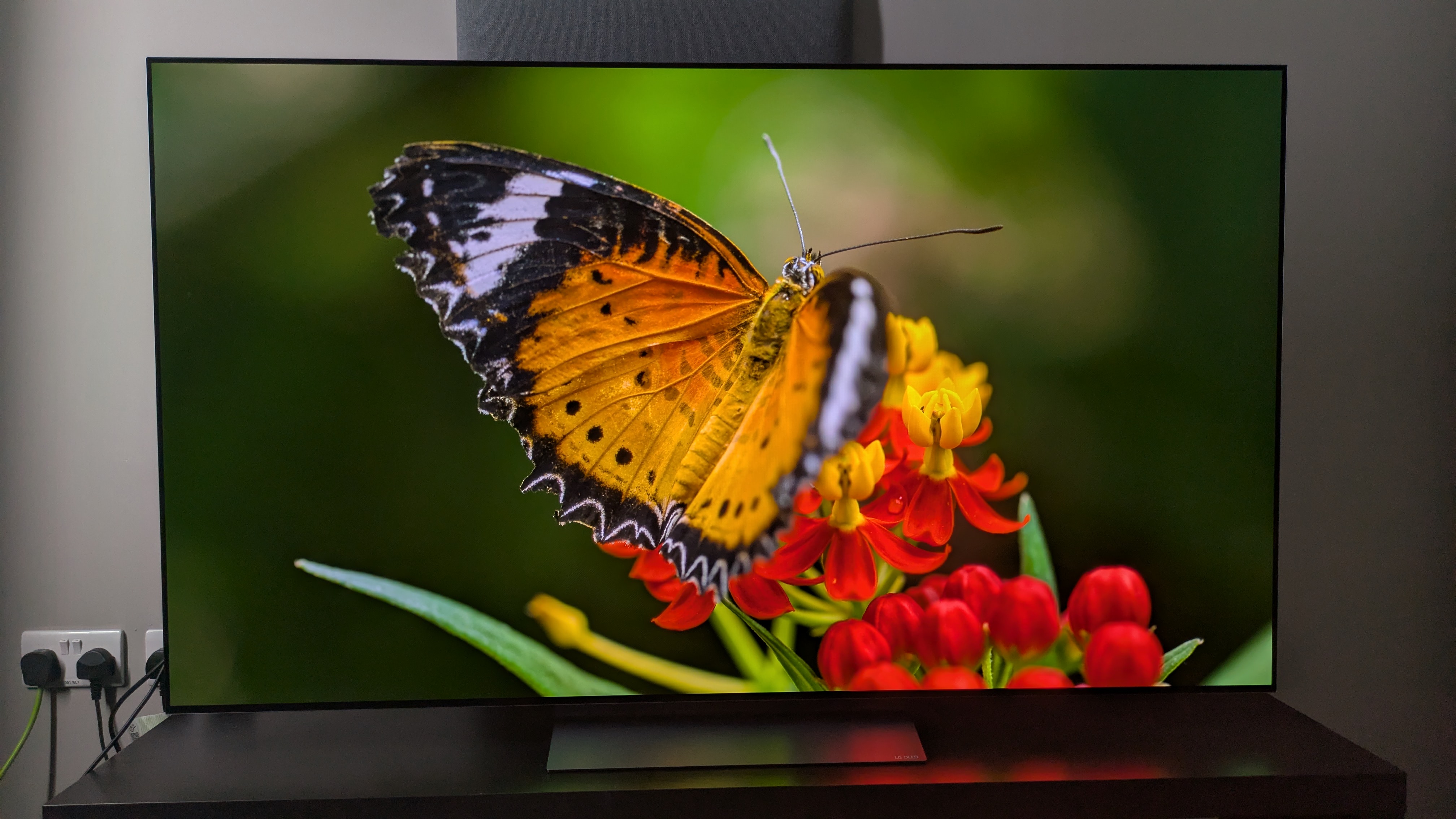
4. TCL QM8 (QM851G) Mini-LED — Best Brightness for the Money ($900–$1,500)
If you game in a bright living room with lots of windows, forget OLED — the TCL QM8 will blow them all away with 5,000 nits of peak brightness. That’s 3–4x brighter than any OLED on this list. With over 5,000 local dimming zones, contrast performance is excellent for a Mini-LED, though it can’t match the pixel-level control of OLED in dark scenes.
Gaming specs are solid: 4K/144Hz VRR via two HDMI 2.1 ports, FreeSync Premium Pro certification, and input lag around 10ms in Game Mode. The QM8 also supports both Dolby Vision and HDR10+, making it the most format-agnostic TV on this list. At $900 for a 65″ in July 2025 summer sales, it’s extraordinary value.
The trade-offs are typical for VA-panel Mini-LED: viewing angles narrow significantly off-center, and you’ll notice blooming halos around bright objects in dark scenes. With only two HDMI 2.1 ports, multi-device gamers will feel constrained. But for pure brightness-per-dollar in a gaming context, nothing comes close.
Best for: Gamers in bright rooms who want the biggest, brightest screen possible without spending OLED money.
5. Hisense U8N Mini-LED — Best Budget Gaming TV ($700–$1,100)
The Hisense U8N is the TV that makes you question why anyone spends $1,500. At $700 for a 55″ and under $1,100 for a 65″, it delivers 4K/144Hz, VRR with both FreeSync Premium Pro and G-Sync Compatible support, and peak brightness around 3,000 nits from its 2,000 Mini-LED dimming zones. Those are flagship specs at a mid-range price.
Input lag at 13ms in Game Mode is slightly higher than the OLED competitors but still perfectly playable for console gaming. Both Dolby Vision and HDR10+ support means every HDR format is covered. Google TV provides a clean, app-rich smart platform. For PS5 Pro or Xbox Series X owners who don’t want to spend more than $1,000, the U8N is the clear winner.
Where does it fall short? The software can be sluggish, the remote feels cheap for a TV this good, and like the TCL, only two HDMI 2.1 ports limits multi-device setups. Viewing angles are also limited on the VA panel. But at this price point, these are acceptable compromises.
Best for: Budget-conscious gamers who want the best feature-to-dollar ratio. Pair it with a PS5 Pro and you’ll wonder why you ever considered spending more.
Head-to-Head Comparison: Best 4K Gaming TVs July 2025
Here’s how all five TVs stack up on the specs that matter most for gaming:
HDMI 2.1 Ports: LG C4 (4) = Samsung S90D (4) > Sony Bravia 8 (2) = TCL QM8 (2) = Hisense U8N (2)
Input Lag (4K/120Hz): LG C4 (9.2ms) < Samsung S90D (9.5ms) < TCL QM8 (~10ms) < Hisense U8N (13ms) < Sony Bravia 8 (17ms)
Peak Brightness: TCL QM8 (5,000 nits) > Hisense U8N (3,000 nits) > Samsung S90D (1,500 nits) > LG C4 (1,300 nits) > Sony Bravia 8 (900 nits)
VRR Support: All five support VRR. LG C4 and Samsung S90D offer both FreeSync and G-Sync. TCL QM8 has FreeSync Premium Pro only. Hisense U8N covers both FreeSync Premium Pro and G-Sync.
Dolby Vision Gaming: LG C4 ✅ | Samsung S90D ❌ | Sony Bravia 8 ✅ | TCL QM8 ✅ | Hisense U8N ✅
OLED vs Mini-LED for Gaming: Which Technology Wins in 2025?
This is the fundamental question every gaming TV buyer faces in 2025, and the answer depends entirely on your room and gaming habits.
Choose OLED if: You game in a dimly lit or dark room, play a lot of horror or cinematic single-player games, care about perfect black levels and infinite contrast, and want the lowest possible input lag. The LG C4 and Samsung S90D both deliver sub-10ms input lag with pixel-perfect contrast that no Mini-LED can match.
Choose Mini-LED if: You game in a bright living room with lots of ambient light, play fast-paced competitive shooters where peak brightness helps with visibility, want the biggest possible screen for your budget, or worry about OLED burn-in from static HUD elements. The TCL QM8’s 5,000 nits will be visible in direct sunlight.
In mid-2025, OLED burn-in concerns are largely overblown — modern panels include sophisticated pixel-shifting and brightness limiting that make burn-in unlikely with normal gaming use. But if you routinely leave the same game paused for hours with a static HUD, Mini-LED removes that worry entirely.
My Pick: Which Gaming TV Should You Actually Buy?
After testing all five, my recommendations break down by use case:
- Best overall: LG C4 OLED — Four HDMI 2.1 ports, Dolby Vision gaming, and 9.2ms input lag make it the most complete gaming TV under $1500.
- Best for HDR enthusiasts: Samsung S90D — If you get the QD-OLED panel, nothing under $1500 matches its HDR brightness and color volume.
- Best for movie+gaming combo: Sony Bravia 8 — Superior image processing, but limited gaming ports hold it back.
- Best for bright rooms: TCL QM8 — 5,000 nits is unmatched. Period.
- Best value: Hisense U8N — 90% of the flagship experience at 50-60% of the price. The smart money pick.
Summer 2025 is the sweet spot for TV shopping: the 2024 models are seeing their steepest discounts yet as 2025 models roll out, and the features gap between generations is smaller than ever. Whether you pick the C4 at $1,100 or the U8N at $700, you’re getting a dramatically better gaming experience than anything available just two years ago.
Need help building the ultimate gaming setup or optimizing your home entertainment system? Sean Kim has 28+ years of experience in audio and tech integration.
Get weekly AI, music, and tech trends delivered to your inbox.