NVIDIA Vera Rubin: 50 PFLOPS Per GPU, 336B Transistors — The 6-Chip AI Supercomputer That Redefines Everything at GTC 2026
March 25, 2026
Synthesizer V AI Choir Guide: How Dreamtonics Is Redefining Vocal Production in 2026
March 26, 2026
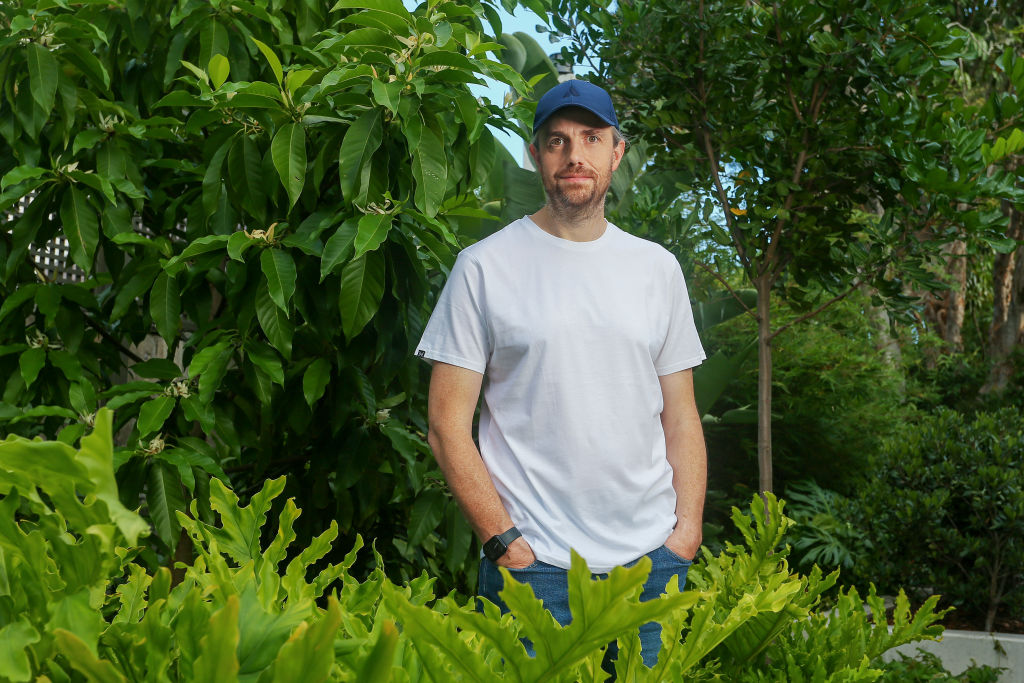
1,600 people opened their inboxes on March 11, 2026, and found out they no longer worked at Atlassian. Within 20 minutes of CEO Mike Cannon-Brookes hitting send on his company-wide memo, affected employees received individual emails confirming their roles had been eliminated. The Atlassian layoffs AI narrative had officially begun — and the stock went up.
That detail — the stock climbing roughly 2% while thousands lost their livelihoods — tells you everything about where enterprise tech is headed in 2026. Atlassian, the company behind Jira, Confluence, and Trello, is making its most aggressive structural bet yet: gut a tenth of the workforce, split the CTO role in half, and funnel the savings into artificial intelligence.
” alt=”Atlassian layoffs AI restructuring 2026 infographic”/>
The Numbers Behind Atlassian’s AI Layoffs
Let’s break down the raw data, because the scale here is significant. Atlassian is cutting approximately 1,600 employees — about 10% of its global workforce. More than 900 of those roles sit in R&D, which means the company isn’t trimming fat from sales or administration. It’s restructuring the very teams that build Jira, Confluence, and its growing suite of AI tools.
The geographic distribution tells its own story. North America absorbs roughly 40% of the cuts (~640 positions), Australia takes 30% (~480), India accounts for 16% (~250), and the remaining positions are spread across Japan, the Philippines, Europe, the Middle East, and Africa. Completion is expected by the end of June 2026.
Financially, Atlassian has earmarked $225–236 million for the restructuring. That breaks down to $169–174 million in severance packages and $56–62 million in office space reductions. The severance terms are relatively generous by tech industry standards: a minimum of 16 weeks’ pay plus one additional week per year of service, a pro-rated FY26 bonus, a $1,000 tech reimbursement, six months of healthcare coverage, outplacement services, and visa support for affected international workers.
Mike Cannon-Brookes’ Memo: The Careful Language of AI Displacement
CEO Mike Cannon-Brookes chose his words carefully. “I have made the incredibly difficult decision to reduce the size of our team by ~10%,” he wrote in his internal memo, which was later published on Atlassian’s official blog. The stated rationale: to “self-fund further investment in AI and enterprise sales, while strengthening our financial profile.”
But the most telling line came when Cannon-Brookes addressed the AI elephant in the room: “Our approach is not ‘AI replaces people.’ But it would be disingenuous to pretend AI doesn’t change the mix of skills we need or the number of roles required in certain areas.”
That sentence is a masterclass in corporate positioning. It simultaneously denies and confirms the obvious: AI is directly reducing headcount. The 900+ R&D cuts make the subtext impossible to ignore. When more than half of eliminated positions come from software research and development — the department most directly affected by AI coding assistants and automation — the connection is self-evident.
As TechCrunch reported, Atlassian follows a pattern established just two weeks earlier when Block (formerly Square) cut 4,000 jobs with similar AI-first framing.
CTO Role Splits in Two: Meet Atlassian’s “Next Generation AI Talent”
Perhaps the most structurally significant move is the departure of CTO Rajeev Rajan, effective March 31, 2026. Rajan served nearly four years in the role, bringing credentials from VP-level positions at Meta and a 20-year career at Microsoft. His replacement isn’t one person — it’s two.
Taroon Mandhana becomes CTO of Teamwork. Previously head of AI and products engineering at Atlassian, Mandhana will oversee the core collaboration platform that generates the company’s revenue. Vikram Rao takes on the dual title of CTO of Enterprise and Chief Trust Officer, transitioning from his prior role as chief trust officer. Atlassian described both leaders as “next generation AI talent.”
The split is revealing. By carving the CTO role into “Teamwork” and “Enterprise/Trust,” Atlassian is explicitly acknowledging that AI integration into its products (Jira, Confluence, Rovo) and enterprise security/compliance are now equally critical — and too large for a single technical leader to manage. It’s a structural admission that AI isn’t a feature bolted onto existing products; it’s a parallel architecture requiring its own C-suite leadership.

” alt=”Atlassian CTO role split AI leadership restructuring”/>
The Financial Reality: Unprofitable Since 2017, Stock Down 84% From Peak
Atlassian’s AI pivot isn’t happening in a vacuum. The company has been unprofitable since 2017, and its shares sit roughly 84% below the 2021 peak. That context matters because it transforms the narrative from “visionary company embraces AI” to “company under financial pressure uses AI as justification for cost cuts.”
The numbers aren’t all bleak, though. CNBC reported that Atlassian’s cloud revenue hit $1.067 billion, up 26% year-over-year. Forward obligations reached $3.814 billion, a 44% increase. And Rovo, the company’s AI assistant product, has already amassed 5 million monthly active users — a signal that the AI bet isn’t purely theoretical.
The $225–236 million restructuring cost will be partially offset by the headcount reduction itself, plus the $56–62 million in office space savings. If Atlassian can successfully redirect those savings into AI R&D and enterprise sales, the move could accelerate the company’s path to profitability — or at least that’s the pitch to Wall Street.
The “AI Washing” Problem: A Pattern Across Tech in 2026
Atlassian isn’t operating in isolation. The same week, The Next Web noted that Block had cut 4,000 positions two weeks prior, and WiseTech Global eliminated 2,000 roles — all under the banner of AI transformation. In every case, the stock went up.
By March 2026, tech layoffs have exceeded 45,000 globally. Yet OpenAI CEO Sam Altman has publicly called this pattern “AI washing,” pointing out that fewer than 1% of 2025 job losses were directly attributable to AI. The implication: companies are using the AI narrative as cover for traditional cost-cutting that Wall Street rewards.
The pattern is hard to ignore. Company announces layoffs + AI investment. Media covers the “AI pivot” angle. Stock rises 2–5%. Executives get to frame cost cuts as forward-thinking strategy rather than financial distress. Whether Atlassian’s restructuring represents genuine AI transformation or strategic positioning is a question that won’t be answered for at least 12–18 months.
What This Means for Jira, Confluence, and Rovo Users
For the millions of teams that rely on Atlassian products daily, the practical implications are worth watching. With 900+ R&D roles eliminated, the near-term development velocity on Jira, Confluence, and Trello could slow — though Atlassian will argue that AI tools compensate for reduced headcount.
Rovo’s 5 million MAU milestone suggests Atlassian’s AI integration is gaining traction, but the dual-CTO structure means product direction could shift significantly. Taroon Mandhana’s “CTO Teamwork” role signals that AI-powered collaboration features will take center stage — expect deeper Rovo integration into Jira workflows, AI-generated project summaries in Confluence, and more automated task management.
Vikram Rao’s “CTO Enterprise and Chief Trust Officer” role addresses a different concern: enterprise customers worried about AI handling their proprietary data. As Atlassian pushes AI deeper into its stack, trust and compliance become non-negotiable selling points for Fortune 500 clients.
The Human Cost: 20 Minutes to Lose Your Job
Behind the corporate strategy and stock price movements are 1,600 people who received life-altering news via email within 20 minutes of a CEO memo. Atlassian maintained Slack access for 6–12 hours after notifications, allowing affected employees to say goodbye to colleagues — a small but meaningful gesture that not all companies extend.
The severance package — 16 weeks minimum plus tenure bonuses, six months of healthcare, visa support — sets a reasonable standard. But for the 250+ employees in India and hundreds more across Asia-Pacific, the job market dynamics are vastly different than in North America or Australia. A 16-week runway means different things in different economies.
Looking Ahead: The AI-First Enterprise Playbook
Atlassian’s restructuring is a case study in the 2026 enterprise playbook: cut costs, rebrand as AI-first, split leadership to signal structural commitment, and let Wall Street reward the narrative. Whether the company delivers on the promise — turning $225 million in restructuring costs into genuine AI-powered product innovation — will determine if this was transformation or theater.
The dual-CTO model is particularly worth watching. If Mandhana and Rao can demonstrably accelerate Atlassian’s AI capabilities while maintaining enterprise trust, other major software companies will follow the template. If the restructuring leads to product stagnation and talent flight, it becomes another cautionary tale about cutting your way to innovation.
One thing is certain: in 2026, the line between “AI transformation” and “cost optimization dressed in AI clothing” has never been blurrier. Atlassian’s next two earnings calls will tell us which side of that line this particular story lands on.
Get weekly AI, music, and tech trends delivered to your inbox.