PreSonus Eris E5 XT MkII Review: 5 Reasons This $200 Budget Monitor Refresh Changes Everything
July 22, 2025
OpenRouter July 2025 Update: Free Tier Shakeup for the Unified API Powering 200+ AI Models
July 23, 2025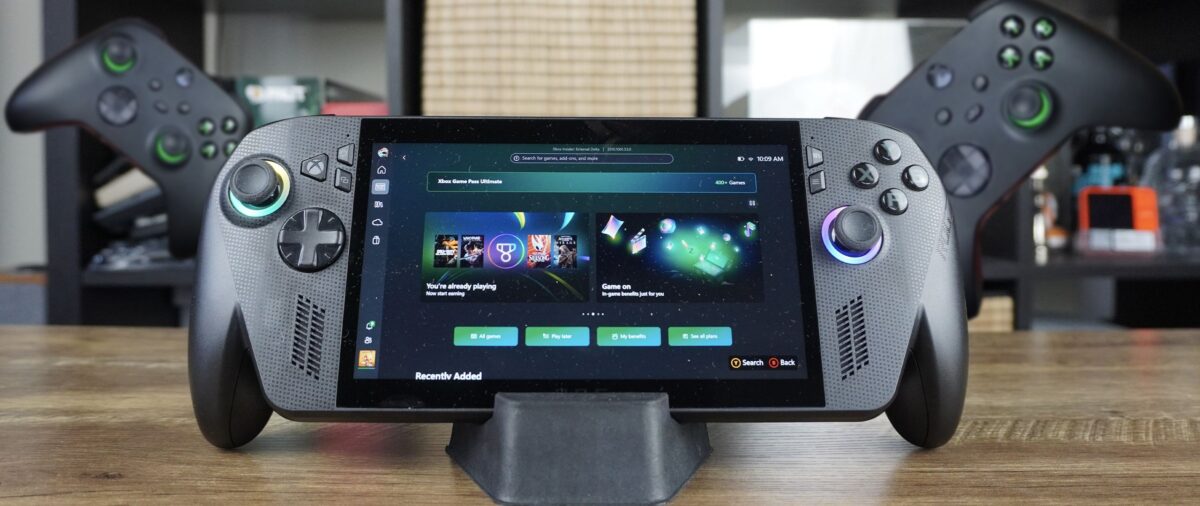
Cyberpunk 2077 at 60 frames per second in the palm of your hands—no dock, no external GPU, just raw handheld power. That is the promise ASUS is making with the ROG Ally 2 (officially branded ROG Xbox Ally X), and after weeks of benchmark data and hands-on previews rolling in this summer, the numbers suggest they are actually delivering. This ASUS ROG Ally 2 review breaks down every spec, benchmark, and real-world gaming result to help you decide whether the $999 price tag is justified.
ASUS ROG Ally 2 Review: What Is the ROG Xbox Ally X?
The ROG Xbox Ally X is the premium tier of ASUS’s second-generation handheld gaming lineup, born from a deeper partnership with Microsoft. Unlike the original ROG Ally, this device ships with Xbox branding, a dedicated Xbox button, and a revamped software experience built around Xbox Full-Screen Experience and Armoury Crate SE. It is not just an iterative upgrade—it is a fundamental rethinking of what a Windows-based handheld should be.
At the core sits AMD’s brand-new Ryzen AI Z2 Extreme processor, a chip designed from the ground up for handheld gaming. The Z2 Extreme pairs 8 Zen 5 CPU cores with 16 RDNA 3.5 GPU compute units, plus an integrated NPU for AI-accelerated tasks. This is a significant architectural leap from the Z1 Extreme’s Zen 4 + RDNA 3 combination that powered the first-generation Ally.
Hardware Specifications: 24GB RAM, 80Wh Battery, and Thunderbolt 4
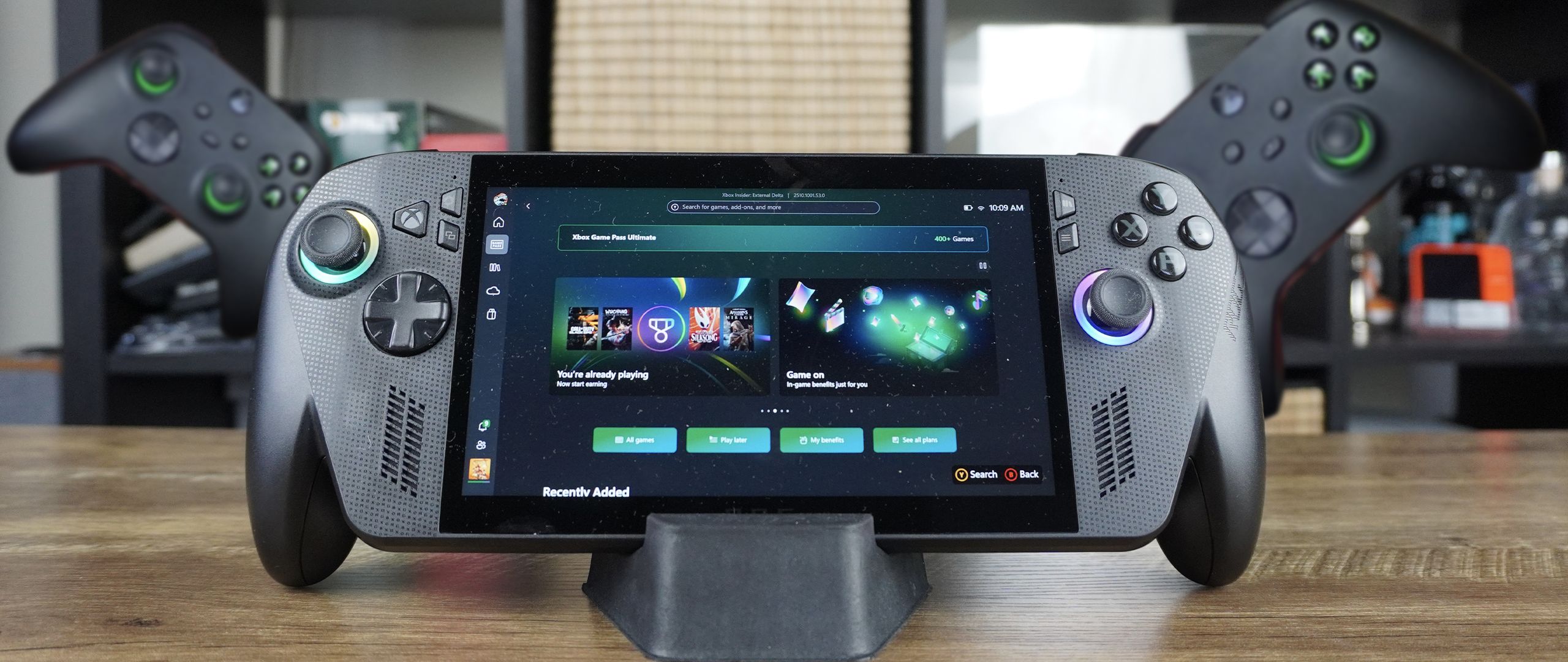
ASUS has not held back on the supporting hardware. The ROG Xbox Ally X ships with 24GB of LPDDR5X-8000 memory—a 50% increase over the original Ally’s 16GB—and a 1TB M.2 2280 SSD that is user-replaceable. That last detail matters: unlike some competitors that solder storage to the board, ASUS lets you swap in a larger drive down the road.
The battery jumps to a massive 80Wh cell, up from the original’s 40Wh. According to LaptopMedia’s extensive testing, the performance drop when unplugged is negligible—Red Dead Redemption 2 ran at 34 FPS on battery versus 35 FPS plugged in. That kind of consistency is rare in gaming handhelds.
Connectivity gets a major upgrade with USB4/Thunderbolt 4, enabling external GPU docks and high-speed data transfers. The 7-inch 1080p 120Hz display features PWM-free backlighting and anti-glare coating, addressing two of the biggest complaints about handheld screens: eye strain during long sessions and reflections in bright environments.
Ryzen Z2 Extreme Benchmarks: 20-30% Faster Than Z1 Extreme
The benchmark numbers tell a compelling story. At 55W Turbo mode, the Ryzen Z2 Extreme posts a 3DMark Time Spy Graphics score of 3,620 points, according to Tom’s Guide’s benchmark analysis. Geekbench Vulkan scores hit 45,064, while OpenCL landed at 37,970. These figures not only beat the Ryzen 9 HX 370—a full laptop-class processor—but they crush the Z1 Extreme by a 20-30% margin across the board.
To put that in perspective, the Z1 Extreme was already the fastest handheld chip on the market when it launched. A 20-30% generational uplift in a power-constrained form factor is exceptional, and it comes primarily from the architectural efficiency gains of Zen 5 and RDNA 3.5 rather than brute-force power consumption increases.
Real-World Gaming: Cyberpunk 2077, Red Dead 2, and Beyond
Synthetic benchmarks are useful, but they do not tell you how a device feels in your hands during an actual gaming session. The real-world results from Tom’s Hardware’s review are where the ROG Xbox Ally X truly impresses.
Cyberpunk 2077 runs at a stable 45 FPS without any frame generation—a perfectly playable experience on a handheld screen. Enable AMD’s FSR 3.1 frame generation, and that number jumps to 55-60 FPS, delivering genuinely smooth gameplay in one of the most demanding open-world titles ever released. For context, the Steam Deck OLED cannot come close to these numbers even at lower graphical settings.
Red Dead Redemption 2 at Medium settings holds steady at 35 FPS while plugged in and, as mentioned, barely drops to 34 FPS on battery power. Other AAA titles follow a similar pattern: the Z2 Extreme consistently delivers playable frame rates in games that would have been slideshow material on handhelds just two years ago.
Display and Ergonomics: PWM-Free, Anti-Glare, and Refined Controls
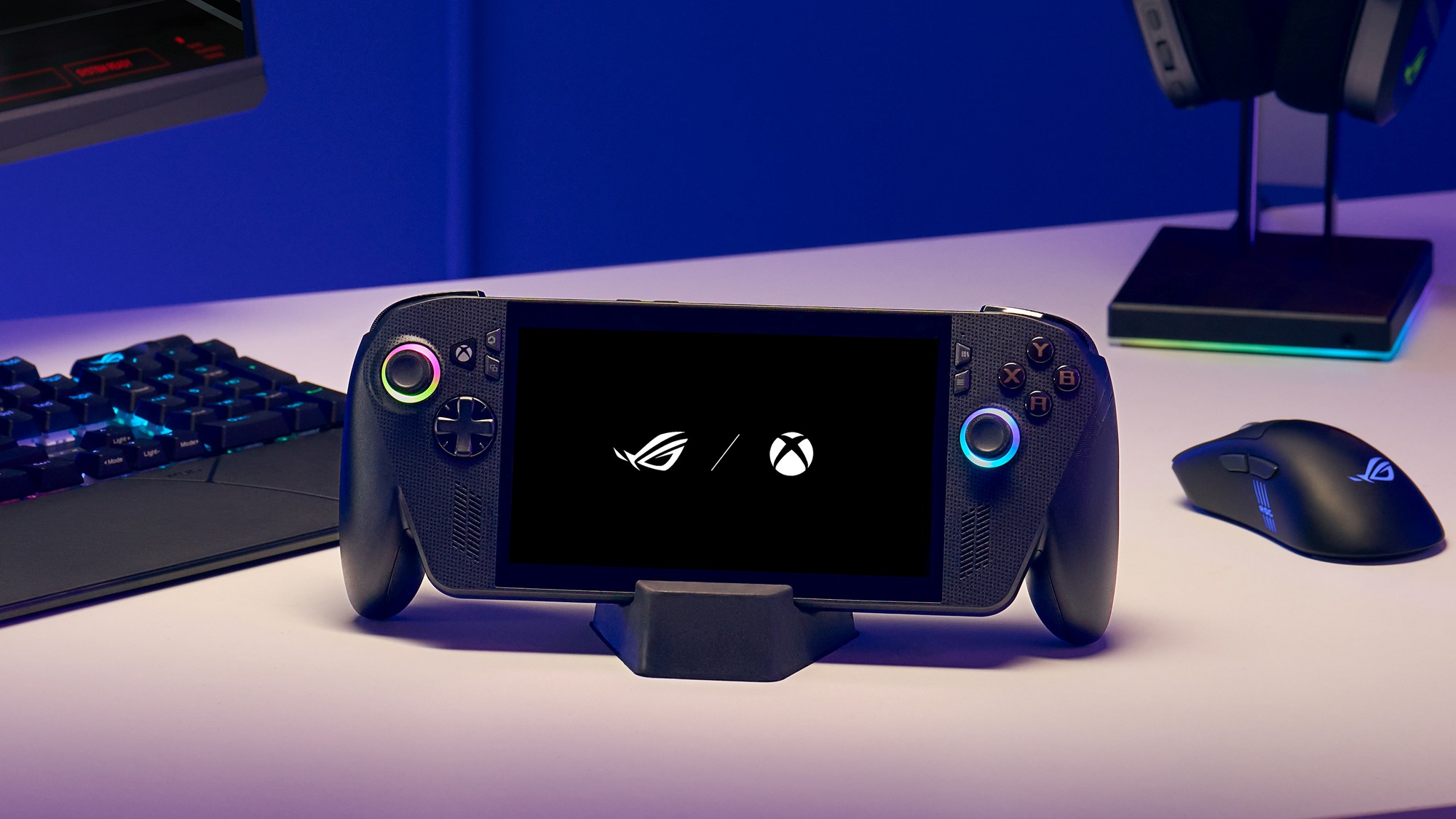
The 7-inch FHD (1920×1080) IPS panel refreshes at 120Hz and, critically, uses PWM-free backlighting. If you have ever felt eye fatigue after an hour with certain OLED handhelds, the ROG Ally 2’s flicker-free display is a genuine relief. The anti-glare coating makes outdoor or well-lit room gaming viable without cranking brightness to battery-draining levels.
Ergonomically, Tom’s Guide praised the device’s supreme ergonomics after putting it through thousands of miles of travel testing, giving it a 4 out of 5 stars. The grip angles and button placement have been refined based on feedback from the original Ally, and the addition of a dedicated Xbox button streamlines navigation between Armoury Crate SE and Xbox Full-Screen Experience.
Software Experience: Xbox Partnership Changes Everything
Perhaps the most underrated upgrade is not hardware at all. The ROG Xbox Ally X ships with a deeply optimized Windows 11 installation and Xbox Full-Screen Experience—Microsoft’s console-like interface that transforms the Windows desktop into a controller-friendly environment. Combined with Armoury Crate SE for performance tuning, you get a software stack that finally makes Windows gaming on a handheld feel intentional rather than awkward.
Game Pass integration is seamless, and the Xbox button provides instant access to your library, friends list, and notifications. For anyone who has wrestled with Steam’s Big Picture mode on a non-Steam handheld, this is a meaningful improvement in daily usability.
ASUS ROG Ally 2 vs. Steam Deck OLED: How Do They Compare?
The inevitable comparison is with Valve’s Steam Deck OLED. Here is where it gets interesting:
- Performance: The ROG Ally 2 wins decisively. The Z2 Extreme delivers roughly 2-3x the GPU performance of the Steam Deck’s custom AMD APU. AAA games that require aggressive settings reductions on the Deck run at Medium or High on the Ally 2.
- Display: The Steam Deck OLED has a superior HDR-capable OLED panel with deeper blacks and richer colors. The Ally 2’s IPS panel is excellent but cannot match OLED contrast ratios. However, the PWM-free backlighting and anti-glare coating give the Ally 2 advantages in comfort and outdoor visibility.
- Battery: The Ally 2’s 80Wh battery versus the Steam Deck OLED’s 50Wh is a substantial difference, especially given the Ally 2’s efficient battery performance with minimal frame rate drops.
- Price: The Steam Deck OLED starts at $549, while the ROG Ally 2 (Ally X) is $999. That is nearly double the price—a gap that raw performance alone may not justify for casual gamers.
- Ecosystem: Steam Deck runs SteamOS (Linux-based), limiting you primarily to Steam’s library. The Ally 2 runs Windows 11, giving access to Steam, Epic, GOG, Xbox Game Pass, and virtually every PC game launcher.
The bottom line: if you want the best possible handheld gaming performance and full Windows compatibility, the ROG Ally 2 is the clear winner. If you want great value and do not mind Linux-based gaming with a gorgeous OLED screen, the Steam Deck OLED remains an incredible device at nearly half the price.
The $999 Question: Is the ROG Ally 2 Worth It?
Let us address the elephant in the room. At $999, the ROG Xbox Ally X is the most expensive mainstream handheld gaming device on the market. That price puts it in direct competition with budget gaming laptops that offer larger screens, full keyboards, and potentially similar gaming performance.
But that framing misses the point. The ROG Ally 2 is not trying to replace your gaming laptop—it is trying to give you AAA gaming in a form factor that fits in a backpack, plays during commutes, and travels without a bag full of peripherals. If portability is a genuine priority in your gaming life, the Z2 Extreme’s performance-per-watt and the 80Wh battery’s endurance make a compelling argument that no laptop in this price range can match on pure convenience.
For users upgrading from the original ROG Ally, the 20-30% performance uplift, doubled battery capacity, 50% more RAM, and Thunderbolt 4 connectivity represent a substantial generational leap. For first-time handheld buyers, the value proposition depends entirely on how much you value gaming portability—if you will actually use it on the go, $999 is easier to justify than if it will mostly sit on your nightstand.
Final Verdict: The New Handheld Gaming Benchmark
The ASUS ROG Ally 2 (ROG Xbox Ally X) is not just an upgrade—it is a statement. With the Ryzen Z2 Extreme delivering desktop-class gaming in a handheld form factor, 24GB of fast memory, an 80Wh battery that barely flinches when unplugged, and a software experience that finally makes Windows gaming portable feel polished, ASUS has set a new benchmark for what handheld gaming PCs can achieve in 2025.
The lack of OLED and the $999 price tag are the only meaningful criticisms, and neither undermines the core achievement here: Cyberpunk 2077 at 60 FPS in your hands, with battery life that lasts through a cross-country flight. If that is what you have been waiting for, the wait is over.
Get weekly AI, music, and tech trends delivered to your inbox.