Snapdragon X2 Plus at CES 2026: 80 TOPS AI, 35% Faster CPU, and $800 ARM Laptops Are Here
January 7, 2026
Claude Opus 4.5 Update: Auto-Compaction, Effort Parameter, and Microsoft 365 Integration Explained
January 8, 2026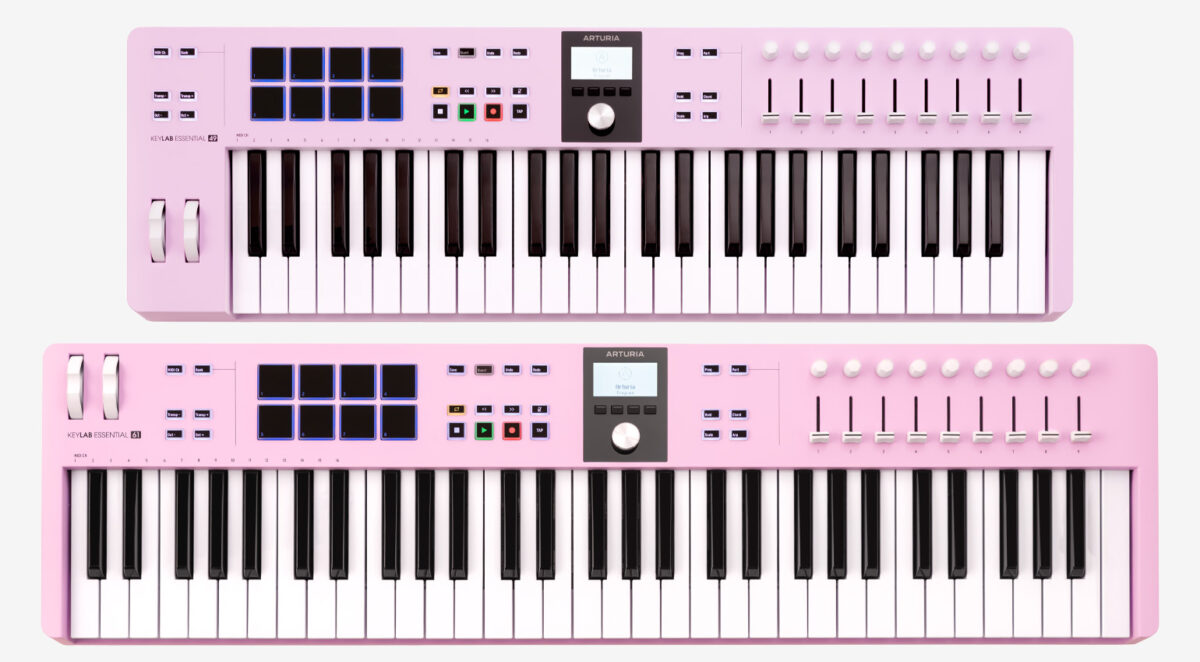
A stage keyboard with 11 synthesis engines that weighs less than a laptop bag — for $699. That single spec line from the Arturia NAMM 2026 lineup tells you everything about where the company is headed. With the show opening on January 20th, here’s a comprehensive look at the four major products Arturia is bringing to Anaheim this year.
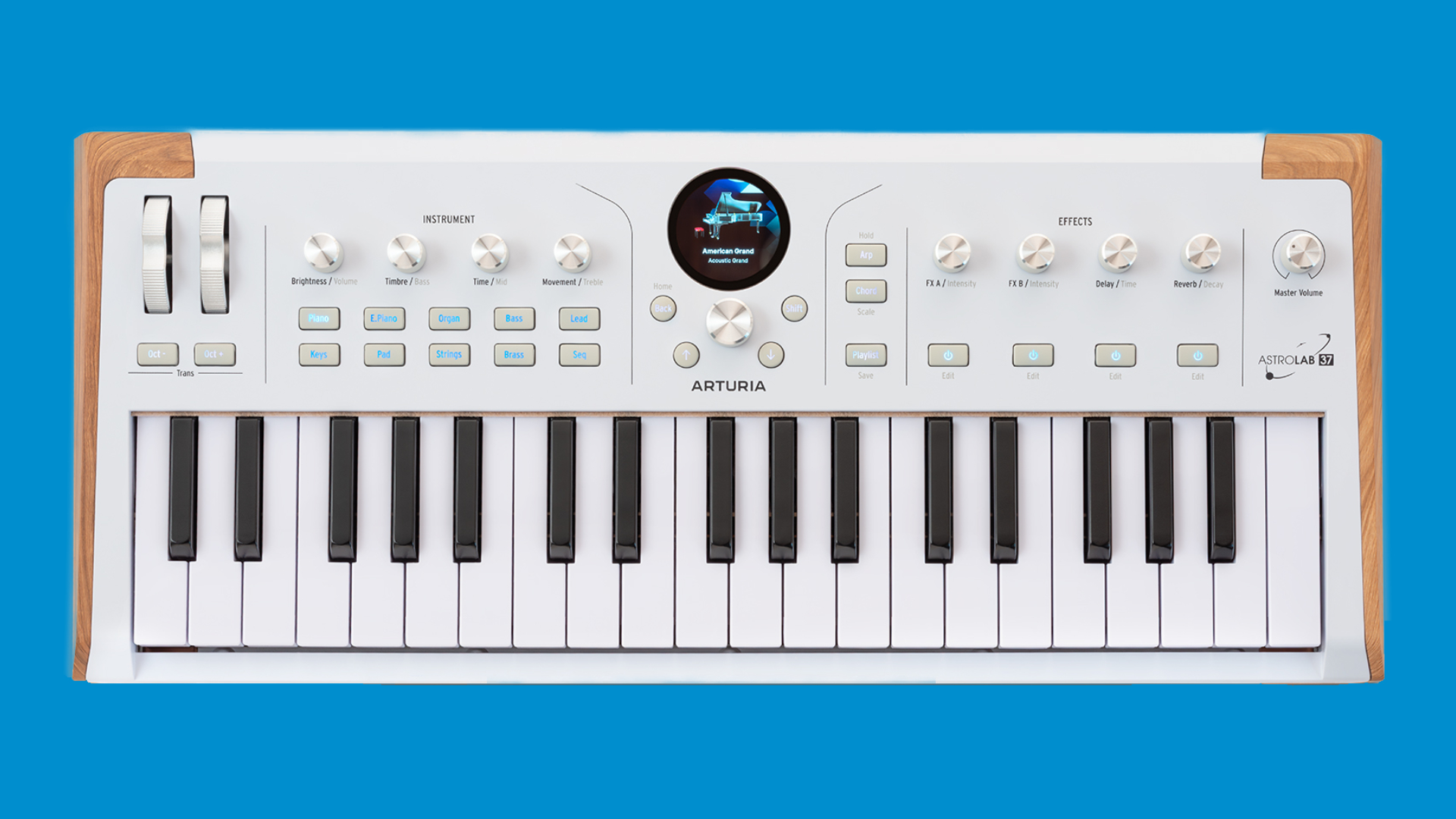
AstroLab 37: The Arturia NAMM 2026 Showstopper
Released in November 2025, the AstroLab 37 compresses the core DNA of Arturia’s 61-key and 88-key AstroLab models into a 37 slim-key format. NAMM 2026 will be the first major trade show where attendees can get hands-on time with this instrument, and the anticipation is warranted.
Let’s break down the numbers that matter.
- Price: $699 — roughly half the cost of the 61-key model ($1,299)
- Weight: 1.95 kg (4.3 lbs) — genuinely backpack-portable
- Sound Engines: 11 total, including granular, wavetable, FM, and physical modeling
- Instruments: 44 instruments drawn from V Collection and Pigments
- Presets: 1,800 factory presets, expandable up to 10,000
- Effects: Built-in Delay and Reverb
- Performance: Chord mode, Scale mode, Arpeggiator
What makes the AstroLab 37 genuinely compelling isn’t any single spec — it’s the combination. Eleven synthesis engines in a 1.95 kg chassis means you can carry granular textures, physical modeling tones, FM basses, and classic analog emulations in one unit that fits in a messenger bag. For gigging musicians who are tired of hauling 20+ kg Nord Stages or Yamaha Montages, this is a paradigm shift in portability versus capability.
The $699 price point is equally strategic. The original AstroLab launched at $1,299 for the 61-key version, targeting professional stage performers. At $699 with 37 keys, Arturia opens the door to home studio producers, bedroom musicians, and anyone who wants a premium sound engine platform without the premium real estate requirements. It’s the same sound architecture — just in a smaller, more accessible package.
Context matters here. A Sweetwater listing confirms the full spec sheet, and what stands out is the expandability — 1,800 factory presets that can grow to 10,000 via Arturia’s Sound Store ecosystem. That’s not just a keyboard; it’s a platform that grows with you. The built-in Delay and Reverb effects also mean you can go from USB power to a PA system without needing a pedalboard for basic spatial processing. For buskers, small venue performers, and worship musicians, the AstroLab 37 could genuinely replace an entire rig.
KeyLab Essential mk3: Rose Quartz and Aquamarine Join the Party
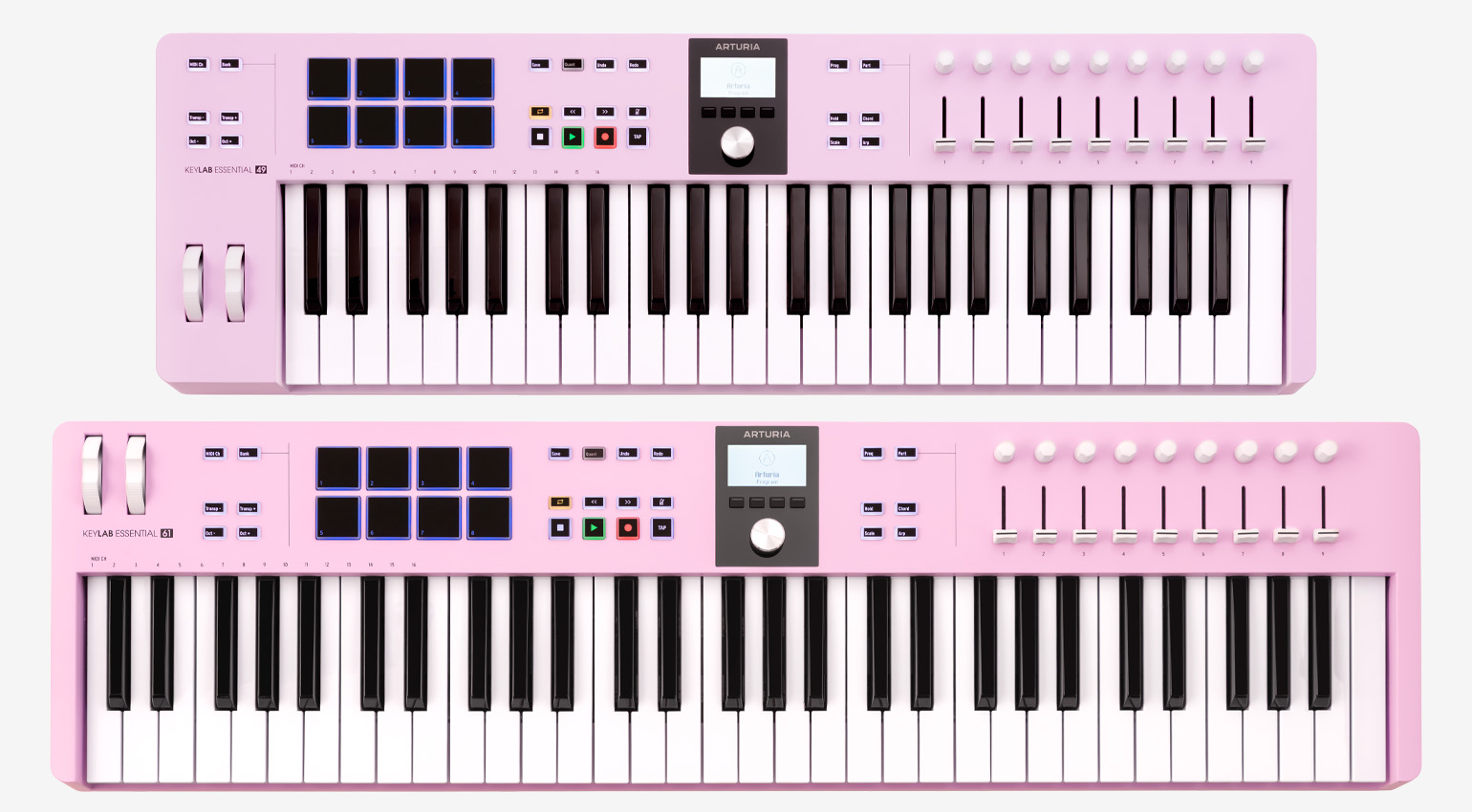
Arturia’s best-selling MIDI controller, the KeyLab Essential mk3, is getting two new color options debuting at NAMM 2026. Rose Quartz (a soft pink) and Aquamarine (baby blue) join the existing black and white lineup, adding a splash of personality to what’s already one of the strongest value propositions in the MIDI controller market.
Pricing remains unchanged: $191 for the 49-key model and $234 for the 61-key version. The feature set is identical across all colors.
- 9 faders + 9 knobs + 8 RGB pads
- DAW transport controls
- Arpeggiator + Chord/Scale modes
- 2.5-inch display
- Analog Lab software included
You might dismiss this as a cosmetic update, but studio aesthetics have become a real purchasing factor — especially among content creators who stream their production sessions or post studio photos on social media. Native Instruments saw significant demand when they released white editions of Komplete Kontrol, and Teenage Engineering built an entire brand identity around color and industrial design. Arturia’s pastel palette is a smart play for the same audience.
At $191 for a 49-key controller with this feature density — faders, knobs, pads, display, and bundled software — the KeyLab Essential mk3 remains one of the best entry points into serious music production, regardless of color choice. The included Analog Lab software gives you immediate access to thousands of curated presets from Arturia’s engine, meaning a new producer can be making music within minutes of unboxing. Compare that to the Akai MPK Mini ($99, limited controls) or the Novation Launchkey ($169, no display) and the value becomes even clearer.
V Collection 11: 45 Instruments, 7 Brand New — Arturia’s Software Magnum Opus
V Collection 11 represents the pinnacle of Arturia’s software instrument lineup, bundling 45 virtual instruments into a single package. This version adds seven completely new instruments to the roster.
The 7 New Instruments
- Pure LoFi: A dedicated lo-fi sound processor for the tape-saturated aesthetic
- Jup-8000 V: Roland JP-8000-inspired supersaw synthesizer
- SEM V: A fresh take on the Oberheim SEM emulation
- MiniBrute V: Arturia’s own hardware synth, reimagined in software
- Synthx V: Elka Synthex emulation
- Augmented Mallets: Hybrid synth built on percussive instrument modeling
- Augmented Yangtze: Eastern instrument-inspired soundscapes
Two additions stand out for very different reasons. Jup-8000 V targets the massive demand for supersaw-style synthesis — the sound that defined 90s and 2000s trance and EDM. With the current synthwave and Y2K revival in electronic music, this instrument arrives at exactly the right cultural moment. MiniBrute V, meanwhile, marks the first time Arturia has turned one of its own hardware synthesizers into a plugin. The original MiniBrute was a raw, aggressive analog mono synth — translating that character into software while maintaining Arturia’s modeling accuracy will be the real test.
The introduction of a V Collection Intro tier is also strategically significant. Previously, V Collection was an all-or-nothing purchase — you either bought the full bundle or individual instruments. The Intro tier creates a middle ground for producers who want more than single plugins but aren’t ready for the full collection. This positions Arturia against subscription models from Splice and Plugin Alliance, offering a more traditional ownership path at multiple price points.
The Augmented series additions — Mallets and Yangtze — are also worth mentioning. These hybrid instruments combine sampled acoustic sources with synthesis processing, creating sounds that sit between organic and electronic. Augmented Mallets uses vibraphone, marimba, and gamelan samples as raw material for granular and spectral processing. Augmented Yangtze explores guzheng, erhu, and other East Asian instruments through the same hybrid lens. For film composers and ambient producers, these could be invaluable texture generators that don’t sound like every other preset library.
Pigments 7: Audio-Reactive Synthesis Enters the Chat
Arturia’s flagship software synthesizer continues its rapid evolution. Pigments 6, released in January 2025, added physical modeling and a vocoder. Pigments 7 pushes further into territory that few competitors have explored.
- Audio-Reactive Play Page: An interactive performance interface that responds to external audio input in real time
- Rage Filter: An aggressive distortion filter for heavier sound design
- Corroder FX: Sound degradation and destruction effects
- Ripple/Reverb Filters: Spatial filtering that blurs the line between filter and effect
- 150 new factory presets
The audio-reactive Play Page deserves particular attention. Imagine routing a drum machine or vocal mic into Pigments and having synth parameters respond dynamically — filter movement tracking the kick drum’s envelope, oscillator detune shifting with vocal pitch, reverb depth responding to input dynamics. This eliminates the need for manual MIDI mapping or complex automation, creating organic, evolving textures that respond to the musical context in real time.
Pigments already supports granular, wavetable, FM, additive, and physical modeling synthesis. Adding audio-reactive capabilities on top of that engine diversity creates clear separation from competitors like Native Instruments Massive X, Xfer Serum, and even Vital. While those synths excel at static sound design, Pigments 7 is pushing toward a more performance-oriented, interactive paradigm.
The new Rage filter and Corroder FX also signal a shift in Pigments’ sonic identity. Earlier versions leaned heavily toward lush pads, evolving textures, and cinematic soundscapes. With these additions, Arturia is clearly courting the industrial, bass music, and experimental electronic crowds. The Ripple and Reverb filters blur the boundary between filtering and spatial effects — running audio through a reverb algorithm as a filter stage rather than a send effect creates entirely different tonal results than traditional low-pass or high-pass filtering. Combined with 150 new presets designed around these features, Pigments 7 owners get a substantial creative expansion at no extra cost.
The Wild Card: What Else Could Arturia Reveal at NAMM 2026?
Beyond the confirmed products, industry rumors suggest Arturia may unveil a new software-integrated hardware synthesizer at the show. Their current hardware flagship is the PolyBrute 12 — a $3,499, 12-voice analog polysynth. Given that the AstroLab series pioneered a new category of software-engine-powered hardware, an expansion in that direction seems like a logical next step.
Looking at Arturia’s 2025-2026 trajectory, a clear strategy emerges. On the hardware side, the AstroLab line is expanding across price points and key counts. On the software side, V Collection and Pigments continue to grow in scope and capability. The AstroLab platform bridges both worlds — running Arturia’s software engines in dedicated hardware. The KeyLab mk3 color expansion widens the entry point into this ecosystem. It’s a cohesive playbook that spans from the $191 KeyLab Essential to the $3,499 PolyBrute 12.
NAMM 2026 runs January 20-24 in Anaheim, California. Whether you’re planning to attend in person or following along online, Arturia’s booth should be one of the first stops. Between the AstroLab 37’s real-world playability, the KeyLab mk3’s new colorways, V Collection 11’s expanded instrument library, and Pigments 7’s audio-reactive capabilities, there’s something for every type of producer and performer. If you’re considering upgrading your studio setup or expanding your plugin toolkit this year, Arturia’s NAMM lineup deserves serious attention.
Need help choosing the right studio gear or optimizing your plugin workflow? Greit Studios offers professional consultation tailored to your production needs.
Get weekly AI, music, and tech trends delivered to your inbox.