Ableton Live 12.2: Bounce to Track, Redesigned Auto Filter, and Expressive Chords — Everything Coming June 11
June 2, 2025
WWDC 2025 iOS 19 AI Features Preview — On-Device Image Understanding and Smart Replies Are Coming
June 3, 2025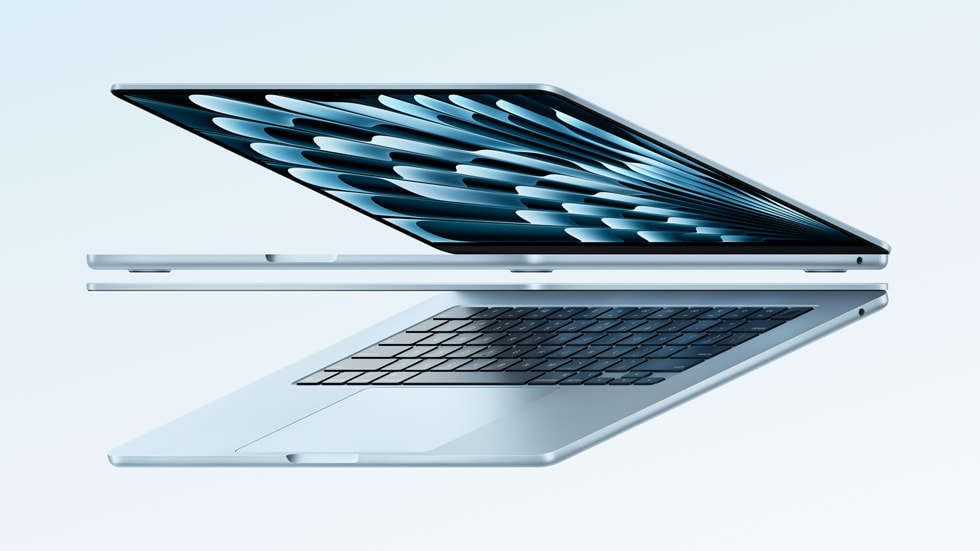
One week from today, Apple takes the stage at WWDC 2025 — and for the first time in years, nobody expects a single piece of new WWDC 2025 hardware to be unveiled. That’s not because Apple has slowed down. It’s because they’ve already shipped everything.
Between the MacBook Air M4 and the Mac Studio M4 Max dropping in March, plus last year’s iPad Pro M4 refresh, Apple’s hardware story for the first half of 2025 is already written. The June 9 keynote? That’s going to be all about iOS 26, macOS Tahoe, and the design overhaul everyone’s calling “Liquid Glass.” Let’s break down every piece of the puzzle.
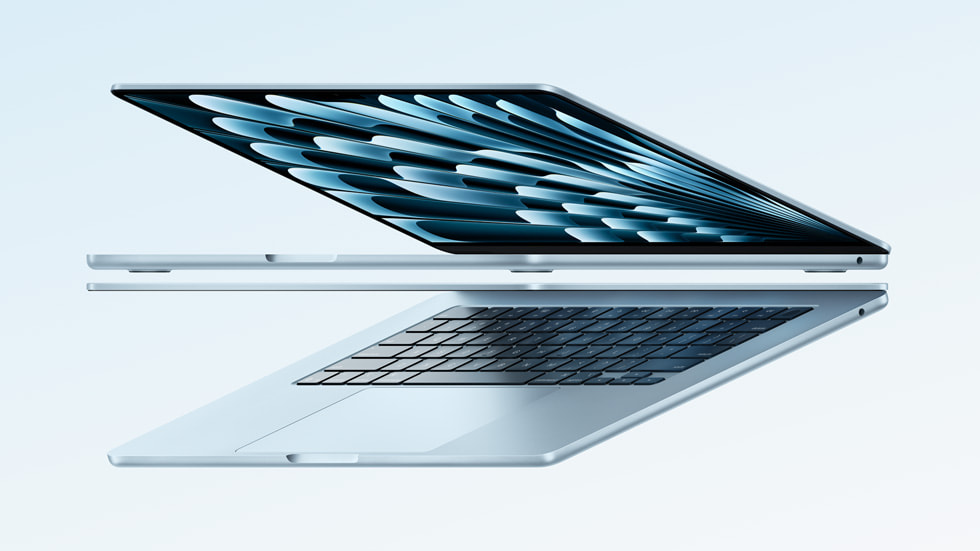
MacBook Air M4: The $999 Laptop That Shouldn’t Be This Good
Apple officially launched the new MacBook Air M4 on March 5, 2025, and it immediately reset expectations for what a sub-$1,000 laptop can deliver. Here’s the full breakdown of what you get at that price point:
- M4 chip: 10-core CPU, 8-core GPU, 16-core Neural Engine
- 16GB unified memory — standard across all configurations, up from 8GB on previous generations
- 18-hour battery life — Apple’s longest ever in the Air lineup
- Sky Blue color option — joining Midnight, Starlight, and Space Gray
- 12MP Center Stage camera with automatic framing
- Two Thunderbolt 4 ports and MagSafe charging
- Starting price: $999 for the 13-inch model
The real story here isn’t any single spec — it’s the accumulation. Doubling the base RAM to 16GB while keeping the starting price at $999 is aggressive positioning against Windows ultrabooks that still ship with 8GB at similar price points. The M4 chip’s 10-core CPU delivers roughly 25-30% better multi-threaded performance compared to the M3, and the Neural Engine improvements are particularly relevant as Apple pushes on-device AI features with Apple Intelligence.
The Sky Blue color option is a small but telling detail. Apple’s laptop palette has been conservative for years — silver, gray, gold variations. Adding an actual color signals confidence that the Air is no longer the “budget Mac” but a product that stands on its own identity. It’s the kind of move you make when you know the internals are strong enough that the exterior can afford to be playful.
For context, this is now the laptop I’d recommend to almost anyone who asks. Developers running Docker containers, designers working in Figma, students juggling dozens of browser tabs — the 16GB base configuration handles all of it without breaking a sweat. The 18-hour battery means you can genuinely leave the charger at home for a full workday. And the 12MP Center Stage camera finally brings the Air’s video calling quality up to par with the Pro lineup — something that mattered far less before the pandemic permanently shifted how we work.
Mac Studio M4 Max and M3 Ultra: The Most Powerful Mac Ever Built
The same March 5 event brought the updated Mac Studio, and Apple’s claim that it’s “the most powerful Mac ever” isn’t marketing fluff — the numbers back it up. The lineup splits into two tiers:
Mac Studio with M4 Max ($1,999)
- 16-core CPU, 40-core GPU
- Up to 128GB unified memory
- Thunderbolt 5 on all ports — a first for any Mac
- Hardware-accelerated ray tracing and mesh shading
Mac Studio with M3 Ultra ($3,999)
- 32-core CPU, 80-core GPU
- Up to 512GB unified memory — yes, half a terabyte of RAM
- Thunderbolt 5 connectivity throughout
- 800GB/s memory bandwidth
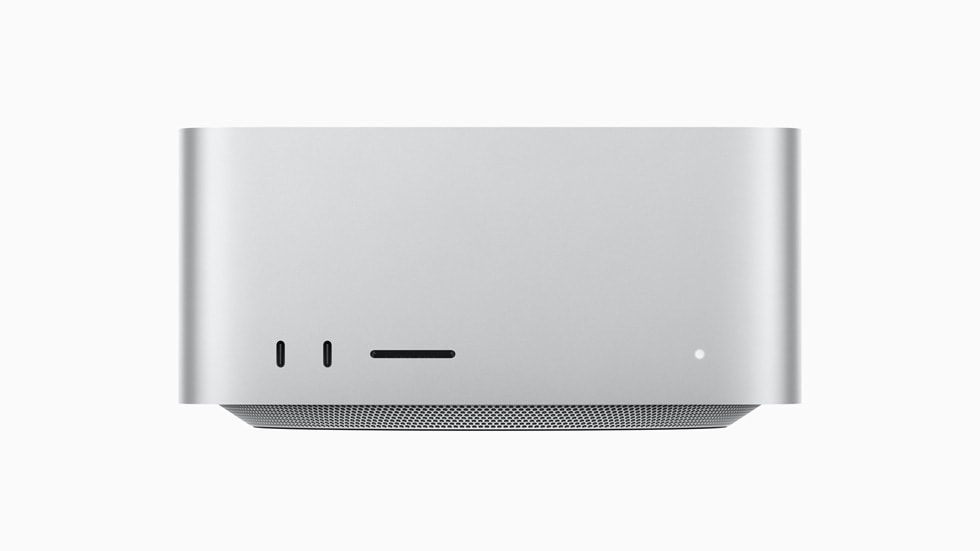
Thunderbolt 5 across all configurations is the standout upgrade. With up to 120Gbps bandwidth, it unlocks external storage workflows that were previously bottlenecked by Thunderbolt 4’s 40Gbps ceiling. For video editors working with 8K ProRes RAW footage or machine learning engineers training models on large datasets, this is a tangible, day-one improvement. Connect a Thunderbolt 5 SSD array and you’re looking at read speeds that can keep up with the M4 Max’s internal storage — something that was simply impossible with TB4’s 40Gbps limit.
The M3 Ultra configuration with 512GB of unified memory is particularly interesting for AI and ML workloads. Running large language models locally — something that typically requires expensive GPU clusters — becomes feasible on a desktop that fits on your desk. Studios running inference on models with 70B+ parameters are already looking at this as a cost-effective alternative to cloud compute. At $3,999 for the base M3 Ultra config, you’re paying a fraction of what equivalent GPU server rentals would cost over a year of continuous use.
For creative professionals, the Mac Studio’s compact form factor remains its secret weapon. This is a machine that can render 8K timelines in real time, compile massive codebases in seconds, and run multiple virtual machines simultaneously — all from a box that’s roughly the size of a stack of hardcover books. The thermal design Apple engineered for this chassis continues to impress, keeping fan noise manageable even under sustained workloads that would have desktop towers roaring.
The Elephant in the Room: Mac Pro Still on M2 Ultra
If there’s one piece of WWDC 2025 hardware people are watching for, it’s the Mac Pro. But as MacRumors reports, citing Bloomberg’s Mark Gurman, there are no major new devices ready to ship at WWDC. The Mac Pro remains stuck on the M2 Ultra — a chip that launched in June 2023.
That makes the Mac Pro the lone holdout in Apple’s silicon transition timeline. Every other Mac has been refreshed at least once since the M1 era. The Mac Pro’s position is especially awkward now that the Mac Studio M3 Ultra arguably matches or exceeds it in most workflows, at a fraction of the price. A Mac Pro with M4 Extreme (or whatever Apple calls its next top-tier chip) is likely a second-half-of-2025 or early-2026 story.
Why WWDC 2025 Hardware Was Shipped Before the Keynote
The logic is straightforward. Apple has already refreshed nearly every product line in the first half of 2025:
- MacBook Air M4 — March 2025
- Mac Studio M4 Max / M3 Ultra — March 2025
- iPad Pro M4 — May 2024 (still current-gen)
- iPad Air M3 — refreshed and current
- iPhone 16 lineup — September 2024
- Apple Watch Series 10 / Ultra 2 — September 2024
With the hardware pipeline this full, WWDC returns to its roots: a developer conference focused on software. According to Macworld, the keynote is expected to center on iOS 26 and macOS Tahoe, featuring a sweeping visual redesign that industry insiders are calling “Liquid Glass” — a translucent, depth-aware interface language that could be the biggest aesthetic shift since iOS 7’s flat design revolution in 2013.
Apple is also expected to unify version numbering across all its platforms, signaling a tighter integration between iOS, macOS, watchOS, and visionOS. This is less about cosmetics and more about preparing the ecosystem for deeper cross-platform AI features under the Apple Intelligence umbrella.
The Liquid Glass design language, if the leaks are accurate, represents Apple’s attempt to add visual depth back into its interfaces without returning to the skeuomorphism of the pre-iOS 7 era. Think translucent layers that respond to device orientation, frosted glass effects with real-time lighting adaptation, and a sense of physical materiality that flat design deliberately stripped away. Whether developers and users embrace this shift or resist it will likely define the discourse around Apple design for the next several years.
What About AirTag 2, HomePad, and M5 Macs?
A few products are still in the pipeline but won’t make it to the WWDC stage:
- AirTag 2: The only rumored hardware that might appear around WWDC, though a standalone announcement is more likely. Expected upgrades include Ultra Wideband improvements and longer battery life.
- HomePad: Apple’s rumored smart home hub with a display — essentially a wall-mounted iPad for HomeKit control. Originally targeted for mid-2025, it’s now reportedly delayed to 2026.
- M5-based Macs: Expected in the second half of 2025, likely starting with MacBook Pro updates. The M5 is rumored to move to TSMC’s 3nm second-generation process, bringing another leap in power efficiency.
- Apple Vision Pro 2: Not expected before 2026 at the earliest.
The Bottom Line: Apple’s Strategic Patience
Apple’s decision to front-load hardware releases in Q1 2025 and reserve WWDC entirely for software tells us something about their priorities. The company is betting that the next competitive battleground isn’t chip speeds or port counts — it’s the software experience built on top of that hardware. iOS 26’s Liquid Glass redesign, expanded Apple Intelligence features, and tighter cross-device integration are where Apple sees the real differentiation.
For consumers, the takeaway is simple: if you need a Mac right now, the MacBook Air M4 and Mac Studio are excellent buys with no immediate replacements on the horizon. The Air M4 in particular represents one of the strongest value propositions Apple has ever offered at the $999 tier. If you’re holding out for the Mac Pro refresh or M5-based machines, patience will be required — those are second-half stories at the earliest, and early M5 models may not even reach all product lines until 2026.
WWDC 2025 kicks off June 9. Whatever Apple shows on the software side, the hardware foundation is already firmly in place. The question isn’t what new devices they’ll announce — it’s what they’ll build on top of the silicon that’s already in your hands.
Get weekly AI, music, and tech trends delivered to your inbox.