Summer NAMM 2025: 7 Best Budget Gear Announcements Under $300
June 4, 2025
VisionOS 3 AI Features: 7 Spatial Intelligence Upgrades Expected at WWDC 2025
June 5, 2025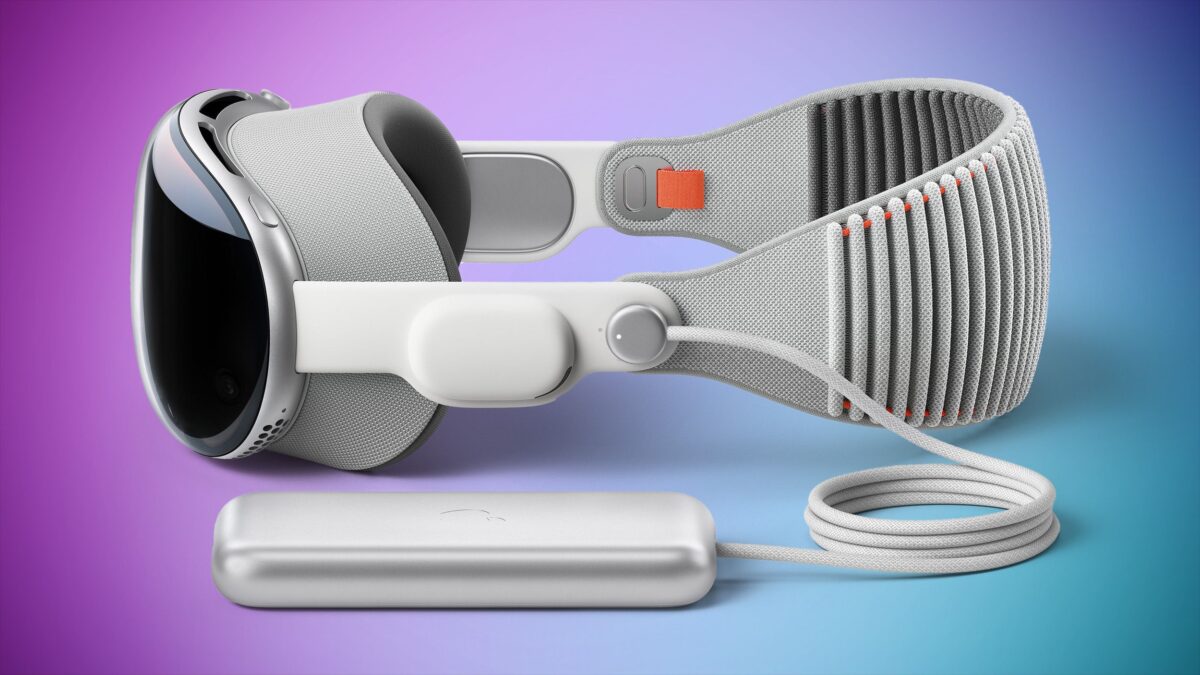
$3,499 for a headset that makes your neck sore after 45 minutes — that was the deal Apple offered us in February 2024. Fifteen months later, the Apple Vision Pro 2 rumors paint a radically different picture: 40% lighter, potentially half the price, and powered by a chip that didn’t exist when the original launched. With WWDC 2025 just days away, here’s a complete breakdown of everything credible analysts are saying about the next generation of Apple’s spatial computing platform.
Apple Vision Pro 2 Rumors: A Three-Tier Roadmap, Not Just One Device
The most important thing to understand about the Apple Vision Pro 2 rumors is that Apple isn’t building just one successor — they’re building three distinct products on a staggered timeline. Both Mark Gurman at Bloomberg and analyst Ming-Chi Kuo have independently confirmed this multi-tier approach, and their timelines align remarkably well.
First, there’s the M5 chip refresh of the current Vision Pro form factor, expected in late 2025. This isn’t a redesign — it’s a spec bump. Think of it as the Vision Pro equivalent of going from iPhone 15 to iPhone 15S. Second, there’s the Vision Air — a lighter, cheaper model targeting the mass market, expected in 2026. Third, the true Vision Pro 2 with a fundamentally new design won’t arrive until 2027 at the earliest.
This three-tier strategy reveals Apple’s real challenge: the original Vision Pro is too expensive, too heavy, and too niche. Each tier attacks a different problem.
The M5 Chip Refresh: What’s Actually Coming in Late 2025
According to supply chain reports from April 2025, the M5-powered Vision Pro has already entered mass production. This is the device most likely to appear first, and here’s what the Apple Vision Pro 2 rumors tell us about its specifications.
The M5 chip brings meaningful upgrades across the board: more CPU cores for multitasking in spatial environments, an improved GPU delivering roughly 10% more pixel rendering capability, and an enhanced Neural Engine that could dramatically improve hand tracking and eye tracking precision. RAM configurations are expected in 16GB and 24GB variants, up from the current 16GB unified memory.
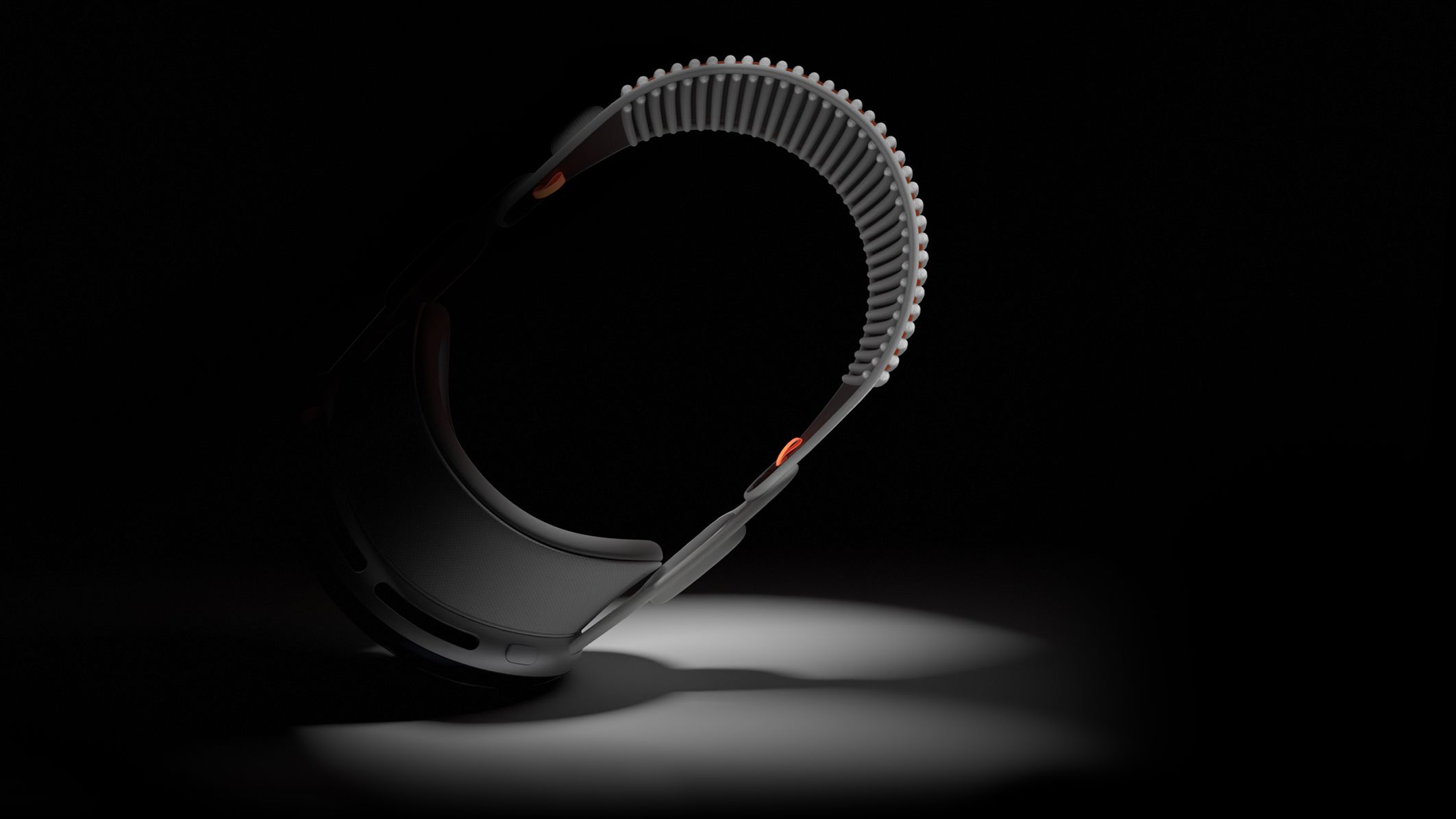
But here’s the catch — this refresh keeps the same physical design. Same weight (approximately 1.375 lbs without the headband), same form factor, same general appearance. The one notable physical change? A new Dual Knit Band headstrap designed to address the comfort complaints that have plagued the original since launch. Anyone who’s worn the current Solo Knit Band for an extended session knows exactly why this matters.
Price-wise, this refresh is expected to be slightly cheaper than the current $3,499 — analysts suggest somewhere in the $2,999–$3,299 range. A meaningful reduction, but still firmly in the premium tier.
Vision Air: The Game-Changer at $1,750
If the M5 refresh is evolution, the Vision Air is revolution. Supply chain reports from AppleInsider indicate Apple is targeting a 40% weight reduction — bringing the headset from 1.375 lbs down to under 1 lb. That’s the difference between “I can use this for 30 minutes” and “I can use this for hours.”
The price target is equally ambitious. At approximately $1,750, the Vision Air would cost exactly half of the current Vision Pro. That’s still expensive by consumer electronics standards, but it puts the device in the same price bracket as a high-end MacBook Pro — a price point where Apple has historically found millions of willing buyers.
To hit these targets, Apple will likely make trade-offs. The micro-OLED displays may shift to a slightly lower resolution panel. The external EyeSight display — that outward-facing screen showing your eyes to people around you — could be simplified or removed entirely. Processing power may come from an M4 or M3 variant rather than the latest M5.
The timeline for Vision Air is less certain. Mark Gurman initially reported development was “ramping up” in early 2025, and supply chain adjustments suggest a late 2025 or early 2026 launch window. If Apple announces it at WWDC 2025, expect a ship date in Q1 2026.
The Wildcard: A Mac-Wired Enterprise Model
One of the more surprising Apple Vision Pro 2 rumors involves a Mac-wired version specifically designed for enterprise use. Instead of running as a standalone device, this variant would connect directly to a Mac via cable, offloading all processing to the computer. The result? Ultra-low latency, no battery pack, lighter weight on your head, and potentially unlimited processing power.
This makes enormous sense for professional workflows — 3D modeling, architectural visualization, medical imaging, and film production. These are environments where users are already tethered to workstations and would gladly trade portability for performance. It’s also a tacit admission that the current Vision Pro’s onboard processing isn’t sufficient for the most demanding professional applications.
The Competitive Pressure Apple Can’t Ignore
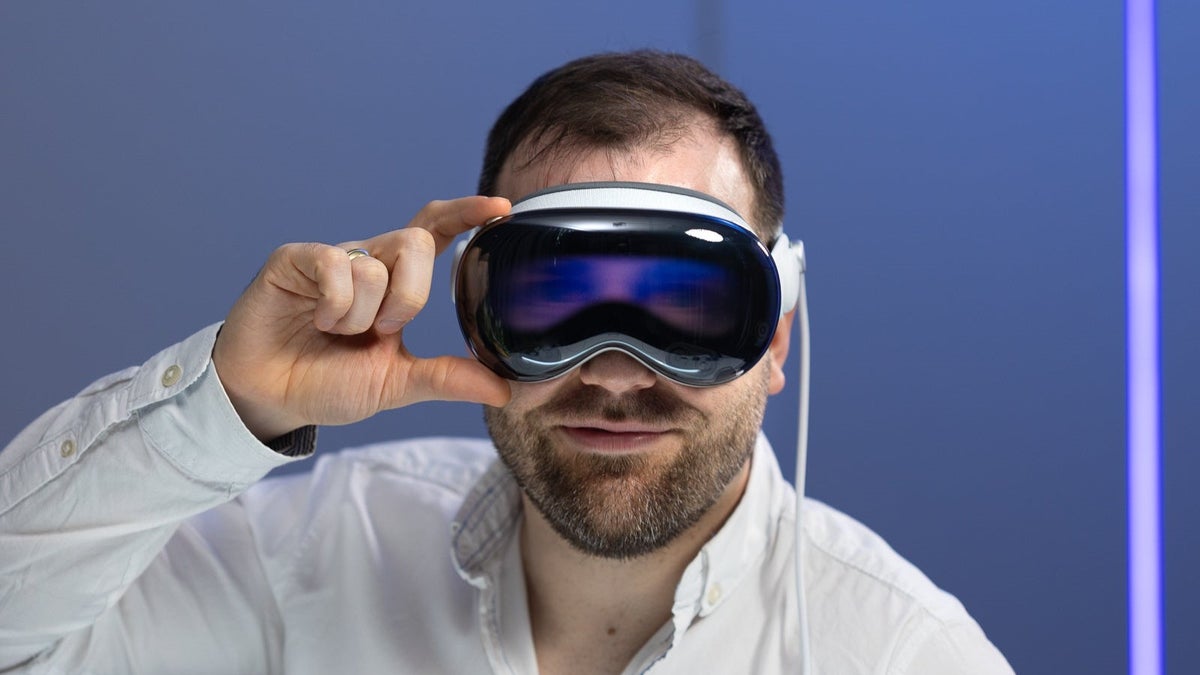
Apple isn’t developing these products in a vacuum. The mixed reality market has shifted dramatically since the Vision Pro’s February 2024 launch. Meta’s Quest 3 continues to dominate the affordable VR/MR market at $499, offering passthrough mixed reality that — while technically inferior to Apple’s — satisfies the needs of millions of users at one-seventh the price. The AI-equipped Ray-Ban Meta smart glasses have emerged as an unexpected dark horse, proving that consumers will adopt spatial computing if it’s lightweight, affordable, and socially acceptable to wear in public.
Samsung’s entry with the Galaxy XR running Android XR adds another dimension to the competition. Google’s backing of Android XR means developers now have a cross-platform spatial computing framework that could attract the same ecosystem advantages Android brought to smartphones. For Apple, whose entire spatial computing pitch rests on the visionOS app ecosystem, this represents a genuine strategic threat.
The sales data tells a stark story: while the Vision Pro received glowing reviews for its technology, actual adoption has been underwhelming. Reports suggest Apple sold roughly 500,000 units in the first year — a fraction of what Meta moves in a single quarter with Quest devices. The two biggest barriers cited by consumers and reviewers alike? Price and weight. That’s exactly what the Vision Air targets, and it explains why Apple’s three-tier roadmap prioritizes cost reduction and ergonomic improvements over raw technological advancement.
Apple’s spatial computing bet remains a long game. Tim Cook has repeatedly compared it to the early days of the iPhone — a device that was also too expensive and too limited at launch. The iPhone analogy isn’t perfect, though. When the iPhone launched in 2007, it created an entirely new category. The Vision Pro launched into a market where Meta had already sold tens of millions of VR headsets. Apple isn’t defining the category — it’s trying to redefine it at a premium. Whether that strategy holds depends entirely on how quickly Apple can deliver on the promises these Apple Vision Pro 2 rumors suggest.
visionOS at WWDC 2025: The Software Side
Hardware improvements mean nothing without software to match. WWDC 2025, running June 9–13, is expected to reveal visionOS 3 with significant updates to spatial computing capabilities. While specific features haven’t leaked as extensively as the hardware details, expectations include improved multitasking in spatial environments, enhanced developer tools for building immersive apps, deeper Apple Intelligence integration for contextual awareness, and better collaboration features for enterprise users.
Apple Intelligence integration could be particularly transformative for the Vision Pro experience. Imagine spatial environments that adapt to your context — a work setup that automatically arranges your most-used apps when you sit at your desk, or a media environment that adjusts based on what you’re watching. The combination of eye tracking data, hand gesture recognition, and AI-driven context awareness creates possibilities that simply don’t exist on a flat screen.
The developer tools angle is equally critical. The Vision Pro app ecosystem remains thin compared to iOS — there are roughly 2,000 native visionOS apps versus over 1.8 million on the App Store. Apple needs to make it dramatically easier for developers to build spatial experiences, potentially through improved SwiftUI spatial components and better Unity/Unreal Engine integration. Every major platform shift — from desktop to mobile, from mobile to wearables — has been won or lost on developer adoption. If visionOS 3 doesn’t meaningfully lower the barrier to spatial app development, the hardware improvements alone won’t save the platform.
What This Means: A Realistic Timeline
Cutting through the noise of these Apple Vision Pro 2 rumors, here’s the most likely timeline based on the analyst consensus:
- June 2025 (WWDC): visionOS 3 announcement, possible M5 Vision Pro announcement
- Late 2025: M5 Vision Pro refresh ships at $2,999–$3,299
- Late 2025 / Early 2026: Vision Air announced or ships at ~$1,750
- 2027: True Vision Pro 2 with fundamental design overhaul
The pattern is clear — Apple is playing the long game with spatial computing, addressing the most urgent consumer complaints (price and weight) through a new product tier while reserving the true generational leap for 2027. Whether you should wait for the Vision Air or jump on the M5 refresh depends entirely on your budget and patience. But one thing is certain: the spatial computing landscape in 2026 will look nothing like it does today.
Get weekly AI, music, and tech trends delivered to your inbox.