
Best Acoustic Treatment Panels 2025: GIK vs Auralex vs DIY — Which Actually Fixes Your Room?
October 21, 2025
Adobe MAX 2025 Firefly: Image Model 5, AI Video Editor, and Generate Speech — 7 Updates Every Creator Needs to Know
October 22, 2025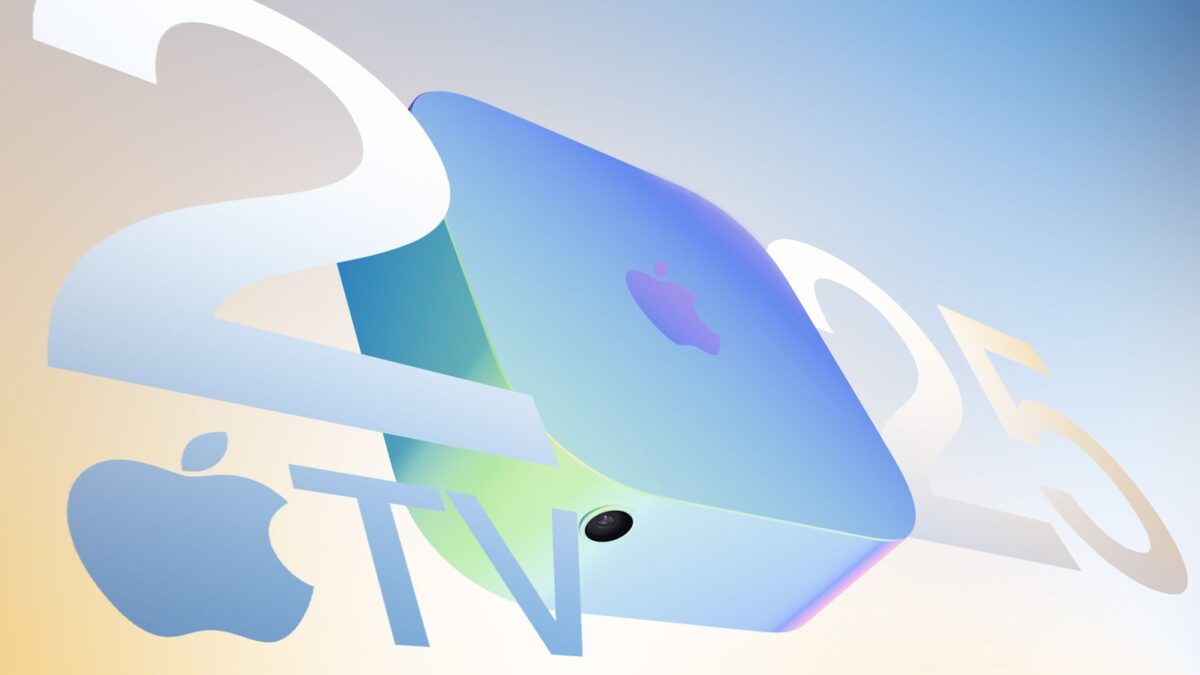
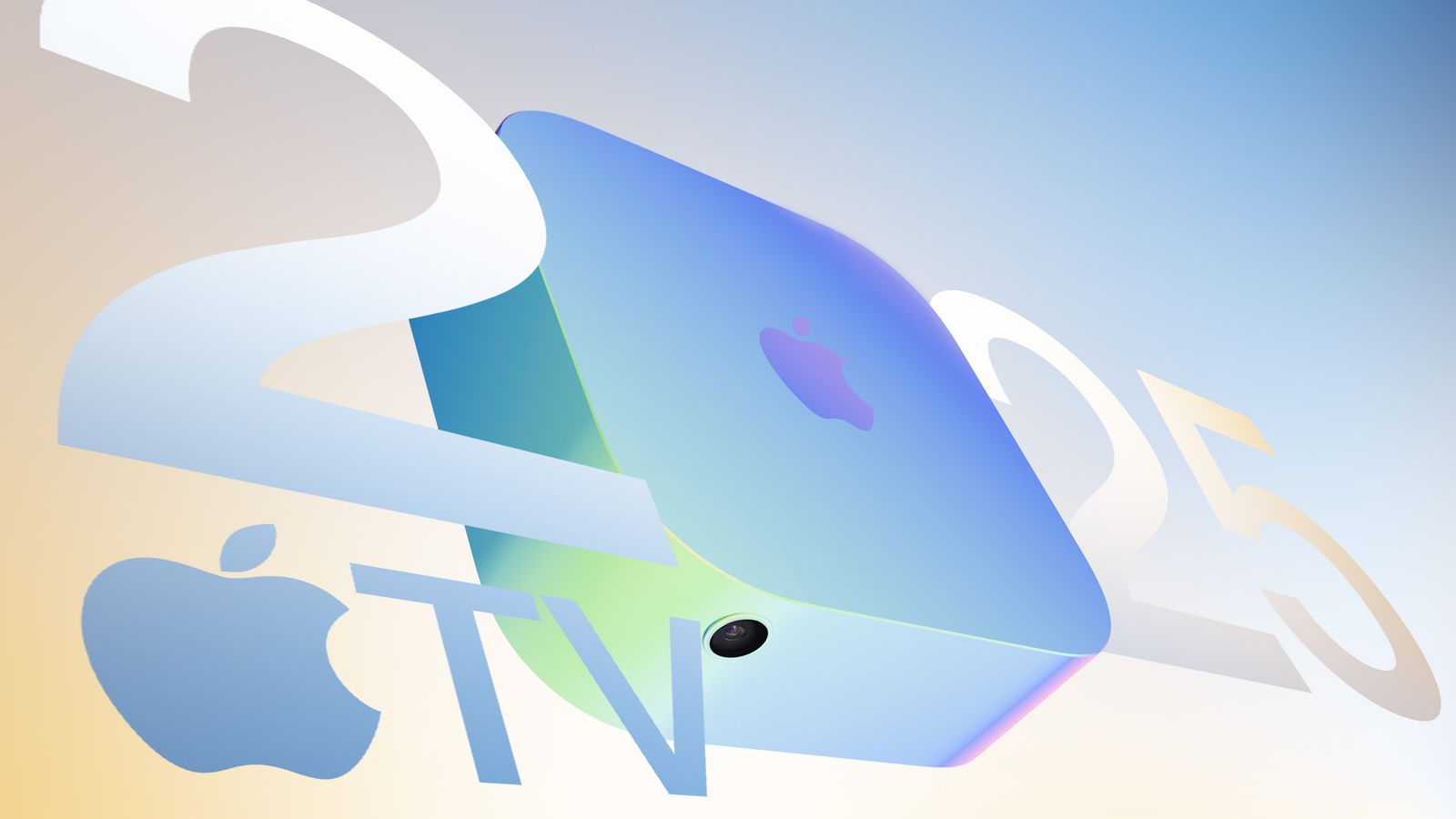
After three years of relative silence, the Apple TV is about to get its most significant overhaul yet. The Apple TV 4K 2025 is rumored to pack the A17 Pro chip — the same silicon that powers the iPhone 15 Pro — bringing on-device AI processing, real-time upscaling, and Apple Intelligence to the living room for the very first time. If even half of these rumors prove true, this update could redefine what a streaming device is capable of. The current Apple TV 4K launched in late 2022, and in the fast-moving world of consumer tech, three years without a major refresh is practically an eternity.
Apple TV 4K 2025: The A17 Pro Advantage
The current Apple TV 4K has been running on the A15 Bionic chip since its late 2022 launch. While perfectly capable for streaming, the A15 lacks the neural processing muscle needed for Apple’s ambitious AI push. The jump to the A17 Pro changes everything, and the performance gap between these two chips is substantial.
According to MacRumors, the A17 Pro brings a 16-core Neural Engine capable of 35 TOPS (trillions of operations per second) — a massive leap that enables on-device AI features previously impossible on the Apple TV platform. We are talking about 30% faster multi-threaded performance, 15% faster single-core speeds, and hardware-accelerated ray tracing that opens the door to console-quality gaming experiences. The chip is built on TSMC’s 3-nanometer process, which means it delivers all this extra performance while maintaining the thermal efficiency required for a fanless device like the Apple TV.
The GPU side of the equation is equally impressive. The A17 Pro features a 6-core GPU with mesh shading and hardware-accelerated ray tracing — capabilities that were introduced with this chip in the iPhone 15 Pro and have already proven their worth in mobile gaming. Bringing this level of graphical horsepower to a dedicated living room device opens up possibilities that developers have been waiting for.
But raw performance numbers only tell part of the story. What matters is what Apple does with all that power, and the answer appears to be: quite a lot.
AI-Powered Upscaling: Every Source Gets the 4K Treatment
Perhaps the most exciting feature rumored for the Apple TV 4K 2025 is real-time AI upscaling. If you have ever streamed older content or dealt with lower-resolution sources on a 4K display, you know the frustration of seeing soft, blurry images stretched across a high-resolution panel. AI upscaling promises to fix that by intelligently reconstructing detail and sharpness from lower-resolution material, using the Neural Engine to analyze each frame and fill in missing information.
The technology works similarly to NVIDIA’s DLSS or AMD’s FSR, but optimized for Apple’s silicon. The Neural Engine analyzes each frame in real time, filling in missing detail and reducing artifacts like banding and compression noise. The result should be noticeably cleaner 4K output from 1080p and even 720p sources — meaning your entire content library gets an instant quality boost. Think about all those classic movies on streaming services that were never mastered in 4K, or live sports broadcasts that still stream at 1080p. With AI upscaling, the Apple TV 4K 2025 could make all of that content look significantly better on your modern display.
For gaming, the implications are even bigger. Imagine playing Fortnite rendered at 1080p and 120 frames per second, then upscaled to 4K in real time with no perceptible quality loss. That is the kind of performance trick that dedicated gaming consoles use, and the Apple TV 4K 2025 could bring it to a device that fits in the palm of your hand. By rendering at a lower resolution and letting the AI handle the upscaling, games can maintain higher frame rates without sacrificing visual quality — a win-win scenario that has transformed PC gaming and is now poised to do the same for the Apple TV ecosystem.
Adaptive HDR tone mapping is another expected addition. This feature would automatically adjust HDR content to match your specific TV’s capabilities, ensuring optimal picture quality regardless of which display you are using. No more washed-out highlights or crushed shadows because your TV handles HDR differently than the mastering display. Whether you own a budget LED TV or a flagship OLED, the Apple TV would intelligently adapt the HDR output for the best possible image on your specific screen.
Apple Intelligence Comes to the Living Room
This is the headline feature that could make the Apple TV 4K 2025 a must-have upgrade. Apple Intelligence — the company’s suite of on-device AI capabilities — is expected to arrive on the Apple TV for the first time, and it could fundamentally change how you interact with your television. Since Apple Intelligence launched on iPhone and Mac earlier this year, the question has always been: when will it come to the rest of the product lineup? The living room appears to be next.
The centerpiece is a completely reimagined Siri experience. Forget the limited voice commands of the current Apple TV, where Siri often struggles with anything beyond basic search queries. With an LLM-powered Siri running on the A17 Pro’s Neural Engine, you will be able to have natural, contextual conversations about what to watch. Requests like “show me something similar to that thriller we watched last weekend, but with a female lead” would actually yield relevant results. Follow-up questions like “how about something shorter, under two hours” would work seamlessly because Siri maintains conversational context.
As The Verge has reported, Apple Intelligence on the Apple TV would also mean smarter content recommendations that learn from your viewing habits across all Apple devices. The system would understand not just what you watch, but the context — differentiating between background viewing while cooking, family movie night on Friday, and a solo binge session after the kids go to bed. This level of contextual awareness could make the “what should we watch” decision dramatically easier.
Critically, all of this processing happens on-device. No waiting for cloud responses, no privacy concerns about your viewing data leaving your home. The A17 Pro’s 35 TOPS neural engine handles Siri queries locally, delivering near-instantaneous responses when you press the Siri button on your remote. That alone could make Siri on Apple TV actually usable — something that has been a pain point for years. The current cloud-dependent Siri often feels sluggish, with noticeable delays between your request and the response. On-device processing should eliminate that friction entirely.
Personalized recommendations powered by Apple Intelligence also mean that each family member could get tailored suggestions based on their individual preferences. Combined with the existing user profile system in tvOS, this creates a viewing experience that genuinely understands who is watching and what they are in the mood for.
Wi-Fi 7, Smart Home Hub, and a Possible Camera
Beyond AI features, the Apple TV 4K 2025 is expected to get a significant connectivity upgrade. Reports point to an N1 networking chip bringing Wi-Fi 7 support, including access to the 6GHz band. For streaming 4K HDR content and cloud gaming, the increased bandwidth and reduced latency of Wi-Fi 7 could eliminate buffering issues entirely. Wi-Fi 7 supports multi-link operation, which allows the device to use multiple frequency bands simultaneously for more stable and faster connections — a genuine improvement over Wi-Fi 6E for bandwidth-intensive applications.
The device would also support Wi-Fi 6E, Bluetooth 5.3, and both Thread and Matter protocols. That last pair is particularly important for smart home enthusiasts. Thread provides a mesh networking backbone for smart home devices, enabling low-power, reliable communication between sensors, locks, lights, and other connected devices. Matter ensures cross-platform compatibility, meaning your Apple TV could control smart home products from Samsung, Google, Amazon, and dozens of other manufacturers. Together, they position the Apple TV 4K 2025 as a legitimate smart home hub that can serve as the central controller for your entire connected home.
One of the more intriguing rumors is the addition of a front-facing camera. If true, this would enable FaceTime calls on your television — a feature Apple has clearly been building toward with the Continuity Camera system on Mac. Imagine family video calls on a 65-inch screen from the comfort of your couch, or using the camera for fitness tracking with Apple Fitness+. The Center Stage feature, which automatically keeps you centered in the frame as you move around, would be particularly useful for group calls and workout sessions. While this remains unconfirmed, it would represent a natural evolution for the platform.
Console-Quality Gaming on a Streaming Box
Apple has been quietly positioning Apple TV as a gaming platform for years, and the A17 Pro could be the chip that finally makes that pitch credible. Hardware-accelerated ray tracing means realistic lighting, reflections, and shadows in games — features that were previously the exclusive domain of dedicated gaming consoles and high-end PCs. When you combine this with the GPU’s mesh shading capabilities, developers have access to rendering techniques that can produce genuinely impressive visual results.
Combined with AI upscaling, games can render at lower internal resolutions to hit high frame rates, then get upscaled to 4K output. This is the exact playbook that made DLSS a game-changer on PC, and having it available on a $100-$130 streaming device is remarkable. Developers building for Apple Arcade and the broader tvOS gaming ecosystem now have significantly more performance headroom to create visually impressive titles that could genuinely compete with last-generation console games in visual fidelity.
The 30% multi-threaded performance improvement also benefits game physics, AI behavior, and world simulation — the kind of background processing that makes game worlds feel alive and responsive. Do not expect PS5-level fidelity, but the gap between dedicated consoles and Apple TV gaming is about to shrink considerably. For casual and mid-core gamers who do not want to invest in a separate gaming console, the Apple TV 4K 2025 could be a compelling all-in-one solution that handles streaming, smart home control, and gaming from a single compact device.
Pricing and Availability: A More Competitive Apple TV
Apple analyst Ming-Chi Kuo has suggested that Apple may target a $100 price point for the new Apple TV 4K, down from the current $129 starting price. If accurate, this would represent Apple’s most aggressive pricing for the product line and a clear signal that the company wants to compete more directly with Roku, Amazon Fire TV, and Google’s Chromecast ecosystem. The strategy likely involves accepting lower hardware margins while driving revenue through service subscriptions like Apple TV+, Apple Arcade, Apple Music, and iCloud+.
A $100 device with A17 Pro performance, Apple Intelligence, Wi-Fi 7, and smart home hub capabilities would be an extraordinarily compelling value proposition. Even at the current $129 price, the feature upgrades alone would justify the purchase for anyone invested in the Apple ecosystem. Consider that a Roku Ultra costs $99 and an Amazon Fire TV Stick 4K Max runs $59 — neither offers anything close to on-device AI processing, hardware ray tracing, or the smart home hub capabilities that the Apple TV 4K 2025 would bring to the table.
The launch is expected within Apple’s autumn 2025 product cycle. With the current model now approaching its third anniversary — an eternity in consumer electronics — the timing feels right for a generational leap. Apple’s fall event season typically runs from September through November, and the Apple TV has historically been announced alongside other hardware refreshes.
Whether you are a cord-cutter looking for the best streaming experience, a casual gamer wanting console-quality visuals without the console price tag, or a smart home enthusiast seeking a reliable central hub, the Apple TV 4K 2025 appears poised to check every box. The combination of A17 Pro performance, on-device AI, Apple Intelligence, and potentially aggressive pricing could make this the most important Apple TV update since the platform’s inception. We will be watching Apple’s fall announcements very closely — and so should you.
Get weekly AI, music, and tech trends delivered to your inbox.