
Best Budget Studio Monitors 2025: 6 Pairs Under $300 That Actually Deliver
July 8, 2025
Gmail AI Subscription Manager: How to Auto-Organize and One-Click Unsubscribe in 2025
July 9, 2025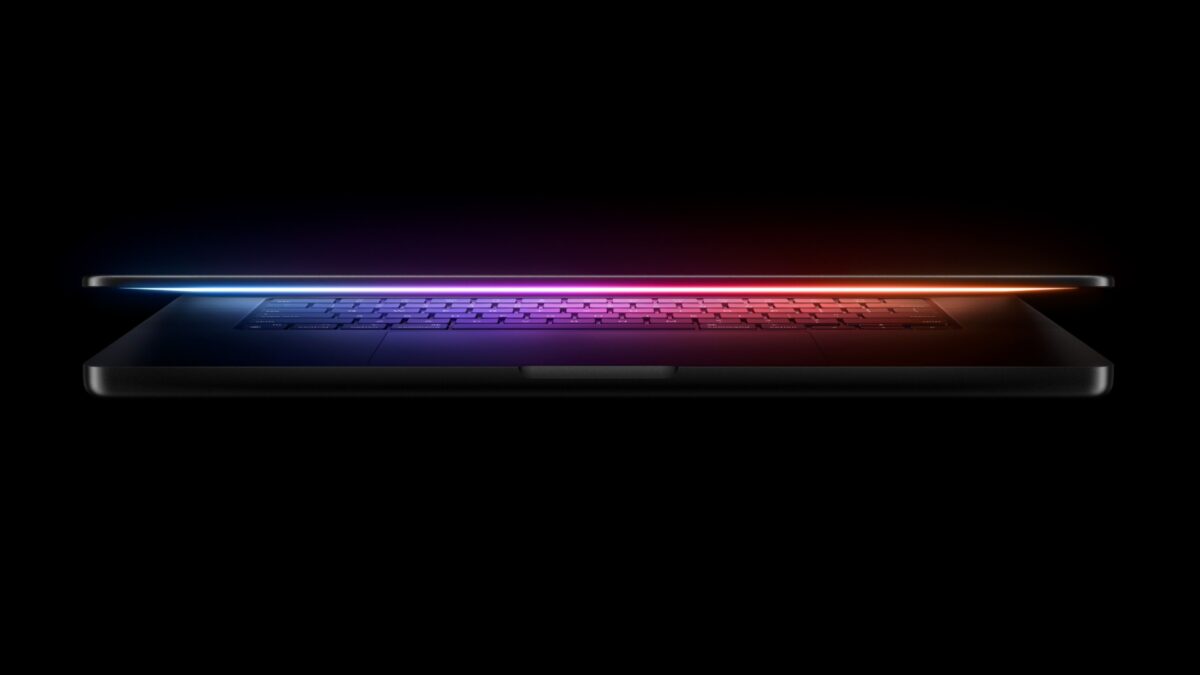
The MacBook Pro M5 might not arrive when we expected — and that’s actually the more interesting story. Bloomberg’s Mark Gurman just shook up the Mac roadmap, and the ripple effects tell us more about Apple’s long-term display strategy than any spec sheet could.
MacBook Pro M5: What the Latest Rumors Tell Us
As of early July 2025, the MacBook Pro M5 was widely expected for a fall 2025 launch, following the same October cadence Apple established with the M4 models in November 2024. The M5 chip has been in development using TSMC’s enhanced 3-nanometer process (N3P), paired with a groundbreaking System on Integrated Chip (SoIC) packaging technology that stacks chips in a 3D structure for better electrical performance and improved thermal management.
Three chip variants are expected: the base M5 for the entry-level 14-inch MacBook Pro, plus M5 Pro and M5 Max for higher-end 14-inch and 16-inch configurations. Early supply chain reports suggested mass production of M5 chips was already underway, with Apple placing orders at TSMC well in advance of the anticipated launch window.
The Timeline Shift: Why M5 MacBook Pro Might Slip to 2026
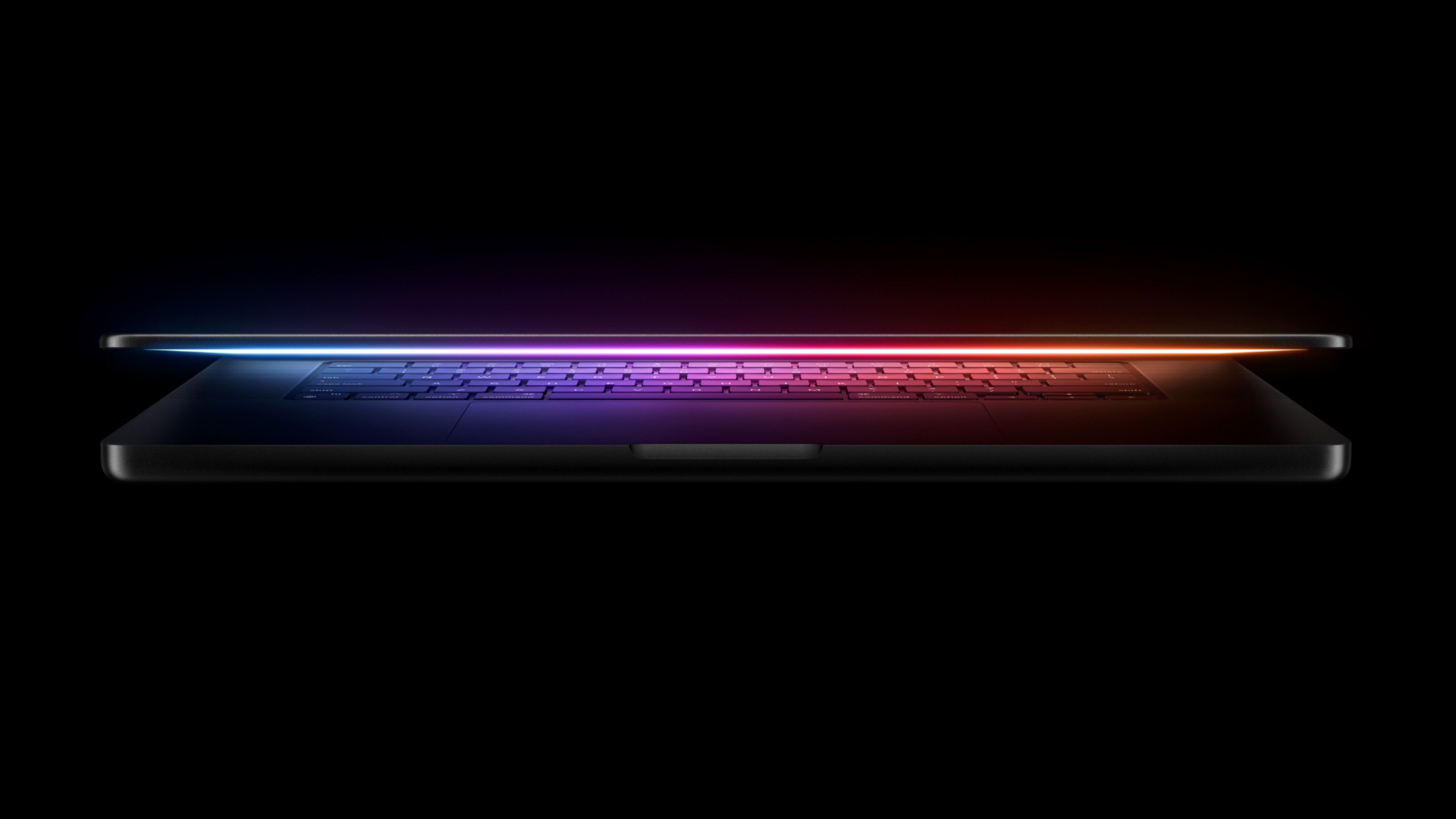
Then came the bombshell. On July 10, Bloomberg’s Mark Gurman reported that Apple has postponed the M5 MacBook Pro and MacBook Air releases from late 2025 to early 2026. The M4 models launched in November 2024, meaning consumers may experience a skip in the typical yearly refresh cycle for the first time in the Apple Silicon era.
Gurman noted that Apple is “internally targeting” an early 2026 launch, though he cautioned that “the timing is fluid, so there may still be a chance that we get the new Macs before the end of the year.” This deliberate ambiguity from one of Apple’s most reliable sources suggests the company itself hasn’t locked down the timeline.
The delay raises an important question: if M5 MacBook Pros arrive in early 2026, and OLED MacBook Pros are also expected in 2026, could Apple be consolidating these upgrades? Or will we see two separate MacBook Pro refreshes in a single calendar year?
TSMC 3nm SoIC: The MacBook Pro M5 Chip Architecture
Regardless of when it ships, the M5 chip represents a significant architectural leap. TSMC’s SoIC (System on Integrated Chip) technology is the headline feature — it allows Apple to stack multiple chiplets in a 3D configuration rather than spreading them across a single 2D die. This approach using thermoplastic carbon fiber composite molding delivers tangible benefits: reduced electrical leakage, improved thermal distribution, and the ability to mix different process nodes within the same package.
The M5 is expected to feature a 10-core CPU and 10-core GPU architecture, with dedicated Neural Accelerators integrated into each GPU core. This is Apple’s clearest signal yet that AI workloads are driving chip design decisions. For professionals running local machine learning models, real-time video processing, or complex creative workflows, the per-core Neural Accelerator approach could deliver meaningful performance gains without the thermal penalties of simply adding more cores.
The M5 Pro is rumored to scale to 16-20 GPU cores, while the M5 Max could pack 32-40 GPU cores. If Apple’s claims of over 4x peak GPU compute for AI workloads compared to M4 hold true, the M5 Max would be a genuine local AI powerhouse — potentially running large language models and image generation tasks that currently require dedicated GPUs.
Neural Accelerator Deep Dive: Why MacBook Pro M5 Changes AI Computing
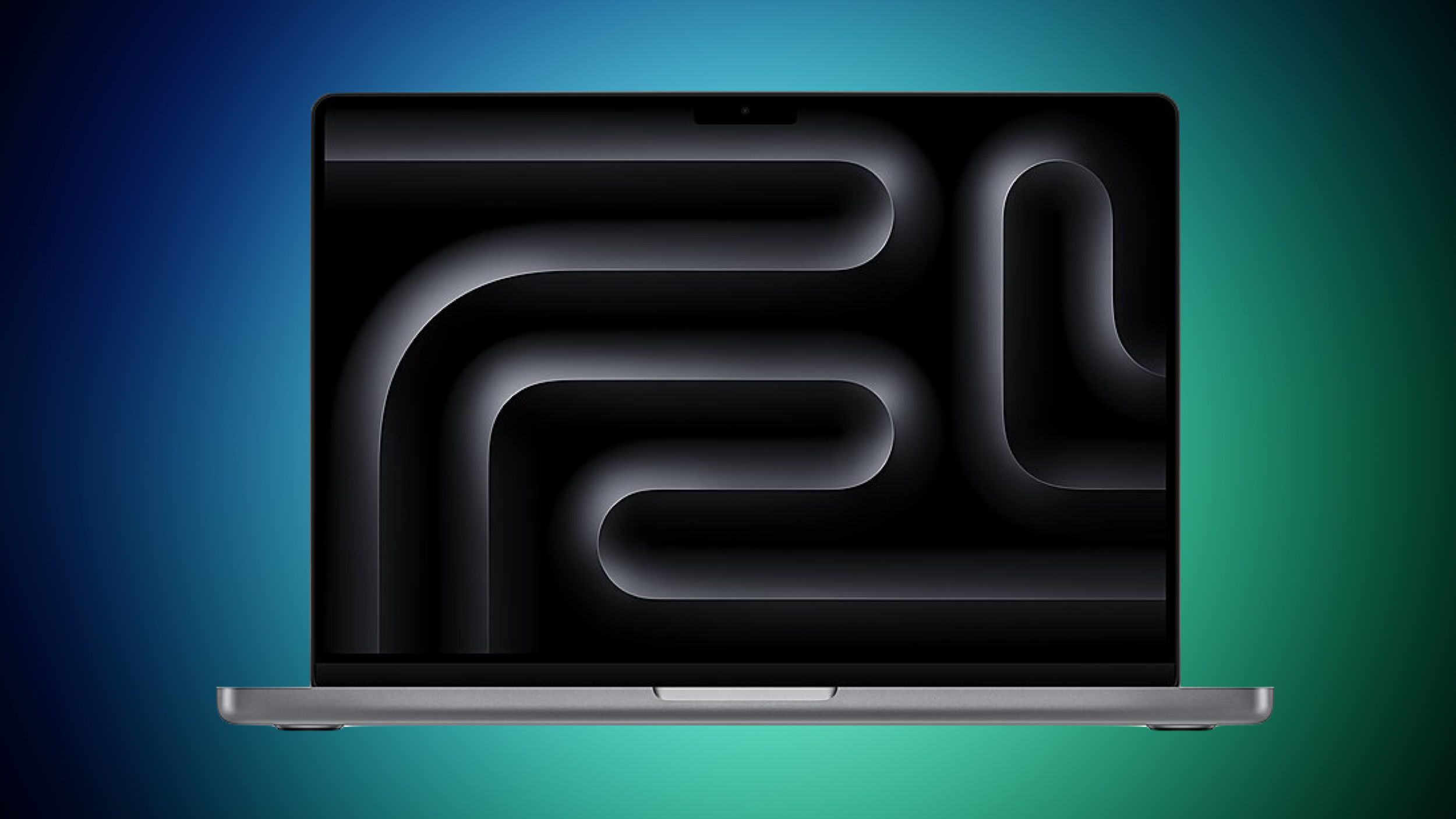
The per-core Neural Accelerator integration in the MacBook Pro M5 deserves special attention. Unlike previous Apple Neural Engines that operated as separate processing blocks, the M5’s approach embeds AI acceleration directly into the GPU pipeline. This means AI inference doesn’t require data to shuttle between separate processing units — it happens in-place, reducing latency and power consumption simultaneously.
For creative professionals, this translates to real-world benefits: real-time AI-powered noise reduction in Final Cut Pro, faster Stable Diffusion inference for design workflows, and more responsive on-device language models. The M5 Pro’s 16-20 Neural Accelerator-equipped GPU cores would theoretically handle tasks that currently require cloud-based processing, keeping sensitive data local and eliminating API latency.
Supply Chain Signals: What TSMC’s Production Schedule Reveals
TSMC’s production timeline offers independent confirmation of Apple’s plans. The foundry began mass-producing M5 chips on its N3P (Performance-enhanced 3nm) node in the second half of 2025, according to multiple supply chain reports. Apple’s decision to forgo TSMC’s more advanced 2nm process for the M5 is believed to be primarily cost-driven — 2nm wafer costs are estimated at 1.5-2x the price of 3nm, a premium Apple apparently deemed unnecessary for a transitional chip generation.
The SoIC packaging technology, however, represents genuine innovation. By stacking chiplets vertically with through-silicon vias (TSVs), Apple can achieve higher bandwidth between components while reducing the overall package footprint. This is the same approach that has enabled AMD’s 3D V-Cache technology in its Ryzen processors, but applied to Apple’s unified memory architecture — a combination that could yield substantial performance-per-watt improvements over the M4 generation.
OLED Display: The MacBook Pro’s Biggest Upgrade Is Coming — But Not Yet
Perhaps the most exciting development in the MacBook Pro rumor cycle isn’t the M5 chip itself, but what comes next. According to Omdia analyst Linda Lin, the first MacBook models with OLED displays are expected to launch in 2026, with the MacBook Pro receiving the technology before the MacBook Air.
The transition from mini-LED to OLED will bring increased brightness, higher contrast with true blacks, and improved power efficiency — the same benefits iPad Pro users have enjoyed since 2024’s tandem OLED panels. For anyone who’s compared the iPad Pro’s display to a MacBook Pro’s mini-LED screen, the difference in HDR content rendering and dark-scene accuracy is immediately noticeable.
More intriguing is what accompanies the OLED transition: the MacBook Pro is expected to receive its first major redesign since 2021. Reports suggest a thinner form factor, and a December 2024 Omdia report claims the OLED models may feature a hole-punch camera instead of the current notch — a change that would maximize screen real estate and modernize the aesthetic Apple has maintained for four years.
What This Means for Buyers Right Now
The MacBook Pro M5 situation creates one of the more complex buying decisions in recent Apple history. Here’s how the landscape breaks down as of July 2025:
- Need a MacBook Pro now: The M4 Pro and M4 Max models remain excellent machines. The M5 won’t change the fundamental experience for most users, and the current generation’s performance headroom is substantial.
- Can wait 3-6 months: The base M5 MacBook Pro should arrive by fall 2025 or early 2026 at the latest, bringing meaningful AI performance improvements via the new Neural Accelerator architecture.
- Want the real upgrade: Hold out for the OLED MacBook Pro with M6 chips, expected in late 2026. This will be the most significant MacBook Pro redesign in five years — new display technology, new form factor, potentially new input methods.
The M5 MacBook Pro M5 will likely be the last generation in the current 2021 chassis design. It’s a transitional product: meaningfully better silicon wrapped in a familiar body, setting the stage for the OLED revolution that follows.
The Bigger Picture: Apple’s Display Technology Roadmap
Apple’s approach to the MacBook Pro M5 reveals a broader strategy. By potentially delaying the M5 launch, Apple avoids releasing a new chip just months before its biggest design overhaul in years. The company appears to be creating clear separation between “chip upgrade” (M5 in current design) and “platform upgrade” (M6 with OLED and new chassis).
Supply chain analyst Ming-Chi Kuo has added another layer to this story: touchscreen Macs could arrive as soon as 2026, likely debuting with the OLED MacBook Pro redesign. If true, Apple would be bringing iPad-style touch interaction to the Mac for the first time — a move the company resisted for over a decade while competitors embraced 2-in-1 designs.
For anyone tracking the evolution of Apple’s laptop lineup, the next 18 months represent the most exciting period since the original Apple Silicon transition in 2020. The M5 is the warm-up act. The OLED MacBook Pro is the main event.
Stay ahead of the MacBook Pro M5 launch, OLED transition, and every major tech shift — get weekly insights delivered straight to your inbox.
Get weekly AI, music, and tech trends delivered to your inbox.