Elektron Analog Heat +FX Review: 8 Analog Drive Circuits Meet Digital Effects in One Box
August 19, 2025
Galaxy Z Fold7 AI Features: 5 Reasons Samsung Unpacked 2025 Changed the Foldable Game
August 20, 2025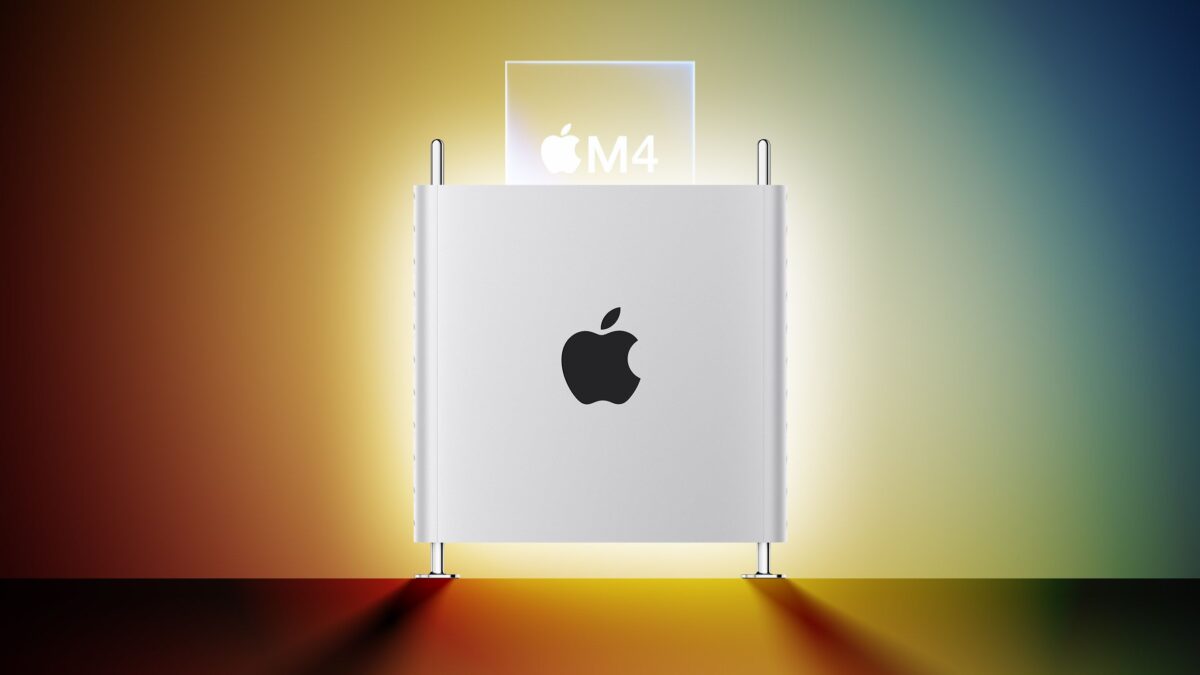
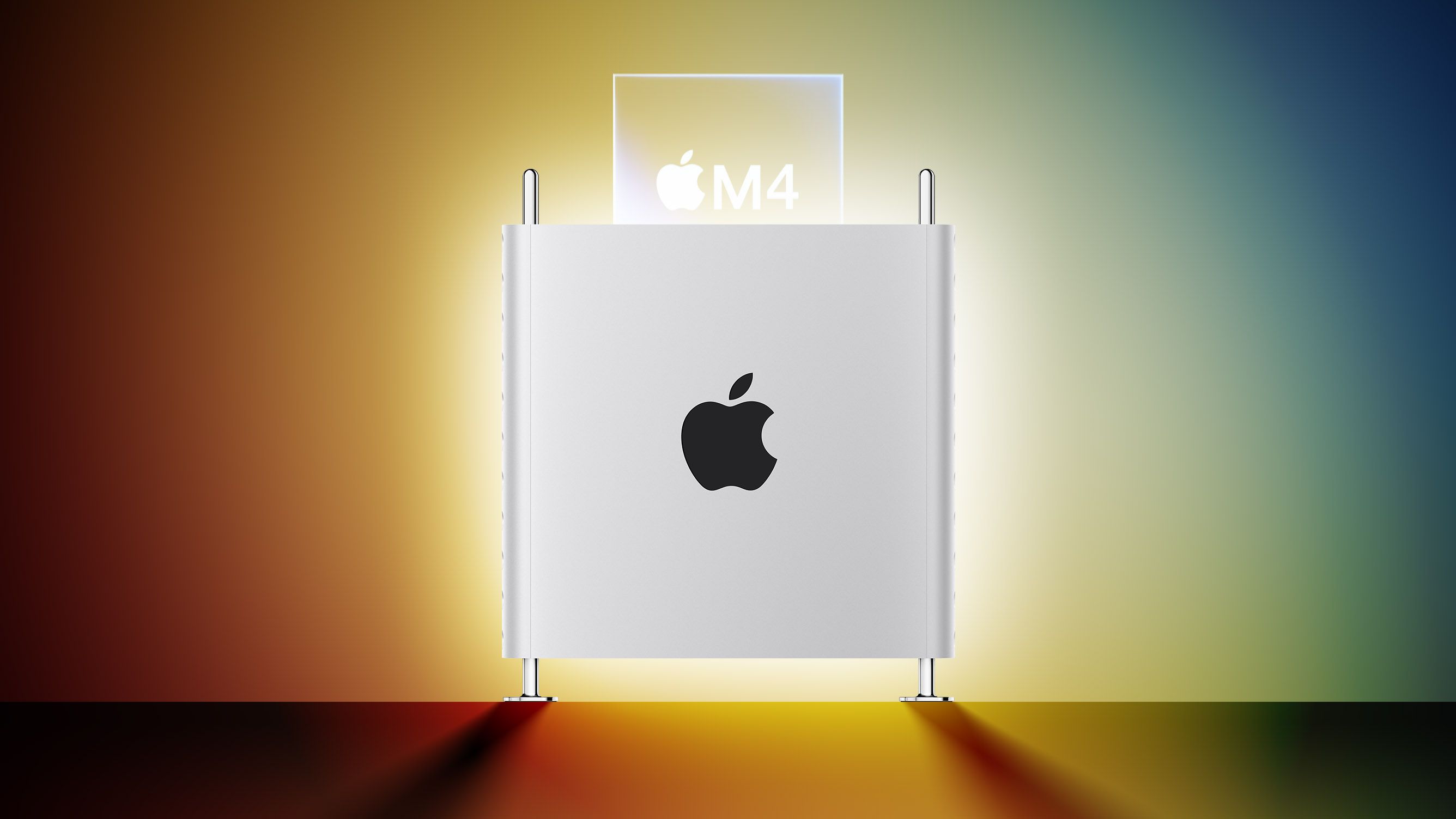
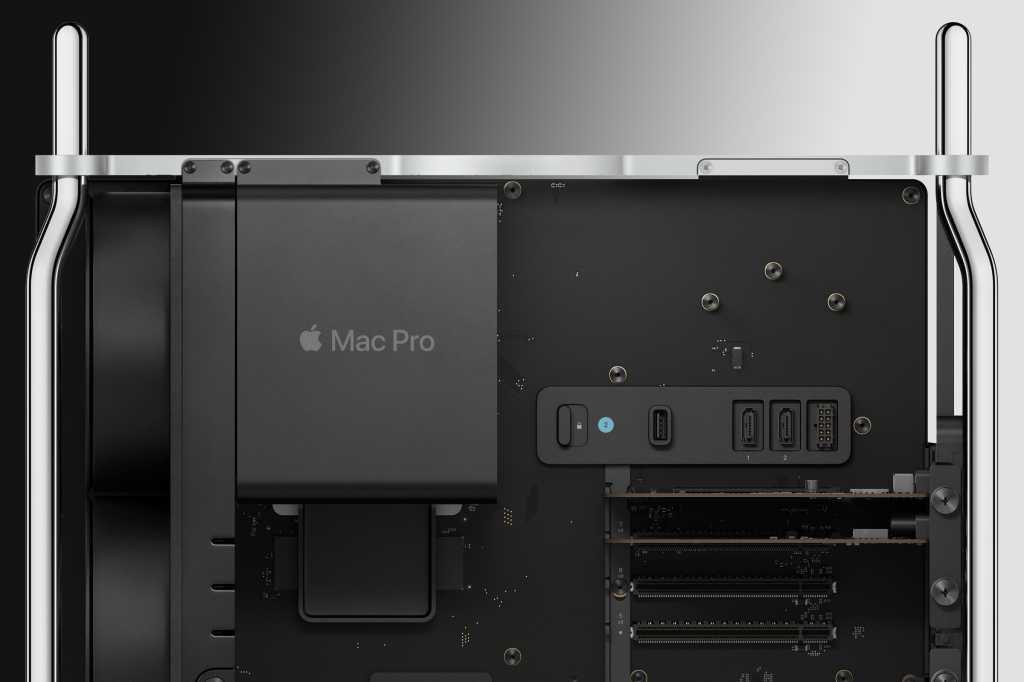
Apple just killed its most ambitious chip — and professionals should be paying attention. The M4 Extreme, a quadrupled M4 Max monster that would have delivered server-grade performance in a desktop tower, has been reportedly scrapped. But that’s only half the story. Internal Apple code discovered just days ago confirms the company is still actively experimenting with an M4 Ultra chip for the Mac Pro, and the specs being discussed would make it the most powerful desktop workstation Apple has ever shipped.
The Mac Pro M4 Extreme: What Was Supposed to Be
Let’s start with what we lost. According to The Information’s December 2024 report, Apple had been developing a chip internally referred to as the M4 Extreme — essentially four M4 Max dies fused together on a single package. If Apple’s naming convention held, this would have meant a chip with up to a 64-core CPU, 160-core GPU, and a Neural Engine capable of processing well over 150 TOPS for on-device AI workloads.
For context, the current M2 Ultra in the Mac Pro tops out at 24 CPU cores and 76 GPU cores. An M4 Extreme would have roughly tripled the GPU firepower while potentially supporting over 1TB of unified memory. That’s not a workstation chip — that’s a data center processor in a cheese grater chassis.
But Apple pulled the plug. Bloomberg’s Mark Gurman reported that the company canceled the Extreme project to redirect engineering resources toward an AI server chip — a strategic bet that on-device inference at the edge matters less than powering Apple’s cloud AI infrastructure. The timing aligns with Apple’s broader push into Apple Intelligence features that require server-side processing.
M4 Ultra: The Mac Pro’s Realistic Future
Here’s where things get interesting for August 2025. Macworld reported on August 14 that internal Apple code confirms the company is still experimenting with an unreleased M4 Ultra chip. This isn’t speculation — it’s evidence found in Apple’s own published code repositories.
The M4 Ultra would follow Apple’s established pattern of fusing two M4 Max dies together. Based on the M4 Max’s specifications and Gurman’s reporting, here’s what professionals can expect:
- CPU: Up to 32 cores (doubled from M4 Max’s 16-core configuration)
- GPU: Up to 80 cores (doubled from M4 Max’s 40-core GPU)
- Neural Engine: 32-core, potentially exceeding 70 TOPS for AI/ML workloads
- Unified Memory: Up to 500GB — a massive leap from the current 192GB maximum
- Memory Bandwidth: Expected to exceed 800 GB/s
- Connectivity: Thunderbolt 5 with up to 120 Gbps bandwidth
- Media Engine: Dual ProRes and AV1 hardware accelerators
That 500GB unified memory figure deserves special attention. For professionals running large language models locally, training machine learning models, or working with massive 8K video timelines, this amount of unified memory eliminates the GPU VRAM bottleneck that plagues traditional workstations. A 500GB unified memory pool means you could run a 400B+ parameter AI model entirely in memory without any offloading.
Hot Chips 2025 and the Chip Architecture Context
This week’s Hot Chips 2025 conference (August 24–26 at Stanford) provides crucial context for understanding Apple’s chip strategy. While Apple typically doesn’t present at Hot Chips directly, the conference showcases the competitive landscape Apple is navigating — from NVIDIA’s next-generation data center GPUs to AMD’s AI accelerators and Intel’s disaggregated chip architectures.
The semiconductor industry is converging on a clear pattern: chiplet-based designs that fuse multiple dies together for maximum performance. Apple’s Ultra and Extreme chip concepts use exactly this approach through their UltraFusion interconnect technology, which bonds two (Ultra) or four (Extreme) dies with minimal latency penalty. The fact that Apple canceled the Extreme while keeping the Ultra suggests that four-die fusion still presents yield and cost challenges that two-die fusion has largely solved.
Who Actually Needs a Mac Pro M4 Ultra?
The honest answer: fewer people than Apple would like. When Apple launched the Mac Studio with M4 Max in March 2025, it delivered performance that satisfies 90% of professional workflows. The Mac Studio starts at a fraction of the Mac Pro’s price and handles 4K/8K video editing, music production with hundreds of tracks, and software development without breaking a sweat.
But the remaining 10% represents some of the most demanding use cases in professional computing:
- VFX and 3D Animation Studios: Rendering complex scenes in Cinema 4D, Houdini, or Blender where GPU cores directly translate to render time savings
- AI/ML Researchers: Training and fine-tuning large models locally without relying on cloud GPU instances — the unified memory architecture eliminates the CPU-to-GPU data transfer bottleneck
- Scientific Computing: Computational fluid dynamics, molecular simulations, and genomics pipelines that need sustained throughput
- Post-Production Houses: Multicam 8K ProRes RAW workflows with real-time color grading and effects
- Music Production at Scale: Running orchestral sample libraries like Vienna Instruments Pro or Spitfire’s full Abbey Road series with thousands of articulations loaded simultaneously
For these users, the Mac Pro’s PCIe expansion slots, additional Thunderbolt 5 ports, and potential for 500GB unified memory aren’t luxuries — they’re necessities that the Mac Studio’s compact form factor simply cannot deliver.
The Pricing Question: $6,999 Was Just the Starting Point
The current M2 Ultra Mac Pro starts at $6,999 — and that was before the U.S. tariff situation complicated Apple’s global pricing strategy. MacRumors reports that the M4 Mac Pro will likely maintain or exceed this price point, with maxed-out configurations easily reaching $12,000–$15,000 when factoring in memory upgrades.
For comparison, a similarly specced NVIDIA-based workstation running dual RTX 6000 Ada GPUs with 96GB VRAM each would cost $15,000–$20,000 and still lack the unified memory advantage that Apple’s architecture provides. The Mac Pro’s value proposition isn’t about being cheap — it’s about architectural efficiency that traditional x86 workstations cannot match.
Timeline: When to Expect the M4 Mac Pro
Based on current reporting, the M4 Mac Pro is expected to be the last Mac to receive the M4 chip family, with a launch window somewhere between October and December 2025. Bloomberg’s Gurman has consistently pointed to a second-half 2025 timeline, though some analysts suggest Apple could delay into early 2026 if the M4 Ultra chip encounters production issues.
There’s also a wildcard scenario: Apple could skip the M4 Ultra entirely for the Mac Pro and jump straight to an M5 Ultra in 2026, as Gurman has reported Apple is already working on M5 Ultra updates for the Mac Studio. If Apple decides the Mac Pro market is too small to justify the engineering cost of an M4 Ultra, professionals could be waiting longer than expected.
What the Extreme Cancellation Really Means
The death of the M4 Extreme isn’t just about one chip — it signals a fundamental shift in Apple’s priorities. Apple is no longer trying to compete with Intel Xeon or AMD EPYC in the traditional workstation/server space. Instead, the company is betting that its AI server infrastructure (powering Private Cloud Compute for Apple Intelligence) is a better use of its most advanced chip engineering talent.
For professionals who were hoping for a quad-die monster capable of replacing rack-mounted servers, this is a disappointment. But for the broader Apple ecosystem, it suggests that on-device AI capabilities will continue to improve rapidly — the same Neural Engine advancements that would have powered the Extreme will likely trickle down into future Ultra and Max chips.
The bottom line for professionals in August 2025: the M4 Mac Pro with Ultra chip is still coming, and it will be a significant upgrade over the aging M2 Ultra configuration. The dream of a server-grade Extreme chip may be dead for this generation, but 500GB of unified memory, Thunderbolt 5, and up to 80 GPU cores should satisfy all but the most extreme professional workflows. If you’re in the market for Apple’s most powerful desktop, the wait is almost over — but temper your expectations for the “Extreme” and prepare your budget for what the Ultra will deliver.
Want to stay ahead of Apple silicon developments and professional hardware trends? Get weekly insights delivered to your inbox.
Get weekly AI, music, and tech trends delivered to your inbox.