Waves Nx Head Tracking: 5 Virtual Studios That Turn Any Headphones into an Immersive Mix Room
October 3, 2025
Mistral AI Studio Launch: Europe’s Answer to Enterprise AI Agent Deployment and Monitoring
October 6, 2025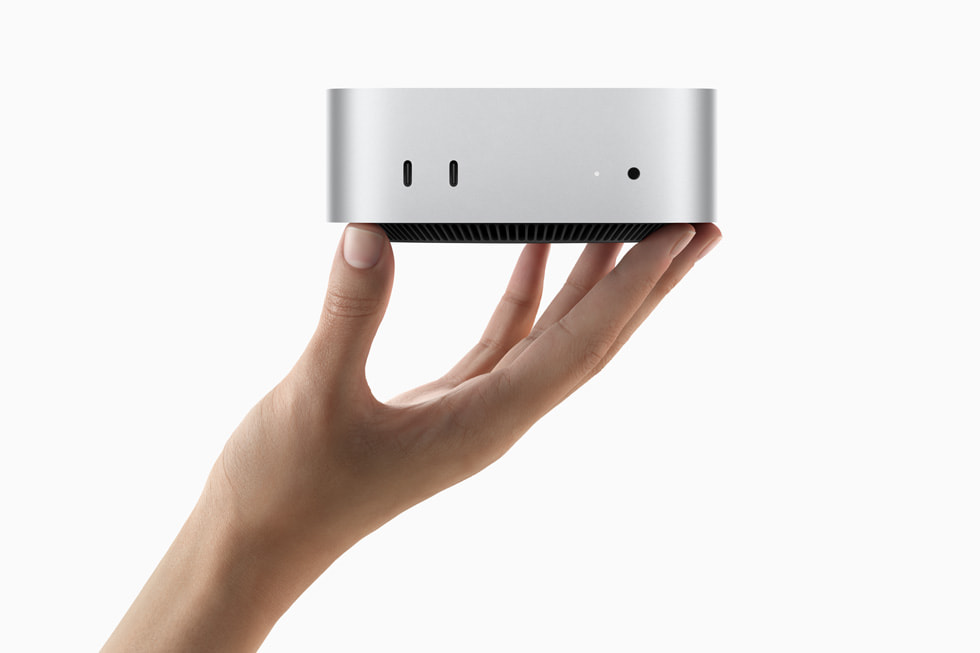
Four times the AI compute. Same $599 price tag. The Mac Mini M5 just turned Apple’s smallest desktop into a machine that outperforms last year’s MacBook Pro in every AI benchmark that matters — and the implications for creators, developers, and small studios are enormous.
Mac Mini M5: What the M5 Chip Actually Delivers
The M5 chip represents Apple’s most aggressive push into on-device AI processing. Built on third-generation 3-nanometer technology, it packs a 10-core CPU, a completely redesigned 10-core GPU with a Neural Accelerator embedded in each core, and a 16-core Neural Engine. The result? Over 4x the peak GPU compute performance for AI workloads compared to the M4 — and a staggering 6x improvement over the M1 that started this entire Apple Silicon revolution.
Memory bandwidth jumps to 153GB/s, a nearly 30% increase over the M4. For AI inference tasks — think Apple Intelligence features like Writing Tools, Image Playground, and on-device Siri processing — this bandwidth boost means models load faster and generate responses with noticeably less latency. The unified memory architecture ensures the CPU, GPU, and Neural Engine all share the same pool without bottlenecks.
$599 Gets You What Used to Cost $1,999
Here’s the number that should make every content creator pay attention: the Mac Mini M5’s AI inference performance at $599 matches or exceeds what the 14-inch MacBook Pro M4 Pro delivered at $1,999 just one year ago. According to AppleMagazine’s analysis, the M5 delivers up to twice the AI performance of the M4 Pro while drawing 20% less power. That’s not incremental — that’s generational.
The base configuration ships with 16GB unified memory, which Apple doubled from the previous generation’s 8GB starting point with the M4 Mac Mini. For most Apple Intelligence features and moderate local LLM inference, 16GB is the sweet spot. Power users running larger models will want to configure up to 32GB, available at the higher tier.
Mac Mini M5 vs M4: Key Specs Compared
- CPU: 10-core (both) — M5 delivers 15% faster multi-threaded, up to 40% faster in optimized workloads
- GPU: 10-core — M5 adds Neural Accelerator per core, 30% faster general graphics, 45% ray tracing improvement
- Neural Engine: 16-core — M5 features redesigned architecture for AI-first processing
- Memory Bandwidth: 153GB/s (M5) vs 120GB/s (M4) — 30% increase
- AI Compute: 4x peak GPU AI performance over M4
- Price: $599 starting (unchanged)
Apple Intelligence on Desktop: Why the Mac Mini M5 Is the Entry Point
With macOS now deeply integrated with Apple Intelligence, the Mac Mini M5 becomes the most affordable way to run Apple’s full AI stack locally. Writing Tools rewrite your emails and documents. Image Playground generates custom images. Core ML lets developers deploy machine learning models that leverage the Neural Engine’s dedicated hardware. And Siri finally processes complex multi-step requests on-device without routing through Apple’s servers.
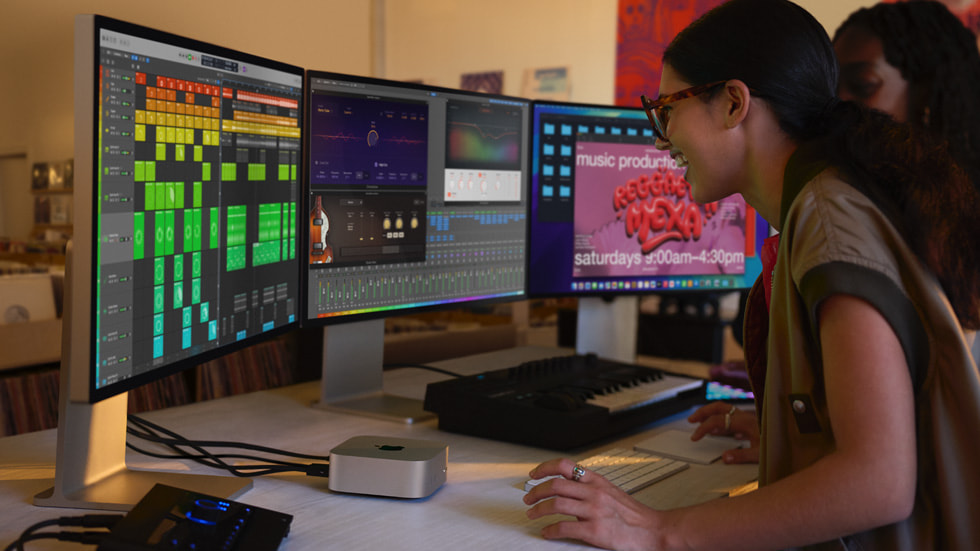
For audio professionals — producers, mix engineers, sound designers — the M5’s enhanced Neural Engine opens up new possibilities. AI-powered plugins that previously required cloud processing can now run locally with zero latency. Real-time vocal isolation, intelligent noise reduction, and AI-assisted mixing suggestions all benefit from the 4x AI compute boost. The Mac Mini M5 at $599 delivers enough neural processing power to run these workloads alongside a full DAW session.
The 5-Inch Powerhouse: Form Factor Meets Function
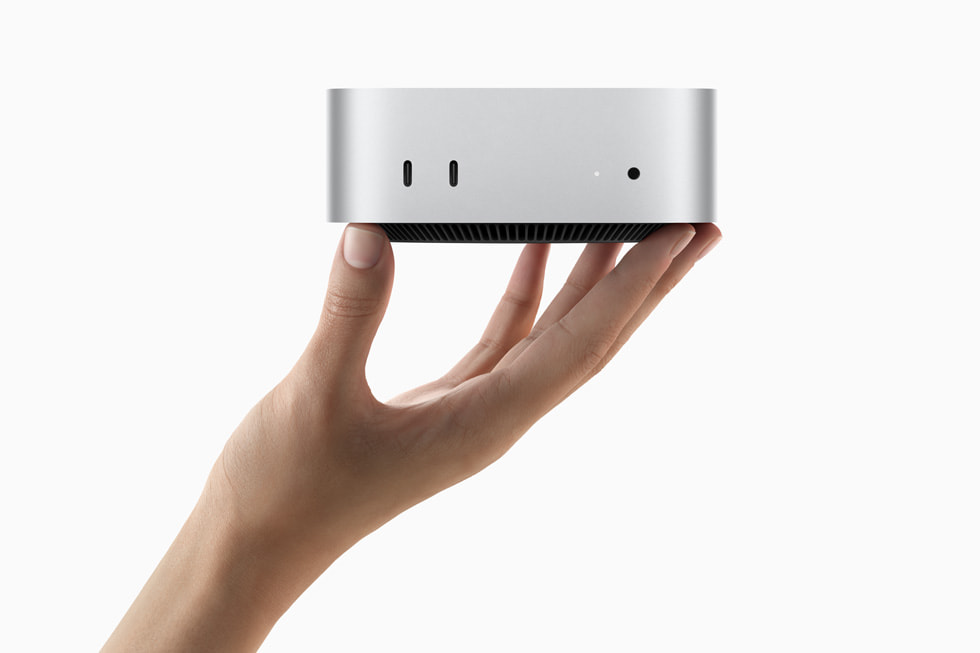
Apple redesigned the Mac Mini with the M4 generation, shrinking it to a remarkably compact 5 x 5-inch footprint — 2.75 inches smaller on each side than the previous model. The M5 variant retains this design while potentially upgrading connectivity to Wi-Fi 7 and Thunderbolt 5, which would deliver up to 80Gbps bandwidth for external storage and displays.
The rear I/O includes three Thunderbolt ports, HDMI 2.1 for up to 8K display output, and Gigabit Ethernet (configurable to 10Gb). The front panel carries two USB-C ports and a 3.5mm headphone jack. For studio setups, this means you can run a Thunderbolt audio interface, a fast external SSD for sample libraries, and dual 6K displays — all from a box that fits in your palm.
Mac Mini M5 Connectivity Breakdown
The port selection deserves closer examination because it directly impacts professional workflows. Three Thunderbolt ports on the back means you can simultaneously connect a Universal Audio Apollo interface via Thunderbolt, a fast NVMe external drive for your sample library (pulling data at 3,000+ MB/s), and still have a port free for a Thunderbolt dock or display chain. The HDMI 2.1 output supports 4K at 120Hz or 8K at 60Hz — useful for video editors who need to monitor full-resolution output while their timeline plays back in the DAW or NLE.
The front-panel USB-C ports operate at 10Gbps, making them ideal for quick-connect peripherals like MIDI controllers, external SSDs for project transfers, or even charging your iPhone while syncing Logic Pro sessions. And that 3.5mm headphone jack on the front? It uses the same high-impedance driver circuit found in the MacBook Pro, capable of driving 150-ohm studio headphones without a separate amp.
Who Should Buy the Mac Mini M5 — And Who Should Wait
Buy now if: You’re on an M1 or Intel Mac. The performance delta is massive — 6x AI compute, 2.5x general GPU, significantly faster CPU. The $599 entry price makes this upgrade a no-brainer for anyone running Apple Intelligence workloads, creative applications, or development environments.
Wait if: You already have an M4 Mac Mini. While the 4x AI boost is impressive, the M4 handles current Apple Intelligence features competently. The M5’s advantages become critical only if you’re pushing local AI models, running multiple ML inference tasks, or need the Thunderbolt 5 bandwidth for high-speed storage workflows.
Consider the M5 Pro variant if: You’re a professional running Pro Tools, Logic Pro, or Ableton with 100+ tracks and heavy plugin loads. The M5 Pro adds more CPU and GPU cores, higher memory bandwidth, and support for up to 96GB unified memory — but expect a $1,399+ price point.
Real-World Performance Context
To put the Mac Mini M5’s AI gains in practical terms: independent benchmarks show the M5 scoring 23,628 in quantized AI tests versus the M4’s 11,616 — roughly double the throughput. For developers working with Core ML models, this translates to faster on-device inference for image classification, natural language processing, and recommendation engines. For music producers, it means AI-powered stem separation tools like those built into Logic Pro 12 run in near real-time instead of requiring offline processing. And for video creators, features like intelligent scene detection and automated captioning execute significantly faster, cutting post-production time substantially.
The Bigger Picture: Desktop AI Just Got Democratized
The Mac Mini M5 isn’t just a spec bump — it’s a statement about where Apple sees AI computing heading. By packing Neural Accelerators directly into GPU cores, Apple has made a clear architectural bet: the future of on-device AI isn’t just the Neural Engine running separately, it’s AI woven into every part of the silicon. The GPU doesn’t just render graphics anymore — it thinks.
At $599, Apple has effectively democratized pro-level AI desktop computing. A music producer in a home studio, a freelance developer building Core ML apps, a content creator running local AI tools — they all get the same silicon architecture that powers the $2,499 MacBook Pro. The Mac Mini has always been Apple’s quiet workhorse. With the M5, it just became their loudest value proposition.
Need help choosing the right Mac setup for your studio or development workflow? Sean Kim has 28+ years of experience building professional audio and tech environments.
Get weekly AI, music, and tech trends delivered to your inbox.