
Perplexity AI Internal Knowledge Search: How Enterprise Pro Teams Search Web and Docs Simultaneously
May 16, 2025
GitHub Copilot Workspace Launch: 7 Things That Change How Developers Write Code in 2025
May 19, 2025
Apple just broke a four-year pattern, and nobody in the pro workstation world is quite sure what happens next. When the company confirmed in March 2025 that the Apple M4 Ultra might not exist at all — because the M4 Max chip shipped without an UltraFusion connector — it sent a shockwave through every studio, post house, and scientific computing lab that depends on Apple Silicon for heavy lifting.
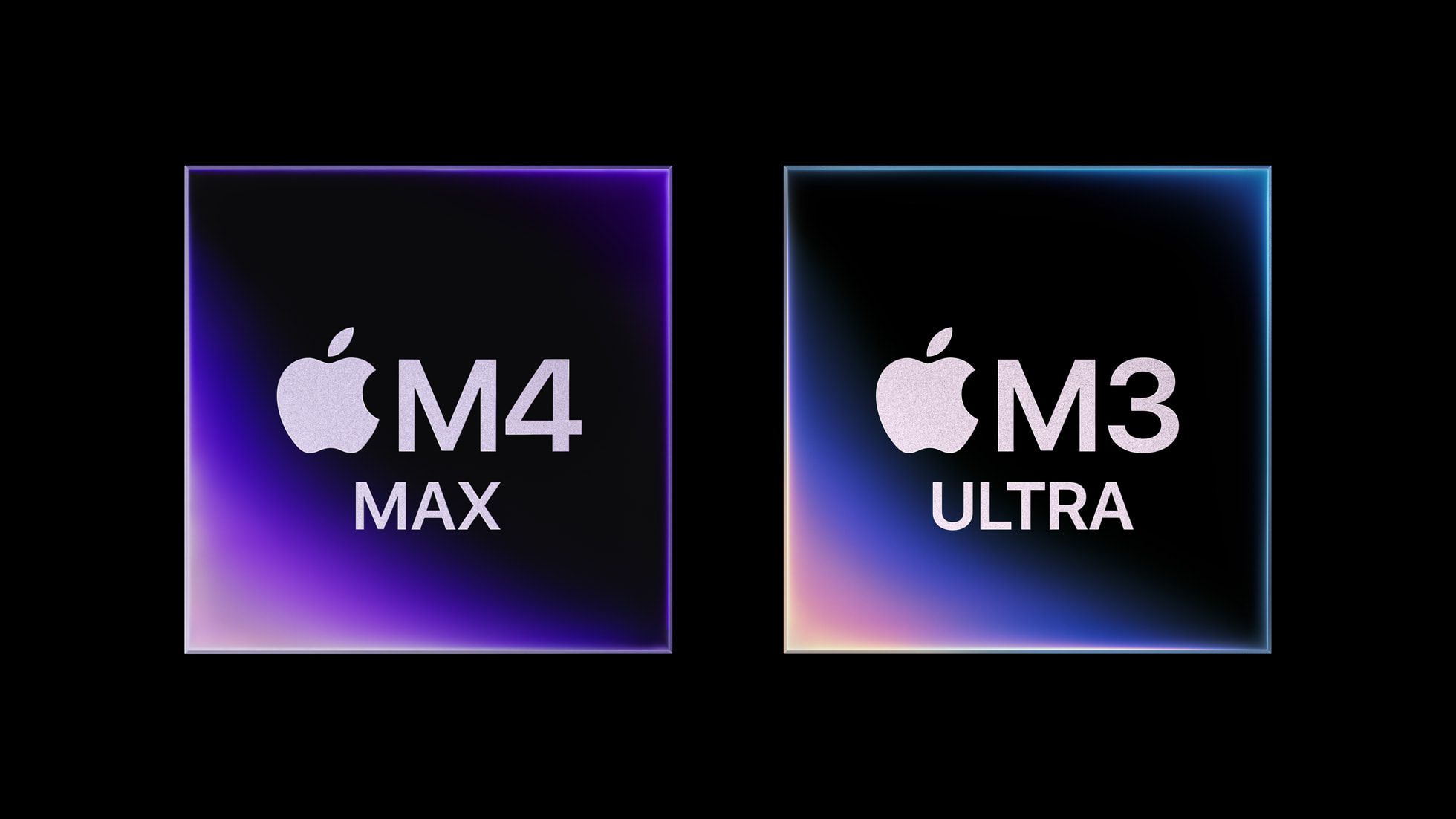
For three consecutive generations, Apple’s Ultra chips followed the same elegant playbook: take two Max dies, fuse them together via the proprietary UltraFusion interconnect, and deliver a chip with double the cores, double the memory bandwidth, and double the unified memory ceiling. The M1 Ultra, M2 Ultra, and M3 Ultra all followed this exact blueprint. Now that formula is broken, and as we head into WWDC season in June, the speculation around Apple’s next move has never been louder.
What Happened to the Apple M4 Ultra UltraFusion Connector?
In early March 2025, Apple launched the refreshed Mac Studio with M4 Max — but crucially, Apple confirmed to journalists that the M4 Max chip does not include an UltraFusion connector. This was a deliberate design choice, not an oversight. Apple representatives reportedly told Mac Studio reviewers that “not every generation of M-series chips will include an Ultra tier.”
That statement was carefully worded but devastating in implication. Every previous Ultra chip was built by physically fusing two Max dies through UltraFusion’s die-to-die interconnect running at approximately 2.5 TB/s bandwidth. Without that connector on the M4 Max silicon, the traditional approach to building an Apple M4 Ultra is physically impossible.
The Mac Studio now ships with two chip options: the M4 Max and the previous-generation M3 Ultra. That configuration alone tells the story — Apple does not currently have an M4-generation Ultra chip ready to replace its predecessor.
The Numbers: What a Hypothetical Apple M4 Ultra Would Look Like
If Apple were to follow the traditional dual-die approach with M4 Max, the hypothetical Apple M4 Ultra specs would be staggering. The M4 Max already delivers a 16-core CPU, 40-core GPU, up to 128GB of unified memory, and 546 GB/s memory bandwidth. A dual-die fusion would theoretically yield:
- 32-core CPU (16 performance + 16 efficiency, or a custom configuration)
- 80-core GPU — double the M4 Max’s already formidable graphics
- Up to 256GB or even 512GB unified memory — critical for 8K video timelines, massive AI models, and scientific datasets
- ~800 GB/s+ memory bandwidth — matching or exceeding the M3 Ultra’s 800 GB/s
- Thunderbolt 5 connectivity — expected for next-gen Mac Pro
For comparison, the M3 Ultra already shipped with 32 CPU cores, 80 GPU cores, up to 192GB unified memory, and 800 GB/s bandwidth. An M4 Ultra would need to meaningfully surpass these numbers to justify the generational jump — particularly in memory capacity and Neural Engine performance for AI workloads.
Three Possible Paths Forward for Apple Silicon Workstations
Bloomberg’s Mark Gurman — the most reliable source for Apple’s internal roadmap — has reported that Apple is reluctant to develop the M4 Ultra from scratch due to production costs and the relatively small Mac desktop sales volume. That reluctance opens up several scenarios.
Scenario 1: Bespoke M4 Ultra from scratch. Apple designs a monolithic or custom multi-die M4 Ultra without relying on UltraFusion. This would be expensive and time-consuming, but Apple has the silicon engineering talent and the cash reserves to do it. The Mac Pro codenamed “Hidra” reportedly exists in Apple’s internal tracking, suggesting some version of an M4 Ultra Mac Pro is still in development. Expected timeline: H2 2025 at the earliest.
Scenario 2: Skip M4 Ultra entirely, jump to M5 Ultra. According to Gurman, Apple may position the Mac Studio with M4 Max as the high-end solution for this generation and wait for the M5 architecture to reintroduce the Ultra tier. An M5 Ultra Mac Studio is reportedly planned for 2026. This would leave a full generation gap in Apple’s workstation lineup — a risky move that could push pro users toward alternatives.
Scenario 3: Mac Studio replaces Mac Pro. Gurman has also suggested Apple is considering the Mac Studio as the long-term high-end workstation solution, potentially phasing out the Mac Pro tower form factor entirely. The Mac Pro’s PCIe expansion, while valuable to some professionals, serves a shrinking audience as Apple’s integrated architecture reduces the need for add-in cards.
Why This Matters for Pro Users Right Now
The timing of this uncertainty is especially frustrating. As of May 2025, we are deep in tech conference season — Google I/O and Microsoft Build are showcasing their AI and hardware roadmaps, and Apple’s WWDC is just weeks away in June. The competitive pressure on Apple to address its professional computing story has never been higher.
Creative professionals who run massive Pro Tools sessions, 8K DaVinci Resolve timelines, or train machine learning models locally have been waiting for the M4 Ultra as the next logical step up from the M3 Ultra. Video editors working with Apple ProRes RAW footage at 8K need every bit of unified memory and GPU compute they can get. Audio professionals running hundreds of tracks with real-time Dolby Atmos rendering need the headroom that only an Ultra-class chip provides.
The current workaround — buying a Mac Studio with last-generation M3 Ultra — feels like a band-aid. It is a proven, powerful chip, but paying flagship prices for year-old silicon while the rest of the M4 lineup has moved forward is a tough sell for anyone making a five-figure investment in their production rig.
Sean’s Take: What 28 Years in Audio Taught Me About Waiting for Silicon
I have been through enough hardware transitions in my 28 years in audio production and technology to know that waiting for “the next chip” is often the worst strategy. When Apple moved from PowerPC to Intel, I watched studios freeze their upgrade cycles for two years, only to find that the first Intel Macs had their own compromises. The same pattern repeated with the transition from Intel to Apple Silicon — early M1 Macs were extraordinary, but the real payoff came with the M1 Ultra Mac Studio, which finally matched the I/O and horsepower that serious production demanded.
Right now, if someone asks me whether they should wait for the Apple M4 Ultra, my honest answer is: it depends on what is hurting you today. If your M1 Ultra or M2 Ultra Mac Studio handles your current sessions comfortably, wait. The M3 Ultra is not a dramatic enough leap to justify the cost. But if you are on an older Intel Mac Pro or a maxed-out M1 Max and your projects are regularly hitting memory or GPU ceilings, the M3 Ultra Mac Studio is a genuinely excellent machine — and waiting for a chip that may never arrive is a gamble I would not take with client deadlines on the line.
What concerns me more is the signal Apple is sending to professional users. The Mac Pro has always been a statement product — it says “we take your workflows seriously.” If Apple lets the Mac Pro stagnate or quietly kills it, that sends a very different message. As someone who has built automation pipelines, managed studio infrastructure, and worked with everything from analog consoles to AI-driven production tools, I can tell you that the trust of professional users is earned in hardware cycles, not keynote presentations. Apple needs to show its hand at WWDC, or the conversation will shift from “when is M4 Ultra coming” to “should we look at other platforms entirely.”
What to Watch at WWDC and Beyond
With WWDC 2025 just around the corner in June, there are several signals to watch for. First, any mention of Mac Pro during the keynote or developer sessions would confirm the product line is still alive. Second, look for changes to the Metal API or Core ML frameworks that seem designed for Ultra-tier hardware — that would suggest Apple is building software to take advantage of something new. Third, pay attention to what Apple does not say. If WWDC passes without any Mac Pro acknowledgment, the skip-to-M5-Ultra scenario becomes significantly more likely.
The Mac Pro codenamed “Hidra” remains in Apple’s internal systems, which is a cautiously optimistic sign. But codenames do not ship — silicon does. Until Apple puts an M4 Ultra chip on a die shot and a Mac Pro on a stage, every professional user planning a major hardware investment is making a bet on incomplete information.
For now, the smartest move is to evaluate your actual workload bottlenecks, not your spec sheet aspirations. If the M4 Max at 128GB unified memory handles your needs, it is an outstanding chip at a better price point. If you genuinely need Ultra-class power, the M3 Ultra remains the current best option — and it is not going anywhere even when its successor eventually arrives.
Navigating Apple Silicon upgrades for your studio or production pipeline? Let’s figure out the right timing and configuration together.
Get weekly AI, music, and tech trends delivered to your inbox.